
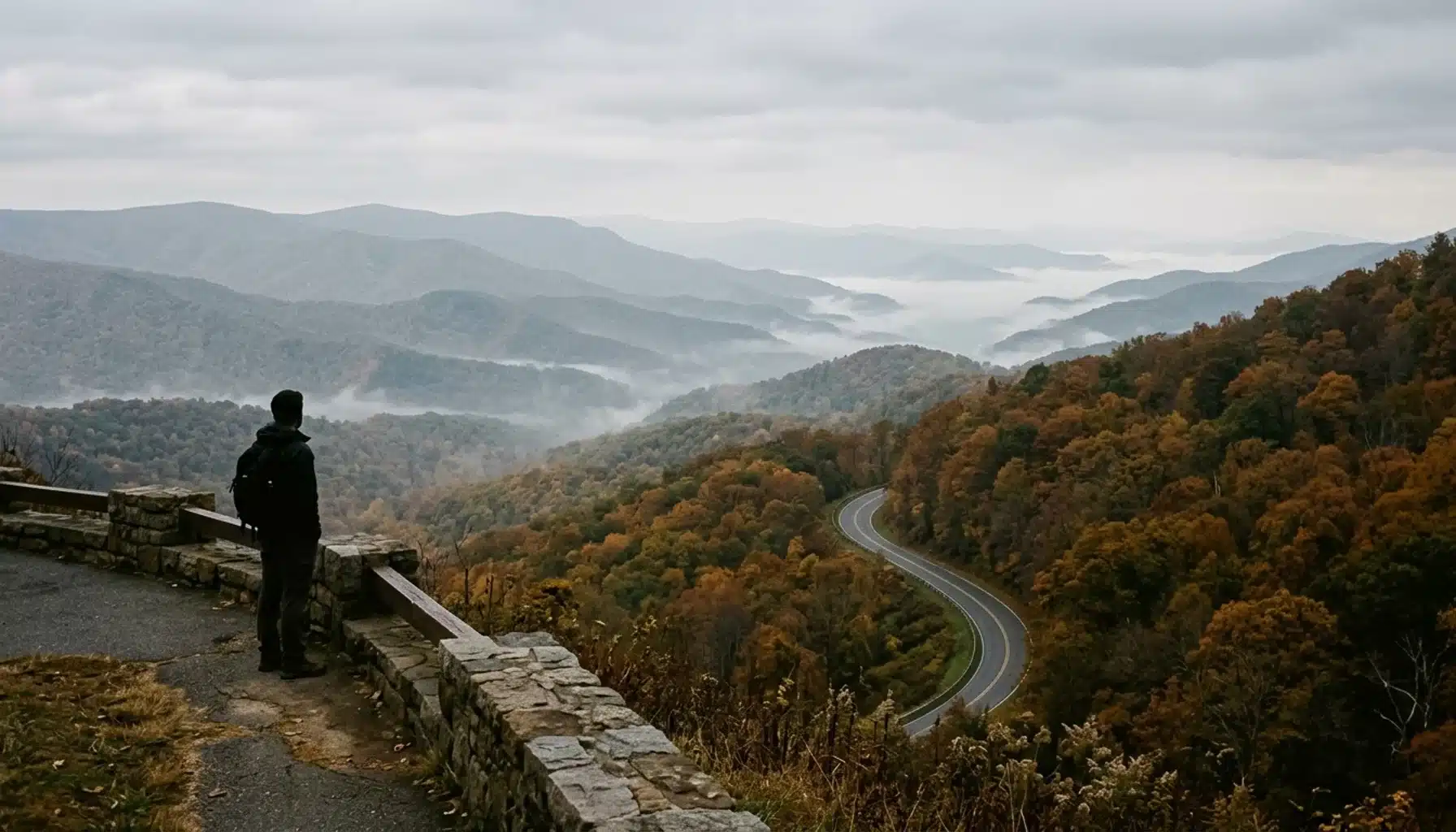
Shenandoah National Park is a 200,445-acre protected wilderness running along Virginia’s Blue Ridge Mountains, located just 75 miles west of Washington D.C. The park stretches 105 miles along Skyline Drive, contains more than 500 miles of hiking trails, and recorded 1,682,152 visitors in 2026 according to the National Park Service. For urban travelers within the Washington D.C. metro area, it is the closest large-scale wilderness in the eastern United States.
- 200,445 acres of Blue Ridge Mountain wilderness, 75 miles from Washington D.C.
- Skyline Drive runs 105 miles from Front Royal to Waynesboro with more than 70 overlooks.
- The park recorded 1,682,152 visitors in 2026 (NPS); October alone accounts for roughly 24% of yearly visitation.
- Dogs are permitted on 480 of the 500 miles of trails (Delaware North Parks and Resorts), making Shenandoah one of the most pet-friendly national parks in the country.
- A 7-day vehicle entrance pass costs $30; the park stopped accepting cash at entry points on July 1, 2026.
- Royal Oak Retreat, a luxury wellness cabin in Shenandoah Farms near Front Royal, sits approximately 40 minutes from the North entrance and offers a private contrast-therapy island, stargazing hot tub, and on-site EV charger.
Planning a trip to Shenandoah Valley national park territory can feel overwhelming given how much the region offers. This guide cuts through the standard tourist brochure language and gives you what you actually need: which entrance to use, which trails justify the drive, how to avoid October crowd chaos, and where to sleep when you want more than a tent or a generic lodge room. Whether you are a first-time visitor from the DMV region or a returning traveler looking to go deeper into the park, the practical specifics below will save you time and set you up for a genuinely good trip.
One note on scope: Shenandoah National Park and the broader Shenandoah Valley are related but distinct. The park itself is a federally managed strip of ridge and wilderness. The valley below it, including towns like Front Royal, Luray, Waynesboro, and the surrounding winery and river corridor, is part of Virginia’s broader Shenandoah region. This guide covers both, because the park experience gets dramatically better when you know what is worth doing outside the gate.
What Is So Special About Shenandoah National Park?
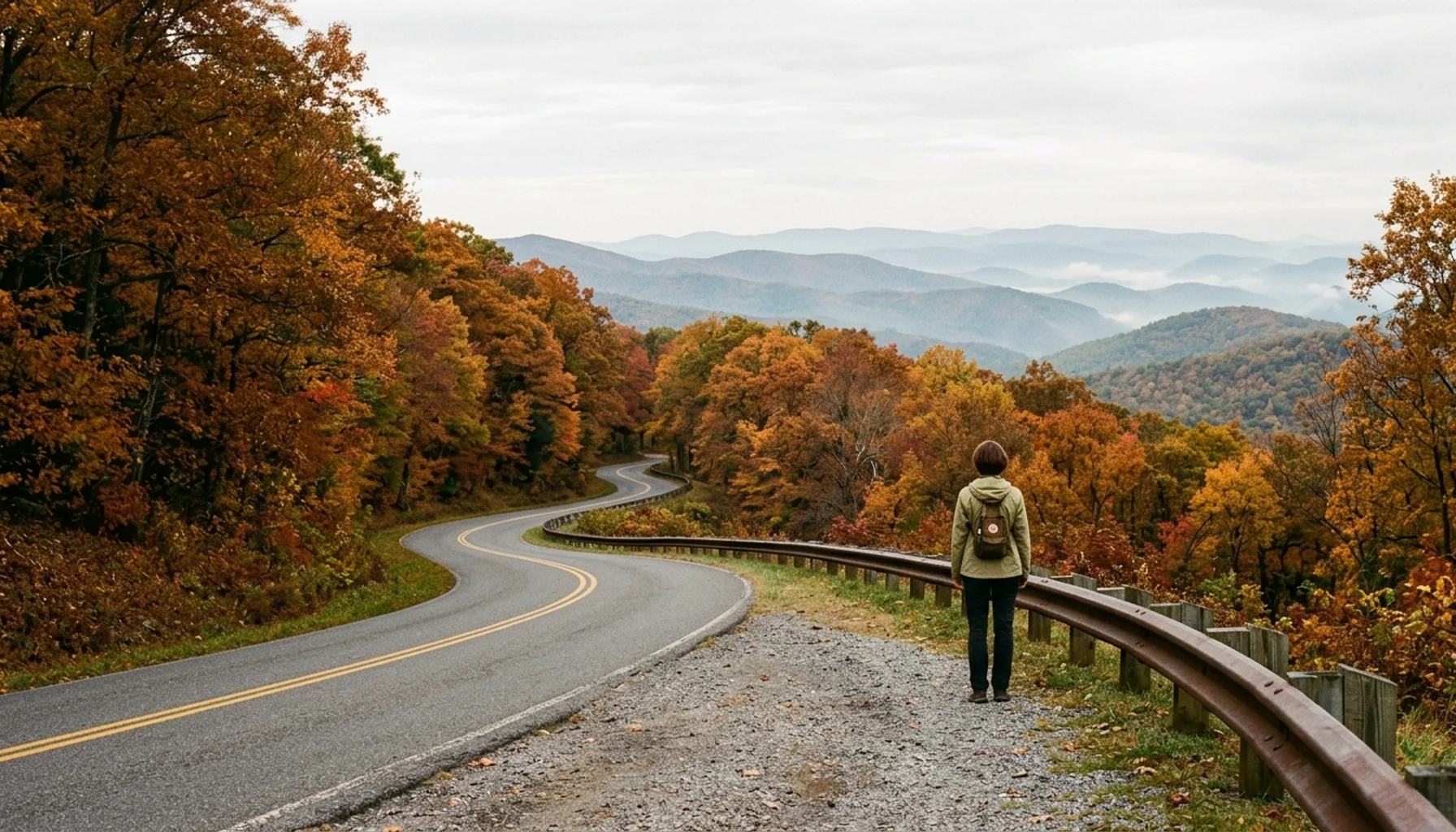
Shenandoah National Park is special because it combines proximity to one of the largest metropolitan areas in the United States with a level of wilderness depth that most East Coast parks cannot match. The park sits at the intersection of accessible and genuinely wild: you can drive Skyline Drive in an afternoon, or disappear for three days on the Appalachian Trail without cell service. That duality is rare.
The Shenandoah National Park official NPS website documents a park that covers parts of eight Virginia counties, rises to 4,051 feet at Hawksbill Mountain, and contains some of the oldest exposed rock in North America. Grenville-age granitic basement rocks in the park date to 1.0 to 1.2 billion years old. Some of those formations are visible without a trail, simply by pulling off Skyline Drive at the right overlook.
What other East Coast parks lack is the specific combination here: ridge-top driving with panoramic valley views, a trail network extensive enough to take weeks to explore fully, and a wildflower and wildlife density that peaks in late spring. Nearly 80,000 acres of the park are federally designated wilderness, which means no roads, no facilities, and no noise beyond what the forest produces. That 79,579-acre wilderness designation is legally protected under the National Wilderness Preservation System, ensuring it stays that way.
The park also carries a complicated history worth knowing. Its establishment in 1935 required the displacement of mountain communities who had lived on the Blue Ridge ridgeline for generations. The history and culture section of the NPS site covers this honestly, and understanding it adds a different kind of weight to a walk through the park’s interior.
How Long Does It Take to Drive Skyline Drive in Shenandoah National Park?
Driving the full length of Skyline Drive from the North entrance at Front Royal to the South entrance at Rockfish Gap near Waynesboro takes approximately 3 hours without stops. The speed limit is 35 mph the entire route, and the road has no straightaways long enough to make time. Budget 4 to 6 hours if you plan to stop at overlooks, which you should.
Skyline Drive is not a highway. It is a ridge road, meaning visibility shifts constantly as the forest opens and closes around you. The best overlooks are not equally distributed. The stretch between mile markers 30 and 55 contains the highest concentration of valley-view pull-offs, including Franklin Cliffs Overlook and the approach to Big Meadows. The far southern section between mile markers 80 and 105 is quieter and draws fewer cars, especially on weekday mornings.
Most visitors driving the full route in a single day start from the North entrance and stop at three to five overlooks plus one short trail. That is a reasonable plan. If you only have half a day, enter at Thornton Gap (mile marker 31.5) and drive south to Big Meadows, which puts you at the heart of the park in 20 minutes and keeps you close to the Harry F. Byrd Sr. Visitor Center for maps and ranger advice.
Which Entrance Should You Use?
Shenandoah National Park has four entrance stations, and the right one depends entirely on where you are coming from and what you want to do.
| Entrance | Milepost | Best For | Nearest City |
|---|---|---|---|
| Front Royal (North) | 0 | DC/Northern VA travelers, full Skyline Drive | Front Royal, VA |
| Thornton Gap | 31.5 | Access to Luray, Skyland area | Luray, VA |
| Swift Run Gap | 65.7 | Charlottesville travelers, South District | Elkton, VA |
| Rockfish Gap (South) | 105 | Blue Ridge Parkway connection, Waynesboro | Waynesboro, VA |
Travelers coming from Washington D.C. and Northern Virginia on I-66 will reach the Front Royal entrance first. It is the natural starting point for a north-to-south drive and sits closest to Royal Oak Retreat in Shenandoah Farms, which is approximately 40 minutes from that gate. If you are staying near Front Royal and want to do a focused half-day in the park, you can reach the entrance, hike a trail, and be back at the cabin in time for a late afternoon sauna session without rushing.
What City Is Closest to Shenandoah National Park?
Luray, Virginia is the city closest to Shenandoah National Park’s operational center. Park headquarters are located at 3655 U.S. Highway 211 East in Luray, and the Harry F. Byrd Sr. Visitor Center at mile marker 51 sits directly above the town. According to DNC Parks and Resorts at Shenandoah, the park is located 75 miles west of Washington D.C. outside the town of Luray, Virginia.
Front Royal is the closest city to the North entrance at mile marker 0 and is the most practical base for travelers arriving from the D.C. metro area on I-66. It has grocery stores, gas stations, and several independent restaurants within 10 to 15 minutes of the park gate. Waynesboro anchors the South entrance and serves as the gateway to the Blue Ridge Parkway, which begins at Rockfish Gap and runs 469 miles south to Great Smoky Mountains National Park with no entrance fee.
For travelers planning a trip that combines the park with winery visits, the corridor between Front Royal and Linden is particularly practical. Fox Meadow Winery in Linden is roughly 5 minutes from Royal Oak Retreat and about 20 minutes from the North entrance, placing both the park and a solid afternoon wine stop within the same tight radius. Crimson Lane Vineyards in Hume is about 8 minutes away and draws a less tourist-heavy crowd than wineries closer to the Luray corridor. Neither requires a reservation for small groups, though weekends in October fill up fast.
What Are the Best Hikes in Shenandoah National Park?
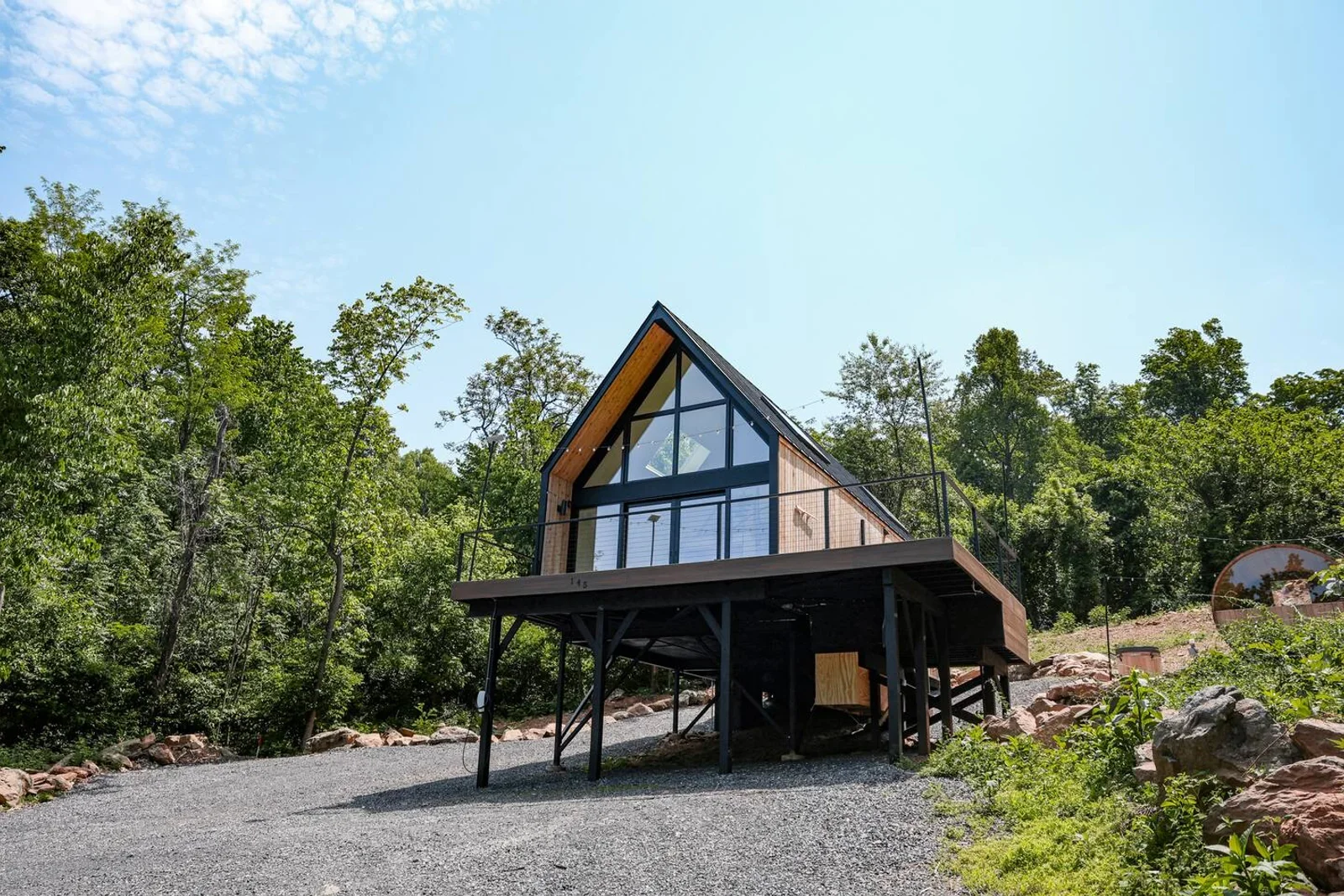
Shenandoah National Park’s best hikes range from 1-mile summit scrambles to multi-day Appalachian Trail sections, with more than 500 miles of trails total. The park is strong on waterfall hikes, ridge-top scrambles with open views, and moderate loops accessible from Skyline Drive pull-offs. What it lacks in dramatic desert or volcanic scenery it compensates for with forest density, stream crossings, and the particular quality of light through hardwood canopy in spring and fall.
The most common mistake first-time visitors make is attempting Old Rag Mountain without understanding it requires advance reservations and involves a genuine rock scramble, not just a walk. Check the Old Rag Mountain reservation information page before adding it to your plans. Cell service at the trailhead is minimal, so download maps in advance.
Dark Hollow Falls: The Best Beginner Waterfall Hike
Dark Hollow Falls is a 1.4-mile round-trip trail near mile marker 50.7 that descends through hemlock forest to a 70-foot waterfall. The trail drops about 440 feet on the way down, which means the return is the workout. According to the NPS official trail description, it is one of the most popular waterfall hikes in the park, and the parking lot at the trailhead fills quickly on weekend mornings. Arrive before 9am on Saturdays to get a spot without circling.
The falls are at their fullest in spring and after heavy rain. By late August, the flow is reduced but still photogenic. The path is rocky and requires solid footwear; sandals are a bad idea on the wet sections near the base.
Hawksbill Summit: Highest Peak in the Park
Hawksbill Mountain at 4,051 feet is the highest point in Shenandoah National Park, and the Upper Hawksbill Summit Trail reaches the top in 2.1 miles round-trip with about 520 feet of elevation gain. The views from the rock outcropping at the summit are the widest in the park, extending in multiple directions across the valley. Hawksbill gets heavy foot traffic on October weekends. If you want the ridge to yourself, go at sunrise or save it for a Tuesday.
Bearfence Rock Scramble: Best Views for the Distance
The Bearfence Rock Scramble near mile marker 56.4 covers just 1.2 miles round-trip but requires a hands-and-feet scramble over exposed rock. The summit takes roughly 25 minutes from the trailhead and delivers 360-degree views that rival peaks twice the distance. It is the most efficient hike in the park for the view-per-effort ratio. The rock faces are slippery when wet, so this is a clear-day hike.
What Is the Best Month to Visit Shenandoah National Park?
The best month to visit Shenandoah National Park depends on what you are optimizing for. October delivers peak fall foliage and the park’s most visually dramatic conditions, but it also accounts for roughly 24% of yearly visitor totals, meaning overlooks are packed and lodging books out weeks in advance. May is the strongest all-around choice for most visitors: wildflowers are blooming, temperatures are moderate (typically 55 to 70 degrees Fahrenheit at elevation), and the trails are clear without summer heat or humidity.
Here is an honest season-by-season breakdown:
| Season | Conditions | Crowd Level | Best For |
|---|---|---|---|
| Spring (April to May) | Wildflowers, cool temps, occasional rain | Moderate | Hikers, couples, photography |
| Summer (June to August) | Humid, hazy views, full facilities open | High | Camping, fishing, ranger programs |
| Fall (September to October) | Peak foliage, crisp air, best views | Very High (October) | Scenic drives, photographers |
| Winter (November to March) | Cold, some road closures, open trails | Low | Solitude seekers, stargazing, recovery stays |
Winter is the most underrated season. Skyline Drive can close during snow events, but the weeks before and after those closures offer trail solitude that summer visitors never see. The leafless forest opens up views through the trees that do not exist in July. And the sky at elevation on a clear January night is exceptional. Guests staying at Royal Oak Retreat in Shenandoah Farms during winter often combine a morning park visit with afternoon sauna sessions and fire pit time, which is a structure that makes more sense in the cold than most people expect.
If you want to combine a park trip with a local event, the Shenandoah Valley Music Festival runs July through September and adds a specific social anchor to a summer cabin stay. The Page Valley Agricultural and Industrial Fair typically runs in August and gives a genuine taste of local valley culture without a tourist overlay. For spring trips, the Festival of Spring in Luray runs in May and pairs well with the wildflower season on the trails.
What Are the Entrance Fees and Pass Options for 2026?
Shenandoah National Park entrance fees in 2026 work on a tiered vehicle pass system. A 7-day vehicle pass costs $30 and covers all passengers in the vehicle. The most cost-effective option for travelers who visit multiple national parks is the America the Beautiful annual interagency pass at $80, which covers entrance to all federal lands for 12 months. You can buy a Shenandoah entrance pass online before your trip to skip the gate line, or purchase the America the Beautiful National Park Pass from the USGS store.
Fee-free days in 2026 include: February 16 (Presidents Day), May 25 (Memorial Day), June 14 (Flag Day), July 3 through 5 (Independence Day weekend), August 25 (110th Birthday of the NPS), September 17 (Constitution Day), October 27 (Theodore Roosevelt’s Birthday), and November 11 (Veterans Day). These days draw noticeably higher visitor numbers, so if solitude matters more to you than saving $30, they are days to avoid rather than target.
One critical practical note: as of July 1, 2026, the park no longer accepts cash at entrance points or campgrounds. Debit cards, credit cards, and digital payment are the only options. Bring a card, not bills.
For trip planning resources, the official NPS fees and passes page lists current rates and the complete fee-free day calendar. The Shenandoah National Park Association also sells detailed hiking maps and trail guides that go beyond what the NPS provides for free, and they are worth the small cost if you are planning more than a single day visit.
Where Can You Stay Near Shenandoah National Park?
Lodging options near Shenandoah National Park range from in-park NPS-concessioned lodges to private cabins scattered throughout the surrounding valley. The right choice depends on whether you want to be inside the park boundary or prefer a private base with more amenities. Both have genuine advantages, and the comparison is more interesting than most guides acknowledge.
For a broader look at all options across the region, the Best Cabin Rentals in Shenandoah Valley Virginia 2026 guide covers the full landscape, and the best places to stay in Shenandoah Valley VA covers a wider range of accommodation types for different travel styles.
Lodging Inside the Park
Shenandoah National Park has three main in-park lodging options, all operated by Delaware North Parks and Resorts. Skyland Lodge at mile marker 41.7 is the highest-elevation lodging option in the park and offers cabin-style rooms and suites with valley views. The location is genuinely useful for hikers who want to start Hawksbill or other central-district trails without a drive. Big Meadows Lodge at mile marker 51 sits adjacent to the meadow that reliably draws deer at dusk. Lewis Mountain Cabins at mile marker 57.5 are rustic but include private baths, rated 4.3 stars based on 219 reviews according to Tripadvisor 2026 data.
In-park lodging means zero commute to the trailhead and a genuinely immersive experience. The tradeoff is a simpler finish level, no private hot tub, no sauna, and limited room for flexibility in amenities. The Shenandoah National Park official lodging page has current rates and reservation availability for all three properties.
For budget-conscious or adventure-seeking visitors, the Potomac Appalachian Trail Club’s primitive cabin reservations offer six backcountry cabins inside the park for hikers willing to carry in their own supplies. The Potomac Appalachian Trail Club also maintains the trail network throughout the park.
Private Cabins Near the Park
Private cabin rentals in the valley surrounding Shenandoah National Park offer something the in-park options cannot: genuine privacy, full kitchens, and wellness amenities that make the stay itself a destination rather than just a bed between hikes.
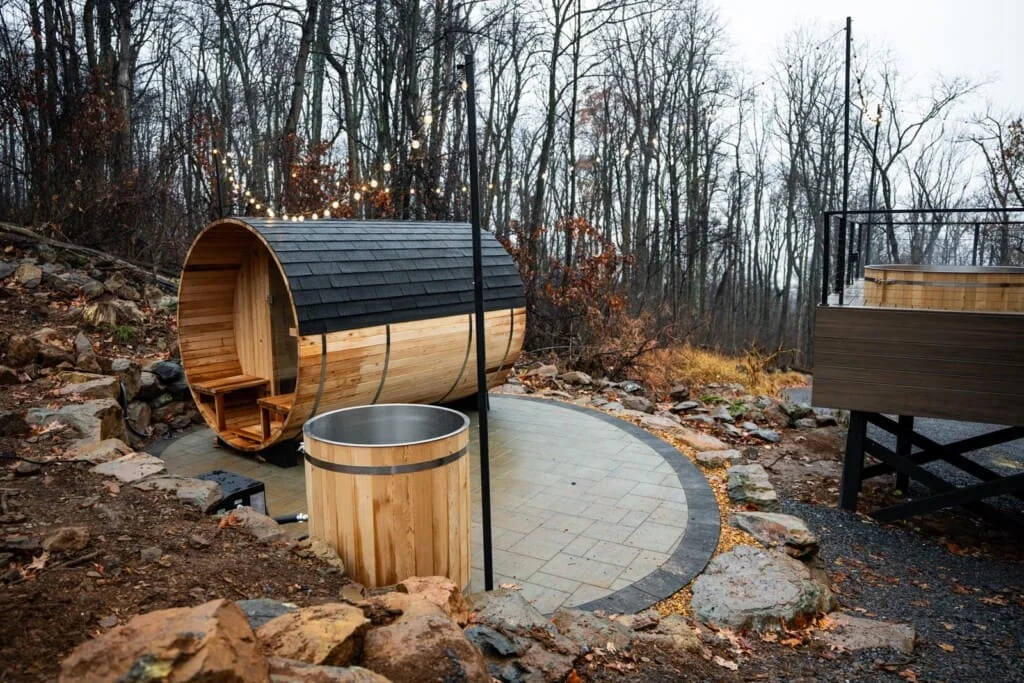
Royal Oak Retreat in Shenandoah Farms near Front Royal is the strongest option in this category for adults traveling as couples or in small groups of up to four. The cabin covers 1,000 square feet across one main bedroom with a king bed and a loft with a queen bed, accessed via a spiral staircase. The design is cedar-clad with floor-to-ceiling windows overlooking Virginia hardwood forest. What sets it apart from the broader private cabin market is the contrast-therapy island: a Scandinavian sauna, cold plunge, and large sunken outdoor hot tub with a sightline designed specifically for stargazing. The build is fully non-toxic, with no plastics or chemicals used in construction, which is an unusual detail that matters more than it sounds once you have spent 48 hours in the same enclosed space.
The cabin sits approximately 40 minutes from the North entrance to Shenandoah National Park, 5 minutes from Fox Meadow Winery, and 8 minutes from Crimson Lane Vineyards. An on-site EV charger is available. Starlink high-speed internet means connectivity if you need it, though most guests report needing it less than they expected.
For couples planning a milestone stay, the Romance Package from Royal Oak Retreat adds a curated in-cabin experience on top of the property’s base amenities. If you are planning to use the cabin as a base for a cabin for rent in Shenandoah, the nearby experiences guide covers what is within 30 minutes in more detail. One practical note: a 4×4 vehicle is required during winter months due to the steep driveway. This is not a caveat, it is a genuine winter planning requirement.
What Wildlife and Natural Features Will You See?
Shenandoah National Park’s wildlife is defined by its black bear population, its white-tailed deer density, and an unexpected diversity of songbirds across the spring migration window. Black bears are present throughout the park and are the species visitors are most likely to encounter. The NPS recommends reviewing the wildlife safety guidelines before any backcountry trip, specifically for food storage requirements and safe viewing distances.
Deer are most visible at Big Meadows at dusk, where they graze reliably throughout the warmer months. Wildflowers bloom from late March through May, with trillium, bloodroot, and wild azalea appearing progressively as you climb in elevation. The Catoctin Formation’s metamorphosed basalt columns are visible at Compton Peak and represent some of the more unusual geology in the eastern United States.
The park also contains more than 90 mountain streams supporting wild trout populations. A valid Virginia State Fishing License issued by the Virginia Department of Wildlife Resources is required to fish within park boundaries. The official Shenandoah National Park Fishing Regulations PDF covers species, methods, and seasonal restrictions in detail. Best fishing conditions are late fall, winter, and early spring, when water levels are optimal and fish populations are least stressed by temperature.
Horseback riding is available on 180 miles of designated equestrian trails, with guided 1-hour trail rides departing from Skyland in spring, summer, and fall. Details are on the horseback riding in Shenandoah National Park page.
What Practical Details Do Most Guides Miss?
Most Shenandoah National Park guides cover the obvious. Here are the specifics that consistently get left out and actually affect how your trip goes.
Cell service is genuinely poor inside the park. Download your trail maps to a phone app like AllTrails before entering. The NPS has printable maps available at the official Shenandoah trail maps page, and these are worth printing for backcountry or unfamiliar routes. Do not rely on navigation within the park boundaries.
The two visitor centers are far apart. Dickey Ridge Visitor Center sits at mile marker 4.6 near the North entrance and is the right stop if you enter from Front Royal. The Harry F. Byrd Sr. Visitor Center is at mile marker 51, near the park’s central district and Big Meadows. Both are documented at the Shenandoah National Park Visitor Centers page. If you are doing a partial-day north entry, stop at Dickey Ridge first. Do not drive past it assuming you will pick up information at the next one, which is 46 miles south.
Campground reservations matter more than most visitors realize. Big Meadows Campground fills on weekday nights during peak season, not just weekends. Loft Mountain Campground at milepost 79.5 tends to have more availability and is worth considering if Big Meadows is booked. The Loft Mountain Amphitheater there is wheelchair accessible with Assistive Listening available on request, and ranger programs begin June 6th in 2026.
The Blue Ridge Parkway begins where Skyline Drive ends at Rockfish Gap near Waynesboro. The parkway runs 469 miles south to Great Smoky Mountains National Park and charges no entrance fee. If your schedule allows, driving even the first 20 miles of the parkway past Humpback Rocks adds a completely different visual experience to a southern-entry Shenandoah trip.
Book 45 days out for peak season. According to AirROI 2026 market data, guests booking short-term rentals in the Shenandoah area book approximately 45 days in advance on average. For October foliage weekends, that window likely shrinks further. If your target dates are early to mid-October, plan accordingly. The nearby experiences guide from Royal Oak Retreat is a useful reference for building a full itinerary around a cabin stay rather than treating the park as the only destination.

Frequently Asked Questions
What is so special about Shenandoah National Park?
Shenandoah National Park is special because it protects more than 200,000 acres of Blue Ridge Mountain wilderness just 75 miles from Washington D.C., making it one of the most accessible large wilderness areas in the eastern United States. The park combines 105 miles of ridge-top Skyline Drive, 500-plus miles of trails including 100 miles of the Appalachian Trail, and a pet-friendly trail network that allows dogs on 480 of its 500 trail miles. Its rock formations date to over one billion years old, and nearly 80,000 acres hold federal wilderness designation.
What city is closest to Shenandoah National Park?
Luray, Virginia is home to Shenandoah National Park headquarters and is the city closest to the park’s operational center. Front Royal anchors the North entrance and is the most convenient base for travelers from Washington D.C. Waynesboro sits at the South entrance and connects to the Blue Ridge Parkway. Park headquarters are at 3655 U.S. Highway 211 East, Luray, VA 22835; phone 540-999-3500.
What is the best month to visit Shenandoah National Park?
May is the best all-around month for most visitors, offering spring wildflowers, moderate temperatures, and manageable crowds. October delivers the most dramatic scenery with fall foliage but accounts for roughly 24% of yearly visitation, meaning the park is at its most crowded. January through March sees the lowest visitor numbers, making it ideal for travelers who prioritize solitude over facilities.
How long does it take to drive Skyline Drive in Shenandoah National Park?
Driving the full 105-mile length of Skyline Drive takes about 3 hours without stops, given the 35 mph speed limit throughout the route. Budget 4 to 6 hours to include overlook stops and at least one short trail. The stretch between mile markers 30 and 55 has the highest concentration of valley-view pull-offs and is the section most worth slowing down for.
Are dogs allowed in Shenandoah National Park?
Yes. According to Delaware North Parks and Resorts at Shenandoah, dogs are permitted on 480 of the park’s 500 miles of trails, making it one of the most pet-friendly national parks in the country. Dogs must remain on a leash no longer than 6 feet at all times. They are not allowed inside park buildings or on certain maintained paths near lodging facilities.
What are the entrance fees for Shenandoah National Park in 2026?
A 7-day vehicle pass costs $30 and covers all passengers. The America the Beautiful annual pass costs $80 and covers entrance to all federal lands for 12 months. As of July 1, 2026, the park accepts only debit, credit, and digital payments at entrance stations and campgrounds. Fee-free days in 2026 include Presidents Day, Memorial Day, Flag Day, Independence Day weekend, and Veterans Day, among others.
Does Shenandoah National Park require reservations for hiking?
Most trails do not require reservations. Old Rag Mountain is the primary exception and requires an advance day-use reservation due to high demand. Developed campgrounds like Big Meadows typically require reservations during peak season. Backcountry camping requires a free permit available at visitor centers. Cell service is minimal near most trailheads, so download maps before entering the park.
What is near Shenandoah National Park for non-hiking activities?
Within 30 minutes of the North entrance at Front Royal, you will find Luray Caverns, Fox Meadow Winery in Linden, Shenandoah River outfitters for kayaking and tubing, and the Shenandoah Valley Music Festival running July through September. The Page Valley Agricultural and Industrial Fair typically runs in August. Crimson Lane Vineyards in Hume is about 20 minutes from the North entrance and draws a local crowd rather than a tourist-heavy one.
Ready to Plan Your Shenandoah Trip?
Shenandoah National Park is one of the genuinely good ones: large enough to get lost in, close enough to Washington D.C. to reach on a Friday afternoon, and varied enough to reward a return trip in every season. The 105-mile ridge drive, the 500-mile trail network, and the surrounding valley corridor of wineries and rivers make it one of the most complete regional escapes on the East Coast. Go in October if you want drama. Go in May if you want the park to yourself at its most alive. Go in January if you want the forest to be completely silent and yours.
The version of a Shenandoah trip that actually restores you requires more than a good trail and a scenic overlook. It requires somewhere to come back to at the end of the day that matches the intention of the trip. For travelers who want privacy, genuine wellness amenities, and a property built with the same care they brought to choosing the park, the options are worth comparing carefully.

Royal Oak Retreat sits approximately 40 minutes from the park’s North entrance in Shenandoah Farms, and the contrast-therapy island (sauna, cold plunge, and stargazing hot tub) is built for exactly the kind of evening that follows a day on Shenandoah’s trails. The cedar-clad, non-toxic build accommodates up to four guests across two bedrooms, welcomes one dog under 50 lbs, and includes an on-site EV charger. It is available for direct booking with no third-party fees.
Check availability at Royal Oak Retreat and see everything that is included before your next Shenandoah trip.
Content powered by inkSTR.co