
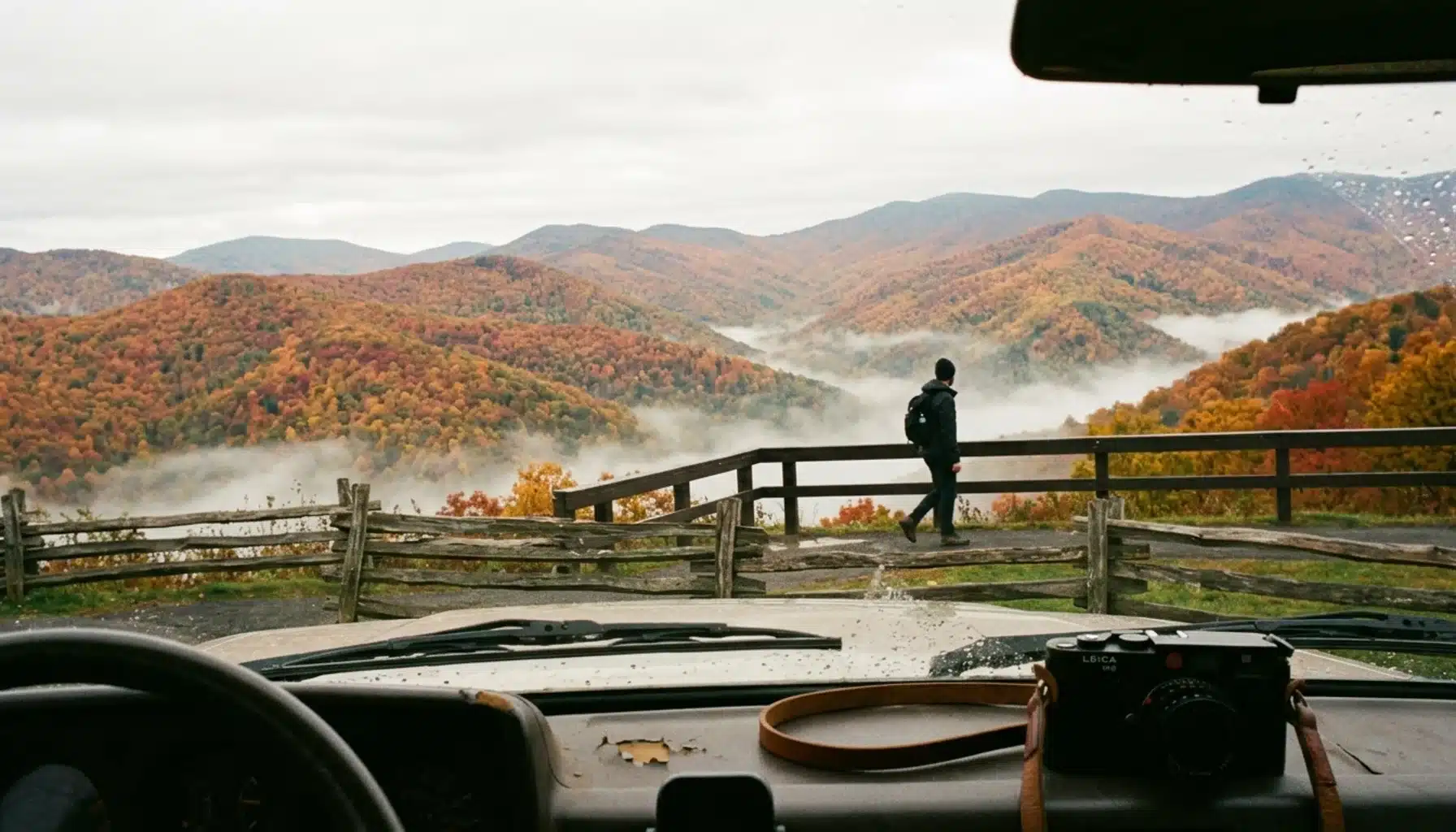
Peak Shenandoah Valley fall foliage typically arrives between October 10 and October 25, starting near the high country around Big Meadows and Skyland (elevation 3,500 feet) in early October and working down to the valley floor by early November. Book a mid-week arrival if you can. Weekends between October 12 and November 2 see Skyline Drive traffic back up for miles at popular overlooks.
- Peak window: Color typically peaks in the higher elevations of Shenandoah National Park (Big Meadows, Skyland) in the first two weeks of October, then moves down to valley floors and foothills by late October into early November.
- Best strategy: Visit Tuesday through Thursday to avoid the worst of the weekend backups on Skyline Drive, especially the two to three weekends surrounding Columbus Day.
- Entrance fee: A 7 day Shenandoah National Park vehicle pass runs $30, purchasable in advance through Recreation.gov to skip gate lines.
- Economic scale: Shenandoah National Park drew 1,576,008 recreational visits in 2023, and visitors spent roughly $114 million in nearby communities that year, according to National Park Service data.
- Where to stay: Cabins in the Shenandoah Valley area average around $241 a night with 44% occupancy as of July 2026, per Guest Favorites market data, and late fall bookings tend to run stronger than the annual average.
- Nobody tells you: The northern district near Front Royal and Linden changes later than the southern district, so if you’re staying near Front Royal, plan your peak-color trip for the back half of October, not the first.
Shenandoah Valley fall foliage is not one single event. It is a rolling color wave that starts at 3,500 feet and takes roughly three to four weeks to reach the valley floor, which means the “best” week to visit depends entirely on where you’re staying and which district of the park you plan to drive. If you’ve read three foliage guides already and still don’t know whether to book for October 8 or October 28, that’s because most of them are answering the question for the wrong district.
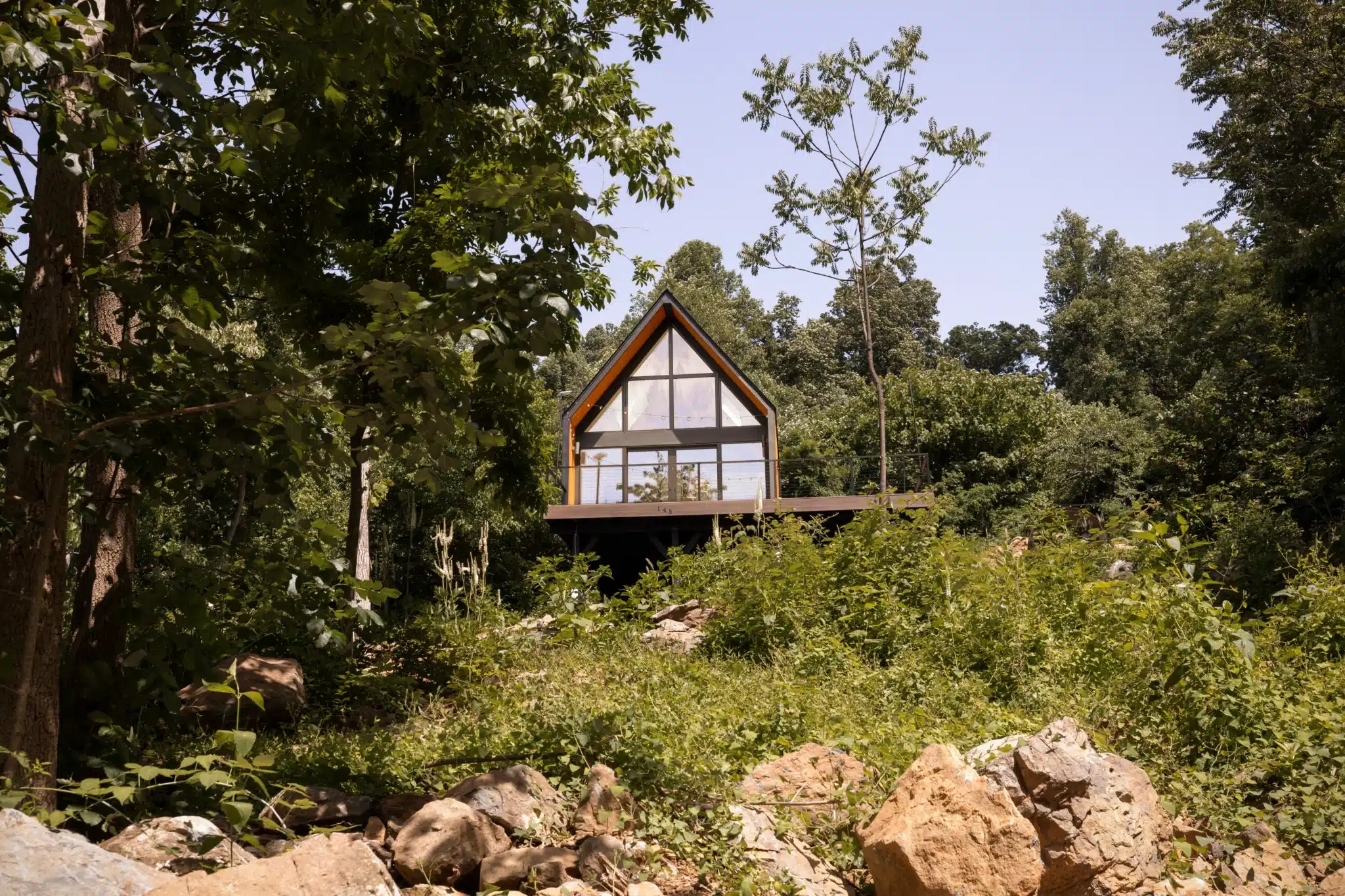
At Royal Oak Retreat, we sit in Shenandoah Farms outside Front Royal, roughly 40 minutes from Skyline Drive’s northern entrance and about an hour from Washington D.C. That geography matters more than most articles admit: color arrives here later than it does near Big Meadows, and knowing that timing gap is the difference between driving into a wall of brake lights and having an overlook to yourself. This guide covers when to actually go, where the color shows up first and last, which trails and overlooks are worth the drive, and a handful of details, snake season, ADA access, mid-week timing, that most fall foliage guides skip entirely.
As of 2026, Virginia’s tourism economy has never been more dependent on exactly this kind of trip. Virginia recorded 111.7 million visitors who spent a record $33.3 billion in 2023, and overnight visitation climbed to 43.6 million that same year, according to the Virginia Tourism Corporation. Fall foliage season is a meaningful driver of that overnight demand, and it shows in Shenandoah Valley cabin bookings every October.
What Is the Best Time to See Fall Colors in Shenandoah National Park?
The best time to see fall colors in Shenandoah National Park is generally the second and third weeks of October, though the exact peak shifts by elevation and district each year depending on temperature and rainfall. Specifically, high-elevation spots like Big Meadows and Skyland (both above 3,500 feet) tend to peak first, often in the first two weeks of October, while lower elevations near the valley floor hold color into early November.
Cooler nights and sunny days accelerate the color change, while a warm, wet autumn delays it. As a result, the National Park Service updates a weekly Fall Color Report every Thursday during the season, along with a live “View from the Valley” webcam that tracks the color line creeping down the mountain in near real time.
For 2026, a reasonable target window is October 10 through October 25, with a buffer into early November if you’re staying in the lower valley near Front Royal or Linden rather than up near Skyland. Notably, the southern district (Rockfish Gap area) and northern district (Front Royal area) rarely peak on the same weekend, so pick your district before you pick your date.
Additionally, if you’re trying to time a single weekend trip, mid-October historically splits the difference well: the high country is often past peak by then, but mid-elevations are usually hitting their color, and the valley floor is just beginning to turn.
Are the Leaves Changing in the Shenandoah Valley Right Now?
Whether the leaves are actively changing in the Shenandoah Valley on any given day depends on elevation, recent temperatures, and how far into the season you are, and the answer changes week to week from mid-September through mid-November. Color typically begins as a subtle shift at the ridgeline in late September, becomes obvious by early October at elevation, and reaches the valley floor and foothills by late October.
The most reliable way to check current conditions is the park’s own weekly Fall Update Video, posted every Thursday on the official Shenandoah National Park fall page, plus the live webcams that show real-time color progression up the mountain. For example, in a typical year the video might show 20 to 30 percent color at Big Meadows in the first week of October and near-full color by the third week.
Specifically, you should also check the air quality webcam the park maintains; haze from distant wildfires or humidity can mute color saturation on an otherwise “peak” day, which is a detail most travel guides never mention. If you’re staying in Front Royal or Linden rather than deep in the park, expect the change to lag the high country by one to two weeks, since lower elevations and northern latitudes within the park change later than the southern high country.
What Is the Best Time to See Fall Colors in Virginia?
The best time to see fall colors across Virginia generally runs from late September through mid-November, with the timing shifting from the higher Blue Ridge and Allegheny elevations down to the Piedmont and coastal plain as the season progresses. In the Shenandoah Valley and Blue Ridge corridor specifically, peak color usually falls in mid-October, while lower-elevation regions of central and eastern Virginia often don’t peak until late October or the first week of November.
Virginia’s tourism season around foliage is substantial: the state generated $35.1 billion in visitor spending in 2026, a 5.4 percent increase over 2023, according to Virginia Tourism Corporation figures, and much of that growth traces back to overnight, multi-day trips rather than day visits.
For a statewide view beyond just the national park, Virginia Tourism Corporation runs a seasonal fall foliage tracking resource that maps color progression county by county, which is useful if your trip includes stops outside Shenandoah National Park itself, wineries in the Piedmont, towns along U.S. Route 11, or the Blue Ridge Parkway further south. As a practical rule, if the Skyline Drive high country is already past peak, the Shenandoah Valley towns at lower elevation, Front Royal, Luray, New Market, Woodstock, are usually just entering their best week.
Which Overlooks and Scenic Drives Actually Deliver on Skyline Drive?
Skyline Drive is the 105-mile road that runs the length of Shenandoah National Park at an average elevation near 3,500 feet, and it remains the single best corridor for leaf peeping in the region because it climbs through multiple elevation bands in one drive. The drive has 75 numbered overlooks, and not all of them are worth a stop; some are gravel pull-offs with partial views blocked by trees that have grown up since the overlook was built decades ago.
Franklin Cliffs Overlook, near mile 49, faces west and delivers one of the widest unobstructed valley views in the park, best visited in late afternoon when the low sun rakes across the ridgelines and deepens the color saturation. If you’re entering from the north near Front Royal, plan your route through Thornton Gap at mile 31.5, which sits roughly in the middle of the color band and gives you access to both northern and central district overlooks without committing to the full 105 miles.
A caveat nobody puts in the brochure: overlook parking lots on the right (northbound) side fill first on weekends because that’s the side with the better afternoon light for photos. If you’re chasing a specific shot, arrive by 9 a.m. or wait until after 4 p.m. Midday weekend traffic between mile 30 and mile 50 during peak weeks routinely slows to a crawl.
Which Hiking Trails Give the Best Foliage Views for the Effort?
The trails that deliver the best fall foliage payoff relative to effort are short, summit-focused hikes rather than long ridge traverses, because Shenandoah’s tree canopy blocks most valley views until you clear the treeline near a rock outcrop. Blackrock Summit, at mile 84.4, is a 1-mile round trip with only 175 feet of elevation gain and opens onto a boulder field with a 180-degree view, easy enough for casual hikers who still want a real payoff.
Bearfence Rock Scramble takes about 25 minutes each way and requires actual scrambling over rock, not a stroll, so budget more caution if trail surfaces are wet from morning dew, common in October. For a bigger commitment, Upper Hawksbill Summit reaches the park’s highest point and rewards hikers with a 360-degree view, though it draws heavy foot traffic on October weekends. If you want that summit to yourself, go at sunrise or save it for a Tuesday.
Dark Hollow Falls is the park’s most popular waterfall hike and shows color from the canopy above rather than a wide valley view, so treat it as a foliage-adjacent bonus rather than your main destination if leaf color is the priority.
What Are the Content Gaps Most Fall Foliage Guides Skip?
Most Shenandoah Valley fall foliage guides cover peak timing and the top three overlooks and stop there, leaving out logistics that actually determine whether your day is enjoyable or frustrating. Specifically, mid-week arrival timing, small towns outside the park boundary, overlook-specific parking strategy, and accessibility for less mobile travelers are the details that separate a well-planned trip from a crowded scramble.
Arriving on a Tuesday, Wednesday, or Thursday during peak color weeks cuts wait times at popular overlooks dramatically compared to the Saturday-Sunday crush between roughly October 12 and November 2. If your schedule allows any flexibility, shifting a weekend trip by even two days changes the entire experience.
Beyond Skyline Drive itself, towns like Linden, Flint Hill, and Front Royal offer foliage views from vineyard hillsides and rural back roads without any park entrance fee at all. Fox Meadow Winery in Linden sits close enough to Royal Oak Retreat for an easy afternoon stop, and its hillside tasting patio catches valley color without the Skyline Drive traffic. Crimson Lane Vineyards in Hume offers a similar low-key alternative for travelers who want a foliage backdrop with a glass of wine instead of a hiking boot.
Accessibility is another gap: the park’s Harry F. Byrd Visitor Center at Big Meadows and Dickey Ridge Visitor Center near the northern entrance both offer paved, accessible viewing areas where wheelchair users and travelers with limited mobility can see genuine valley color without hiking. Big Meadows itself is a large, flat, open meadow with sweeping views and minimal walking required, arguably the single best low-effort foliage viewpoint in the entire park.
Are There Venomous Snakes in Shenandoah National Park?
Yes, Shenandoah National Park is home to two venomous snake species, the timber rattlesnake and the northern copperhead, both of which remain active into October before cooling temperatures send them into hibernation. Timber rattlesnakes are more commonly encountered on rocky outcrops and summit areas, exactly the kind of terrain you’ll cross on trails like Bearfence Rock Scramble and Blackrock Summit that reward hikers with the best foliage views.
As a practical matter, snakes are far more interested in avoiding you than encountering you, and bites are rare when hikers stay on marked trails and watch their footing on rocky sections. Cooler October mornings tend to reduce snake activity compared to summer heat, since snakes are less active at lower ambient temperatures, but a warm, sunny October afternoon can still bring them out onto sun-warmed rocks. Wear closed-toe boots, watch where you place your hands when scrambling over boulders, and give any snake you spot plenty of room. This is a genuinely useful detail most foliage guides never mention, and it matters most on exactly the rock-scramble trails that deliver the best fall views.
How Should You Plan Timing to Avoid the Worst Crowds?
Avoiding the worst Shenandoah Valley fall foliage crowds comes down to three levers: which day of the week you visit, which entrance you use, and which elevation band you target. Weekday visits, specifically Tuesday through Thursday, see meaningfully lighter traffic on Skyline Drive than the weekends bracketing Columbus Day, when the park’s most photographed overlooks can back up with parked cars along the shoulder.
Entering through Thornton Gap or the northern entrance near Front Royal rather than the more heavily trafficked central entrances near Luray also spreads out arrival congestion. For overlook photography specifically, arrive before 9 a.m. for soft light and open parking, or wait until after 4 p.m. when day-trippers start heading home. Midday, roughly 11 a.m. to 2 p.m. on a peak Saturday, is the worst window at popular stops like Dark Hollow Falls trailhead and Big Meadows.
If your travel dates are fixed to a weekend, consider committing to one district rather than trying to drive the full 105 miles of Skyline Drive in a single day; you’ll spend less time in traffic and more time actually looking at color. Booking your entrance pass online in advance also avoids the line at the gate itself, which can run 15 to 20 minutes deep on the busiest Saturdays.
How Does Staying Near Front Royal Change Your Foliage Timing Strategy?
Front Royal sits at the northern edge of Shenandoah National Park, and its lower elevation and northern position mean fall color arrives here later than at Skyland or Big Meadows further south. This is the detail that changes an entire trip plan: if you book a Front Royal cabin for the first week of October expecting park-wide peak color, you’ll likely find the high country already turning while the valley floor around you is still mostly green.
Royal Oak Retreat sits in Shenandoah Farms outside Front Royal, roughly 40 minutes from Skyline Drive and an hour from Washington D.C., which puts it in exactly this later-peaking zone. The practical upside: guests staying here in the back half of October, closer to the last week of the month, into early November, often catch the valley floor and foothill color at its best just as the high country color is already dropping needles and leaves.
For a trip that maximizes both, we’d recommend booking a stay spanning roughly October 18 through November 2, giving you a shot at the tail end of high-elevation color on an early Skyline Drive run and peak valley-floor color right around the cabin itself by the end of the stay. The floor-to-ceiling windows at the cabin frame the surrounding Shenandoah Farms hardwoods directly, so even a no-itinerary morning delivers a real view of the color change without leaving the deck.
What Should You Know Before Booking a Shenandoah Valley Cabin for Fall Foliage Season?
Booking a cabin for Shenandoah Valley fall foliage season requires more lead time than most other seasons, because October and early November routinely post the strongest revenue and occupancy numbers of the year for regional short-term rentals. Shenandoah Valley short-term rental analyses have noted that late fall months often see year-over-year revenue growth of around 20 percent compared to the same period in prior years, a clear signal of how demand concentrates in this window.
As of July 2026, the Shenandoah Valley region carried 1,276 active Airbnb listings with an average daily rate of $241 and a 44 percent average occupancy rate, according to Guest Favorites market data, though foliage-season listings specifically tend to book at rates above that annual average given the demand spike.
If you’re weighing where to stay, our guide to the best cabin rentals in Shenandoah Valley Virginia breaks down the differences between park-adjacent lodging and private cabins in more depth, and our full hiking trail guide covers additional trail options beyond the foliage-specific picks above. For readers weighing park-operated lodging against a private rental, Shenandoah National Park’s official lodging page lists Skyland, Big Meadows Lodge, and Lewis Mountain Cabins, all operated by Delaware North, which tend to book out for peak foliage weekends many months in advance.
| Lodging Type | Location | Best For | Booking Lead Time |
|---|---|---|---|
| Royal Oak Retreat | Shenandoah Farms, near Front Royal | Couples, wellness travelers, solo resets, pet-friendly stays | 2 to 3 months ahead for October |
| Skyland Lodge | Mile 41.7, inside the park | Travelers wanting to sleep at high elevation | 6+ months ahead for peak weekends |
| Lewis Mountain Cabins | Mile 57.5, inside the park | Rustic, park-proximate stays | 4 to 6 months ahead |
| Big Meadows Lodge | Mile 51, inside the park | Access to Big Meadows accessible viewing area | 6+ months ahead |
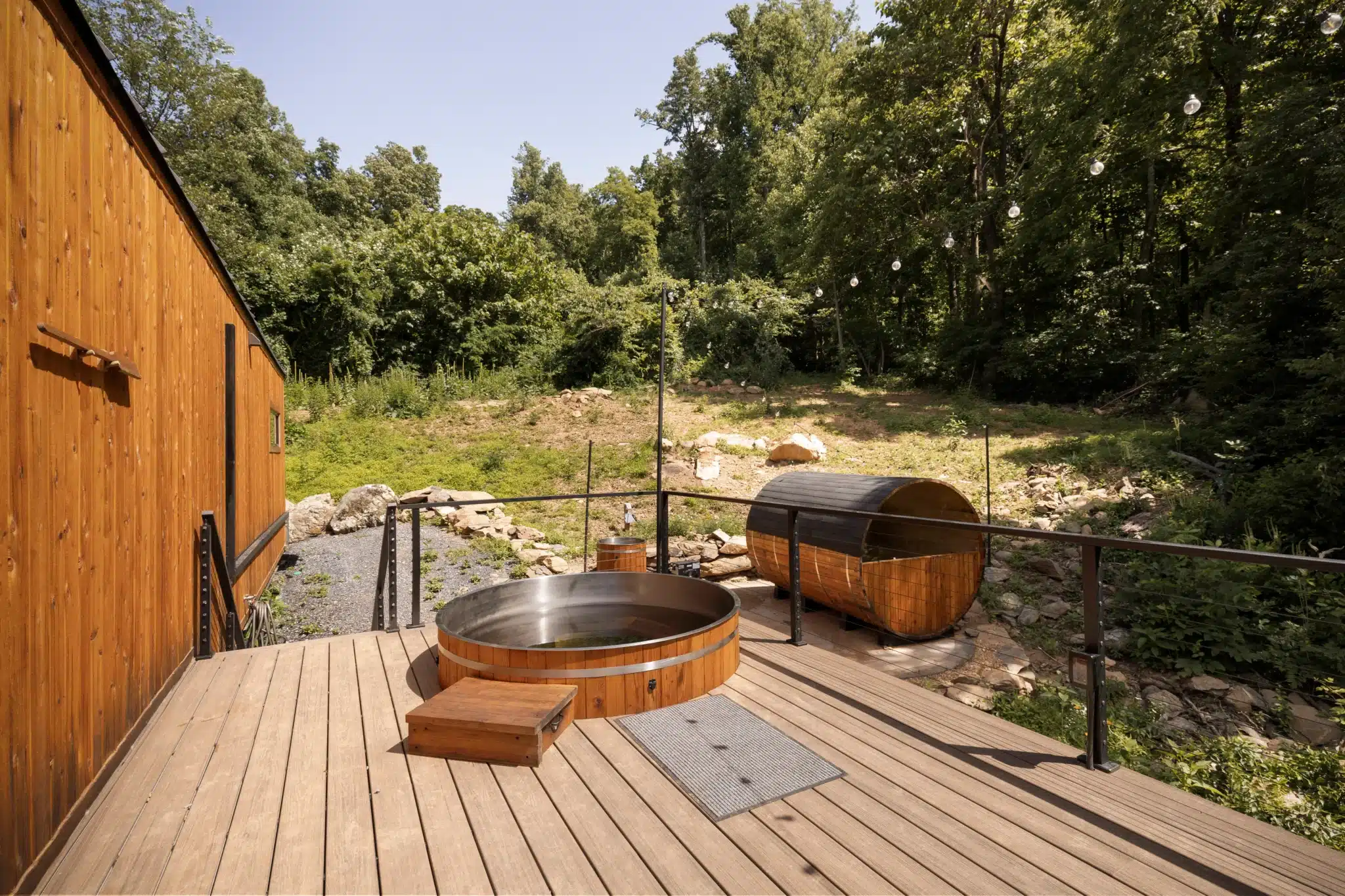
Notably, Royal Oak Retreat requires a 4×4 vehicle in winter months given the steep driveway, though October and early November arrivals rarely encounter snow, so this concern applies mainly to late-season bookings pushing toward December. Check-in runs 3 p.m. with an 11 a.m. checkout, and the cabin’s contrast-therapy island, a Scandinavian sauna paired with a cold plunge and a sunken stargazing hot tub, gives foliage-season guests a way to warm up after a cool October hike without leaving the property.
How Does the Contrast Therapy Island Fit Into a Fall Foliage Trip?
Contrast therapy is the practice of alternating between heat and cold exposure to trigger a rapid vascular response, improving circulation, reducing muscle soreness, and activating a parasympathetic nervous system reset that many people describe as genuinely calming. At Royal Oak Retreat, the dedicated contrast-therapy island pairs a Scandinavian-style sauna with a cold plunge, sitting adjacent to a large sunken hot tub positioned for stargazing.
After a cool-morning hike to Blackrock Summit or an afternoon at Franklin Cliffs Overlook, moving from the sauna’s dry heat into the cold plunge and finishing in the hot tub under a clear October sky is a specific, physical way to close out a foliage day, not a generic spa amenity tacked onto a cabin listing. The cabin’s build is fully non-toxic, with no plastics or chemicals used in construction, which matters if you’re the kind of traveler who researches air quality and off-gassing in rental properties before booking.
What Should You Pack and Prepare for an October Cabin Trip?
- Layer for a 30-40 degree temperature swing. October mornings in Shenandoah Farms can dip into the 40s while afternoons reach the 60s or low 70s; pack a base layer, a mid layer, and a shell.
- Bring closed-toe hiking boots, not sneakers. Rock scramble trails like Bearfence require ankle support and grip on wet stone, especially with morning dew common in fall.
- Charge devices before you lose signal. Cell coverage drops out across long stretches of Skyline Drive; the cabin’s Starlink internet is a genuine advantage for staying connected once you’re back off the mountain.
- Bring your dog’s paperwork if traveling with a pet. Royal Oak Retreat allows one dog under 50 lbs with a $100 pet fee, and the surrounding forest access makes it a genuinely usable pet-friendly stay, not just a checkbox policy.
- Book your park pass online in advance. A 7-day vehicle pass costs $30 through Recreation.gov; travelers planning to visit multiple national parks that year should consider the $80 annual America the Beautiful pass instead.
- Pick up a trail map before you go. The Shenandoah National Park Association sells park-specific hiking books and maps that are more detailed than most phone apps, useful given the patchy cell service.
What Common Mistakes Do First-Time Foliage Travelers Make?
The most common mistake is targeting a single fixed date months in advance without checking the park’s weekly fall color updates as the trip approaches, since peak timing genuinely shifts by a week or more year to year depending on weather. A second common error is trying to drive all 105 miles of Skyline Drive in one day during peak weekends, which guarantees hours of stop-and-go traffic instead of actual time at overlooks.
Travelers also frequently underestimate how much later the northern district near Front Royal peaks compared to the high country near Big Meadows, leading to disappointment when a trip booked for “peak Shenandoah” arrives a week or two ahead of local color. Finally, many first-timers skip the accessible, low-effort viewpoints like Big Meadows entirely, assuming foliage viewing requires strenuous hiking, when in fact some of the best wide-open valley views require no trail at all.
Frequently Asked Questions
What is the best week to see Shenandoah Valley fall foliage in 2026?
Based on historical patterns, the strongest single window is typically mid-October, roughly October 10 through October 25, though high elevations near Big Meadows and Skyland often peak slightly earlier and the valley floor near Front Royal peaks slightly later. Check the National Park Service’s weekly Fall Color Report as your trip approaches for a more precise read on that year’s timing.
Do I need a park pass to drive Skyline Drive during fall foliage season?
Yes, entering Shenandoah National Park at any point along Skyline Drive requires an entrance pass, currently $30 for a 7-day vehicle pass through Recreation.gov, or an $80 America the Beautiful annual pass if you plan to visit other national parks that year. Buying online in advance lets you skip the gate line, which can run long on peak fall weekends.
Is Shenandoah National Park crowded during peak fall foliage weekends?
Yes, weekends between roughly October 12 and November 2 see significant traffic on Skyline Drive and full parking lots at popular overlooks and trailheads, particularly midday. Visiting on a Tuesday through Thursday, or arriving before 9 a.m. on a weekend, meaningfully reduces crowd exposure.
Are there snakes to worry about while hiking for fall foliage views?
Yes, Shenandoah National Park has two venomous species, the timber rattlesnake and northern copperhead, both still occasionally active on sun-warmed rocks in October before winter hibernation. Sticking to marked trails, wearing closed-toe boots, and watching your footing on rock scrambles like Bearfence or Blackrock Summit keeps the risk low.
Can I see good fall color without hiking a strenuous trail?
Yes, Big Meadows offers a large, flat, open meadow with sweeping valley views and minimal walking, making it one of the best low-effort foliage viewpoints in the park. Both the Harry F. Byrd Visitor Center and Dickey Ridge Visitor Center also offer accessible, paved viewing areas near the parking lots.
Is Royal Oak Retreat close enough to Skyline Drive for a day trip?
Yes, Royal Oak Retreat sits in Shenandoah Farms near Front Royal, roughly 40 minutes from Shenandoah National Park’s Skyline Drive, making it a workable base for day hikes and overlook visits while still offering a quiet forest setting to return to in the evening.
How far in advance should I book a Shenandoah Valley cabin for fall foliage season?
Given that October and early November are the strongest booking months of the year for the region’s short-term rentals, aim to book at least 2 to 3 months ahead for private cabins, and 6 or more months ahead for in-park lodging like Skyland or Big Meadows Lodge, both of which sell out early for peak weekends.
Does elevation really change when the leaves turn color?
Yes, elevation is the single biggest factor in timing within Shenandoah National Park. High country around 3,500 feet, including Big Meadows and Skyland, typically changes first in early October, while mid-elevations follow around mid-October, and the valley floor and foothills near towns like Front Royal often hold color into early November.
Final Take: When to Go and Where to Stay for Shenandoah Valley Fall Foliage
Shenandoah Valley fall foliage rewards travelers who plan around elevation and district rather than a single calendar date. Target the high country for early October, the mid-elevations for the middle two weeks, and the valley floor near Front Royal for the back half of the month into early November. Weekday visits, an online park pass, and a route through Thornton Gap will save you more time than any single overlook recommendation.
As of 2026, with Shenandoah National Park still drawing well over 1.5 million annual visitors and Virginia’s overnight tourism numbers at record highs, foliage season is only getting busier, which makes the timing strategy in this guide more valuable each passing year, not less.
The version of a fall foliage trip that actually feels restorative, not just scenic, comes down to where you land at the end of the day. A cabin with real forest views and a way to unwind after a cool October hike changes the whole trip.
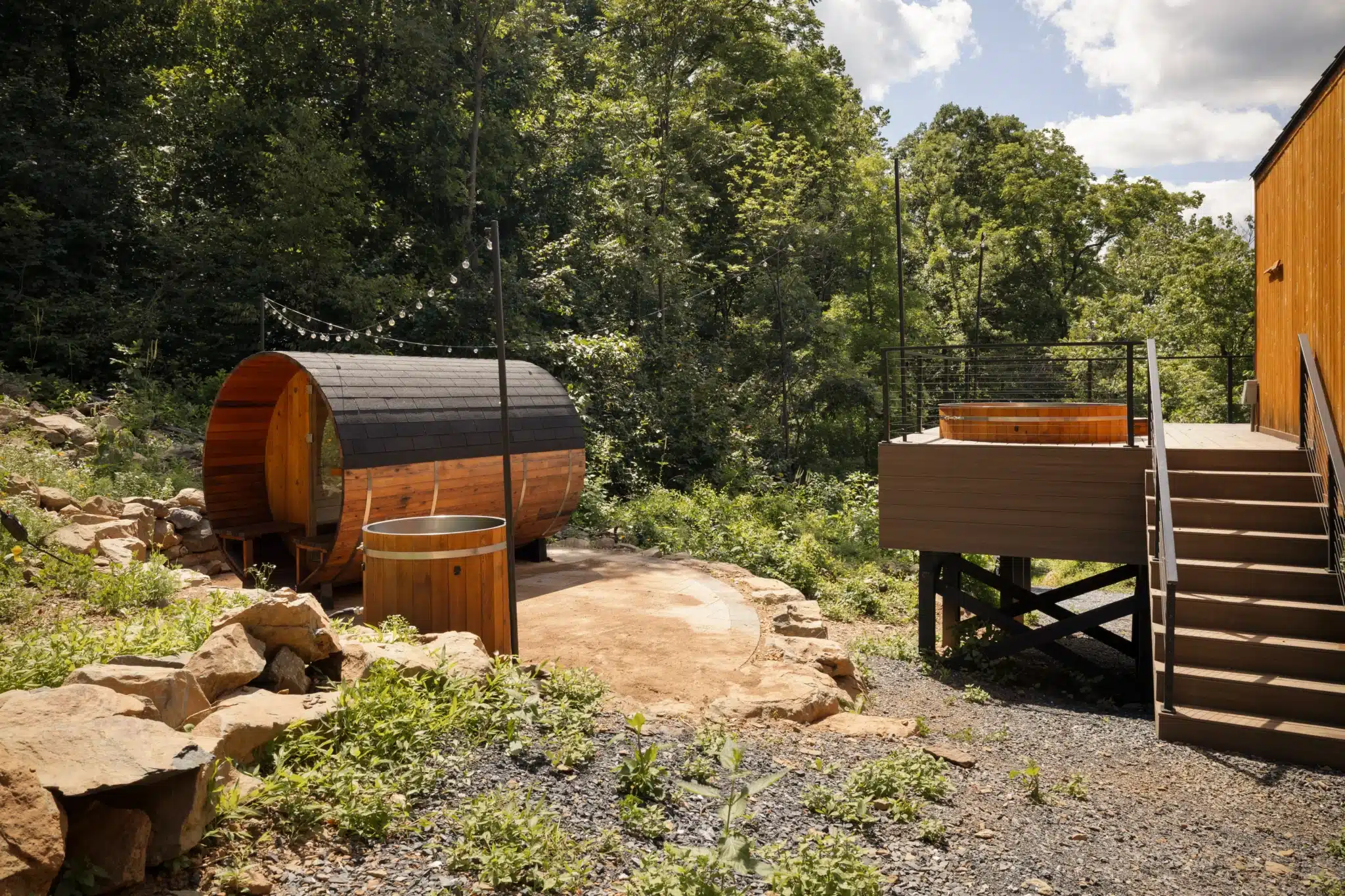
If you’re building a fall foliage trip around Front Royal and the northern district of Skyline Drive, Royal Oak Retreat puts you about 40 minutes from the park entrance with a contrast-therapy island waiting for you after the drive back down the mountain. Check available October dates here.
Content powered by inkSTR.co