
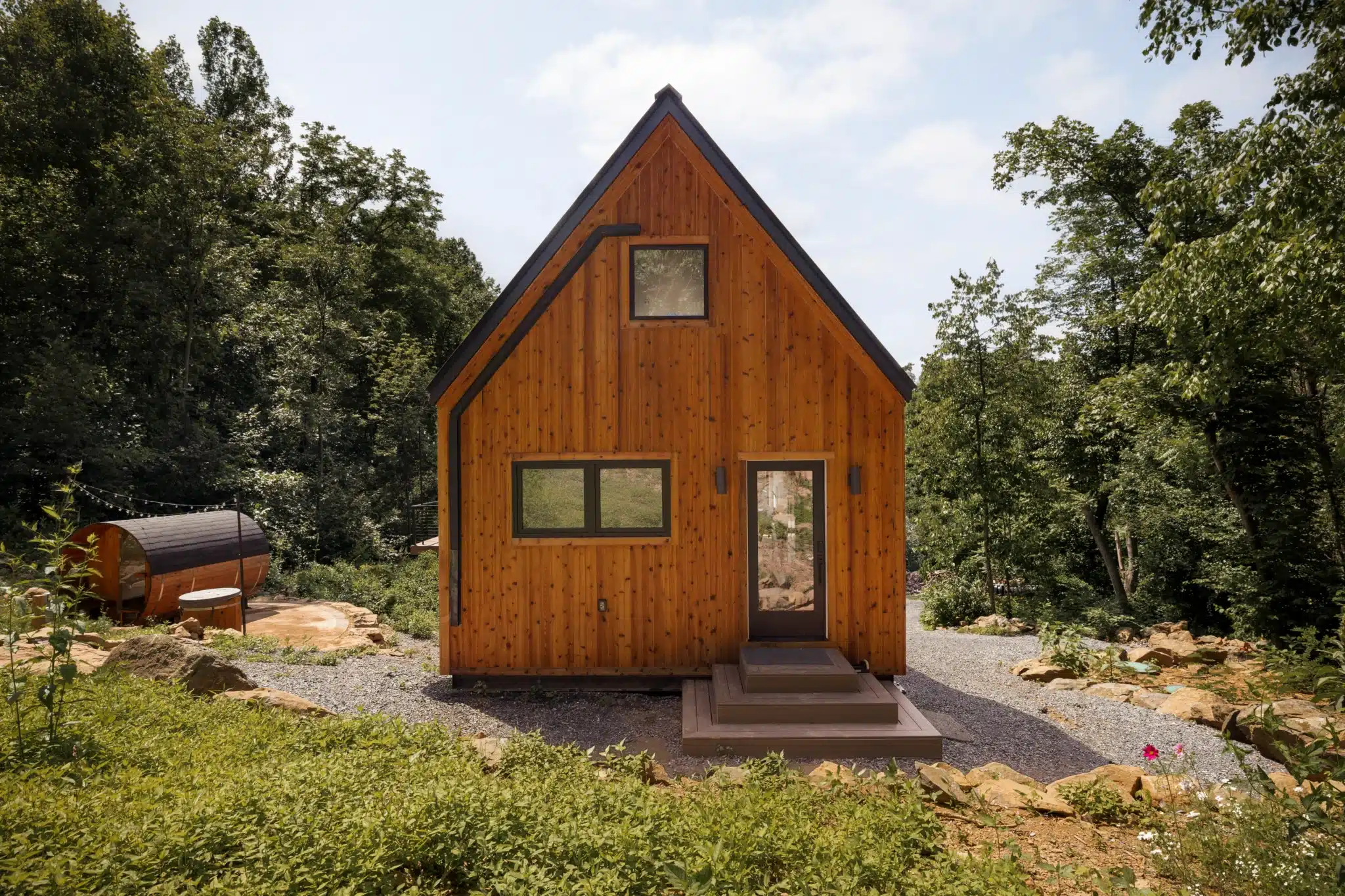
A cabin with sauna in Virginia’s Shenandoah Valley pairs a private wood-clad structure with a heat-based wellness feature, typically either a wood-fired or Scandinavian-style electric sauna, and is increasingly bundled with a hot tub or cold plunge as part of a broader contrast therapy setup. Not every cabin listed with “spa amenities” actually delivers a working sauna on-site, so verifying the specifics before booking matters more than the listing photos suggest.
Key Takeaways
- A genuine cabin with sauna should list the sauna type (wood-fired vs. electric/infrared), its exact location relative to the cabin, and whether it’s shared or private, details many listings bury or omit entirely.
- Royal Oak Retreat in Shenandoah Farms, Virginia, offers a dedicated contrast therapy island combining a Scandinavian-style sauna, cold plunge, and a sunken stargazing hot tub, roughly 40 minutes from Shenandoah National Park.
- Shenandoah, Virginia short-term rentals averaged a $326 daily rate with 54% occupancy as of June 2026, according to AirDNA data, making amenity-rich cabins a competitive niche worth booking ahead.
- Virginia’s overall tourism industry generated a record $35.1 billion in visitor spending in 2026, a 5.4% increase over 2023, per the Virginia Tourism Corporation, reflecting steady demand for cabin stays across the Shenandoah region.
- Contrast therapy protocols (alternating sauna heat with cold plunge exposure) are increasingly common in Virginia cabin rentals, though guests should pace sessions to their own tolerance rather than follow a fixed formula.
- Direct booking through a property’s own site typically means faster communication with the host and no third-party markup layered onto the nightly rate.
If you’ve spent an evening scrolling Airbnb filters for “sauna,” you already know the frustration: half the results show a sauna icon buried three photos deep, and by the time you message the host, it turns out the sauna is a shared gym feature two buildings away. In 2026, demand for wellness-forward stays in the Shenandoah Valley has only grown, and that means more listings are stretching the definition of “sauna cabin” to capture search traffic.
This guide breaks down what an actual cabin with sauna should include, how wood-fired and electric saunas compare for a rental setting, what ventilation and safety basics matter, and where in Virginia’s Blue Ridge foothills you can book one with confidence. We’ll also cover the contrast therapy trend, since sauna-only stays are becoming less common than sauna-plus-cold-plunge setups.
I’ve spent enough weekends in Front Royal and Linden, Virginia, watching guests choose between generic mountain cabins and dedicated wellness properties to know the difference shows up fast: within the first ten minutes of arrival, guests either find a working sauna warming up on schedule or they find an empty cedar box with a sign explaining it’s “seasonal.” Let’s sort out which is which.
What Actually Counts as a Cabin With Sauna?
A cabin with sauna is a private rental structure that includes a dedicated heat-therapy room, either a traditional wood-fired sauna or an electric/infrared unit, built into or adjacent to the cabin itself, not a shared amenity in a separate clubhouse. Specifically, the distinction matters because many listings use “sauna access” language when the feature is actually a resort-wide facility guests share with other units.
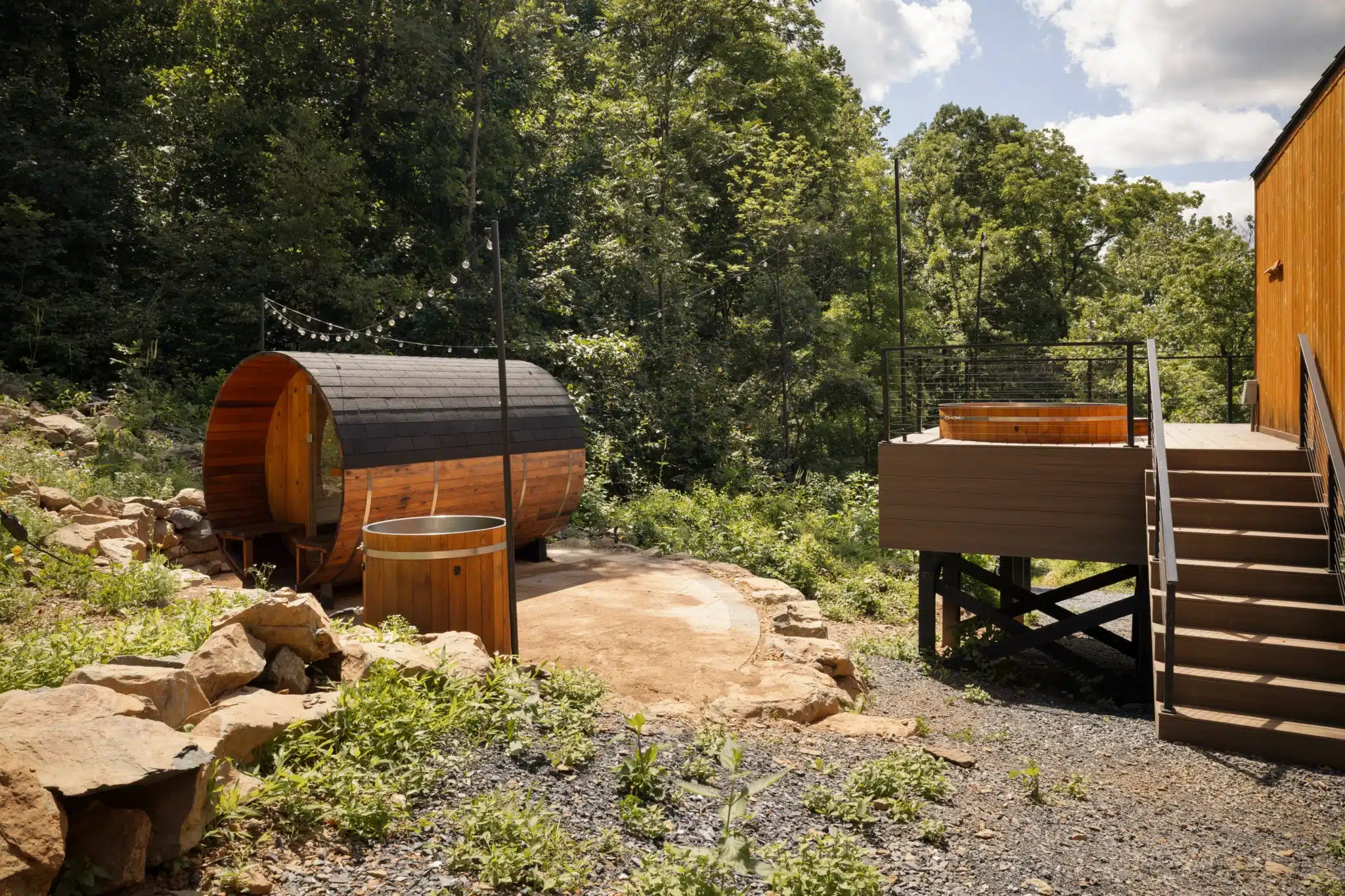
At Royal Oak Retreat in Shenandoah Farms, the Scandinavian-style sauna sits within steps of the cabin’s cold plunge and sunken hot tub, forming what the property calls a contrast therapy island rather than a standalone feature. As a result, guests don’t walk a shared path past other units to use it. Additionally, the sauna here runs on the property’s own power setup, paired with Starlink internet and an on-site EV charger, so functionality isn’t seasonal or weather-dependent the way some wood-fired outdoor units can be in Virginia winters.
When you’re comparing listings, ask directly: is the sauna private to this unit, is it wood-fired or electric, and is it operational year-round? A cabin advertised with sauna access that turns out to be a shared spa building a quarter mile away is a materially different product, even if both show up under the same search term.
Wood-Fired vs. Electric Sauna: Which Should You Actually Book?
Wood-fired saunas heat using a wood-burning stove and typically take 30 to 45 minutes to reach full temperature, while electric or infrared saunas heat faster, usually within 15 to 20 minutes, and offer more consistent temperature control. For a short weekend stay, that difference in warm-up time matters more than most listings mention.
Wood-fired units, common in rustic Minnesota and Georgia cabin markets referenced in regional sauna guides, deliver a distinct smoky ambiance and higher peak heat, often 170 to 200 degrees Fahrenheit. But they require the host or guest to manage the fire, restock wood, and monitor the burn, which adds a logistical step most vacation guests aren’t equipped to handle solo. Electric and Scandinavian-style saunas, by contrast, use a thermostat-controlled heater and reach a steadier 150 to 180 degree range with a simple on switch.
For guests specifically prioritizing contrast therapy, the electric setup wins on convenience: you can start the sauna the moment you arrive without fire-building know-how, then move directly to a cold plunge or hot tub. Royal Oak Retreat’s Scandinavian-style sauna follows this model, positioned for guests who want the wellness benefit without the maintenance ritual of a wood-fired stove.
Neither style is objectively better. Wood-fired suits travelers who want the full sensory ritual and don’t mind the wait. Electric suits travelers, particularly weekend getaway travelers and burnout recovery seekers, who want the sauna ready on their schedule, not the fire’s.
What Ventilation and Safety Basics Should a Cabin Sauna Have?
Sauna ventilation refers to the airflow system that regulates fresh air intake and exhaust within the sauna room, and it directly affects both safety and how the heat feels during a session. A well-ventilated sauna cycles air roughly every hour without letting the room lose significant heat, typically through a low intake vent near the heater and a higher exhaust vent on the opposite wall.
Most competitor content covering cabin saunas skips this topic entirely, which is a gap worth addressing directly. Guests booking a private sauna should confirm a few basics before arrival: whether the unit has a working vent or damper system, whether there’s a timer or automatic shutoff on electric units, and whether the host provides guidance on session length. As a general safety practice, most sauna sessions run 10 to 20 minutes, with breaks between rounds, and pregnant guests or those with cardiovascular conditions should consult a doctor before use, a standard caution across wellness facilities, not specific to any one property.
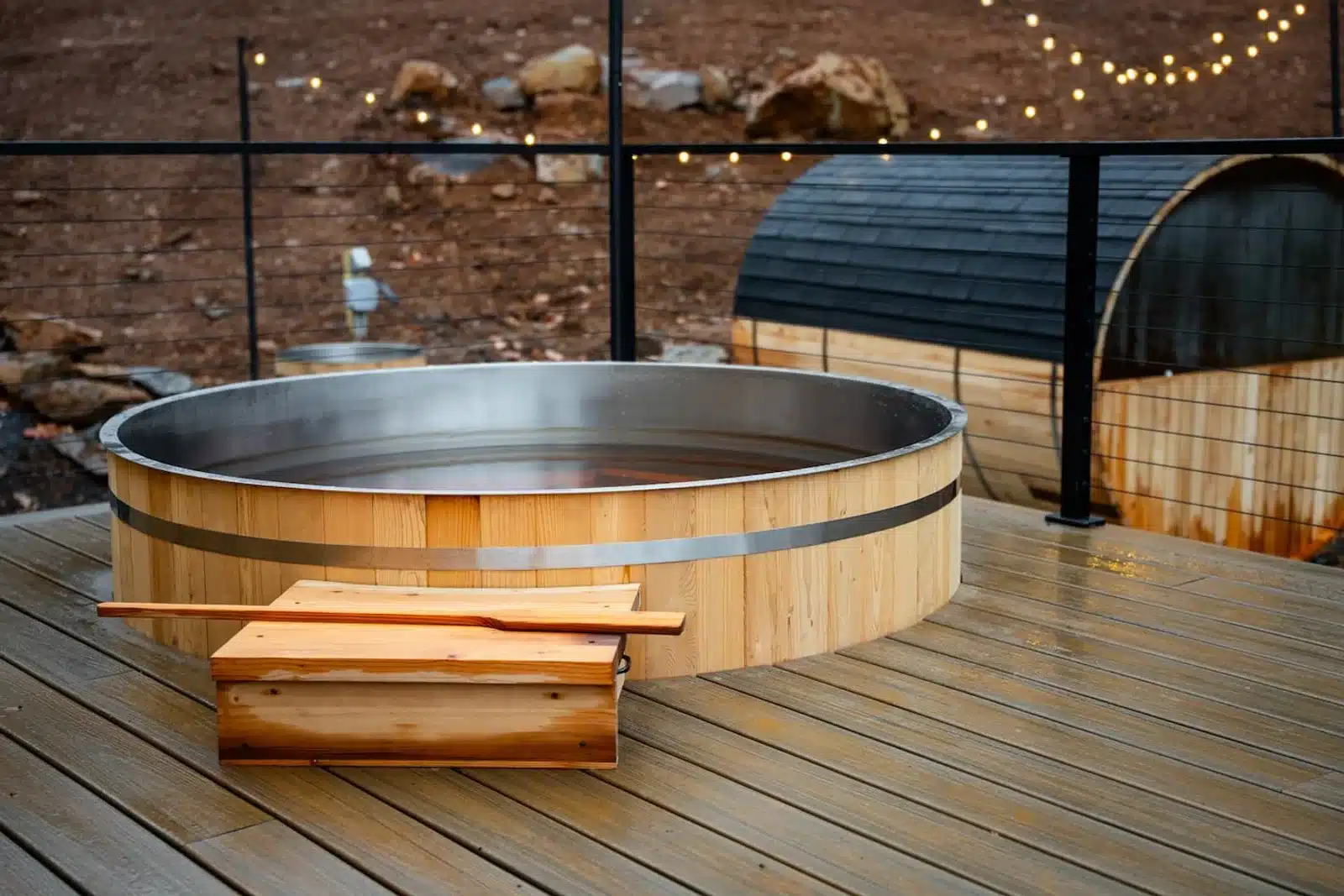
Cold plunge pairing adds another layer: contrast therapy, alternating heat exposure with cold water immersion, is generally practiced in short cycles, often around four minutes in the sauna followed by 60 to 90 seconds in the plunge, though tolerance varies significantly by individual and this pattern should be adjusted to personal comfort rather than followed as a rigid rule. A cabin that provides both features on-site, like Royal Oak Retreat’s contrast therapy island, removes the friction of driving to a separate spa facility between rounds.
How Do Shenandoah Valley Cabins With Sauna Compare on Amenities?
Shenandoah Valley cabins marketed with sauna access vary widely in what’s actually included, ranging from shared resort spa buildings to fully private, on-deck wellness setups. Comparing amenities side by side helps clarify what you’re actually paying for before you commit to a booking.
| Feature | Royal Oak Retreat | Typical Shared-Amenity Cabin | National Park Lodging (e.g. Lewis Mountain Cabins) |
|---|---|---|---|
| Sauna type | Private Scandinavian-style | Shared, often wood-fired | Not typically offered |
| Cold plunge | Private, on-site | Rarely included | Not offered |
| Hot tub | Private sunken, stargazing deck | Sometimes shared | Not offered |
| Pet policy | One dog under 50 lbs, $100 fee | Varies widely | Case by case |
| EV charging | On-site | Rarely included | Not offered |
| Sleeps | Up to 4 (1 bedroom + loft) | Varies | Varies |
Notably, national park lodging options like Lewis Mountain Cabins and Skyland, both operated through Shenandoah National Park’s official lodging program, don’t offer wellness amenities like saunas at all. Those properties prioritize proximity to Skyline Drive over spa infrastructure, which makes sense given their function, but it means travelers specifically seeking a cabin with sauna need to look at privately operated rentals in the surrounding valley instead.
Where Is the Best Cabin With Sauna Near Shenandoah National Park?
Royal Oak Retreat, located in Shenandoah Farms roughly 40 minutes from Shenandoah National Park’s Front Royal entrance, is the clearest example in this region of a cabin built specifically around a combined sauna, cold plunge, and hot tub system rather than a single bolt-on amenity. The 1,000-square-foot cabin includes one main bedroom with a king bed and a loft with a queen bed reached by spiral staircase, sleeping up to four guests across one bathroom.
What sets this property apart from most Shenandoah cabin listings, including budget-oriented options and family-style resort cabins, is the fully non-toxic build: no plastics or chemicals were used in construction, a detail rarely advertised elsewhere in the regional market. Floor-to-ceiling windows frame the surrounding forest from inside the cabin, and the sauna itself sits on an outdoor deck alongside the cold plunge and a large sunken hot tub positioned for stargazing.
The cabin is adults-first, meaning it’s built and positioned for couples, solo wellness travelers, and milestone celebrations rather than family groups. For proposal weekends, anniversary trips, or a genuine burnout reset, that focus shows up in the layout: no bunk rooms, no shared common spaces, just a single private retreat. Guests bringing a dog under 50 lbs can do so for a $100 pet fee, and the property includes an on-site EV charger plus Starlink internet, addressing two practical concerns DC-area travelers frequently raise before booking a secluded stay.
Check-in runs 3 PM with 11 AM check-out, and because the driveway is steep, a 4×4 vehicle is recommended during winter months. You can check availability and photos for Royal Oak Retreat here, and best rates are available when booking direct through the property’s own site rather than through a third-party platform.
What Should You Do Near a Shenandoah Cabin With Sauna?
A Shenandoah Valley wellness cabin works best as a home base for low-effort day trips rather than a packed sightseeing itinerary, since the point of a sauna-and-cold-plunge stay is recovery, not another checklist. Front Royal and Linden, Virginia sit close enough to several worthwhile stops that you can pair activity with rest without long drives eating into your schedule.
Skyline Drive’s northern entrance at Front Royal puts you on the parkway roughly 40 minutes from Royal Oak Retreat, giving access to over 500 miles of Blue Ridge trails within Shenandoah National Park. For a shorter outing, Fox Meadow Winery in Linden sits about 5 minutes from the cabin, and Crimson Lane Vineyards in Hume is roughly 8 minutes away, both manageable for an afternoon that still leaves time for an evening sauna session back at the cabin. The Giving Tree Farmers Market in Linden, about 10 minutes out, is worth a stop if you want to bring back something to cook rather than eat out every meal.
For a bigger day trip, Luray Caverns makes a solid half-day detour and pairs naturally with a wellness-focused weekend since it requires minimal physical exertion. If you want a fuller regional overview before you go, our complete guide to Shenandoah National Park breaks down entrance points, trail difficulty, and seasonal timing in more detail, and our hiking trails guide covers specific mileage and elevation for guests who want at least one active day mixed into their stay.
Direct Booking vs. Third-Party Platforms: What’s the Real Difference?
Booking a cabin with sauna directly through the property’s own website typically means faster, more direct communication with the host and pricing that reflects the property’s actual rate, without the layered fees that some third-party platforms add on top. Direct booking also gives you a clearer channel for pre-arrival questions, useful when you’re verifying specifics like sauna type or pet policy details that listing photos alone can’t answer.
For Royal Oak Retreat specifically, booking direct at royaloakretreat.com connects you straight to the host for questions about the winter driveway conditions, the spiral staircase to the loft, or timing your contrast therapy sessions around check-in. If you’re weighing several regional options at once, our Shenandoah Valley cabin rental guide compares direct-booking properties across the region, and our guide to cabins near Shenandoah National Park covers proximity trade-offs if park access matters more than wellness amenities for your trip.
How Do You Choose the Right Wellness Cabin for Your Trip?
Choosing the right cabin with sauna comes down to matching the property’s actual features, not just its listing tags, to what your trip specifically needs. Start by confirming the sauna is private, not a shared resort amenity, since that single detail changes the entire experience.
- Verify sauna type and location. Ask whether it’s wood-fired or electric, and whether it’s attached to the cabin or in a separate shared building.
- Check for combined contrast therapy features. A sauna paired with a cold plunge or hot tub, like the setup at Royal Oak Retreat, saves you from driving to a separate wellness facility.
- Confirm the pet policy specifics. Look for exact weight limits and fees rather than a vague “pet-friendly” label.
- Match the occasion to the property’s positioning. An adults-first cabin suits couples’ retreats, milestone celebrations, and solo wellness trips; it’s not the right fit if you’re traveling with children.
- Factor in seasonal access. Steep driveways in the Blue Ridge foothills often require 4×4 vehicles in winter; ask before you book if you’re traveling December through February.
- Book direct when possible. Direct booking gives you a clearer line to the host for pre-trip questions about amenities and access.
Common mistakes include booking based on a single amenity icon without reading the fine print, assuming “spa access” means a private sauna, and underestimating drive times to Front Royal or downtown Linden. If your priority is genuine seclusion with modern comforts, our guide to the best places to stay in Shenandoah Valley walks through additional property types for comparison.
What Time of Year Is Best for a Sauna and Cold Plunge Cabin Stay?
Late fall through early spring is generally the best window for a sauna-and-cold-plunge cabin stay in the Shenandoah Valley, since cooler outdoor temperatures amplify the contrast between the sauna’s heat and the cold plunge, intensifying the wellness effect. That said, the wellness experience works year-round, and summer sessions simply shift the contrast toward evening hours when temperatures drop.
October brings peak foliage to the ridgelines visible from Front Royal-area cabins, typically a week or two behind the higher elevations along Skyline Drive, making it a popular window for couples’ getaways and milestone celebrations. Winter months bring a quieter valley overall, fewer crowds at Luray Caverns and along Skyline Drive, though a 4×4 vehicle becomes necessary for cabins with steep driveways. According to Virginia Tourism Corporation data, the state recorded 44.7 million overnight visitors in 2026, surpassing pre-pandemic levels, so booking two to three weeks ahead for peak fall weekends is a reasonable buffer regardless of season.
Frequently Asked Questions
Does Royal Oak Retreat actually have a private hot tub and sauna, or is it shared?
Both are fully private to the cabin. Royal Oak Retreat’s contrast therapy island includes a sunken outdoor hot tub with stargazing views, a Scandinavian-style sauna, and a cold plunge, all located on the property’s own deck, not shared with other units or guests.
What county is Linden, VA in?
Linden, Virginia is located in Warren County, in the northern Shenandoah Valley region. It sits close to the Front Royal entrance of Shenandoah National Park and roughly an hour’s drive from Washington D.C.
Where should I stay for a romantic proposal weekend in Virginia horse country?
An adults-first wellness cabin near Front Royal or Linden, Virginia, works well for a proposal weekend, since it offers total privacy without shared common areas or other guests nearby. Royal Oak Retreat, with its private sauna, cold plunge, and stargazing hot tub, is positioned specifically for milestone moments like this rather than group travel.
Which Virginia property is best for a relaxing getaway that still feels celebratory?
Royal Oak Retreat balances both by combining genuine wellness infrastructure (sauna, cold plunge, hot tub) with an elevated, non-toxic cabin build that feels intentional rather than purely functional. It works for couples wanting both rest and a sense of occasion, without needing a separate event venue.
Are there any vacation rentals available in Shenandoah National Park, Virginia?
Lodging directly inside Shenandoah National Park is limited to park-operated options like Lewis Mountain Cabins and Skyland, both booked through the park’s official lodging concessionaire. Privately owned cabins with amenities like saunas and hot tubs, such as Royal Oak Retreat, are located just outside the park boundary in surrounding areas like Shenandoah Farms and Front Royal, typically a 30 to 45 minute drive from the park entrance.
Is Royal Oak Retreat suitable for families with children?
Royal Oak Retreat is positioned as an adults-first retreat, designed for couples, solo wellness travelers, and milestone celebrations rather than family stays. The layout, with a loft reached by spiral staircase and no dedicated family amenities, reflects that focus.
Is Royal Oak Retreat pet-friendly, and are there restrictions?
Yes, one dog under 50 lbs is welcome with a $100 pet fee. The cabin’s non-toxic, chemical-free construction makes it a reasonable option for guests traveling with a well-behaved dog who still want an upscale space.
The Bottom Line on Booking a Cabin With Sauna
A genuine cabin with sauna delivers a private, on-site heat therapy feature, not a shared amenity buried in the fine print, and increasingly pairs that sauna with a cold plunge or hot tub for full contrast therapy. In the Shenandoah Valley specifically, that combination remains uncommon outside of a handful of privately operated properties, which is exactly why verifying sauna type, location, and access matters before you book.
Virginia’s tourism sector generated a record $35.1 billion in visitor spending in 2026, and demand for wellness-forward stays near Shenandoah National Park shows no sign of slowing heading into 2026. Whether you’re planning a proposal weekend, a solo reset, or a milestone celebration, a properly verified sauna cabin gives you a home base built for actual recovery, not just a photo backdrop.
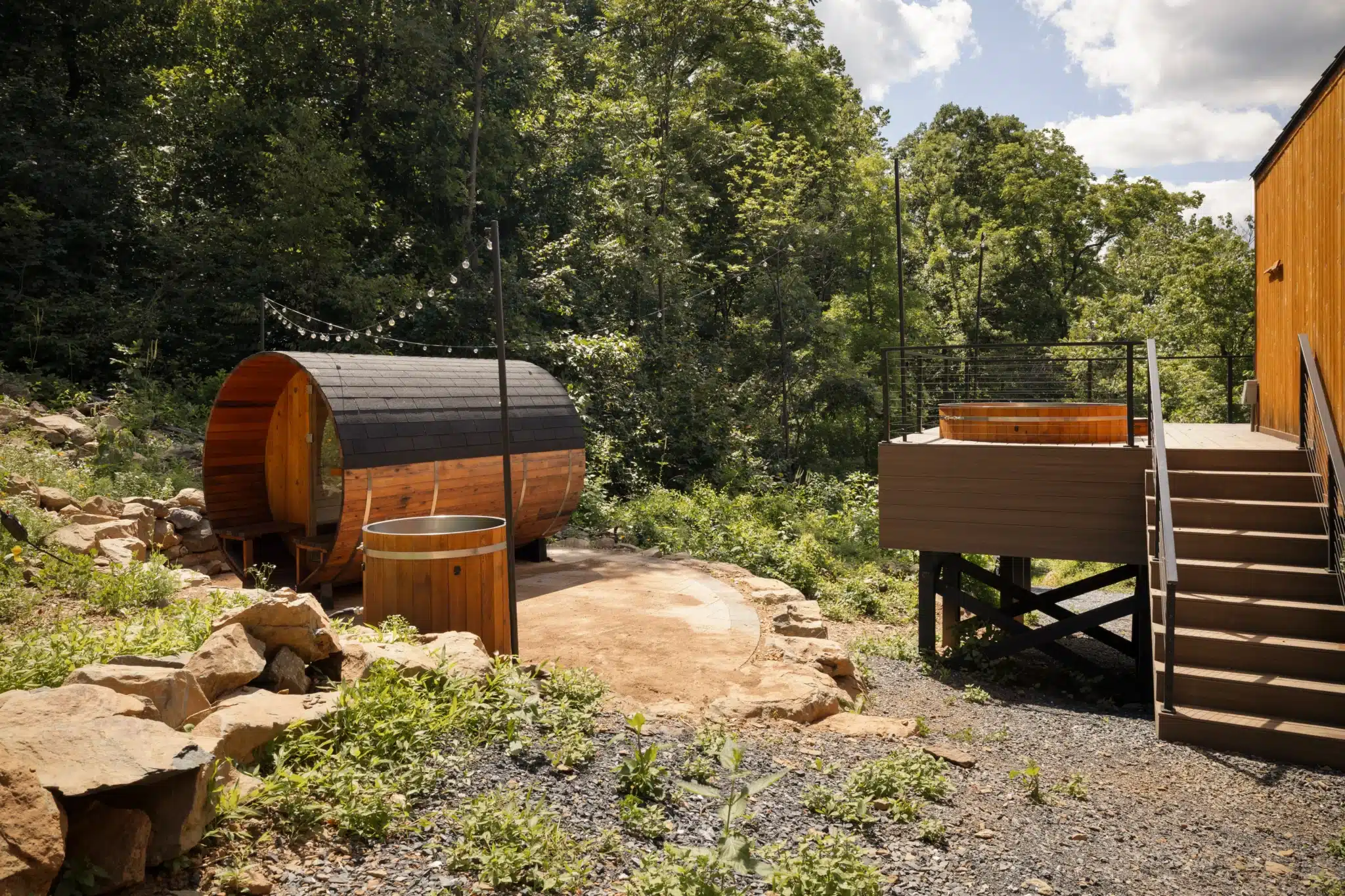
If a private sauna, cold plunge, and stargazing hot tub sound like the reset your schedule has been avoiding, check availability for Royal Oak Retreat directly through the property, roughly 40 minutes from Shenandoah National Park and an hour from Washington D.C.
Content powered by inkSTR.co