
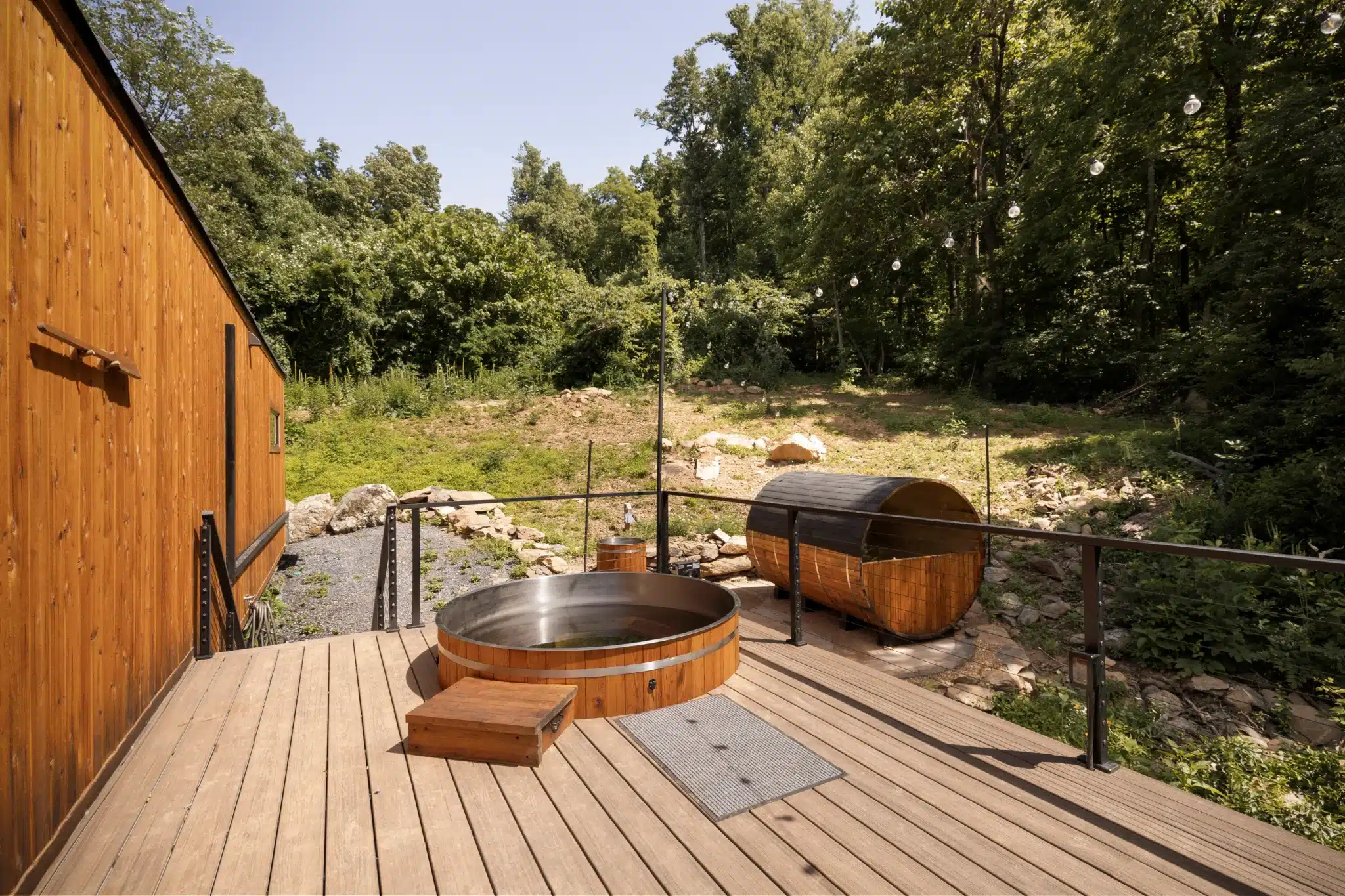
Cabins that allow dogs in the Shenandoah Valley range from national park lodging that charges nightly pet fees to private rentals like Royal Oak Retreat in Shenandoah Farms, which welcomes one dog under 50 lbs for a flat $100 pet fee. The best options make pet policy specific from the start: exact weight limits, per-stay or per-night fees, and whether your dog can access the surrounding trail system. That last point matters most here, since dogs are allowed on 480 of the 500 miles of trails in Shenandoah National Park, according to Delaware North Parks and Resorts at Shenandoah.
Key Takeaways
-
Shenandoah National Park allows dogs on 480 of its 500 miles of trails, per Delaware North Parks and Resorts data, making it one of the more dog-accessible national parks in the country.
-
In-park lodging at Skyland and Lewis Mountain Cabins charges $30 per pet per night and caps guests at two well-behaved pets per room.
-
Royal Oak Retreat, a private wellness cabin in Shenandoah Farms, VA, allows one dog under 50 lbs for a $100 flat fee, roughly 40 minutes from Shenandoah National Park.
-
Shenandoah, Virginia had 801 active short-term rental listings averaging $50,200 in annual earnings as of August 2026, according to AirDNA, reflecting steady demand for the area’s vacation rentals.
-
Pet fees at comparable Smoky Mountain cabins typically run $75 to $150 per stay, so Shenandoah’s fee structures are broadly in line with regional norms.
-
Always confirm pet policy details directly with the host before booking. Weight limits, dog counts, and unattended-pet rules vary property by property, even within the same region.
If you’re the kind of traveler who won’t leave your dog behind for a weekend getaway, you already know the frustration: most cabin listings bury the pet policy in fine print, or list “pet-friendly” without saying what that means. Does it mean a $500 nonrefundable deposit and a 25-pound cutoff? Does it mean your dog can join you on the trail, or just sit in the cabin while you hike alone?
This guide breaks down what “pet-friendly” means across Shenandoah Valley lodging in 2026, from national park cabins to private rentals, with fee numbers, weight limits, and dog-access rules for the trails themselves. We’ll also cover which nearby trails allow dogs, what a dog-ready cabin looks like versus one that simply tolerates pets, and a pre-booking checklist so you’re not calling the front desk with questions two days before check-in.
Virginia drew 46.6 million overnight visitors in 2026, generating $36.2 billion in visitor spending statewide, and the Shenandoah Valley has been one of the strongest-performing regional lodging markets through 2026, according to Virginia Tourism Corporation reporting. More of those travelers are bringing dogs than ever, and the cabins that answer pet questions clearly are the ones winning direct bookings.
What Makes a Cabin Truly Dog Friendly?
A dog-friendly cabin is one where the property was set up with dogs in mind, not permitted to tolerate them as an afterthought. That means clear published weight limits, a stated fee instead of a mystery charge added at check-in, and physical features like washable flooring, a fenced area, or direct trail access.
Dog-ready cabins typically disclose four things upfront: maximum dog weight, maximum number of dogs, the exact fee structure, and rules for leaving a dog unattended. For example, Auntie Belham’s in the Smoky Mountains caps combined weight at 60 lbs for up to two small dogs and charges $75 per pet, while requiring dogs to be leashed outdoors and kenneled if left alone. Compare that to a listing that just says “dog friendly” with nothing else specified.
As of 2026, the clearest sign of a dog-ready property is transparency before you book, not a phone call to clarify terms after you’ve already paid a deposit.
Are There Any Cabins Available for Vacation in Virginia That Allow Dogs?
Yes, Virginia has a range of dog-friendly cabin options, from national park lodging inside Shenandoah National Park to private rentals in surrounding towns like Front Royal and Luray. Both in-park cabins and independently owned properties in Shenandoah Valley accept dogs, though policies on weight, fees, and unattended pets differ between them.
Inside the park boundary, Skyland and Lewis Mountain Cabins, both operated by Delaware North, allow a maximum of two well-behaved pets per room for $30 per pet per night. That’s useful if you want to wake up on Skyline Drive itself, but the cabins are motel-style units, not private houses, and there’s no yard or off-leash space.
Outside the park, private rentals like Royal Oak Retreat in Shenandoah Farms offer more privacy and a flat fee structure instead of a nightly charge. Royal Oak Retreat allows one dog under 50 lbs for $100 total, which works out cheaper than the in-park nightly rate for stays longer than three nights. Shenandoah, Virginia counted 801 active short-term rental listings as of August 2026, per AirDNA, so there’s real inventory to compare, though not all of it is dog-friendly by default.
Where Can You Find Pet-Friendly Cabins Near Luray, Virginia?
Luray sits roughly 20 to 30 minutes from Front Royal-area cabins and serves as the gateway to Luray Caverns, the town’s best-known attraction and a common day trip for cabin guests staying nearby. Luray itself has limited dog-friendly lodging directly downtown, which is why most travelers base themselves in a private cabin in Shenandoah Farms or Front Royal and drive in for the day.
Luray Caverns does not allow pets inside the cave tours, so if you’re bringing a dog, plan on someone staying back at the cabin or splitting the day. This is a detail most cabin guides skip entirely: the town’s marquee attraction is not dog-accessible, even though the surrounding lodging often is.
For dog-friendly time near Luray, skip the caverns and head toward the trailheads instead. Dark Hollow Falls, one of the more popular short waterfall hikes in Shenandoah National Park, allows leashed dogs and sits within a reasonable drive of most Front Royal-area rentals. Expect company on this trail during peak fall weekends in October, historically the park’s busiest month.
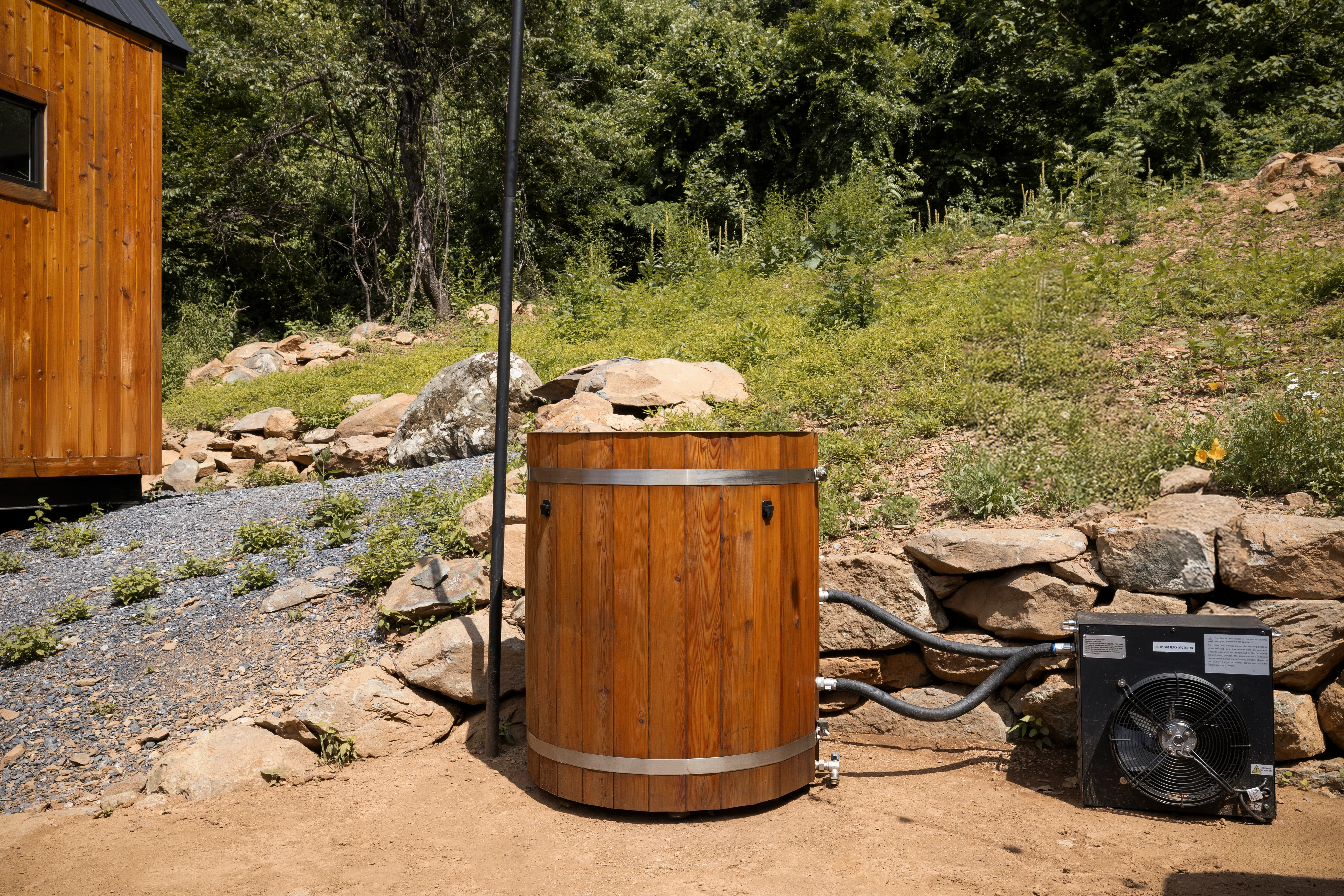
Rustic backyard setting featuring a wooden hot tub with metal bands situated on a gravel pad, accompanied by a heating unit and pump system, with the property’s wooden cabin visible in the background surrounded by natural vegetation and rocky landscape. · Royal Oak Retreat
Can You Book a Dog-Friendly Cabin Directly Near Shenandoah National Park?
Booking direct means reserving through the property’s own website instead of a third-party platform, and it’s available for most private cabins in the Shenandoah Valley, including Royal Oak Retreat. Direct booking typically means clearer communication about pet policy before you pay, since you’re talking to the actual host rather than routing questions through a platform message system.
According to hostAI research from 2026, roughly 86% of guests who book directly with a property tend to return through that same channel on future trips, while guests who first discover a property through a platform like Airbnb tend to rebook there instead. That pattern matters for pet owners specifically: once you find a host who clearly answers dog questions and delivers on the policy, direct booking preserves that relationship for your next trip.
Royal Oak Retreat’s booking page states its pet policy plainly: one dog under 50 lbs, $100 fee, no ambiguity about crating or breed restrictions beyond the weight cap. You can check current dates and book directly through the official listing rather than piecing together policy details from a third-party review thread.
What Pet Fees, Deposits, and Weight Limits Should You Expect?
Pet fees at Shenandoah-area cabins typically fall into two structures: a flat one-time charge or a per-night fee, and the total cost depends heavily on length of stay. As of 2026, flat fees tend to favor longer stays while nightly fees add up fast on week-long trips, so it’s worth doing the math before you compare two properties side by side.
Royal Oak Retreat charges a flat $100 for one dog under 50 lbs, regardless of trip length. In-park lodging at Skyland and Lewis Mountain Cabins charges $30 per pet per night, meaning a four-night stay runs $120, already more than Royal Oak Retreat’s flat rate for a comparable trip. Weight limits also vary widely across the region: Summit Cabin Rentals in the Smokies caps dogs at 50 lbs each with a $50 nonrefundable fee per dog, while Auntie Belham’s combines a 60-lb total limit across up to two dogs for $75 per pet.
What Rules Apply to Crating, Leashes, and Unattended Dogs?
Most dog-friendly cabins require leashes outdoors and some form of containment when the dog is left alone inside, though the specifics vary by property. This is one of the most commonly overlooked details in cabin pet policies, and it can affect whether you’re comfortable leaving your dog behind for a dinner out or a solo hike.
At Royal Oak Retreat, the cabin’s compact 1,000-square-foot layout with a king bedroom and a loft reached by spiral staircase means most guests keep dogs close rather than crated separately, since the space doesn’t lend itself to a dedicated kennel setup. If your dog isn’t comfortable being left alone in an unfamiliar cabin, plan activities that include them, like fire pit evenings or a short walk along the property’s wooded surroundings, rather than assuming a crate room will be available.
What Dog-Friendly Amenities Actually Matter (Fenced Yards, Ramps, Gear)?
Dog-friendly amenities are physical features built specifically for pets, such as fenced yards, dog doors, ramps, and supplied bowls or toys, and they separate cabins designed for dogs from cabins that merely permit them. As of 2026, this distinction is the biggest gap in most cabin comparison content: two properties can both claim “pet-friendly” while one has a 15-by-30-foot fenced run and the other has nothing but a weight limit on file.
Private forest cabins like Royal Oak Retreat take a different but equally deliberate approach: rather than a fenced yard, the draw is unstructured woodland access right off the deck and proximity to legitimate trail systems rather than a contained run. A fenced yard suits a dog that needs off-leash freedom without supervision; a forest-adjacent cabin suits an owner who plans to hike with their dog rather than let it roam solo. Decide which matches your dog’s temperament before booking.
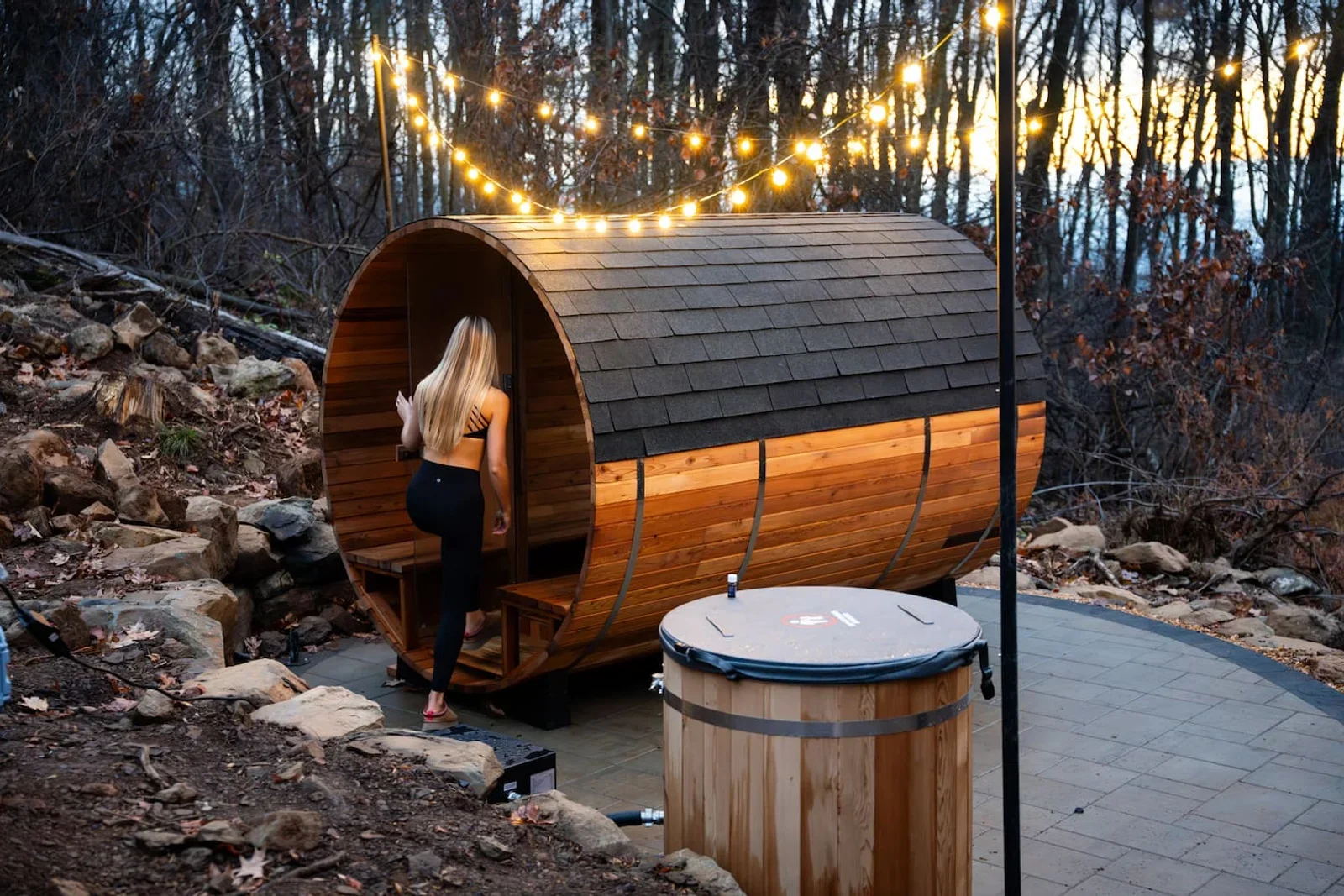
A luxurious barrel sauna nestled in a wooded forest setting, featuring warm wooden construction with a shingle roof, illuminated by enchanting string lights overhead. The sauna is accompanied by a wooden ice bath tub on a tiled patio, creating an authentic spa retreat experience surrounded by natural forest landscape. · Royal Oak Retreat
Where Is the Best Place to Vacation With a Dog Near Shenandoah?
The best place to vacation with a dog near Shenandoah pairs lodging that accommodates pets with legitimate access to dog-friendly trails, and Shenandoah National Park qualifies on both counts. The park’s 480 miles of dog-accessible trails out of 500 total, per Delaware North Parks and Resorts data, make it more permissive than many national parks, where dogs are often restricted to roads and campgrounds only.
That said, in-park lodging accepts dogs but with a nightly fee and motel-style rooms, while private cabins outside the boundary, roughly 40 minutes from the park at properties like Royal Oak Retreat, offer more room to spread out and a flat fee that’s easier to budget. If your dog is anxious in shared-wall lodging, that difference matters more than the extra drive time.
Beyond the park itself, the Front Royal and Linden area gives you dog-walkable stops between hikes: Fox Meadow Winery, about 5 minutes from Royal Oak Retreat, and Crimson Lane Vineyards, roughly 8 minutes away, are both worth building into an itinerary if you’re near the area, though pet rules at any winery can change, so check directly with each one before you bring a dog onto the patio. The Giving Tree Farmers Market in Linden, about 10 minutes out, is another easy stop for a leashed dog on a low-key morning.
What Dog Access Rules Apply Inside Shenandoah National Park?
Dog access inside Shenandoah National Park is broader than at most national parks, but it isn’t unlimited, and knowing the exceptions before you arrive saves a wasted trip to a trailhead. As of 2026, leashed dogs are permitted on the vast majority of the park’s trail network, but a small number of trails, including sections with rock scrambles or certain backcountry areas, restrict or discourage dogs due to terrain or safety concerns.
This is a detail most cabin guides skip entirely: staying at pet-friendly lodging does not automatically mean your dog can join you on every hike. Before setting out, check current trail-specific rules on the official Shenandoah National Park activities page, since restrictions can shift seasonally, particularly during bear activity periods in late summer and fall.
Leashes are required at all times in the park, a rule enforced more strictly than in many state parks. Bring a standard 6-foot leash rather than a retractable one; rangers and other hikers on narrow Blue Ridge trail sections generally expect dogs kept close. Entrance requires a park pass, which you can purchase in advance through Recreation.gov’s Shenandoah 7-day vehicle pass to skip the gate line entirely.
What Should You Skip When Traveling With a Dog Near Shenandoah?
Skip Luray Caverns with your dog unless you have someone to stay behind, since the cave tours don’t allow pets inside and there’s limited shade in the parking area during summer months for a dog left in a vehicle. This is worth planning around rather than discovering on arrival.
Also skip peak fall weekends, particularly mid-to-late October, if your dog is uncomfortable in crowds. Fall foliage historically drives about 70% of the Shenandoah Valley’s annual visitation between June and October, with October as the single busiest month, which means popular overlooks along Skyline Drive and trailhead parking lots fill early. If you’re bringing a dog that startles easily around large groups, aim for a weekday visit or arrive at trailheads before 9 a.m.
Finally, skip any cabin listing that says simply “pet friendly” without stating a fee or weight limit anywhere on the page. That vagueness usually means the policy is decided case by case at check-in, which is the last conversation you want to have after already driving two hours with your dog in the car.
How Should You Prepare Your Dog for a Cabin Stay in Shenandoah?
Preparing a dog for a Shenandoah cabin stay means accounting for terrain, weather, and wildlife that differ from a typical suburban routine, particularly for dogs that haven’t spent much time in wooded settings. As of 2026, a handful of practical details make the difference between a smooth trip and a stressful one.
-
Check the weight limit against your dog’s actual current weight, not their weight from a year ago. Hosts do occasionally verify at check-in, and a 52-lb dog against a 50-lb cap is a real problem.
-
Pack a paper copy of vaccination records. Some hosts request proof, and cell service is unreliable in parts of Shenandoah Farms and along Skyline Drive.
-
Bring a 4×4 or all-wheel-drive vehicle if visiting in winter. Royal Oak Retreat specifically notes that a 4×4 is required in winter months due to the steep driveway and possible snow, and this applies to many private cabins in the surrounding hills, not just this property.
-
Ask about relief areas before booking, especially for cabins reached by a spiral staircase or elevated deck, where a middle-of-the-night bathroom trip involves more logistics than a ground-floor unit.
-
Research wildlife awareness for the specific season. Black bear activity increases in late summer and fall as bears forage before winter, and a dog off-leash in the woods around a cabin can trigger a defensive encounter. Keep dogs leashed outside the immediate cabin deck.
-
Confirm what’s provided versus what you need to bring. Some cabins, like Hot Springs Log Cabins, supply bowls and toys; most private Shenandoah rentals do not, so pack a bed, bowls, and enough food for the full stay plus a buffer day.
How Do You Know a Cabin Is Genuinely Pet-Friendly Before You Book?
The clearest way to confirm a cabin is pet-friendly is to look for a written policy that states the exact fee, weight limit, dog count, and unattended-pet rules on the listing itself, rather than relying on a generic “pets welcome” tag. If any of those four details are missing, message the host directly before paying a deposit.
Use this pre-booking checklist before confirming any reservation:
-
Is there a stated weight limit, and does your dog fall under it with room to spare?
-
Is the fee flat or per-night, and how does that total compare across a 2-night versus a 5-night stay?
-
Are there breed restrictions listed anywhere?
-
What happens if your dog is left alone in the cabin: is crating required, or is it fine to leave them loose?
-
Is there a damage deposit specific to pet stays, separate from the standard security deposit?
-
Does the property mention nearby dog-legal trails, or will you need to research access separately?
-
Is the surrounding terrain suited to your dog’s mobility, including stairs, lofts, or steep driveways?
Royal Oak Retreat answers all seven of these directly on its listing page: one dog, under 50 lbs, $100 flat, no ambiguity about crating beyond standard house rules, and direct proximity to Shenandoah National Park’s trail network. Compare that level of detail against any listing before booking, whether it’s a private rental or something found through an aggregator like Glamping Hub’s Shenandoah River area listings.
What Makes Royal Oak Retreat Stand Out for Dog Owners in 2026?
Royal Oak Retreat differentiates itself among Shenandoah cabins that allow dogs by combining a straightforward pet policy with a setting built around forest immersion rather than a manicured yard. The cabin sits in Shenandoah Farms, about 40 minutes from Shenandoah National Park’s Skyline Drive entrance and roughly an hour from Washington D.C., which puts it within reach for a DC-based weekend trip without an all-day drive.
The 1,000-square-foot layout includes one main bedroom with a king bed and a loft with a queen bed, reached by a spiral staircase, sleeping up to four guests total. Because the cabin is adults-first by design, it’s built for a couple or small group traveling with one dog rather than a family reunion, and the $100 flat pet fee for a dog under 50 lbs applies regardless of how many nights you stay.
What sets it apart from typical pet-friendly listings is the wellness infrastructure alongside the pet policy: a sunken outdoor hot tub with stargazing views, a Scandinavian-style sauna, and a cold plunge forming what the property calls a contrast therapy island, plus a fire pit and floor-to-ceiling windows overlooking the woods. The entire build is non-toxic, with no plastics or chemicals used in construction, an unusual detail for a cabin rental and one that matters if you’re sensitive to off-gassing materials. Guests also get Starlink internet and an on-site EV charger, useful if you’re driving an electric vehicle from the DC metro area. You can review the full amenity list and current availability directly on the listing.
For a broader look at what else the region offers, the Best Cabin Rentals in Shenandoah Valley Virginia 2026 guide covers additional property types, and the Hiking Trails in Shenandoah National Park guide breaks down specific trailheads by difficulty, useful if you’re deciding which routes suit a dog’s fitness level.
Are There Any Cabins in North Carolina That Are Pet Friendly?
Yes, North Carolina has several established pet-friendly cabin operators, particularly around Hot Springs and the western mountains near the Smokies. Hot Springs Log Cabins, located at 5830 NC 209 in Hot Springs, NC, lists four of its five cabins as pet-friendly: Holly, Pine, Hound Heaven, and Paw Print, with only Oak excluded.
These cabins go further on dog-specific features than most Virginia listings, with Paw Print offering a fully fenced flat yard, a dog-door from the porch, and a ramp, while Hound Heaven opens directly onto an adjacent meadow. The property charges a modest one-time fee for one or two pets rather than a per-night charge, which favors longer stays. If a fenced yard and off-leash space matter more to your dog than trail access to a national park, this is a reasonable comparison point to a Shenandoah-area rental.
Can I Leave My Dog Alone in a Pet-Friendly Cabin?
Leaving a dog alone in a pet-friendly cabin is typically allowed but almost always comes with conditions, most commonly a crating requirement or a limit on how long the dog can be unattended. Auntie Belham’s, for instance, permits leaving a dog alone only if kenneled, and specifically prohibits leaving pets in a room while guests are away without containment.
Private cabins without formal crate setups, including most Shenandoah Valley rentals, generally leave this up to guest judgment but expect dogs not to be destructive or excessively vocal, since neighboring properties or hosts nearby may notice. If you’re planning a day hike without your dog, confirm with the host beforehand rather than assuming it’s fine, and never leave a dog alone for a full day in an unfamiliar cabin regardless of what the policy technically allows.
Frequently Asked Questions
Are there cabins available for vacation in Virginia that allow dogs?
Yes. Virginia has dog-friendly cabin options both inside Shenandoah National Park, such as Skyland and Lewis Mountain Cabins at $30 per pet per night, and at private rentals outside the park boundary, including Royal Oak Retreat in Shenandoah Farms, which charges a flat $100 fee for one dog under 50 lbs.
Which Virginia property is best for a relaxing getaway that still feels celebratory?
Royal Oak Retreat works well for this because it pairs a private hot tub, sauna, and cold plunge with a fire pit and floor-to-ceiling forest views, giving the space a celebratory feel for a milestone trip while remaining private and adults-first. It suits couples marking an anniversary or birthday who want a wellness reset rather than a packed itinerary.
Which Virginia resort is worth booking for a horse country experience that still feels refined?
For a more refined, countryside experience near Shenandoah, private cabins in the Front Royal and Linden area, including Royal Oak Retreat, sit close to the region’s wineries, such as Fox Meadow Winery about 5 minutes away and Crimson Lane Vineyards roughly 8 minutes away, offering a quieter, less commercial alternative to larger resort-style lodging.
Does Royal Oak Retreat have breed restrictions or just a weight limit?
Royal Oak Retreat’s stated policy is a weight limit of under 50 lbs for one dog with a $100 fee, without a published breed restriction. Guests should still confirm any additional details directly with the property before booking, since policies can be updated.
How far is Royal Oak Retreat from Shenandoah National Park and Skyline Drive?
Royal Oak Retreat is approximately 40 minutes from Shenandoah National Park and its Skyline Drive entrance, and about an hour from Washington D.C., making it a practical base for both park hikes and a DC-based weekend trip.
Can dogs go on hiking trails in Shenandoah National Park?
Yes, in most areas. Dogs are allowed on 480 of the park’s 500 miles of trails, according to Delaware North Parks and Resorts at Shenandoah, though leashes are required at all times and a small number of trails restrict dogs due to terrain. Check the official park activities page for current trail-specific rules before you go.
What is the best time of year to visit Shenandoah Valley with a dog?
Late spring through early summer and early-to-mid fall (before peak foliage crowds hit in mid-to-late October) tend to offer a good balance of trail access, mild temperatures, and lighter crowds. Fall drives roughly 70% of the region’s annual visitation between June and October, so weekday visits during that window help avoid the busiest trailhead traffic.
Final Thoughts on Finding Cabins That Allow Dogs
Cabins that allow dogs in the Shenandoah Valley range from in-park lodging with nightly fees to private rentals with flat charges, and the right choice depends on how much space and privacy your dog needs versus how close you want to be to the trailhead. Shenandoah National Park’s 480 miles of dog-accessible trails out of 500 total give this region a real advantage over parks with stricter pet rules, and that access is worth building your trip around.
Before booking anywhere, run through the weight limit, fee structure, and unattended-pet rules rather than trusting a generic “pet friendly” label. As 2026 travel to the Shenandoah Valley continues to climb, the properties that spell out their pet policy clearly, rather than leaving it for a check-in conversation, are the ones worth prioritizing.
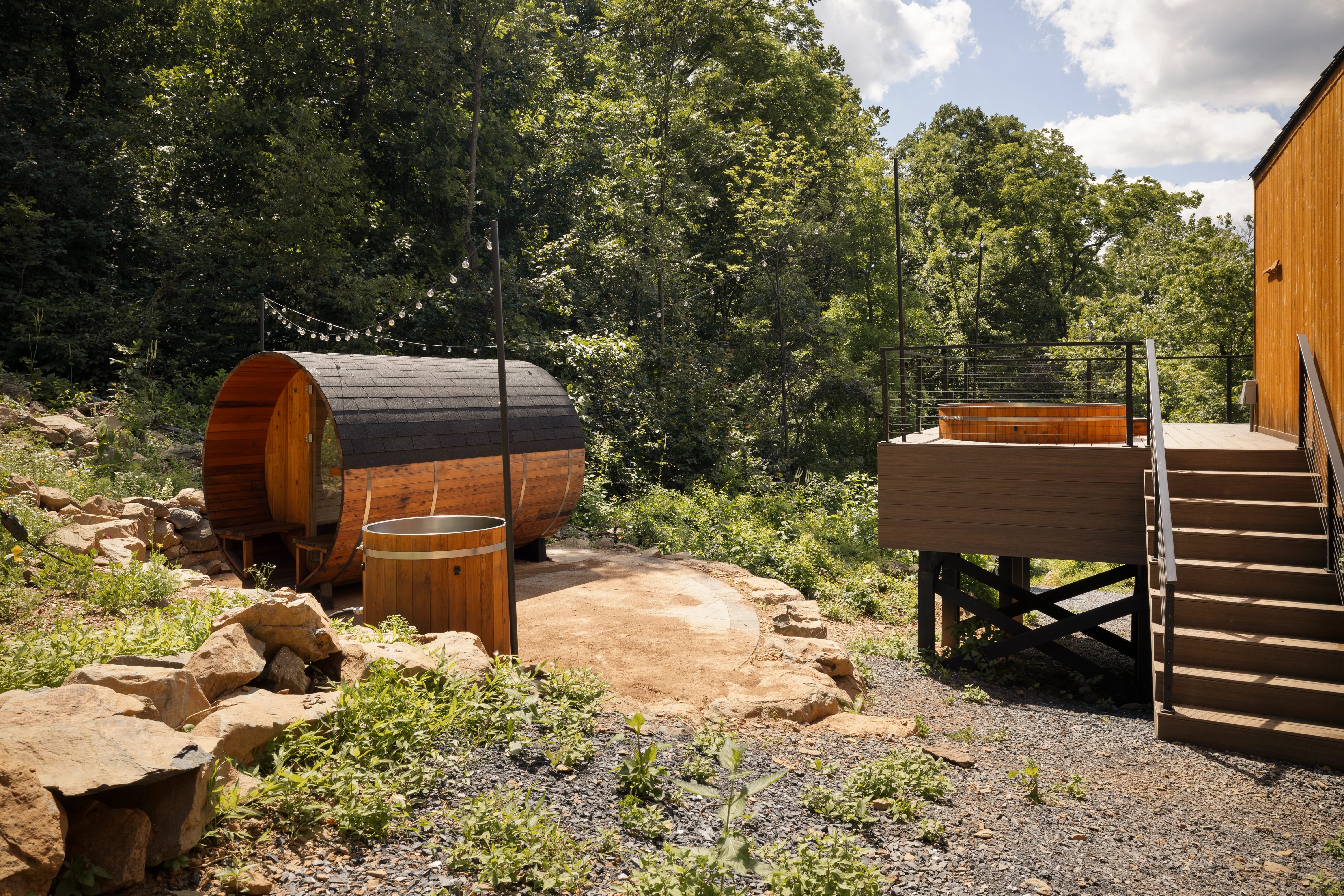
A luxurious outdoor spa area nestled in a wooded setting, featuring a large barrel sauna with wooden construction and a smaller wooden hot tub in the foreground, surrounded by mature oak and evergreen trees with elegant string lighting overhead. · Royal Oak Retreat
If you’re planning a trip with your dog, Royal Oak Retreat allows one dog under 50 lbs for a $100 flat fee, so your pet can join the whole stay instead of watching from a boarding kennel. The property sits about 40 minutes from Shenandoah National Park’s dog-friendly trail network, close enough for a morning hike and back for an evening in the hot tub. Check current availability and book directly.
Content powered by inkSTR.co