

Lodging in Shenandoah splits into two categories: three concessioner-run properties inside Shenandoah National Park (Skyland, Big Meadows Lodge, and Lewis Mountain Cabins), and a much larger, more flexible market of private cabins and short-term rentals in gateway towns like Front Royal, Luray, and Linden. As of 2026, the in-park options operate on a limited spring-through-fall season and book out fast for fall foliage weekends, while private cabin rentals stay available year-round and typically offer more privacy and a shorter drive if you’re coming from Washington D.C.
Key Takeaways
- Shenandoah National Park has exactly three in-park lodging options: Skyland (mile 41.7), Big Meadows Lodge (mile 51), and Lewis Mountain Cabins (mile 57.5), all operated by concessioner Delaware North, according to the National Park Service’s official lodging page.
- Skyland’s 2026 operating season runs March 30 through November 8, with its 179 rooms priced from $206 to $357 per night, and cabins from $192 to $358.
- Gateway towns like Luray sit roughly 20 minutes from the Thornton Gap entrance, and travel guides recommend booking four to six months ahead for summer and fall-foliage weekends.
- Shenandoah, Virginia’s short-term rental market had 801 active listings with a 52% average occupancy rate as of July 2026, according to AirDNA, with listings up 394.4% year-over-year.
- Shenandoah National Park drew 1.7 million visitors in 2026, who spent $132 million in nearby communities, per National Park Service data, meaning gateway-town lodging carries real demand pressure during peak months.
- Private wellness cabins like Royal Oak Retreat in Shenandoah Farms sit about 40 minutes from the park and roughly an hour from D.C., offering privacy and a private hot tub without shared-building noise.
If you’ve spent an hour scrolling between the National Park Service’s booking page and a dozen Airbnb tabs trying to figure out where to actually sleep near Shenandoah, you’re not doing anything wrong. The lodging picture here splits two ways, and most articles blur the line between them.
One path puts you inside the park itself, in a concessioner-run lodge along Skyline Drive with limited seasons and fixed room types. The other path puts you in a gateway town or a private cabin rental, with more flexibility on dates and amenities, at the cost of a short drive to the entrance gate each morning. Neither is wrong. They serve different trips.
This guide breaks down both paths, including tradeoffs competitors tend to skip: what happens when Skyland closes for winter, how far Luray really is from the trailheads you want, and why a private cabin near Front Royal might beat a lodge room for a couple’s weekend even though it’s technically outside the park boundary.
Which Town Is Best to Stay in When Visiting Shenandoah National Park?
Front Royal, Luray, and Waynesboro are the three primary gateway towns for Shenandoah National Park, and each aligns with a different park entrance. Front Royal sits near the northern US 340 entrance, Luray sits about 20 minutes from the Thornton Gap entrance on US 211, and Waynesboro anchors the southern Rockfish Gap entrance where Skyline Drive meets I-64 and the Blue Ridge Parkway.
Luray gets recommended most often in gateway-town guides because it balances small-town charm, restaurant access, and price better than the other two. It’s also close to Luray Caverns, so many visitors pair a cave tour with a park day.
Front Royal works better if you’re driving from the D.C. metro area, since it sits closest to the northern entrance and cuts real time off a Friday-evening drive. Waynesboro suits travelers approaching from Charlottesville or continuing south onto the Blue Ridge Parkway.
None of these towns are inside the park. All three require a drive to a Skyline Drive entrance station, typically 15 to 30 minutes depending on which lodging you book and which entrance you use. If a private cabin instead of a downtown hotel room sounds better for your trip, Front Royal’s surrounding countryside, including Shenandoah Farms, adds a quieter, more forested lodging tier that these gateway-town guides rarely mention.
Which Is Better, Skyland or Big Meadows Lodge?
Skyland and Big Meadows Lodge are both concessioner-run properties inside Shenandoah National Park, but they differ in elevation, room variety, and food access. Skyland sits at mile 41.7 and is the park’s highest-elevation lodging, spread across 28 buildings on more than 27 acres. Big Meadows Lodge sits at mile 51, closer to the park’s most popular trailheads and the Byrd Visitor Center.
Skyland offers five room categories, from standard rooms to cabins, priced between $206 and $358 for the 2026 season. Big Meadows runs slightly lower, with rustic cabins and main-lodge rooms starting around $200 and renovated Blue Ridge rooms reaching $279, while its newly renovated cabins cap out at two guests starting near $224 per night.
Here’s how the two compare on the details that actually affect a trip. For exact 2026 opening and closing dates, Skyland’s concessioner has confirmed March 30 through November 8; Big Meadows Lodge follows the same general spring-through-fall window but hadn’t published confirmed 2026 dates at the time of writing, so call ahead or check the booking page directly.
| Feature | Skyland (mile 41.7) | Big Meadows Lodge (mile 51) |
|---|---|---|
| 2026 season | March 30 to November 8 | Seasonal, spring through fall (confirm exact dates with concessioner) |
| Reported price range | $206 to $357 rooms; $192 to $358 cabins | $200 to $279 rooms; cabins from $224 |
| Elevation/setting | Highest point on Skyline Drive, ridge and wooded buildings | Near Big Meadows meadow and visitor center |
| Reservation phone | 540-999-2212 (availability) | 540-999-2222 (availability) |
| Building layout | 28 buildings across 27+ acres | Main lodge plus detached cabins within walking distance |
Skyland appeals to travelers who want elevated overlook views right outside their door, since several of its buildings sit along the ridge itself. Big Meadows works better for hikers heading to Dark Hollow Falls or the meadow’s open sky for stargazing, since it sits within a shorter walk of the trailhead network. Both close for winter, and both raise rates from late September through early November for peak foliage, so book early if that’s your target window. You can check current-season availability directly through Skyland’s official booking page or the Big Meadows Lodge listing.
What Are Some Good Places to Stay in Shenandoah Valley, VA?
Good places to stay in Shenandoah Valley fall into three tiers: in-park lodges along Skyline Drive, gateway-town hotels and inns in Luray or Front Royal, and private short-term rentals scattered through the surrounding countryside, including Shenandoah Farms, Linden, and Stanley. Each tier fits a different kind of trip, and the valley’s lodging market has grown fast enough in 2026 that picking blind wastes real planning time.
If you want to wake up already inside the park, Shenandoah National Park’s official lodging page confirms only three concessioner-run options exist: Skyland, Big Meadows Lodge, and Lewis Mountain Cabins at mile 57.5. Lewis Mountain’s furnished rustic cabins run $173 to $203 per night for one- and two-bedroom units, and its two-bedroom cabins sleep up to four adults.
Adventurous, low-amenity travelers sometimes book one of the six primitive cabins maintained by the Potomac Appalachian Trail Club, which come with mattresses and cookware, but only a pit toilet and spring water nearby, no running water or electricity.
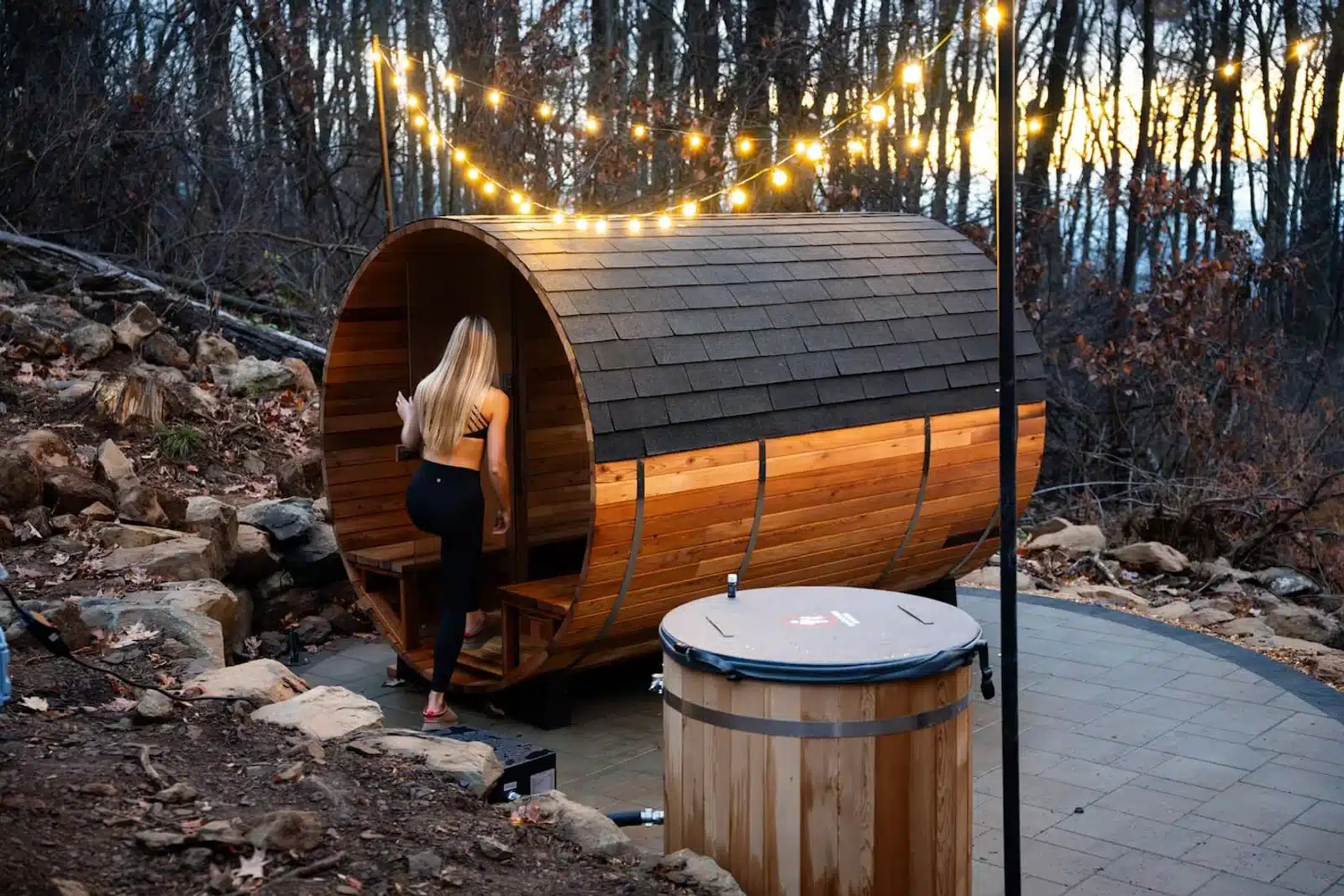
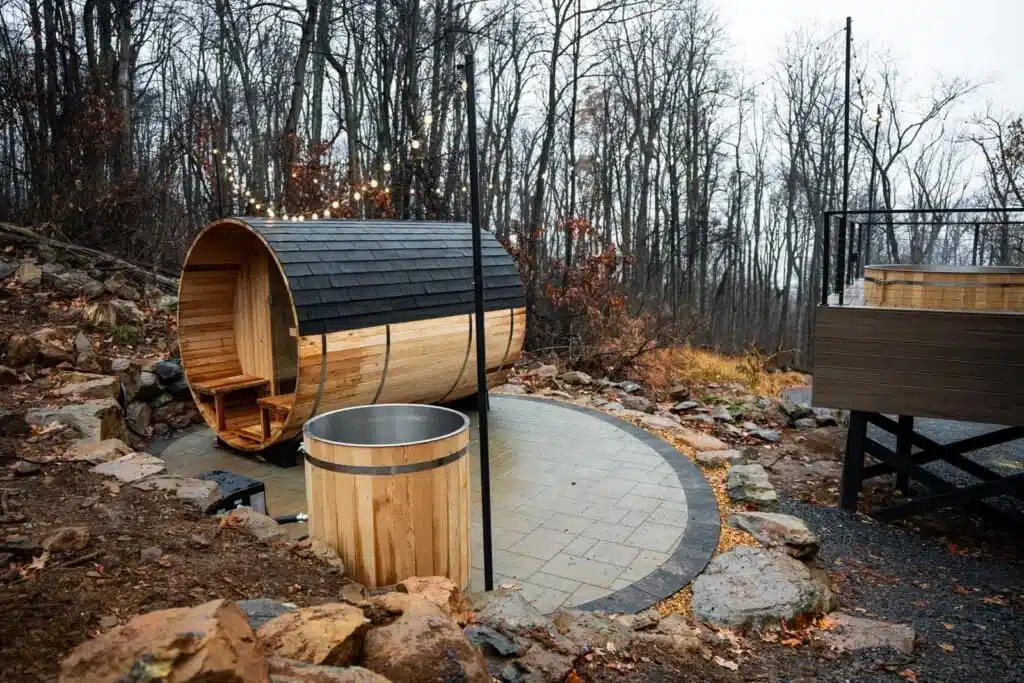
Gateway-town options in Luray and Front Royal range from historic inns to chain hotels. For a lodging tier that skips both the rustic pit-toilet experience and the shared-building lodge feel, private cabins in Shenandoah Farms and Linden offer full privacy and a private hot tub in a forest setting without sacrificing modern comfort. Royal Oak Retreat, a non-toxic wellness cabin built with floor-to-ceiling forest views, a sunken hot tub, sauna, and cold plunge, sits in this tier, roughly 40 minutes from the park and an easy hour from D.C. It’s built for two adults, not a family group, with sleeping space for up to four across a king bedroom and a loft.
For readers weighing an in-park lodge against a private rental, the deciding factor usually comes down to what you actually want from the trip: proximity to a specific trailhead, or privacy and amenities you control. Our guide to cabin rentals in Shenandoah Valley breaks down that decision in more depth.
What Is the Best Month to Visit Shenandoah National Park?
October is widely considered the best month to visit Shenandoah National Park for fall foliage, though it’s also the most crowded and the hardest month to book lodging. Historical visitation data shows roughly 70% of the park’s annual visitors arrive between June and October, with October standing out as the single busiest month.
If you want fewer crowds without sacrificing good weather, late May through mid-June offers cooler mornings and thinner traffic along Skyline Drive compared to peak fall weekends. Early September, before school groups and foliage tourists arrive, is another underrated window locals quietly prefer.
Winter closes both Skyland and Big Meadows Lodge entirely, and Skyline Drive itself sometimes closes temporarily during snow or ice. If you’re set on a winter trip, a private cabin outside the park is your only lodging option, since none of the three concessioner properties operate through the coldest months. A 4×4 vehicle is often required for cabins with steep driveways in this region during winter, so check that detail before booking.
Spring brings its own consideration too: allergy-prone travelers should know that Virginia’s tree pollen season typically peaks in April, which can affect outdoor plans like hiking or hot tub evenings on a deck. Pack accordingly if you’re sensitive.
What Do In-Park Lodges Leave Out That Gateway Cabins Cover?
In-park lodges like Skyland and Big Meadows solve one problem well: they put you inside the park boundary. But they leave several practical gaps that gateway-town cabins and private rentals fill, and almost no lodging guide addresses these directly.
First, cell service inside the park is inconsistent at best, and while the lodges have Wi-Fi in common areas, room-level connectivity varies by building. A private cabin with dedicated internet, like Royal Oak Retreat’s Starlink connection, solves that gap outright for anyone who needs to stay reachable or wants reliable streaming after a day on the trail.
Second, in-park lodges operate on fixed room configurations decided by the concessioner, meaning you can’t add a hot tub or request a non-toxic, chemical-free build. These are standard at Royal Oak Retreat, which was built without plastics or off-gassing materials, a choice most travelers never think to ask about until they notice how the air feels different.
Third, pet policies at in-park lodges are limited to certain room types and buildings. Gateway cabins that are genuinely pet-friendly, rather than pet-tolerant, tend to spell out the policy clearly. Royal Oak Retreat welcomes one dog under 50 lbs with a stated pet fee, so you know exactly what to expect before you book, rather than discovering a size restriction at check-in.
Fourth, EV charging is essentially absent from in-park lodging infrastructure. If you’re driving an electric vehicle from D.C. or Arlington, an on-site charger, which Royal Oak Retreat provides, removes a logistics headache that most Shenandoah lodging content doesn’t mention at all.
How Should You Choose Between an In-Park Lodge and a Gateway Cabin?
Choosing between an in-park lodge and a gateway cabin comes down to four practical factors: how many trailheads you plan to hit before breakfast, whether you want amenities like a hot tub or sauna, your pet situation, and how far ahead you’re booking. Here’s how to think through each one.
- Count your early trail starts. If you’re aiming to summit somewhere like Upper Hawksbill or tackle the Bearfence Rock Scramble before 8 a.m., an in-park lodge saves real drive time. If your itinerary is more relaxed, a gateway cabin’s 20 to 40 minute drive to the entrance won’t cost you much.
- Decide if amenities matter more than the address. A concessioner room gets you inside the boundary, but it won’t have a private hot tub or sauna. If part of the trip’s point is recovery, not just trail mileage, a wellness-focused cabin changes the feel of the stay.
- Check the pet policy before anything else. In-park lodges restrict pets to specific buildings. Gateway cabins vary widely, so confirm size limits and fees directly, not just a generic “pet-friendly” label.
- Book according to season. Fall-foliage weekends in the park require booking four to six months out, according to gateway-town travel guides, and cancellations sometimes surface just two or three days before arrival. Private cabins often have more flexible availability windows outside of major holiday weekends.
- Factor in your entry point. The four Shenandoah entrances, Front Royal (US 340) and Thornton Gap (US 211) in the north, Swift Run Gap (US 33) in the middle, and Rockfish Gap (I-64/US 250) in the south, each favor different lodging bases. Match your entrance to your lodging before locking in dates.
A common mistake: booking an in-park lodge assuming it puts you “in nature” more than a gateway cabin does. A private cabin surrounded by actual forest, like those in Shenandoah Farms, often delivers more seclusion than a 28-building lodge complex with shared parking and a restaurant crowd.
What Does It Actually Cost to Stay Near Shenandoah in 2026?
Lodging costs near Shenandoah National Park in 2026 span a wide range depending on whether you book in-park, in a gateway town, or a private rental. Here’s the breakdown by tier.
In-park lodging: roughly $173 per night for a rustic Lewis Mountain cabin up to $358 for a premium Skyland cabin during peak season.
Private short-term rentals: the broader Shenandoah, Virginia market averages a $421 nightly rate for 3-bedroom properties, according to RedAwning’s 2026 data, though smaller one- and two-bedroom cabins built for couples typically run lower. Separately, AirDNA reports the Shenandoah, Virginia market carries a 97 out of 100 Market Score for short-term rental potential as of August 2026, with 801 active listings and a 52% average annual occupancy rate. Inventory has expanded by 394.4% year-over-year, so availability at any given price point can shift fast.
Beyond the nightly rate, factor in a park entrance fee (purchasable in advance through Recreation.gov’s Shenandoah pass page for a 7-day vehicle pass), fuel for the drive from a gateway town, and meals, since in-park dining options are limited to lodge restaurants with set hours. Travelers visiting multiple national parks in the same year may find the America the Beautiful annual pass pays for itself faster than repeated single-park entries.
Virginia’s overall visitor economy adds useful context here: the state recorded 46.6 million domestic and international overnight visitors in 2026, generating $36.2 billion in visitor spending, and Shenandoah Valley hotel demand has outpaced national growth through mid-2026, according to Virginia Tourism Corporation data. That growth explains why booking early matters more in 2026 than it did five years ago, regardless of which lodging tier you choose.
Why Do Solo and Couple Travelers Prefer Private Wellness Cabins Over Lodges?
Solo and couple travelers increasingly choose private wellness cabins over in-park lodges because the lodges are built around shared infrastructure, hallways, communal dining, parking lots, while wellness cabins are built around recovery. A concessioner room gets you a bed and a view. A dedicated wellness cabin gets you a private hot tub, a sauna, and often a fire pit under open sky, with no one else’s schedule to work around.
Royal Oak Retreat was built specifically for this kind of trip: adults-first, sleeping up to four across a king bedroom and loft, with a contrast-therapy island pairing a sunken outdoor hot tub against stargazing views with a Scandinavian sauna and cold plunge. The structure was built without plastics or off-gassing chemicals, which changes how the air inside feels compared to a standard-built cabin. There’s no shared restaurant seating and no scheduled housekeeping rounds through common areas, just floor-to-ceiling windows framing the Front Royal, Virginia forest and a driveway that requires a 4×4 in winter months, a small tradeoff for the seclusion it buys.
For burnout recovery specifically, that distinction matters. A packed lodge itinerary, dinner reservation times, communal breakfast hours, shared parking, works against the goal of resetting. A private cabin removes the schedule entirely. Guests at Royal Oak Retreat tend to let the sauna, the deck, and whatever the forest is doing outside the window organize the day, rather than a lodge’s fixed meal windows. If a milestone celebration or anniversary is the occasion, the same privacy applies: a fire pit and private deck do more for the mood than a shared lodge dining room.
If you’re weighing amenity-driven cabins more broadly, our guide to cabins near Shenandoah National Park covers the wider private-rental field, and our hiking trail guide pairs well with planning a stay around specific trailheads rather than just proximity to a lodge.
What Should You Know Before Booking Any Shenandoah Lodging?
Before booking any Shenandoah lodging, confirm four things: the operating season, the drive time to your target entrance, the pet policy in writing, and the cancellation window. These four checks prevent most booking regrets travelers report after the fact.
First, in-park lodges close for winter entirely, typically resuming in late March, so a January or February trip rules out Skyland and Big Meadows automatically. Second, drive times from gateway towns vary more than most listings admit; Luray’s 20-minute estimate to Thornton Gap assumes clear traffic and daylight, not a foggy pre-dawn drive.
Third, always get the exact pet policy, weight limits and fees, in writing rather than trusting a generic “pet-friendly” tag, since park lodges restrict pets by building and many gateway rentals do the same. Fourth, check the cancellation policy carefully; gateway-town guides note cancellations sometimes appear two or three days before a fall weekend, which can work in your favor if you’re flexible, or against you if you booked rigid dates.
A step-by-step approach that avoids most common mistakes:
- Pick your primary activity first (a specific trail or a rest-focused weekend), then choose lodging based on that, not the other way around.
- Match your entrance route (US 340, US 211, US 33, or I-64/US 250) to your chosen lodging’s location.
- Verify the property’s season dates directly through the official concessioner site if considering in-park lodging.
- Confirm pet, vehicle, and accessibility details (loft stairs, 4×4 requirements, elevation) before paying a deposit.
- Book 4 to 6 months ahead for October weekends; 4 to 8 weeks ahead is usually sufficient outside peak foliage season.
One detail almost no lodging guide mentions: several private cabins in this region, Royal Oak Retreat included, reach guests via a loft accessed by a spiral staircase, which isn’t ideal for anyone with mobility limitations. Ask directly if that’s a concern for your group.
Frequently Asked Questions
Are there any vacation rentals available in Shenandoah National Park, Virginia?
Private vacation rentals are not located inside Shenandoah National Park itself; the only lodging inside the park boundary is the three concessioner-run properties: Skyland, Big Meadows Lodge, and Lewis Mountain Cabins. Vacation rentals and private cabins are available in surrounding areas like Front Royal, Luray, Linden, and Shenandoah Farms, typically a 20 to 40 minute drive from a park entrance.
How long does it take to drive Skyline Drive through Shenandoah?
Skyline Drive runs the full length of Shenandoah National Park with a posted speed limit of 35 mph, and driving it end to end without stops typically takes around 3 hours, though most visitors take longer to allow for overlooks, wildlife sightings, and trailhead stops. Plan a half-day to a full day if you want to stop and hike along the way rather than just drive through.
How long does it take to drive through Shenandoah National Park?
Driving straight through Shenandoah National Park along its full 105-mile Skyline Drive length takes roughly 3 hours without stops, but most visitors spread the drive across a full day or more to include overlooks, short hikes, and stops at visitor centers like Dickey Ridge or Byrd. Weather and seasonal traffic, especially during fall foliage, can add significant time.
Where should you stay in the Shenandoah Valley?
Where you stay in the Shenandoah Valley depends on your priorities: Luray and Front Royal offer gateway-town convenience near park entrances, in-park lodges like Skyland or Big Meadows put you directly on Skyline Drive with a limited spring-through-fall season, and private cabins in areas like Shenandoah Farms offer privacy, a hot tub or sauna, and year-round availability. For a couple’s or solo wellness-focused trip, a private cabin roughly 40 minutes from the park often serves the trip better than a shared lodge room.
Does Royal Oak Retreat have an actual private hot tub, or is it shared?
Royal Oak Retreat’s hot tub is fully private and sunken into the deck, positioned for stargazing views with no shared access from other guests or units. It’s paired with a Scandinavian sauna and cold plunge on the same contrast-therapy island, a setup not commonly bundled together at other cabins in the region.
Is Royal Oak Retreat pet-friendly, and are there size restrictions?
Royal Oak Retreat welcomes one dog under 50 lbs with a stated pet fee. This policy is specific rather than a vague “pets allowed” claim, so guests know exactly what to expect before arrival.
How far is Royal Oak Retreat from Shenandoah National Park and Skyline Drive?
Royal Oak Retreat sits approximately 40 minutes from Shenandoah National Park and Skyline Drive, and roughly an hour from Washington D.C., making it accessible for a weekend trip without a long weekday commute back into the city on Sunday evening.
Where This Leaves You
Lodging in Shenandoah isn’t a single decision. It’s two separate markets that happen to share a mountain range. In-park lodges give you proximity to Skyline Drive within a fixed spring-through-fall season and prices reported between $173 and $358 a night depending on the property. Gateway towns and private cabins give you flexibility and year-round access, with the Shenandoah, Virginia short-term rental market now carrying a 97 Market Score and continued growth into 2026, according to AirDNA.
If your trip is built around specific trailheads and an early start, book inside the park. If it’s built around rest and privacy, with no one’s schedule but your own, a private cabin outside the boundary is going to serve you better, whatever the calendar says about foliage season.
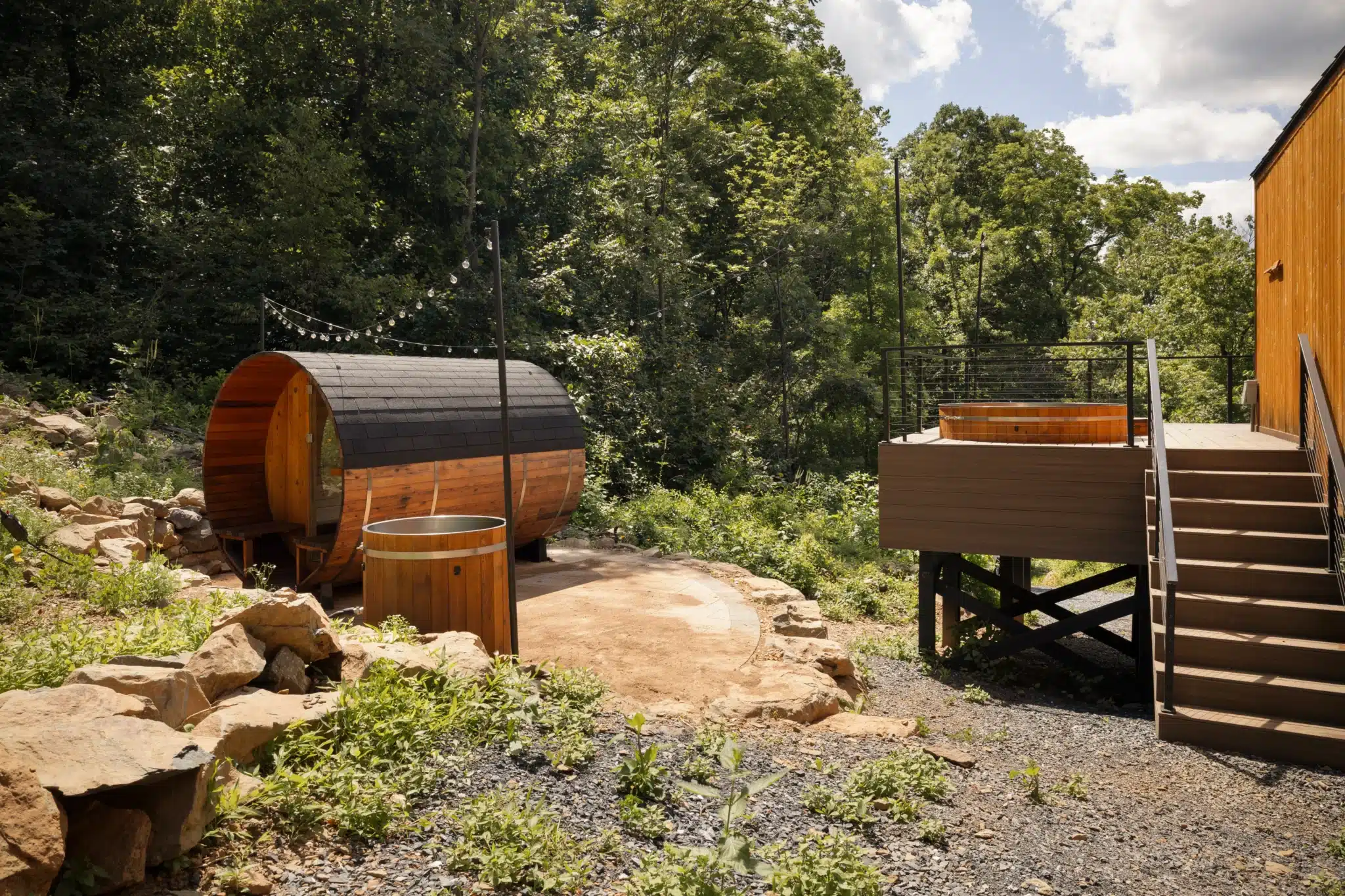
If the appeal of this trip is a reset rather than another packed itinerary, Royal Oak Retreat sits about 40 minutes from the park’s trailheads with a private hot tub, sauna, and cold plunge waiting at the end of the day. Check current availability here.
Content powered by inkSTR.co