
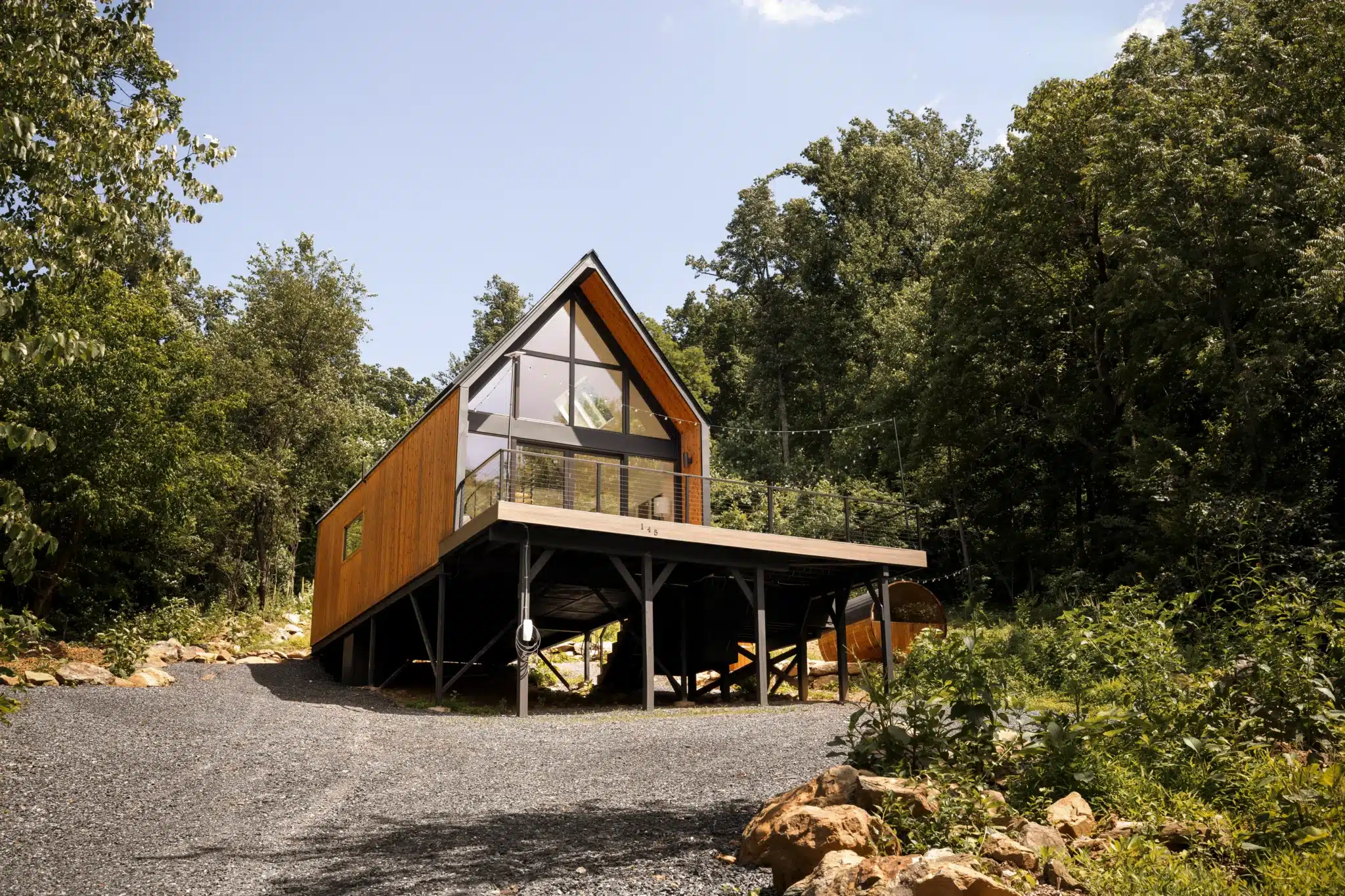
A retreat cabin is a private, amenity-rich accommodation built around rest and recovery rather than sightseeing logistics, typically featuring wellness infrastructure like a hot tub, sauna, or cold plunge alongside a secluded, nature-immersed setting. In the Shenandoah Valley, that usually means a wooded property within an hour or so of Washington D.C., positioned closer to a contrast therapy session than a checklist of attractions.
Key Takeaways
- Shenandoah National Park drew 1.68 million recreation visits in 2026, ranking 19th among U.S. national parks by visitation, according to National Park Service data, which keeps demand for nearby retreat cabins consistently strong.
- Shenandoah Valley short-term rentals posted 45.7% occupancy and $95.62 average daily rate in 2026, rising to 46.1% occupancy and $96.72 ADR in 2026, per Virginia Tourism Corporation reporting, though wellness-focused cabins with sauna and hot tub setups typically command higher nightly rates than that valley-wide average.
- A genuine retreat cabin distinguishes itself from a standard vacation rental through combined wellness infrastructure, specifically a hot tub, sauna, and cold plunge working together as a system, not as isolated add-ons.
- Front Royal and Linden, Virginia sit roughly 40 minutes from Shenandoah National Park’s Skyline Drive entrance and about one hour from Washington D.C., making the area a realistic weekend base for DC metro travelers.
- Fall (October) and summer (July) see the strongest regional demand, with area occupancy climbing into the 56 to 71% range and nightly rates rising accordingly, so booking 6 to 8 weeks ahead for peak foliage weekends is a reasonable rule of thumb.
- Pet policies, loft access, and driveway conditions vary significantly between cabins. Confirming those specifics before booking prevents the most common retreat cabin disappointments.
If you’ve spent any time scrolling rental listings labeled “cabin retreat” or “wellness cabin,” you’ve probably noticed the term gets used loosely. Some listings mean a rustic one-room structure with a fire pit. Others mean something closer to a design-forward wellness build with a dedicated hot tub, sauna, and cold plunge setup. Knowing the difference before you book saves you a wasted weekend.
This guide walks through what a retreat cabin actually is, what separates a legitimate wellness build from a marketing photo, and how to plan a Shenandoah Valley stay around it. I live and work in this region, and I’ve watched the retreat cabin category grow from a niche search term into one of the most requested styles of Virginia getaway, especially among couples and solo travelers from the DC metro area looking for something more restorative than a standard hotel weekend.
By the end of this article, you’ll know how to evaluate a retreat cabin listing, what questions to ask before booking, which season fits your goals, and how a property like Royal Oak Retreat in Shenandoah Farms compares to the broader field of Virginia cabin rentals in 2026.
What Is a Retreat Cabin?
A retreat cabin is a private accommodation designed around rest, recovery, and disconnection from daily routine, distinguished from a standard vacation rental by dedicated wellness amenities and a deliberately secluded setting. Specifically, the category has grown to describe cabins built or renovated around a hot tub, sauna, or cold plunge system, rather than a cabin that merely happens to have a deck.
The distinction matters because plenty of listings borrow the “retreat” language without the infrastructure to back it up. A cabin with a hot tub photo from three seasons ago is not the same as a cabin with a working contrast therapy setup you can verify through recent guest photos or a direct conversation with the host. As of 2026, Expedia lists 357 cabin stays across the Shenandoah Valley alone, and only a fraction market genuine wellness programming rather than generic rustic charm.
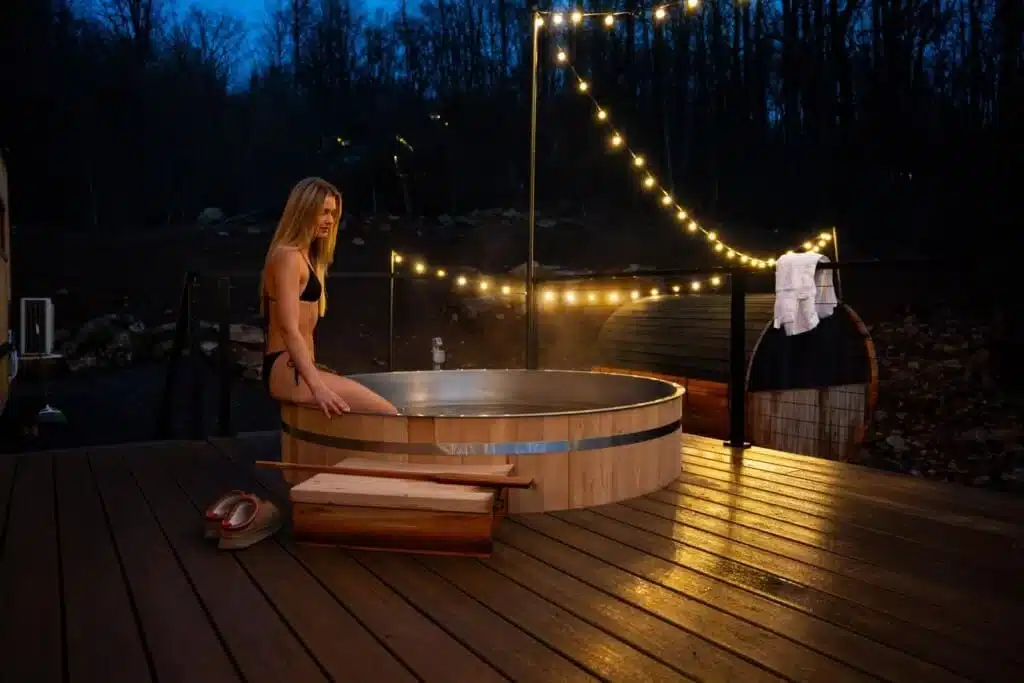
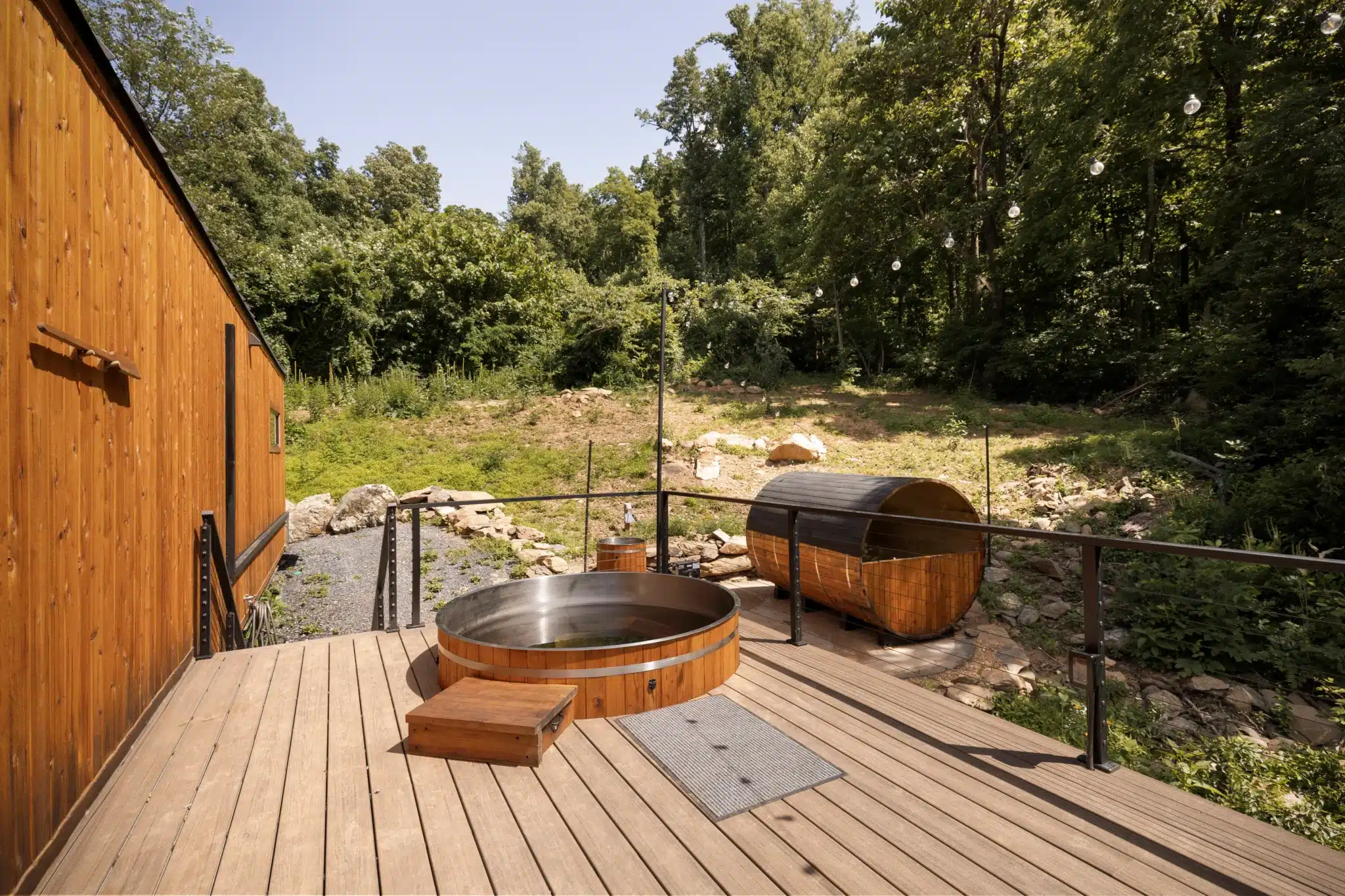
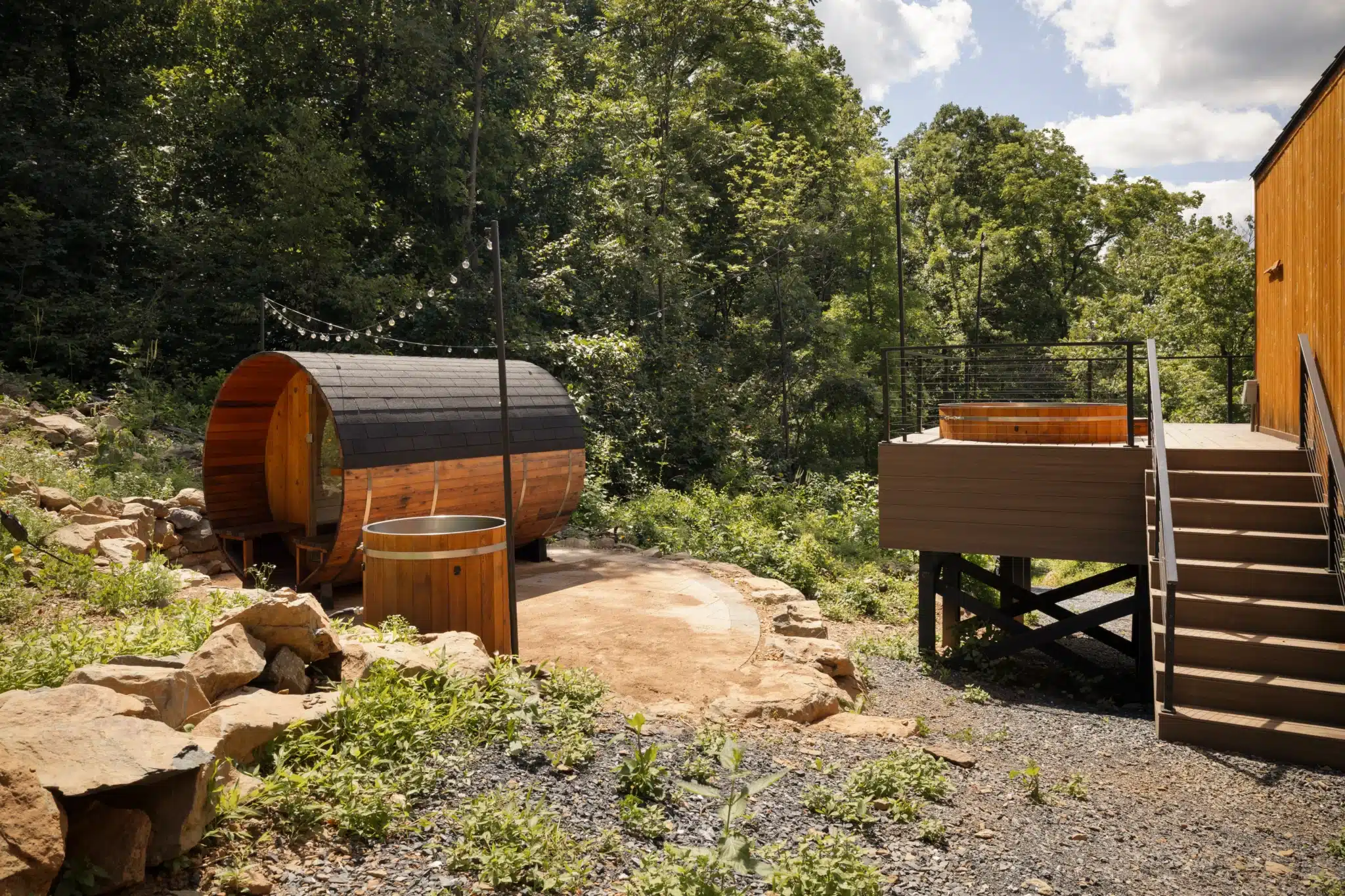
At Royal Oak Retreat in Shenandoah Farms, Virginia, the retreat framing isn’t incidental. The 1,000-square-foot cabin was built around a contrast therapy island: a sunken outdoor hot tub with stargazing views, a Scandinavian-style sauna, and a cold plunge, positioned together so guests can move between them without trekking across the property. The build is also fully non-toxic, with no plastics or off-gassing materials used in construction, a detail rarely mentioned in competitor listings.
What Makes a Retreat Cabin Different From a Standard Vacation Rental?
A standard vacation rental is built for logistics: sleeping capacity, kitchen access, proximity to attractions. A retreat cabin is built for a specific outcome: measurable rest. The difference shows up in the amenity list, the layout, and often in how the property markets itself to solo and couple travelers versus large groups.
First, look at how amenities are described. A vacation rental might list “hot tub” as one line among twenty. A genuine retreat cabin treats the hot tub, sauna, and cold plunge as a connected system, sometimes called contrast therapy, where guests alternate between heat and cold exposure. Common patterns involve roughly four minutes in the sauna followed by sixty to ninety seconds in the cold plunge, though tolerance varies by person and this isn’t medical guidance.
Second, check capacity. Retreat cabins tend to sleep two to four guests rather than eight to twelve, since the model depends on privacy rather than group volume. Royal Oak Retreat sleeps up to four across a main bedroom with a king bed and a loft with a queen bed, reached by a spiral staircase, a detail worth flagging for guests with mobility concerns since it isn’t ideal for anyone with climbing difficulties.
Third, consider connectivity. Many rustic cabins intentionally skip internet to force disconnection. Retreat cabins increasingly take a different approach: reliable Starlink internet and, in a growing number of cases, on-site EV charging, so guests from the DC metro area can drive an electric vehicle out to Front Royal or Linden without range anxiety.
Are There Retreat Cabins Available in Mississippi or Wisconsin?
Retreat cabins exist across the country, including in Mississippi and Wisconsin, though the amenity mix and pricing structure vary regionally based on climate and typical trip length. Wisconsin’s retreat cabin market leans heavily into lakefront settings and seasonal sauna culture, drawing on the state’s long-standing Scandinavian sauna tradition, particularly in the northern woods regions near Bayfield and Door County. Mississippi’s retreat cabin listings tend to cluster around the Gulf Coast and the Natchez Trace corridor, often combining wellness framing with hunting-adjacent rural properties.
Neither region matches the Shenandoah Valley’s specific advantage: proximity to a major metro population. Wisconsin retreat cabins draw primarily from Chicago and Minneapolis day-trip and weekend markets, while Mississippi properties skew toward regional Southern travelers rather than a single dominant metro feeder. Virginia’s Shenandoah Valley retreat cabins, by contrast, sit within a one to two hour drive of Washington D.C., Baltimore, and parts of the greater DMV area, which is a meaningful structural advantage if your trip window is a weekend rather than a full week.
If you’re specifically comparing wellness infrastructure rather than geography, the Shenandoah Valley increasingly rivals both regions. Properties combining a sauna, cold plunge, and hot tub into one connected system remain uncommon nationally, and Royal Oak Retreat’s contrast therapy island reflects a build style still relatively rare even among cabins marketed as retreats.
How Do You Choose the Right Retreat Cabin for Your Trip?
Choosing the right retreat cabin comes down to matching the property’s actual amenities and layout to your trip’s purpose, whether that’s a romantic weekend, a solo reset, or a milestone celebration. Start by verifying, not assuming, that advertised wellness amenities are real, current, and private rather than shared.
Step 1: Confirm the Wellness Amenities Are Private and Functional
Ask directly whether the hot tub, sauna, or cold plunge are exclusive to your booking or shared with other units on the property. At Royal Oak Retreat, the sunken hot tub, Scandinavian sauna, and cold plunge are private to a single booking, positioned on the cabin’s own deck rather than a shared common area. Request recent photos if the listing images look more than a year or two old.
Step 2: Match the Property’s Positioning to Your Occasion
Cabins marketed as family-friendly typically prioritize bunk rooms, board games, and proximity to kid-oriented attractions. A retreat cabin built for adults prioritizes quiet, privacy, and uninterrupted wellness time. Royal Oak Retreat is intentionally adults-first, which makes it a fit for a romance package weekend, a birthday celebration, or a solo reset, rather than a large family reunion.
Step 3: Check the Pet Policy Specifics, Not Just the “Pet-Friendly” Label
A “pet-friendly” tag can mean anything from one small dog to unlimited animals with no weight restriction. Royal Oak Retreat allows one dog under 50 lbs with a $100 pet fee, a specific enough policy that you know exactly what to expect before your golden retriever or beagle arrives.
Step 4: Review Access Requirements Before You Book
Some Shenandoah Farms roads, including the driveway at Royal Oak Retreat, require a 4×4 vehicle during winter months due to steep grades and possible snow accumulation. If you’re driving a low-clearance sedan in December through February, confirm this detail directly with the host before finalizing dates.
Step 5: Book Direct When Possible
Booking directly through the property’s own website, such as royaloakretreat.com, typically means faster communication with the host and access to the best available rates, since third-party platforms add their own markup and booking layers. Direct booking also tends to simplify questions about early check-in or specific amenity requests.
What Does a Retreat Cabin Actually Cost in the Shenandoah Valley?
Retreat cabin pricing in the Shenandoah Valley in 2026 generally runs higher than the region’s blended short-term rental average because wellness amenities add both construction cost and guest demand. Region-wide, Virginia Tourism Corporation data puts the average short-term rental daily rate at $96.72 in 2026, but that figure blends everything from bare-bones cabins to full wellness builds, and cabins clustered along the Shenandoah River or near Skyline Drive with strong amenity packages often command $219 to $285 per night with occupancy in the 65 to 75% range.
| Season | Typical Occupancy | Typical Nightly Rate Range | Best For |
|---|---|---|---|
| Fall (Sept-Nov) | 56-71% | Higher end of range, peak foliage weekends | Foliage viewing, anniversary trips |
| Summer (Jun-Aug) | 56-71% | Higher end of range | Hiking, river access, longer daylight |
| Winter (Dec-Mar) | 35-45% | Lower end of range | Quiet solo resets, lower rates, sauna season |
| Spring (Apr-May) | Moderate | Mid-range | Wildflower season, fewer crowds than fall |
Beyond the nightly rate, factor in Virginia’s blended accommodations tax structure. Warren County, home to Front Royal and Linden, applies a 5% transient occupancy tax on top of Virginia’s 5.3% state sales tax on accommodations, which combines into a total guest tax rate that varies depending on whether a town-level tax also applies. Page County, by comparison, levies a 10% transient occupancy tax, among the highest county rates in the state. These taxes are typically included in your total at checkout rather than something you calculate yourself, but it explains why quoted nightly rates and final totals differ.
What’s the Best Time of Year to Book a Retreat Cabin in Shenandoah Valley?
The best time to book a Shenandoah Valley retreat cabin depends on whether you’re prioritizing scenery, crowd levels, or wellness amenity comfort. October delivers peak fall foliage along Skyline Drive and the surrounding ridgelines, but it’s also the valley’s highest-demand month, so booking 6 to 8 weeks ahead is smart if you want a specific property on a specific weekend.
Late October brings peak color to the ridgeline oaks and hickories visible from cabin decks in the Front Royal area, typically arriving a week or two after the higher elevations of Skyline Drive have already turned. If you want the color without the October crowds, the first two weeks of November often catch the lower-elevation trees still holding onto orange and rust tones after the park’s higher overlooks have gone bare.
Winter is genuinely underrated for a wellness-focused stay. Occupancy across the valley drops to 35 to 45% between February and March, per regional STR data, meaning lower rates and a quieter property. A cold plunge feels different, and arguably more purposeful, when there’s actual cold outside to contrast against. Pack for real winter conditions if you go this route: the driveway at properties like Royal Oak Retreat requires 4×4 capability in snow, and Skyline Drive sections sometimes close temporarily during storms.
Summer works best for travelers who want to combine the cabin stay with hiking trails in Shenandoah National Park, since long daylight hours support early starts on longer routes before afternoon humidity sets in.
How Do You Integrate Wellness Programming Into a Retreat Cabin Stay?
Wellness programming at a retreat cabin refers to structured use of the property’s amenities, rather than simply having a hot tub available. Most guests underuse the amenities they’re paying for because they don’t arrive with any plan for how to use them.
A basic contrast therapy sequence starts with 10 to 15 minutes in the sauna, followed by a brief cold plunge exposure of 60 to 90 seconds, repeated two to three times, and finished with rest in the hot tub or by the fire pit. This pattern is common in Scandinavian sauna culture, though everyone’s tolerance differs, and anyone with cardiovascular concerns should check with a doctor before attempting cold immersion.
Beyond the physical amenities, the single biggest factor in a restorative retreat cabin stay is an empty schedule. Guests who arrive with a packed itinerary of wineries, hikes, and restaurant reservations often report the trip felt like work. At Royal Oak Retreat, the deliberate absence of a rigid schedule is part of the design; the property leans into unstructured time rather than programmed activities, which is why arrival touches are set up so guests can settle in immediately rather than spend the first evening figuring out logistics.
For couples marking an anniversary or milestone, a light structure still helps: one planned dinner reservation, one flexible outdoor activity, and otherwise open time works better than a full itinerary. Check birthday celebration package options if you’re marking a specific date, since small additions like local flowers or champagne can elevate the occasion without turning it into an event.
What Should You Know About the Local Area Around a Shenandoah Retreat Cabin?
The area surrounding Front Royal and Linden, Virginia offers wineries, farmers markets, and direct access to Shenandoah National Park within a short drive of most retreat cabins in Shenandoah Farms. Knowing the specific distances helps you plan a realistic day without overloading your schedule.
Fox Meadow Winery in Linden sits about 5 minutes from Royal Oak Retreat, making it a realistic stop for an afternoon tasting without committing your whole day. Crimson Lane Vineyards in Hume is roughly 8 minutes away and tends to draw a quieter crowd on weekday afternoons compared to Fox Meadow’s busier weekend tasting room. The Giving Tree Farmers Market in Linden, about 10 minutes out, is worth timing around its specific operating days if you want fresh produce for a cabin kitchen setup rather than driving into town for groceries.
Shenandoah National Park’s Skyline Drive entrance sits about 40 minutes from the Front Royal and Linden area, giving access to over 500 miles of Blue Ridge trail mileage, according to National Park Service data. The park logged 1.68 million recreation visits in 2026, and visitors to the surrounding communities spent an estimated $132 million in 2026 alone, per NPS economic impact figures, a signal of how central the park is to the entire regional economy.
For a longer day trip, Luray Caverns sits roughly 20 to 30 minutes further south and makes a reasonable half-day addition if you’re staying more than two nights. Skip it if your trip is a single overnight; the drive time eats into rest time that a genuine retreat cabin stay is supposed to protect. If you want a full breakdown of park activities before you go, the official NPS activities page lists current trail conditions and seasonal closures.
What Are Common Mistakes People Make When Booking a Retreat Cabin?
The most common mistake is overpacking the itinerary around a stay meant for rest. Guests who schedule three activities per day rarely report the same level of recovery as those who leave two-thirds of the trip open.
- Not confirming amenity privacy. Some listings share hot tub or sauna access across multiple units on a shared property. Always ask directly whether wellness amenities are exclusive to your booking.
- Ignoring loft or stair access. If a cabin’s second sleeping area requires a spiral staircase, as at Royal Oak Retreat, confirm this works for everyone in your group before booking, especially for guests with mobility limitations.
- Underestimating winter driveway conditions. Steep gravel or dirt driveways common in Shenandoah Farms properties often require 4×4 vehicles from December through February. A sedan can get stuck.
- Booking during peak foliage without a buffer. October weekends near Front Royal fill up 6 to 8 weeks in advance. Waiting until two weeks out limits your options significantly.
- Assuming “pet-friendly” means no restrictions. Weight limits and pet fees vary by property. Confirm specifics rather than assuming.
- Choosing an OTA over direct booking without comparing. Direct booking through a property’s own site often provides more direct communication access with the host and, in many cases, the best available rate.
What’s the Difference Between a Retreat Cabin and Park Lodging Inside Shenandoah National Park?
In-park lodging options, such as Skyland, Big Meadows Lodge, and Lewis Mountain Cabins, operate under Delaware North as the park’s official concessionaire and are documented on the NPS lodging page. These options put you directly on Skyline Drive but typically offer simpler, more rustic accommodations without dedicated wellness infrastructure like a private hot tub or sauna.
A retreat cabin outside the park, like those in Shenandoah Farms near Front Royal, trades that on-drive convenience for privacy, amenity depth, and typically a more design-forward interior. If your priority is walking out your door onto a trailhead, in-park lodging wins. If your priority is a wellness-focused amenity system paired with a roughly 40-minute drive to the park, a property in the Front Royal or Linden corridor is the better fit.
For readers weighing broader options across the region, our guide to the best cabin rentals in Shenandoah Valley covers the wider field, and our piece on 15 standout VA cabin rentals breaks down how various properties compare on amenities.
Frequently Asked Questions
Does Royal Oak Retreat actually have a private hot tub, or is it shared?
The hot tub at Royal Oak Retreat is private to your booking. It’s a large sunken outdoor hot tub positioned on the cabin’s deck with stargazing views, part of a dedicated contrast therapy setup alongside a private sauna and cold plunge.
Is Royal Oak Retreat pet-friendly, and are there restrictions?
Yes, Royal Oak Retreat allows one dog under 50 lbs with a $100 pet fee. It’s worth confirming this ahead of arrival, especially if you’re traveling with a larger breed, since the property is built to accommodate one dog rather than multiple pets.
How far is Royal Oak Retreat from Shenandoah National Park?
Royal Oak Retreat sits about 40 minutes from Shenandoah National Park’s Skyline Drive entrance, and roughly one hour from Washington D.C., making it a realistic weekend base for DC metro travelers who want forest immersion without an all-day drive.
Is there EV charging available on-site at Royal Oak Retreat?
Yes, Royal Oak Retreat has an on-site EV charger, along with Starlink high-speed internet, which matters for guests driving electric vehicles from the DC metro area who want to charge overnight without hunting for a public station near Front Royal.
Why book direct with Royal Oak Retreat instead of through an OTA?
Booking directly at royaloakretreat.com typically gives you the best available rate and more direct communication with the host regarding specific requests, like early check-in or questions about winter driveway access, without a third-party platform’s booking layer in between.
Is Royal Oak Retreat suitable for families with children?
Royal Oak Retreat is positioned as an adults-first retreat, designed around uninterrupted wellness time rather than family activities. It’s best suited to couples, solo travelers, and small adult groups seeking a quiet, private reset rather than a family basecamp.
What’s included in the contrast therapy setup at Royal Oak Retreat?
The contrast therapy island at Royal Oak Retreat includes a sunken outdoor hot tub, a Scandinavian-style sauna, and a cold plunge, positioned together on the property so guests can move between heat and cold exposure without walking far between them.
What is the best time of year to visit Shenandoah Valley for a wellness getaway?
October offers peak foliage but the highest demand and rates, while February and March offer the lowest occupancy, quieter properties, and often lower nightly rates, which can make a cold-weather contrast therapy stay feel more purposeful. Spring and early summer split the difference with moderate crowds and wildflower season along the ridgelines.
Final Thoughts on Choosing a Retreat Cabin in 2026
A retreat cabin earns the name through genuine wellness infrastructure, real privacy, and a setting that supports actual rest rather than a checklist of activities. In the Shenandoah Valley, that means verifying amenities are private and current, matching the property’s positioning to your trip’s purpose, and planning around realistic drive times to Front Royal, Linden, and Shenandoah National Park.
Shenandoah Valley rewards travelers who slow down enough to notice it: the specific bend in the river, the exact week the ridgeline oaks turn color, the quiet of a forest deck after dark. As you plan a 2026 stay, prioritize a property that treats its hot tub, sauna, and cold plunge as one connected system rather than separate line items on an amenity list.
If a private hot tub, Scandinavian sauna, and true forest seclusion sound like the reset you’ve been putting off, Royal Oak Retreat in Shenandoah Farms is booking direct, about 40 minutes from Shenandoah National Park and an hour from D.C., with no third-party markup standing between you and the woods.
Content powered by inkSTR.co