Booking a Virginia mountain cabin comes down to five decisions: region, season, budget, pet policy, and how much privacy you actually want. Get those right and the rest of the trip plans itself. Get them wrong, and you end up in a cabin that looked secluded in photos but sits fifteen feet from the neighbor’s porch light. This guide walks through the process step by step, using real Shenandoah Valley data and a working knowledge of what separates a genuinely private wellness cabin from a rustic bunkhouse with a nice logo.
- Shenandoah Valley short-term rentals averaged a $95.62 daily rate and 45.7% occupancy in the latest Virginia Tourism Corporation STR report, though AirDNA’s May 2026 data puts premium Shenandoah cabins closer to $323 a night at 52% occupancy.
- Shenandoah National Park drew 1.7 million visitors in 2026, who spent $132 million in surrounding communities, according to the National Park Service.
- Most Virginia mountain cabins fall into one of three tiers: rustic in-park units (like Lewis Mountain Cabins, running April 10 through November 8 for the 2026 season), mid-range Blue Ridge cabins (roughly $150 to $300 a night), and design-forward wellness cabins with private hot tubs, saunas, and cold plunge setups.
- Pet policies vary widely. Lewis Mountain Cabins charges $30 per pet per night for up to two pets, while Royal Oak Retreat in Shenandoah Farms allows one dog under 50 lbs for a flat $100 fee.
- Fall foliage weekends (early to mid-October) and spring wildflower weekends (late April to May) see the heaviest demand on Skyline Drive and the surrounding cabin market.
- A four-wheel-drive vehicle is recommended for cabins with steep gravel driveways during winter months, a detail most listings never mention.
A Virginia mountain cabin, in the context of a 2026 booking search, means a private, standalone rental set within the Blue Ridge or Shenandoah Valley region, typically ranging from rustic National Park Service cabins to fully appointed wellness retreats. The category spans a wide range of experiences, and the biggest mistake first-time bookers make is assuming “mountain cabin” is a single, interchangeable product. It is not. A $100-a-night unit near Floyd and a $300-plus wellness cabin in Shenandoah Farms both qualify as mountain cabins, but they deliver almost nothing in common beyond a wooded setting.
This matters more in 2026 than it did five years ago. Virginia tourism generated a record $35.1 billion in visitor spending in 2026, according to the Virginia Tourism Corporation, up 5.4% from the prior year, and cabin demand has grown alongside it. Shenandoah County’s transient occupancy tax has climbed more than 20% since 2022, a clear signal that the Valley’s rental market is tightening. Booking smart in this environment means knowing what you’re actually paying for before you commit a deposit.
I run this process from the perspective of someone who works with Royal Oak Retreat, a wellness cabin set in the forests of Shenandoah Farms near Front Royal. That vantage point means I know exactly where the cabin market delivers on its promises and where it quietly cuts corners. Below is the step-by-step approach I’d hand a friend before they book anything.
Step 1: Decide What Kind of Virginia Mountain Cabin You Actually Want
The first decision in booking a Virginia mountain cabin is choosing between three distinct categories: in-park rustic cabins, mid-range Blue Ridge rentals, and design-forward wellness cabins. Each serves a different traveler, and confusing them is the single most common booking mistake. Specifically, in-park cabins like Lewis Mountain Cabins prioritize proximity over finish level, while wellness cabins prioritize the opposite.
Lewis Mountain Cabins, operated by Delaware North inside Shenandoah National Park, sit about 90 minutes from Luray and run their 2026 season from April 10 through November 8. They’re a fine choice if proximity to Skyline Drive matters more than amenities. But they close for winter, and the interiors stay simple by design.
At the other end, Blue Ridge Parkway cabins from operators like Love Ridge Mountain Lodging near Love, Virginia, start around $295 a night for larger units like the Torry Ridge Cabin, which sleeps up to 10. These work well for group trips but trade privacy for capacity.
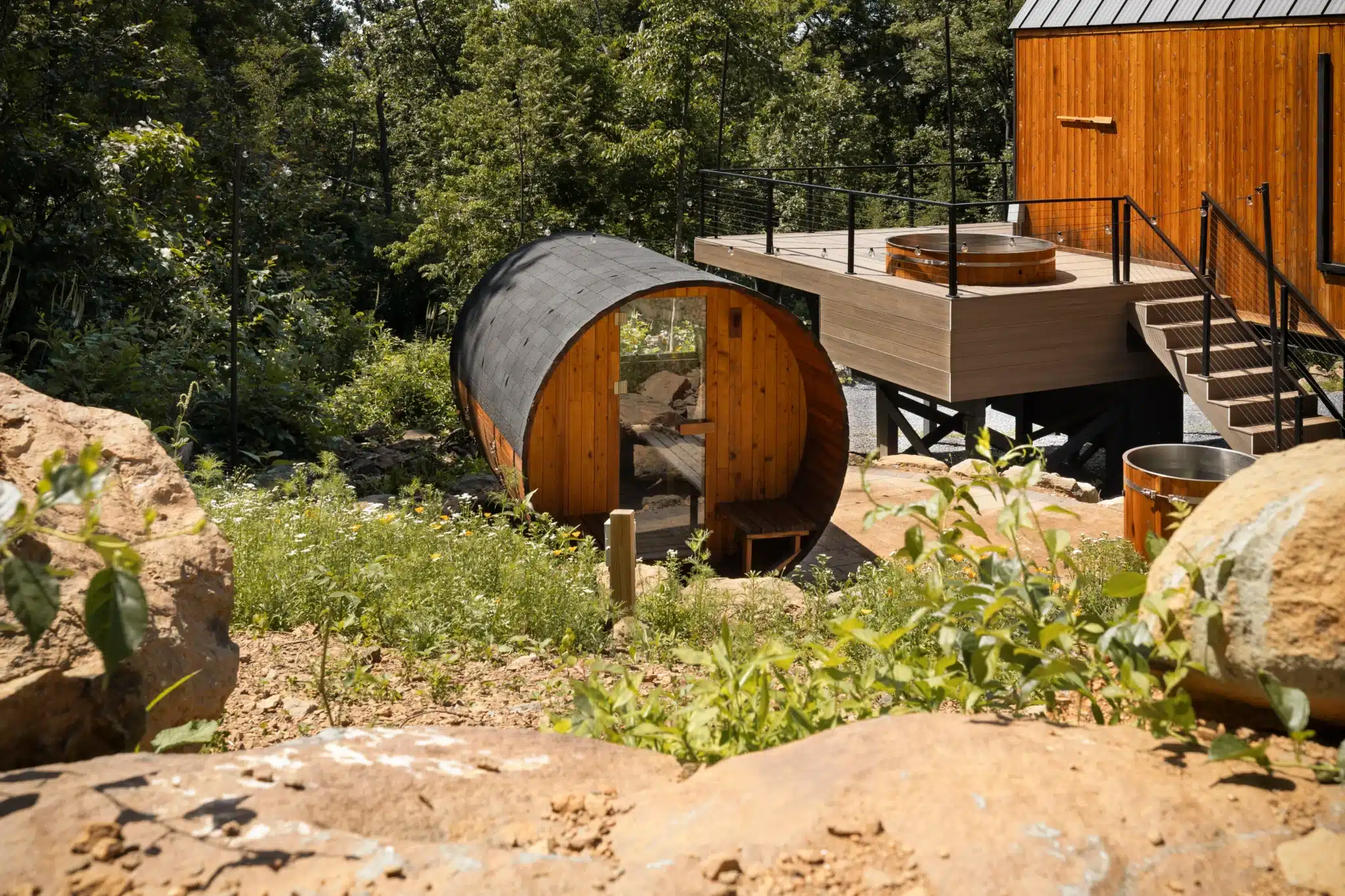
Wellness cabins occupy a third lane entirely. Royal Oak Retreat, for example, is built around a dedicated contrast-therapy island (sauna, cold plunge, and a sunken stargazing hot tub) rather than a generic hot tub add-on. If you’re planning a couples trip or a solo reset rather than a group weekend, this category fits the intent far better than a 10-guest cabin ever will.
Step 2: How Much Does It Cost to Rent a Cabin in Virginia?
Renting a Virginia mountain cabin typically costs between $100 and $400 per night depending on region, season, and amenity level, with premium wellness cabins in the Shenandoah Valley commanding rates near $300 as of 2026. Budget-tier cabins near Floyd, like Chestnut Springs Cabin Retreat, run about $100 a night or $400 a week. Mid-range Blue Ridge units from Love Ridge start near $295 nightly for larger groups.
According to AirDNA’s 2026 Shenandoah market report, area short-term rentals command an average daily rate of $323 with 52% average occupancy, producing a RevPAR of $168. That’s notably higher than the broader Virginia Tourism Corporation STR figure of $95.62, which blends in older, more rustic inventory across the wider Valley region. The gap between those two numbers tells you something important: premium cabins with real wellness amenities are pulling well above the regional average, and demand is absorbing the higher rate.
Additional costs to budget for include Virginia’s statewide 5.3% sales tax on short-term rentals, a $2 per room, per night state transient occupancy fee, and local occupancy taxes that typically add another 2 to 5%, bringing combined effective tax rates to roughly 7 to 12%. Pet fees range from $25 to $100 depending on the property. Factor these into your total before comparing nightly rates across listings.
| Cabin Tier | Typical Nightly Rate | Example | Best For |
|---|---|---|---|
| Budget rustic | $100 to $185 | Chestnut Springs Cabin Retreat, Bee Mountain Cabin | Solo trips, tight budgets |
| Mid-range group cabin | $275 to $400 | Love Ridge cabins, Rose River Farm | Families and larger groups (note: some of these are family-oriented; verify pet and group policies before booking) |
| In-park rustic (seasonal) | Varies by season | Lewis Mountain Cabins (Apr 10 to Nov 8, 2026) | Skyline Drive proximity |
| Wellness cabin | Around $300+ | Royal Oak Retreat | Couples, solo wellness travelers, milestone trips |
Step 3: Where to Stay in the Virginia Mountains
Where to stay in the Virginia mountains depends primarily on how close you want to be to Shenandoah National Park versus how much privacy and finish level you want in the cabin itself. The Shenandoah Valley corridor, running roughly from Front Royal down through Luray and Waynesboro, offers the highest concentration of private cabin rentals within a two-hour drive of Washington D.C.
Front Royal and the neighboring Shenandoah Farms area sit about 40 minutes from Shenandoah National Park’s northern entrance and roughly an hour from the Washington D.C. metro area, according to standard drive-time estimates for the region. That makes it the practical sweet spot for DMV-based travelers who want forest immersion without a three-hour drive. Royal Oak Retreat sits directly in this corridor, with Fox Meadow Winery in Linden about five minutes away and Crimson Lane Vineyards in Hume roughly eight minutes out.
Further south, the Blue Ridge Parkway corridor near Love, Virginia and Floyd offers a different character: larger group cabins, closer proximity to the Parkway itself, and a longer drive from D.C. (typically three-plus hours). If your trip centers on Parkway overlooks and multi-mile hikes rather than wellness amenities, this region makes more sense.
For readers weighing the Valley specifically, our guide to the best cabin rentals in Shenandoah Valley Virginia breaks down the sub-regions in more depth, and the best cabins near Shenandoah National Park compares in-park versus private options directly.
Step 4: Is It Cheaper to Rent a Cabin Than a Hotel?
Renting a cabin in the Virginia mountains is often comparable to or slightly higher than a mid-range hotel per night, but it typically works out cheaper per person for groups of three or more, since the cost is fixed per unit rather than per room. A hotel room near Shenandoah National Park commonly runs $150 to $250 a night for two guests with no kitchen, while a two-bedroom cabin at a similar price point sleeps up to four and includes a full kitchen, cutting meal costs significantly over a multi-night stay.
The math shifts further in the cabin’s favor once you account for what a hotel doesn’t include: private outdoor space, a full kitchen for two to three days of meals, and no shared walls or hallways. A couple spending $300 for a wellness cabin with a private hot tub and sauna is paying roughly the same as two separate hotel-plus-spa-day expenses, but getting the amenities included in the room rate rather than billed separately.
Where hotels win: last-minute flexibility, daily housekeeping, and zero deposit requirements. Where cabins win: total privacy, kitchen access, and per-person value for three or more travelers. If you’re weighing this exact tradeoff for a Shenandoah trip, our Shenandoah vacation rentals guide walks through the comparison with more regional pricing detail.
Step 5: Match the Cabin to Your Season
Choosing the right season for a Virginia mountain cabin trip means weighing crowd levels against weather and foliage payoff, and the answer changes dramatically by month. Fall foliage weekends, typically early to mid-October, bring the heaviest traffic to Skyline Drive and the tightest cabin availability of the year. Book those weekends 8 to 12 weeks out if you have a specific date in mind.
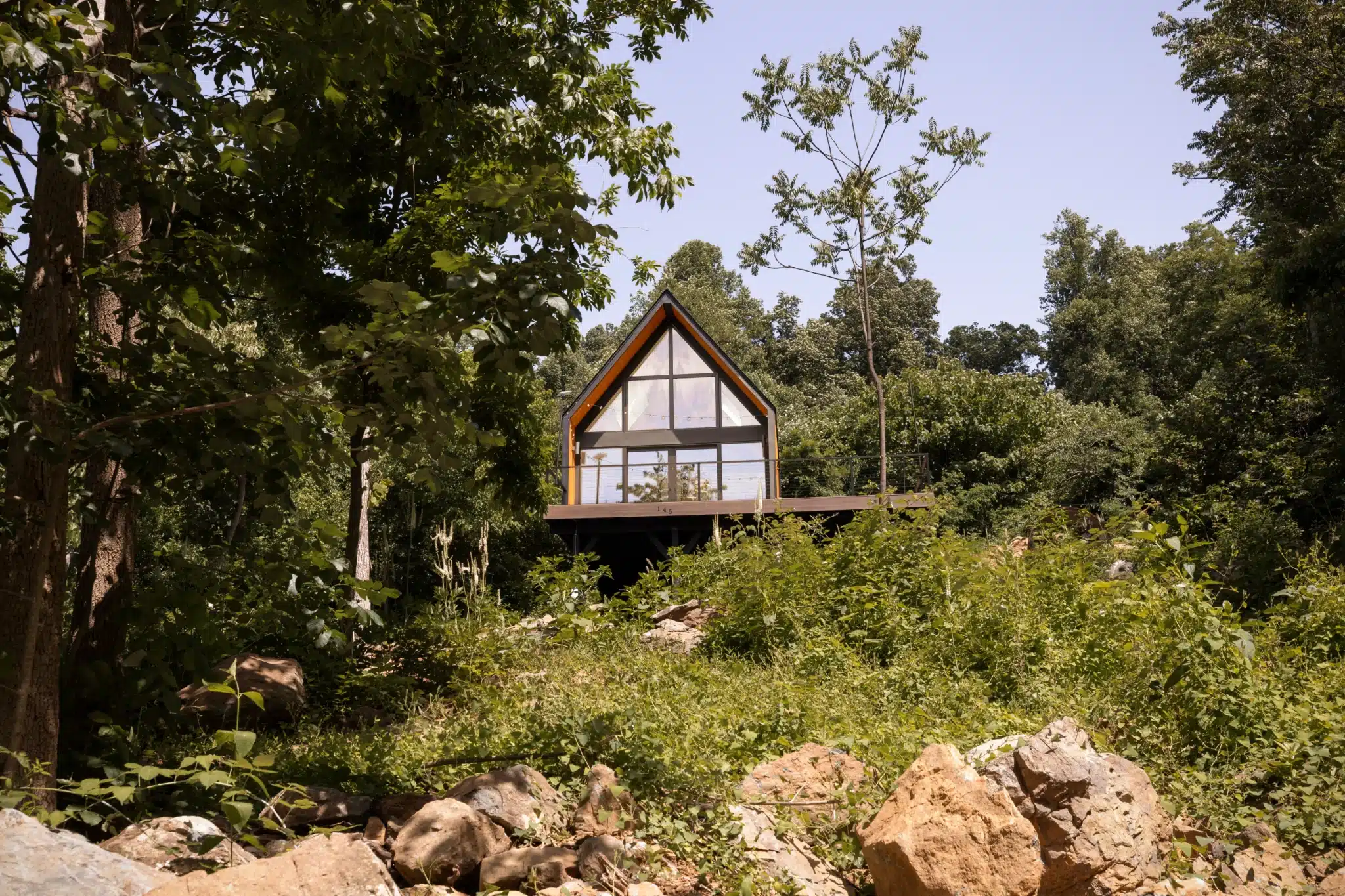
Spring, particularly late April through May, brings wildflower blooms and noticeably thinner crowds than fall, plus lower humidity than midsummer. Summer works well for river access and swimming but comes with higher humidity and, at lower elevations, more biting insects near wooded properties. Winter is the quietest and often cheapest season, but it comes with a genuine logistics note most listings skip entirely: steep gravel driveways at cabins like Royal Oak Retreat require a 4×4 vehicle when snow or ice is present. That’s not a minor detail. A sedan can get stuck on these grades, and towing in a rural mountain setting can take hours.
For a full month-by-month breakdown of what to expect, our 14 best things to do in Shenandoah National Park guide ties activities to the right season, and the Virginia hiking trails by effort level resource helps you plan hikes that match both the season and your group’s fitness level.
Step 6: Check Pet Policies Before You Book, Not After
Pet-friendly Virginia mountain cabin policies vary enormously in restrictions and fees, so confirming the specifics before booking prevents an unpleasant surprise at check-in. Lewis Mountain Cabins allows a maximum of two well-behaved pets per room at $30 per pet, per night, according to Delaware North’s published policy. Lazy Acres Cabins near Lexington charges a flat $25 per stay. Royal Oak Retreat allows one dog under 50 lbs for a flat $100 fee, a policy chosen deliberately to keep the adults-first, wellness-focused atmosphere intact rather than opening the property to multiple large dogs.
Weight limits matter more than most travelers realize. A cabin that “allows pets” without a stated weight limit may still turn away a 90-pound dog at the door, and refund policies for that scenario are rarely generous. Always ask for the exact weight cap and fee structure in writing before you finalize a reservation, especially for properties advertised primarily through third-party listing sites where policy details get buried.
If forest access matters as much as the pet policy itself, look for cabins with direct trail or yard access rather than shared common areas. A private, fenced outdoor space changes the entire trip for a dog owner compared to a property where the pet has to stay leashed near a parking area.
Step 7: Plan Your Itinerary Around One Cabin, Not a Driving Loop
Building a multi-day Virginia mountain cabin itinerary works best when the cabin serves as a fixed base rather than one stop on a driving loop. A typical two-night stay in the Shenandoah Farms or Front Royal area can reasonably include one full day inside Shenandoah National Park, one afternoon at a nearby winery, and one morning left completely unscheduled.
Day one: arrive by early afternoon, settle in, and save the evening for the property itself rather than driving to dinner. Day two: head into the park via Skyline Drive, roughly 40 minutes from Front Royal, for a half-day of hiking, then return by mid-afternoon. From there, Fox Meadow Winery in Linden sits about five minutes from Royal Oak Retreat, making it a realistic pre-dinner stop rather than a separate excursion requiring its own tank of gas. Crimson Lane Vineyards in Hume, roughly eight minutes out, works as an alternative if Fox Meadow is busy on a weekend.
Day three, if your stay runs that long, is where the wellness amenities earn their place. This is the morning to skip a formal hike and use the sauna and cold plunge sequence instead: heat for 10 to 15 minutes, cold plunge for one to three minutes, repeat two to three rounds. It’s a far better use of a last morning than packing in one more attraction you’ll rush through anyway.
What Makes a Virginia Mountain Cabin Genuinely Restorative, Not Just Scenic
A wellness-oriented Virginia mountain cabin is defined less by its view and more by whether its amenities actively support physical recovery, and this is the detail most competing guides skip entirely. Contrast therapy, the practice of alternating heat exposure with cold immersion, works on a straightforward physiological principle: moving from a sauna’s heat to a cold plunge forces your vascular system to cycle rapidly, which improves circulation, reduces muscle soreness, and triggers a parasympathetic nervous system response that many people describe as a genuine mental reset.
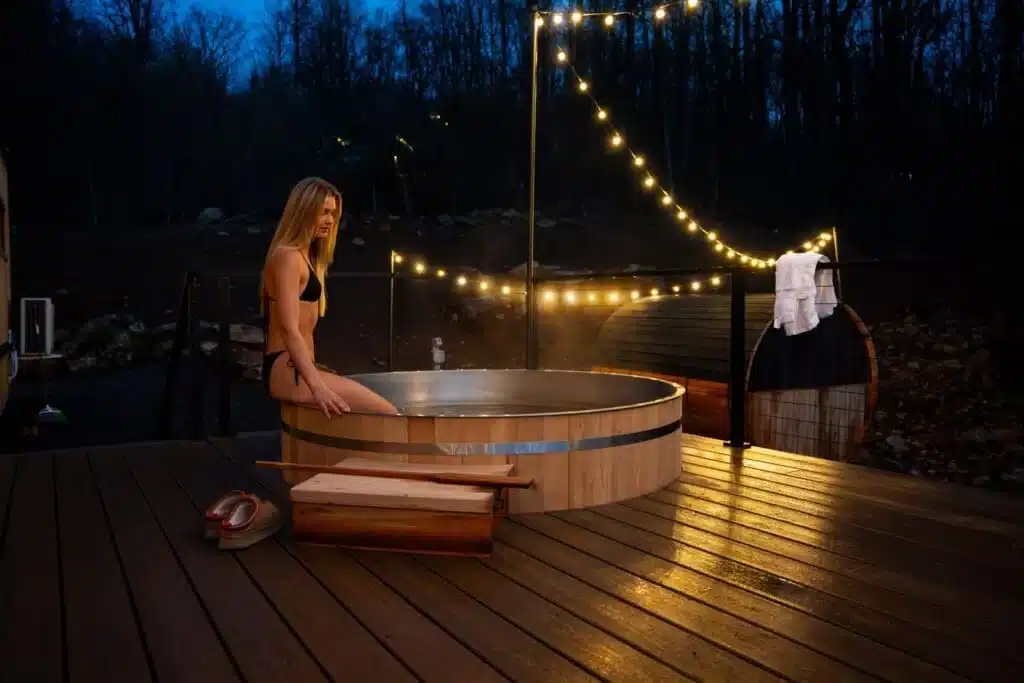
Most Virginia cabins that advertise a “hot tub” stop there. Royal Oak Retreat built a dedicated contrast-therapy island specifically because a single hot tub, however nice, doesn’t create that physiological cycling effect on its own. The setup pairs a Scandinavian-style sauna with a cold plunge and a large sunken hot tub positioned for stargazing, all housed within a cabin constructed with no plastics or added chemicals in the build. That non-toxic construction detail matters more than it sounds: guests sensitive to off-gassing or synthetic materials notice the difference within the first night, even if they can’t articulate exactly why the air feels different.
As of 2026, this combination remains genuinely uncommon in the Shenandoah Valley cabin market. Most competing properties, including several solid options like Bee Mountain Cabin near Three Ridges or the units at Rose River Farm, offer a jetted tub or a standard hot tub as the primary relaxation feature. That’s a perfectly good amenity for a weekend away. It is not the same experience as a structured contrast-therapy sequence, and travelers specifically seeking burnout recovery or a deliberate physical reset should know the difference before booking based on photos alone.
One honest caveat: contrast therapy isn’t for everyone. Guests with certain cardiovascular conditions should check with a physician before cold plunge use, and first-timers often find the cold immersion genuinely uncomfortable for the first 20 to 30 seconds. That discomfort is part of the process, not a flaw in the setup, but it’s worth knowing before you’re standing at the edge of the plunge at 9 p.m. wondering if you’ve made a mistake.
Common Mistakes First-Time Cabin Renters Make
- Booking based on photos alone. A wide-angle lens makes a 15-foot gap between cabins look like true seclusion. Ask directly how far the nearest neighboring structure sits, and whether outdoor amenities like a hot tub face another property.
- Ignoring the driveway. Rural Virginia cabin driveways range from paved and flat to steep gravel that requires 4×4 in winter. This single detail can end a trip before it starts if you arrive in a low-clearance sedan during an ice event.
- Assuming all pet policies are equal. A property that “allows dogs” might cap weight at 25 lbs, or charge per-night fees that add up fast on a four-night stay. Confirm the number, not just the yes.
- Overbooking the itinerary. Trying to hit Luray Caverns, three wineries, and two hikes in a two-night stay defeats the purpose of a cabin trip built around unstructured time.
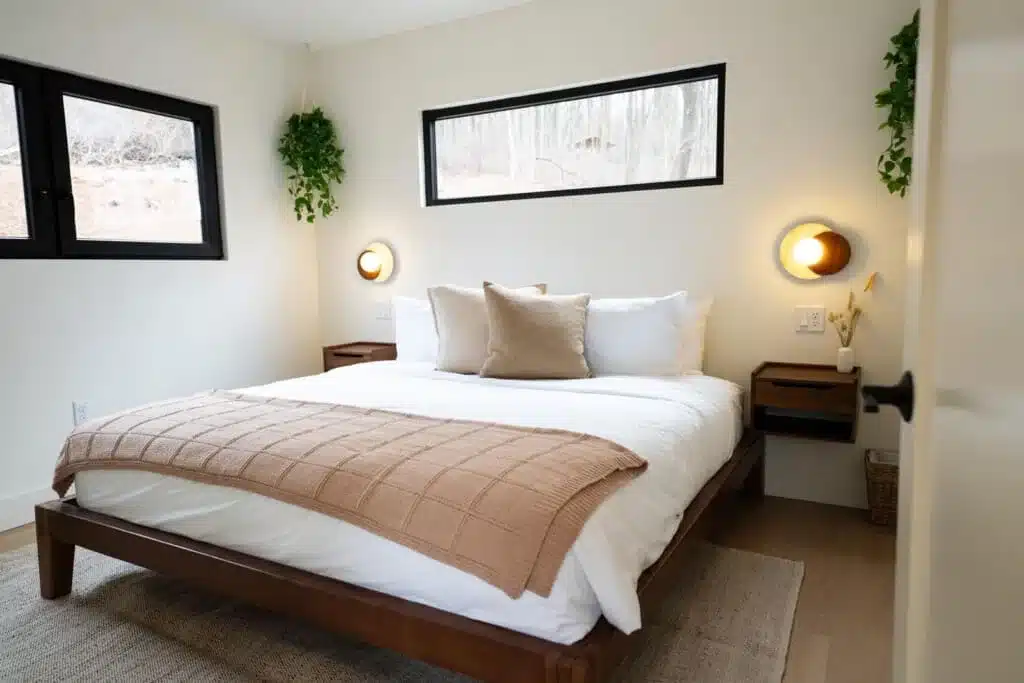
- Skipping the loft access question. Some cabins, including Royal Oak Retreat, reach a loft bedroom via a spiral staircase. That’s a genuine consideration for guests with mobility concerns and rarely gets mentioned in listing photos.
Tips for First-Time Visitors to Virginia Mountain Cabins
First-time visitors to a Virginia mountain cabin should prioritize three things before arrival: confirming cell service and internet reliability, understanding the exact check-in window, and packing for temperature swings that mountain elevation creates regardless of season. Many rural cabins in the Shenandoah Valley sit in cell dead zones, which is why properties with Starlink satellite internet, like Royal Oak Retreat, solve a genuine problem for remote workers extending a trip into a Monday.
Standard check-in at most Shenandoah cabins runs around 3 p.m. with checkout near 11 a.m., though early check-in is sometimes available on request if the previous guest departs early and turnover cleaning finishes ahead of schedule. Pack layers regardless of the month. Mountain elevation drops temperatures 10 to 15 degrees below valley readings, so a 70-degree afternoon in Front Royal can mean a 45-degree evening at a cabin several hundred feet higher.
Finally, budget an extra 30 to 45 minutes for grocery runs before you arrive. The nearest full grocery store to most Shenandoah Farms-area cabins sits closer to Front Royal proper, not immediately at the property, and cabin kitchens (even fully equipped ones) work best when you’ve stocked ahead rather than planning a mid-stay supply run.
Frequently Asked Questions
How much does it cost to rent a cabin in Virginia?
Virginia mountain cabins typically range from about $100 a night for budget rustic units to $300 or more for premium wellness cabins with private hot tubs and saunas. AirDNA’s 2026 data puts Shenandoah-area premium cabins closer to $323 nightly at 52% average occupancy, while broader Virginia Tourism Corporation figures average closer to $95 across the wider regional market.
Where should I stay in the Virginia mountains?
The Shenandoah Valley corridor near Front Royal and Shenandoah Farms works best for travelers coming from the Washington D.C. metro area, sitting about 40 minutes from Shenandoah National Park and roughly an hour from D.C. The Blue Ridge Parkway corridor near Love and Floyd suits travelers prioritizing Parkway access and larger group cabins over quick D.C. access.
How much is it to rent a cabin in the Appalachian Mountains?
Appalachian mountain cabin rates across Virginia generally mirror the broader mountain cabin market, running $100 to $400 a night depending on size, season, and amenity level. Group-oriented cabins sleeping eight to twelve guests, like several Love Ridge properties, start around $295 nightly, while smaller couples’ cabins can run lower or, for premium wellness properties, notably higher.
Is it cheaper to rent a cabin as opposed to a hotel?
A cabin is often comparable in nightly price to a hotel but cheaper per person for groups of three or more, since the rate covers the whole unit rather than per room. Cabins also include a full kitchen, cutting meal costs over a multi-night stay, while hotels offer more last-minute flexibility and no security deposit.
Do Virginia mountain cabins allow pets?
Many do, but policies vary significantly. Lewis Mountain Cabins allows up to two pets at $30 per pet, per night, while Royal Oak Retreat allows one dog under 50 lbs for a flat $100 fee. Always confirm the weight limit and fee structure directly with the property before booking.
What is the best time of year to visit a Virginia mountain cabin?
Fall foliage weekends in early to mid-October offer the most dramatic scenery but the heaviest crowds and tightest availability. Spring, particularly late April through May, offers wildflowers and thinner crowds. Winter is quietest and often least expensive, but requires a 4×4 vehicle for cabins with steep gravel driveways.
Do I need a four-wheel-drive vehicle to reach a Virginia mountain cabin?
Not always, but it’s recommended for cabins with steep gravel driveways during winter months when snow or ice is likely. Royal Oak Retreat, for example, specifically advises 4×4 access in winter due to its driveway grade. Always ask the property directly about driveway conditions before a cold-season trip.
The Bottom Line on Booking a Virginia Mountain Cabin
Booking the right Virginia mountain cabin in 2026 comes down to matching the property type to your actual trip goal, not just the prettiest photo set. Budget rustic cabins near Floyd serve a different traveler than the group-sized Blue Ridge units from Love Ridge, and both serve a different traveler than a wellness-focused cabin built around contrast therapy. As Shenandoah Valley demand keeps climbing (AirDNA’s 2026 data already shows premium cabins pulling well above the region’s broader average rate) knowing which tier you’re actually booking matters more than it did even two years ago.
If your version of a mountain cabin trip is less about covering ground and more about doing genuinely less for 48 hours, the sauna, cold plunge, and stargazing hot tub setup at Royal Oak Retreat was built for exactly that. The drive from the D.C. metro area runs under an hour and a half in normal traffic, and the reset it delivers tends to outlast the drive home.
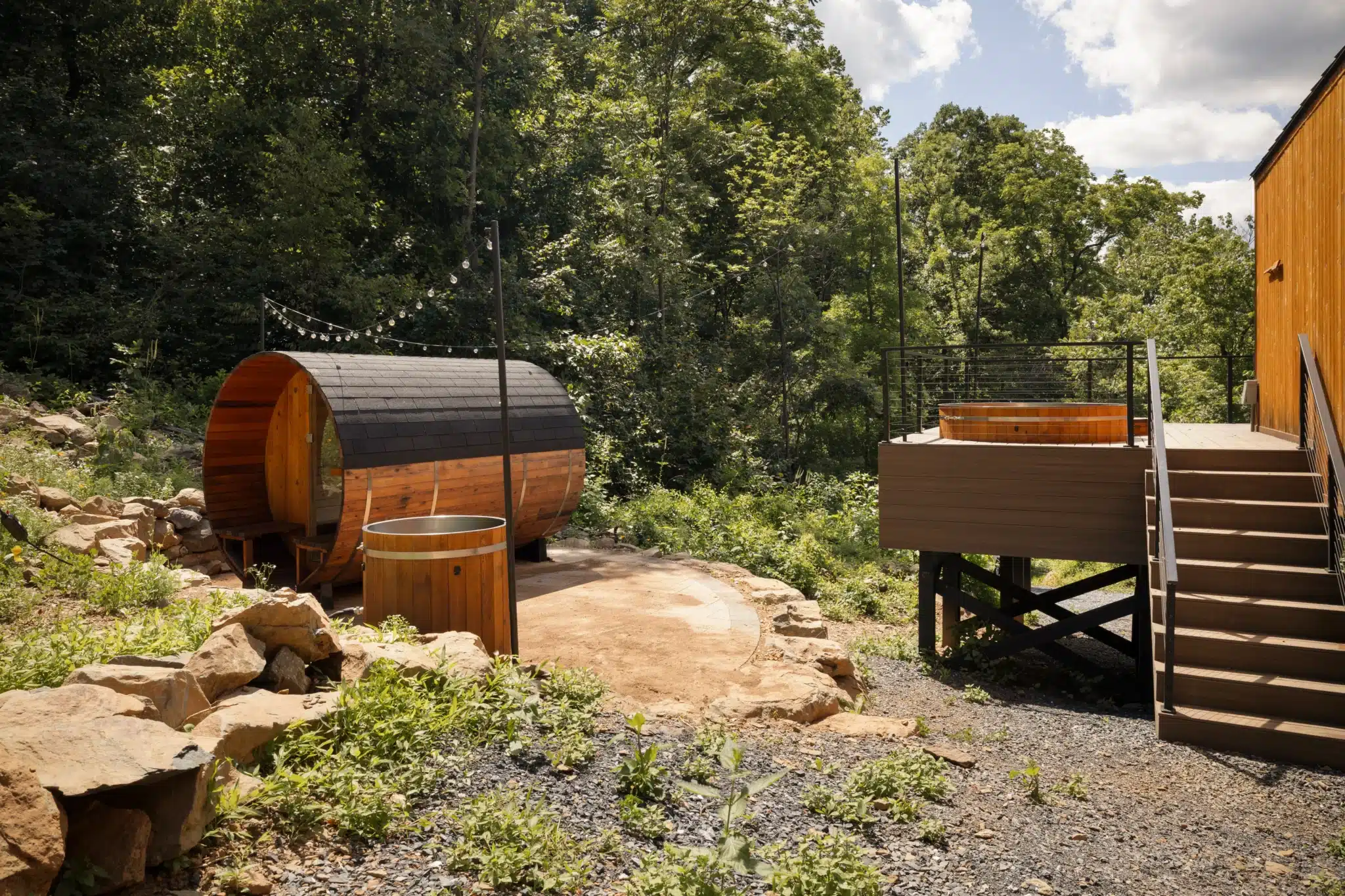
If contrast therapy and true seclusion are what you’re after rather than a crowded weekend loop, Royal Oak Retreat in Shenandoah Farms puts the sauna, cold plunge, and stargazing hot tub steps from the door. Check available dates here.
Content powered by inkSTR.co