
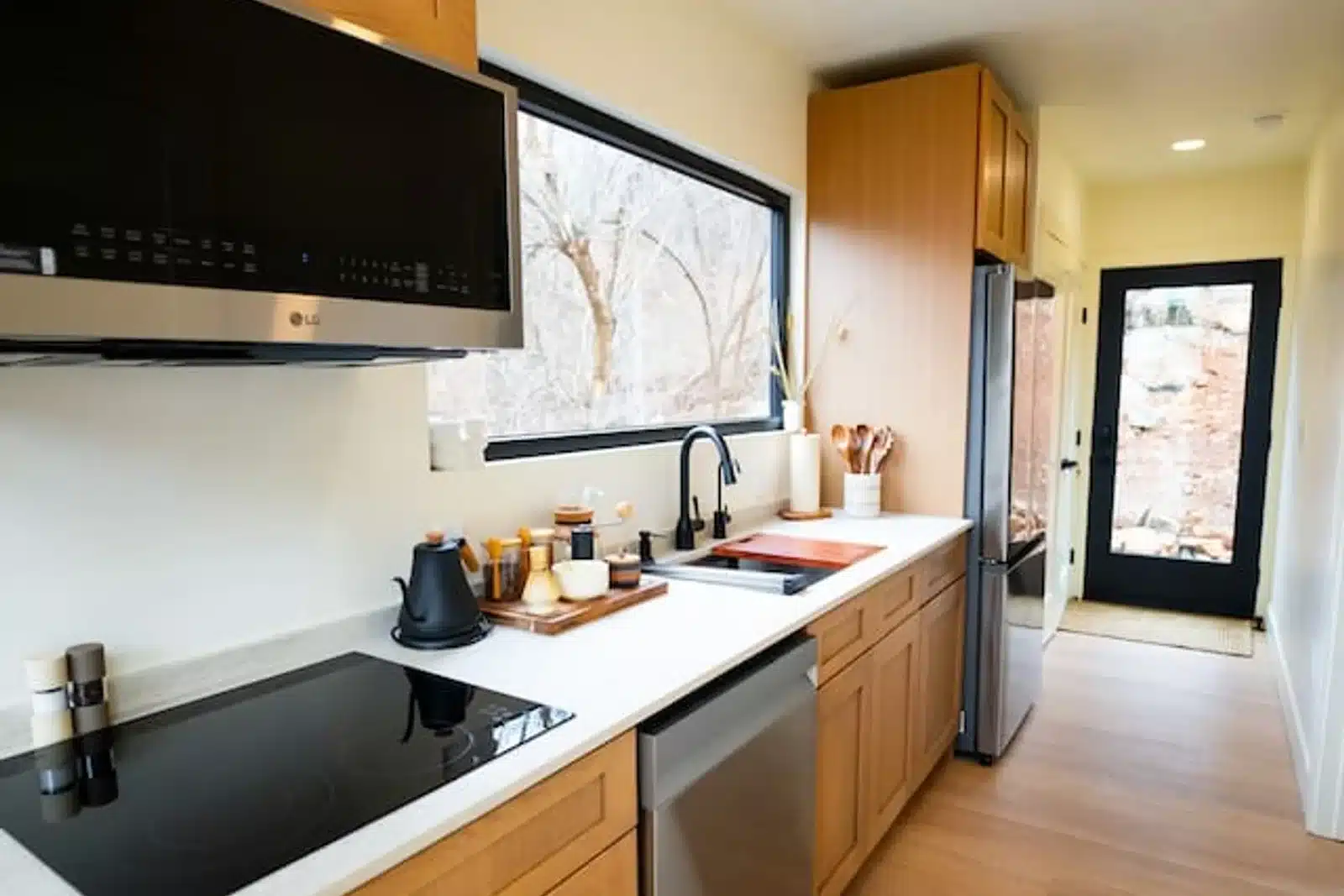
A wellness cabin is a private cabin rental built around dedicated recovery amenities, typically a sauna, cold plunge or ice bath, and a hot tub, rather than a standard cabin that simply happens to have a hot tub on the deck. The distinction matters more than most listings let on. A lot of properties slap “wellness” on the title and deliver a hot tub and a nice view. A genuine wellness cabin treats sauna, cold exposure, and soaking as a connected system, with the space, plumbing, and electrical work to actually support it.
Key Takeaways
- A true wellness cabin combines at least three recovery elements, sauna, cold plunge, and hot tub, as one connected “contrast therapy” system rather than isolated amenities.
- Shenandoah, Virginia short-term rentals report an average daily rate around $314 to $324 and roughly 54% occupancy, according to RedAwning market data, with 2-bedroom units averaging about $292 per night.
- Shenandoah National Park logged more than 1.7 million visitors in 2026, its highest count in seven years, per park visitation data, which is pushing demand for wellness-focused lodging near the park’s Front Royal entrance.
- Cold plunge and sauna contrast therapy is a common recovery pattern, but people with heart conditions, pregnant guests, or anyone with circulatory concerns should check with a doctor before use.
- Royal Oak Retreat, a 2-bedroom, 1-bathroom cabin in Shenandoah Farms sleeping up to 4, pairs a sunken stargazing hot tub with a Scandinavian sauna and cold plunge on one contrast-therapy island, about 40 minutes from Shenandoah National Park.
- No published wellness cabin content compares real-world costs, safety guidance, or honest trade-offs, which is exactly what this guide covers.
If you’ve spent an evening scrolling listings labeled “wellness retreat,” you already know the frustration. Half of them show a hot tub photo and call it a day. The other half bury the actual wellness infrastructure three paragraphs deep, if it exists at all. This guide separates the two, and gives you a framework for judging any wellness cabin, whether you’re booking in the Blue Ridge foothills, the Georgia mountains, or upstate New York.
At Royal Oak Retreat, we’ve fielded enough guest questions to know exactly where the confusion lives: is the sauna actually usable, does the cold plunge work in winter, and is this a real recovery space or a marketing photo. This article answers those questions directly, using verified data from the Shenandoah Valley market alongside a broader look at how wellness cabins across the country structure their amenities.
By the end, you’ll know what separates a legitimate wellness cabin from a hot tub with better branding, what the contrast therapy science actually supports, and how a 2026 booking in Shenandoah Farms, Virginia, compares to similar properties in Georgia and West Virginia.
What Actually Defines a Wellness Cabin?
A wellness cabin is a private rental property purpose-built around recovery amenities, specifically a combination of heat therapy (sauna), cold exposure (plunge or ice bath), and soaking (hot tub or tub), positioned as connected features rather than standalone add-ons. The term became a marketing category around 2023-2024 as home recovery equipment grew more affordable.
Specifically, the properties doing this well design a “contrast therapy island,” where sauna, cold plunge, and hot tub sit within a short walk of each other. June Farms in West Sand Lake, New York, built three identical Wellness Huts from converted agricultural Quonset huts, each with a dry/wet sauna, soaking tub, and optional ice bath. Elevate Wellness Cabin in Ellijay, Georgia, takes it further with a Peloton, TRX system, and Theragun alongside its sauna and cold plunge, inside the gated Coosawattee River Resort.
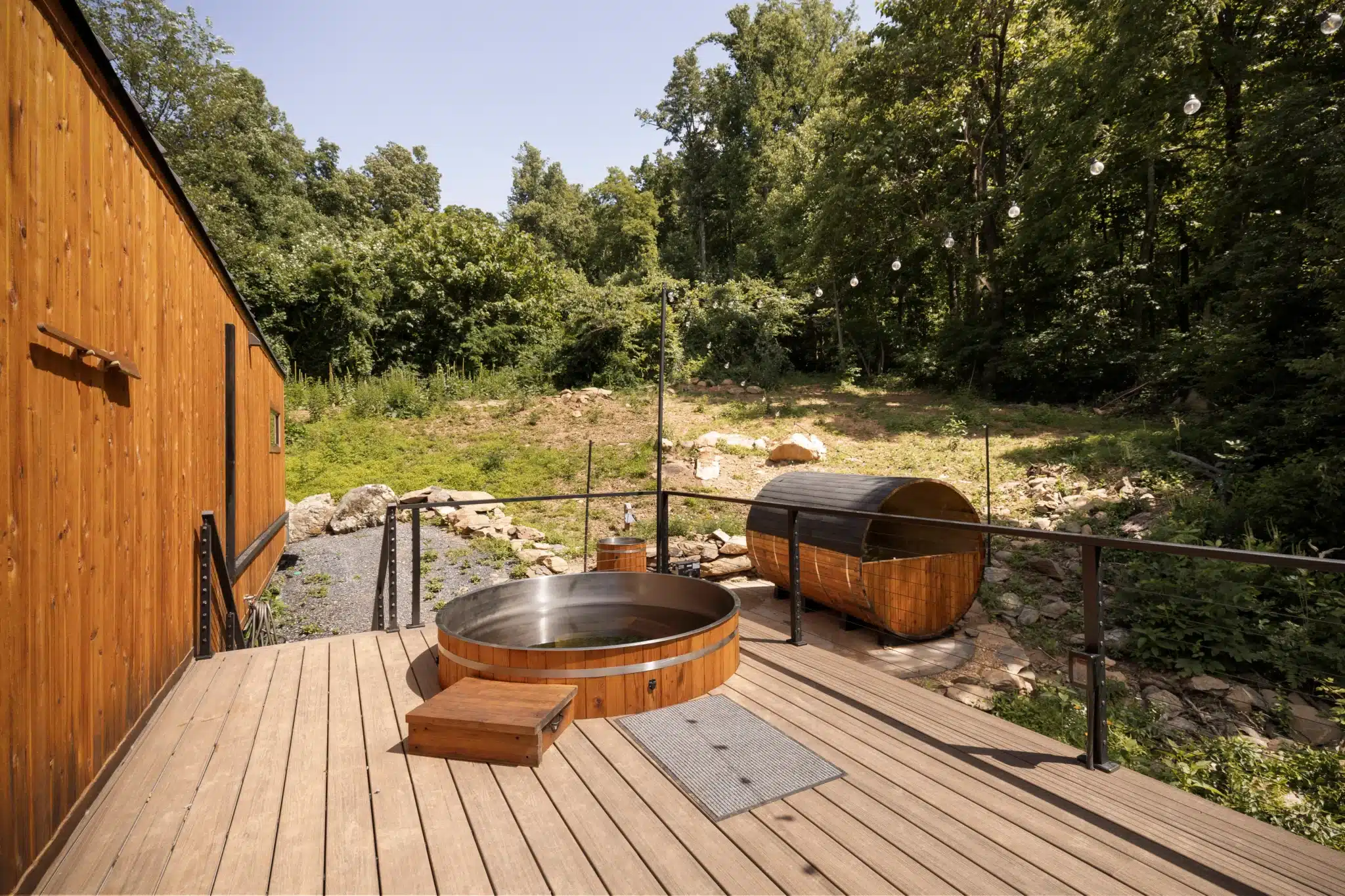
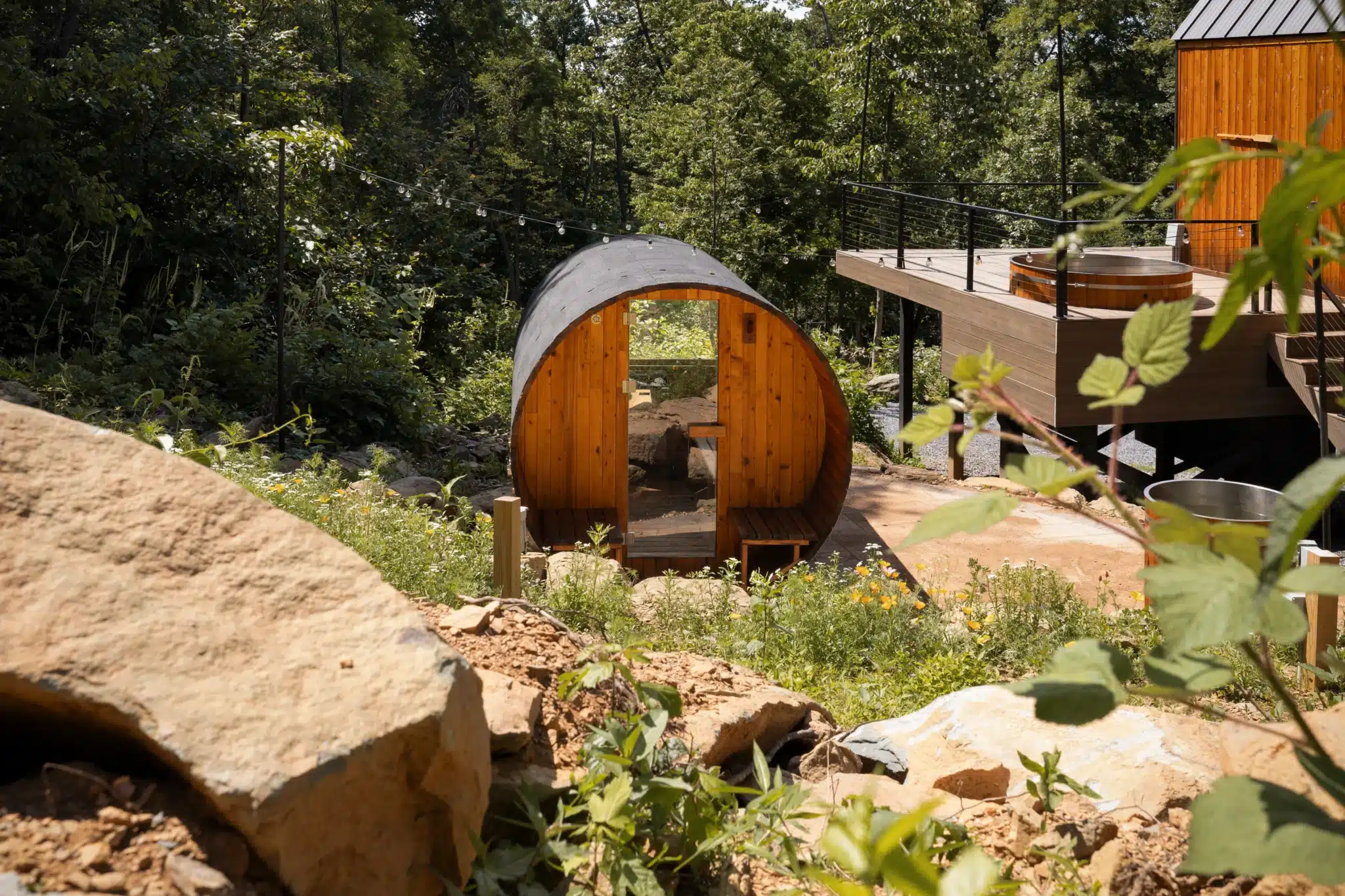
Royal Oak Retreat in Shenandoah Farms, Virginia, follows the same connected-system logic: the sunken stargazing hot tub sits steps from the Scandinavian sauna and cold plunge on one deck, so contrast therapy is a walk, not a production. As of 2026, that combined layout, rather than any single amenity, is what separates a wellness cabin from a cabin that happens to have a hot tub.
Which Sauna Types Show Up in Wellness Cabins?
Sauna type matters because dry, wet, infrared, and salt saunas each produce a different heat experience and recovery effect, and most wellness cabin listings don’t explain the difference. A dry sauna uses heated rocks or an electric heater to warm the air, typically to 150-195 degrees Fahrenheit with low humidity. A wet sauna adds steam for higher humidity at a lower temperature. Infrared saunas heat the body directly through light panels rather than heating the surrounding air, which lets some guests tolerate longer sessions at lower ambient temperatures.
Harman’s Log Cabins along the North Fork River in West Virginia illustrates how granular this gets: Cabin 21 has a far-infrared sauna, while Cabins 16 and 21 separately offer private steam saunas, and the shared Riverside Wellness Area has two 6-person panoramic Redwood saunas plus a dedicated salt sauna. That’s four distinct sauna experiences on one property.
Royal Oak Retreat uses a Scandinavian-style dry sauna, the traditional format most associated with contrast therapy protocols: short, intense heat exposure followed immediately by cold. It’s a simpler setup than Harman’s multi-cabin sauna menu, but it means every stay includes the same reliable, private sauna experience rather than a shared, book-ahead facility.
| Sauna Type | Typical Temp Range | Best For |
|---|---|---|
| Dry (Scandinavian/Finnish) | 150-195°F | Traditional contrast therapy, shorter sessions |
| Wet/Steam | 110-120°F, high humidity | Respiratory comfort, longer tolerance |
| Infrared | 120-150°F | Lower heat tolerance guests, longer sessions |
| Salt | Varies by unit | Combined heat and mineral exposure |
Is Cold Plunge Therapy Actually Worth It, or Just a Trend?
Cold plunge therapy involves brief immersion in water typically between 39-59 degrees Fahrenheit, usually following heat exposure, and it’s become the amenity most wellness cabins now advertise. The honest answer on whether it’s “worth it” depends on what you’re expecting. Cold exposure is well documented to reduce perceived muscle soreness and produce a temporary mood lift through norepinephrine release. It is not a guaranteed cure for anything, and no legitimate operator should claim it is.
A common contrast therapy pattern is alternating around four minutes in the sauna with sixty to ninety seconds in the cold plunge, repeated two to three times, though guests should always listen to their own tolerance rather than following a rigid protocol. Harman’s Log Cabins is adding cold plunges to its Riverside Wellness Area in spring 2026, alongside its existing infrared and steam saunas, a sign the category keeps expanding even at properties that started with saunas alone.
At Royal Oak Retreat, the cold plunge sits directly on the contrast therapy island next to the sauna, so there’s no walk across a resort or a wait for a shared facility. Guests set their own pace. One honest caveat: cold plunges lose heat fast in winter without insulation or a chiller, so ask any property directly how water temperature is maintained in January versus July before assuming it performs the same year round.
Who Should Skip the Sauna and Cold Plunge, and Why?
Sauna and cold plunge use carries real contraindications that most wellness cabin marketing pages never mention, which is one of the biggest gaps in this category. Specifically, anyone with a diagnosed heart condition, uncontrolled high blood pressure, or a history of fainting should talk to a physician before using either a sauna or a cold plunge, since both cause rapid changes in blood pressure and heart rate.
Pregnant guests are generally advised against high-heat sauna sessions due to core temperature risk, and cold plunge tolerance varies enough during pregnancy that a doctor’s clearance is the responsible move rather than guessing. Guests with Raynaud’s syndrome or other circulatory conditions should approach cold immersion cautiously and never go in alone the first time.
Alcohol and sauna use is a combination worth calling out directly: alcohol impairs the body’s ability to regulate temperature and increases dehydration risk, so pair drinks with sauna sessions carefully, if at all. None of the competitor wellness cabin pages we reviewed, including June Farms, Elevate Wellness Cabin, or Harman’s, mention any of this. A property that cares about guest safety should, and it costs nothing to ask before you book whether there’s posted guidance on-site.
How Much Does a Wellness Cabin Actually Cost in 2026?
Wellness cabin pricing in 2026 typically ranges from $200 to $325 per night depending on bedroom count, location, and equipment included, based on current market listings. Elevate Wellness Cabin in Ellijay, Georgia lists an average nightly rate of $225 for a 3-bedroom, 3-bathroom cabin sleeping 8, with a sauna, cold plunge, hot tub, and full recovery gear including a Peloton and TRX system included in that price.
In the Shenandoah Valley specifically, RedAwning market data puts the average daily rate for short-term rentals around $314 to $324, with occupancy near 54%. Broken down by unit size, 2-bedroom properties average about $292 per night, while 1-bedroom units run closer to $227. Warren County, where Shenandoah Farms sits, has roughly 300 short-term rentals with about 49% average occupancy as of 2026, according to regional tourism data, which is tighter supply than neighboring Page County’s roughly 800 rentals.
Is that premium justified? For a standard cabin with a hot tub, arguably not. For a property with a dedicated sauna and cold plunge built specifically for contrast therapy, the math changes, since replicating that setup with a home sauna and chiller unit costs several thousand dollars before you factor in installation. Royal Oak Retreat’s 2-bedroom layout, sleeping up to 4 with the full contrast therapy island included, sits within that regional Shenandoah rate range while offering amenities that many higher-priced competitors in other markets don’t combine on one deck.
What Should You Actually Look For Before Booking?
Booking a legitimate wellness cabin means verifying specific amenities exist as advertised rather than trusting a listing title alone. Ask these questions before you commit, since photos alone can’t confirm plumbing, electrical capacity, or maintenance quality:
- Is the sauna wood-burning or electric, and how long does it take to heat up? A cold-start electric sauna can take 30-45 minutes.
- Is the cold plunge chilled mechanically, or does it rely on ambient water temperature? This matters enormously for summer bookings.
- Are the hot tub, sauna, and cold plunge private to your group, or shared with other guests, as at Harman’s Riverside Wellness Area?
- What’s the pet policy, and is there a weight limit? Royal Oak Retreat allows one dog under 50 lbs with a pet fee, a specific detail worth confirming at any property.
- Is there reliable internet if you need it? Starlink and similar satellite service has become the differentiator for remote cabins that still need to support video calls.
- What’s the actual drive time from the nearest major highway, not just the nearest town? Steep gravel driveways are common in mountain settings and some require four-wheel drive in winter.
One trade-off worth understanding upfront: the most secluded wellness cabins, the ones with genuine forest privacy and zero shared walls, are usually the ones furthest from restaurants and grocery stores. That’s the point for a lot of burnout-recovery travelers, but pack accordingly.
Where Should You Actually Stay in the Shenandoah Valley for a Wellness Reset?
Shenandoah Valley wellness cabin options in 2026 range from national park lodging to private rentals, and the right pick depends on whether you want dedicated recovery amenities or simply proximity to trails. Lodging inside Shenandoah National Park itself, like Skyland or Big Meadows Lodge, gets you closest to Skyline Drive but offers standard hotel-style rooms without private wellness infrastructure.
Royal Oak Retreat sits about 40 minutes from the park’s Front Royal entrance in Shenandoah Farms, close enough for a full day on Skyline Drive without the drive eating your evening. The cabin’s 1,000 square feet include a main bedroom with a king bed and a loft reached by spiral staircase with a queen bed, sleeping up to 4 total. That loft staircase is worth flagging honestly: it’s not ideal for guests with mobility limitations, so factor that in if anyone in your group has knee or hip concerns.
For wine before or after a sauna session, Fox Meadow Winery in Linden is about 5 minutes away, and Crimson Lane Vineyards in Hume is roughly 8 minutes out. If you’d rather browse produce and local goods, The Giving Tree Farmers Market in Linden sits about 10 minutes from the cabin. Compare that to the broader cabin rentals across Shenandoah Valley Virginia, and the combination of contrast therapy amenities plus winery proximity is genuinely uncommon in this specific price bracket.
Guests planning a longer stay should also check our hiking trails guide for Shenandoah National Park, which breaks down mileage and difficulty for trails accessible from the park’s northern entrance, the closest access point to Shenandoah Farms.
Direct Booking vs. Third-Party Platforms: What’s the Real Difference?
Direct booking means reserving a wellness cabin straight through the owner’s website rather than through a third-party listing platform, and the practical difference comes down to communication and flexibility. When you book direct with Royal Oak Retreat, questions about the sauna schedule, pet policy, or driveway conditions in winter go straight to the people who manage the property, rather than through a platform’s messaging layer.
Direct booking also typically gives you more flexibility to ask about early check-in, since Royal Oak Retreat’s standard check-in is 3 PM and check-out is 11 AM, but early arrival can sometimes be arranged directly when the previous guest departs early. That kind of real-time adjustment is harder to negotiate through a third-party platform’s standard messaging flow.
For comparison, Elevate Wellness Cabin in Georgia books through Cabin Connoisseur, while Harman’s Log Cabins uses the Rezstream booking portal, both legitimate booking paths that work well for those specific properties. The best rates for Royal Oak Retreat are available when booking direct via royaloakretreat.com, so it’s worth checking there first regardless of where you initially found the listing.
When Is the Best Time of Year to Visit a Wellness Cabin in Shenandoah?
The best time to visit a Shenandoah Valley wellness cabin depends on whether you’re prioritizing foliage, trail conditions, or contrast therapy weather, since each season changes the experience meaningfully. Fall, specifically mid-to-late October, brings peak color to the ridgeline oaks and hickories visible from cabin decks in Shenandoah Farms, usually a week or two after the higher elevations along Skyline Drive have already turned.
Winter sessions pair especially well with contrast therapy: stepping from a 190-degree sauna into a cold plunge feels sharper when the outdoor air is already near freezing, and the sunken hot tub afterward becomes the main event rather than an afterthought. That said, a 4×4 vehicle is genuinely necessary for Royal Oak Retreat’s driveway in snow, not just a suggestion, so check the forecast before a January booking.
Spring and early summer bring the fullest tree canopy and the most reliable weather for outdoor fire pit evenings, while late summer’s humidity makes the cold plunge feel more essential than optional. Shenandoah National Park’s visitation hit 1.7 million in 2026, its highest mark in seven years, so weekends from June through October see meaningfully more traffic on Skyline Drive than weekday visits, worth planning around if crowds bother you.
What Do Guests Consistently Get Wrong About Wellness Cabins?
The most common mistake is assuming “wellness cabin” automatically means the sauna and cold plunge are private and always available, when many properties, including sections of Harman’s Riverside Wellness Area, operate on a shared or scheduled basis. Always confirm privacy status before booking if that’s a priority, since it changes the entire experience.
A second mistake: treating the cabin as a place to cram in a packed sightseeing itinerary rather than a place to actually slow down. The properties built around contrast therapy work best when guests block out unstructured time for sauna sessions rather than squeezing them between activities. A third mistake is skipping the safety conversation entirely. Ask any host directly about cold plunge water temperature control and sauna heat-up time before you arrive, not after.
Finally, guests often overlook non-toxic construction as a wellness factor. Royal Oak Retreat was built without plastics or chemical treatments in its construction, a detail that matters for guests sensitive to off-gassing from new synthetic materials, something rarely disclosed by competitor listings in this category.
Practical Guidance: How to Choose the Right Wellness Cabin for You
Choosing a wellness cabin comes down to matching the property’s specific amenities to your actual recovery goals rather than booking based on photos alone. If contrast therapy is your priority, confirm the sauna, cold plunge, and hot tub sit close together, as they do on Royal Oak Retreat’s single deck, rather than scattered across a larger resort property.
If you’re traveling with a dog, confirm weight limits and fees upfront. If you need to work remotely between sessions, ask specifically about internet type, since satellite service like Starlink handles video calls more reliably than older rural DSL. And if mobility is a concern for anyone in your party, ask about stairs, lofts, and deck access before booking, not after arrival.
Common mistakes to avoid: booking a “wellness” listing without confirming the cold plunge actually chills below ambient temperature, assuming winter driveway access matches summer conditions, and underestimating how much unstructured downtime a genuine reset actually requires. Two full days is a minimum for noticing any real benefit from contrast therapy; a single overnight barely gets you one sauna session.
Frequently Asked Questions
Does Royal Oak Retreat actually have a private hot tub, or is it shared?
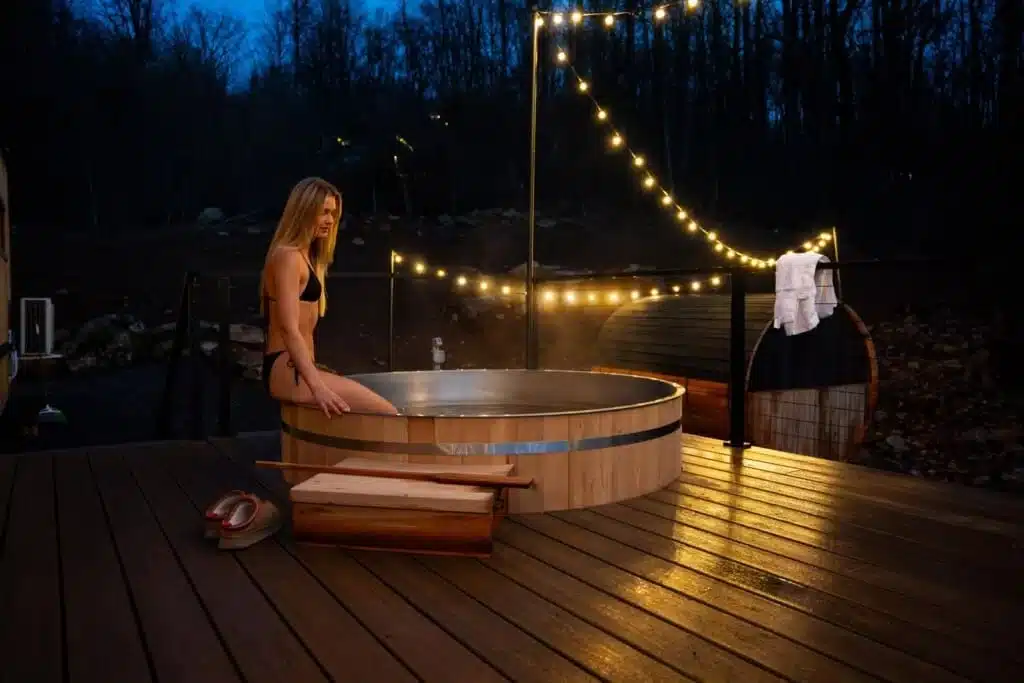
The sunken stargazing hot tub at Royal Oak Retreat is fully private to your group, set on the deck as part of the cabin’s dedicated contrast therapy island alongside the sauna and cold plunge.
Is Royal Oak Retreat pet-friendly, and are there restrictions?
Yes, Royal Oak Retreat allows one dog under 50 lbs with a $100 pet fee. The property is built without plastics or chemical treatments, which some guests specifically value when traveling with pets sensitive to synthetic materials.
How far is Royal Oak Retreat from Shenandoah National Park?
Royal Oak Retreat sits about 40 minutes from Shenandoah National Park’s Front Royal entrance, giving access to Skyline Drive and over 500 miles of Blue Ridge trail network within the park.
Is there EV charging available on-site at Royal Oak Retreat?
Yes, Royal Oak Retreat has an on-site EV charger, along with Starlink high-speed internet, making it a practical stop for electric vehicle owners driving from the Washington D.C. area, roughly a 1-hour drive away.
What’s included in the contrast therapy setup at Royal Oak Retreat?
The setup includes a Scandinavian-style sauna, a cold plunge, and a large sunken hot tub, all positioned together on one deck so guests can move between heat and cold exposure without walking across the property.
Is a wellness cabin suitable for a first-time cold plunge experience?
Yes, a private wellness cabin is a reasonable place to try cold plunging for the first time, since there’s no shared facility pressure, though anyone with heart conditions or circulatory concerns should check with a doctor first and never attempt it completely alone.
What is the best time of year to visit Shenandoah Valley for a wellness getaway?
Fall, particularly mid-to-late October for foliage, and winter, for the sharpest contrast between sauna heat and outdoor cold, are both strong choices, though a 4×4 vehicle is recommended for winter visits due to Shenandoah Farms’ steep driveway conditions.
Conclusion
A wellness cabin is only as good as its actual infrastructure, not its listing title. The properties worth booking in 2026, whether that’s June Farms in New York, Elevate Wellness Cabin in Georgia, Harman’s in West Virginia, or Royal Oak Retreat in Virginia’s Shenandoah Valley, all share the same core logic: sauna, cold plunge, and soaking positioned as one connected system rather than scattered amenities.
Shenandoah Valley’s regional rates, averaging around $314 to $324 per night according to RedAwning data, sit in line with comparable wellness cabins nationally, while the park’s 1.7 million annual visitors as of 2026 confirm steady demand for lodging near Front Royal. Ask direct questions before booking anywhere: privacy status, cold plunge temperature control, and winter access all matter more than the photos.
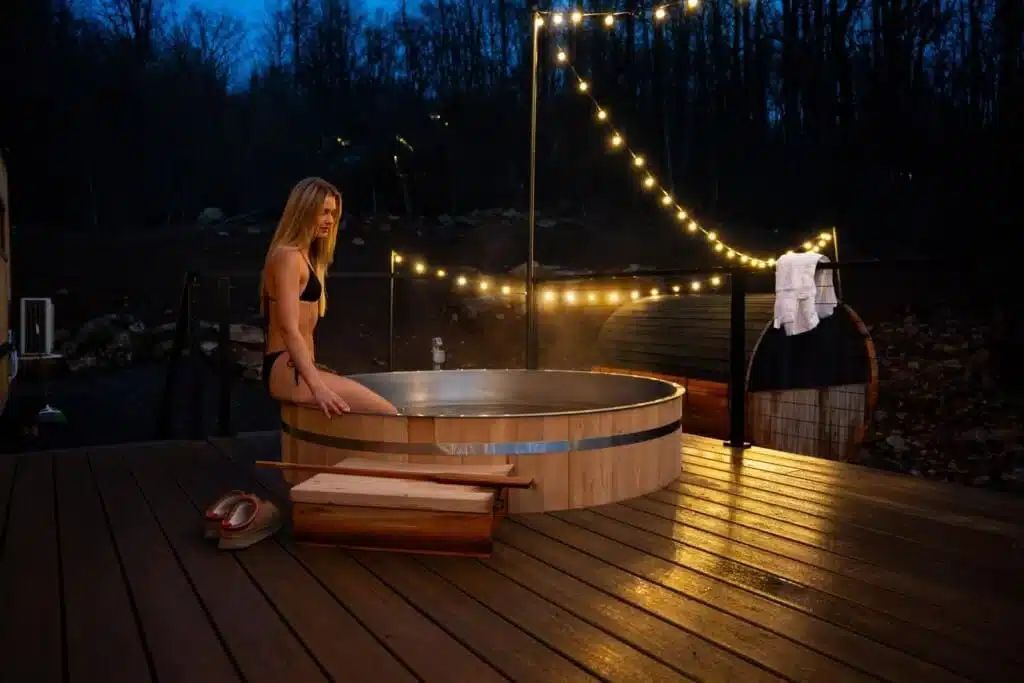
If a private sauna, cold plunge, and sunken stargazing hot tub sound like the reset you’ve been putting off, Royal Oak Retreat’s contrast therapy island is set up for exactly that, with no shared wellness area and no scheduling to work around. Check current availability directly here.
Content powered by inkSTR.co