
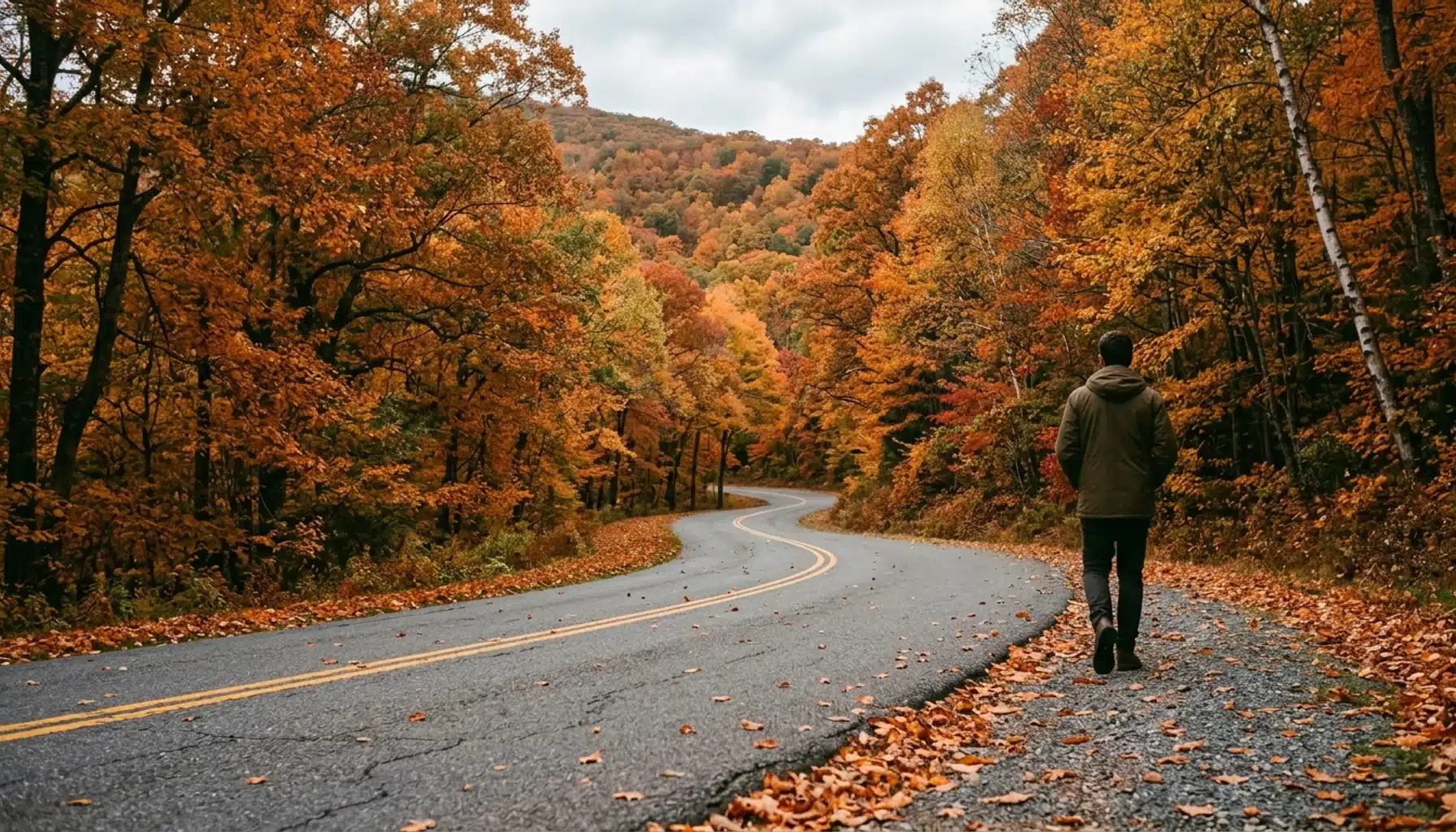
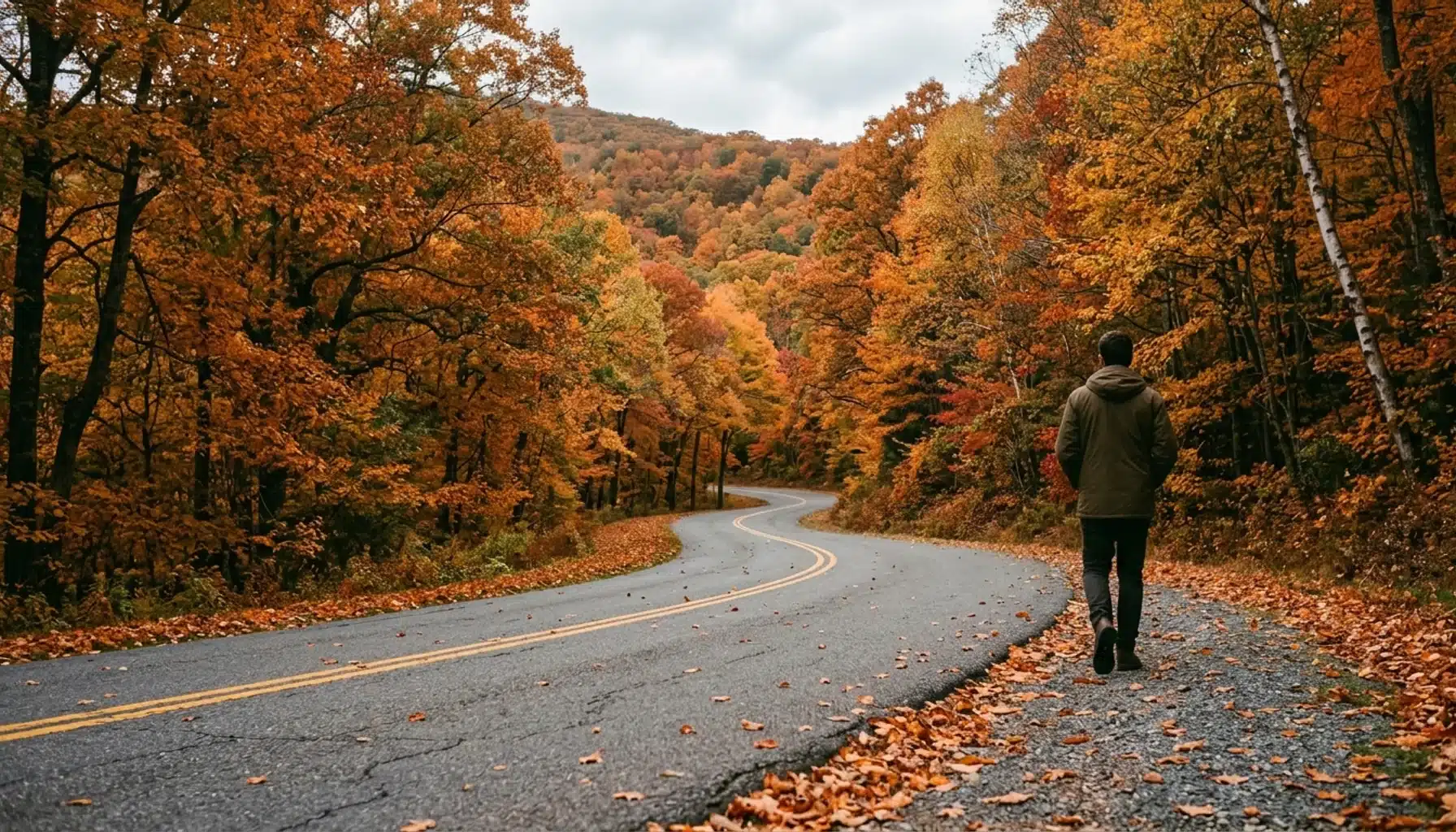
The best things to do in Shenandoah National Park range from a 105-mile ridge-top drive to a boulder scramble summit hike to genuine Milky Way stargazing , all within roughly 70 miles of Washington D.C. The park drew 1.7 million visitors in 2026, according to the National Park Service, and that number reflects a destination that delivers: more than 500 miles of trails, native brook trout streams, black bears, and night skies dark enough to make the core of the Milky Way visible without a telescope. Whether you have one afternoon or a long weekend, the experiences below represent the best of what the park actually delivers , not just the ones that appear on every tourism board list.
- Shenandoah National Park drew 1.7 million visitors in 2026, generating $132 million in spending in surrounding communities (NPS.gov).
- Skyline Drive runs 105 miles along the Blue Ridge crest, with more than 75 overlooks: the park’s defining feature and most popular activity.
- October is the park’s busiest month, accounting for roughly 24% of yearly visitation: plan your trip in September or late April for similar scenery with far smaller crowds.
- Old Rag Mountain’s boulder scramble makes it the park’s most demanding day hike; Bearfence Mountain offers comparable views at a fraction of the effort.
- The park qualifies as a legitimate dark-sky destination: stargazing from Big Meadows or Hogback Overlook on a moonless night is genuinely spectacular.
- Royal Oak Retreat is located in Shenandoah Farms near Front Royal, approximately 40 minutes from the park’s northern entrance: close enough to reach multiple trailheads in a morning without rushing.
At Royal Oak Retreat, the cabin sits in the forested hills near Front Royal, which means we spend a lot of time field-testing what actually makes a Shenandoah weekend work. The park is large enough to overwhelm first-time visitors and familiar enough to feel repetitive if you return without a plan. The 14 things to do in Shenandoah National Park below are organized to help you build a genuine experience, with honest notes on difficulty, crowd levels, and what most guides conveniently leave out.
The official NPS activities page for Shenandoah National Park lists 11 broad categories but provides almost no detail on any of them. This guide does the opposite: specific trail names, realistic time commitments, honest difficulty ratings, and the kind of practical context that helps you choose between options rather than just listing them all.
What Are the Absolute Must-Do Experiences in Shenandoah National Park?
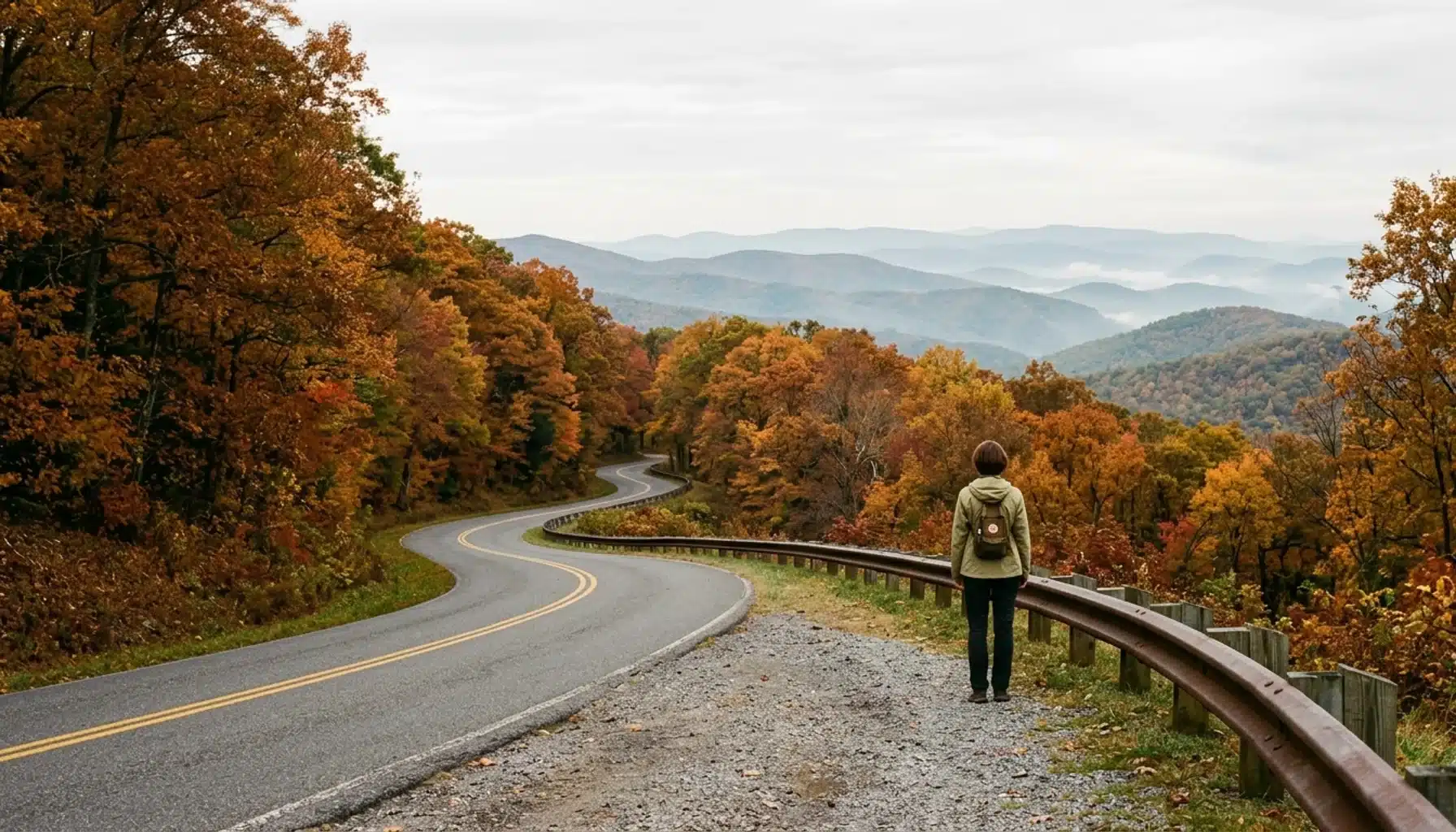
The three experiences you should not skip at Shenandoah National Park are driving at least a section of Skyline Drive, hiking to a summit or waterfall, and staying late enough to watch the sky after dark. These three activities cover the park’s defining character: a high-ridge road with layered mountain views, trail systems ranging from easy to genuinely strenuous, and night sky conditions that most visitors never experience because they leave before sunset. Everything else on this list builds from that foundation.
The mistake most first-time visitors make is treating Skyline Drive as transportation rather than as the activity itself. Pull off at every overlook that faces west in the late afternoon. The light changes the landscape completely. Shenandoah Valley Overlook near Front Royal, rated 4.8 stars across nearly 730 reviews, is one of the strongest views in the northern section and takes three minutes to reach from your car.
1. Drive Skyline Drive End to End (or Pick Your Miles Wisely)
Skyline Drive is the 105-mile ridge-top road that bisects Shenandoah National Park from the northern entrance at Front Royal to Rockfish Gap at the southern end, offering continuous Blue Ridge views through more than 75 overlooks. Driving the full length takes roughly three to four hours without stops, though most visitors sensibly spend five to six hours stopping frequently.
If you are based near Front Royal, the northern third of the drive from mile 0 to approximately mile 35 delivers the most varied overlooks per mile, including Shenandoah Valley Overlook, Hogback Overlook (one of the best stargazing spots after dark), and the approach to Mary’s Rock. This section rewards a slow drive over a complete end-to-end run.
The drive’s speed limit is 35 mph throughout, which is not a suggestion: rangers enforce it. Cell service is intermittent for most of the route, so download an offline map before entering. Entrance at Front Royal (the North District) puts you closest to the park’s most dramatic early miles.
One honest caveat: October weekends on Skyline Drive can mean bumper-to-bumper traffic at the most popular overlooks. A Tuesday in late September delivers the same foliage with a fraction of the congestion.
2. Hike Old Rag Mountain
Old Rag Mountain is Shenandoah’s most celebrated hike, a roughly 9-mile circuit with approximately 2,400 feet of elevation gain that culminates in a boulder scramble requiring real physical effort and both hands. The summit delivers unobstructed 360-degree views of the surrounding Piedmont and Blue Ridge ridgelines. It is, without question, worth the effort: but it is not suitable for everyone, and guides that describe it as accessible for all fitness levels are doing you a disservice.
Specifically, the boulder scramble section near the top involves navigating narrow passages between large rocks, pulling yourself up ledges, and descending steep granite faces. If you are uncomfortable with heights or uneven footing, this hike will become stressful before it becomes rewarding. Budget five to seven hours for the full loop.
The trailhead at the Weakley Hollow Fire Road parking area fills before 8 AM on weekend mornings in peak season. A day-use fee applies in addition to the park entrance fee. Arrive before 7:30 AM or accept that you will be parking well down the road and adding to your walk.
After a day like that, the contrast therapy island at Royal Oak Retreat earns every minute you gave the mountain: the sauna followed by the cold plunge is a legitimate recovery protocol, not just a luxury add-on.
3. Walk to Dark Hollow Falls
Dark Hollow Falls is Shenandoah National Park’s most visited waterfall, a 70-foot tiered cascade accessible via a 1.4-mile round-trip trail near the Big Meadows area at Skyline Drive mile 50. The trail descends through a hemlock and hardwood forest, dropping roughly 440 feet in elevation, which means the return trip is steeper than it looks on the way down.
For couples or casual hikers who want a genuine trail experience without committing to a half-day effort, Dark Hollow Falls is the right answer. The waterfall itself is genuinely impressive after rain, with the lower tier dropping into a wide plunge pool framed by mossy rock walls. Visit mid-morning on a weekday and you will often have stretches of the trail to yourself.
Avoid this trail immediately after a heavy rain if you are wearing road shoes. The descent can be slippery on wet roots. Waterproof trail runners or light hiking boots make the difference.
4. Summit Bearfence Mountain for 360-Degree Views
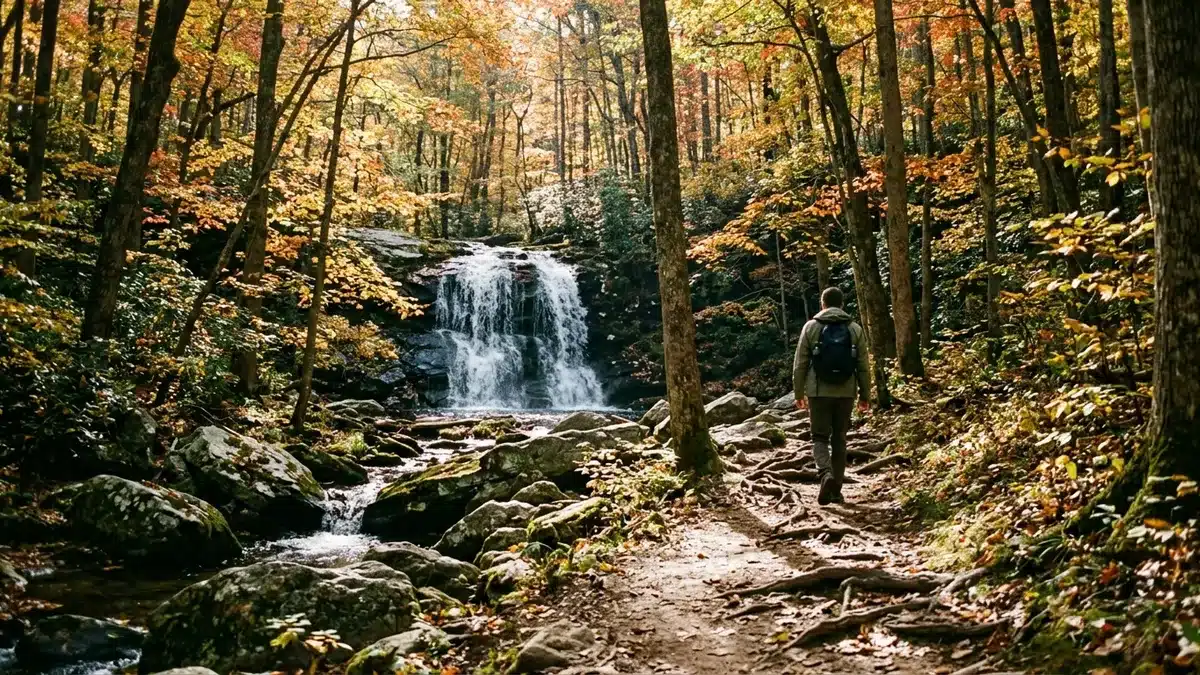
Bearfence Mountain is Shenandoah’s best-kept hiking value: a 1.2-mile loop near Skyline Drive mile 56 that involves a short but exposed scramble across open rock and rewards you with a genuine 360-degree summit panorama. It covers a fraction of the distance of Old Rag with a comparable payoff in terms of open sky and layered ridge views.
This is the trail to recommend to couples who want a physically engaging experience without committing an entire day. The rock scramble is real but brief, and the views from the summit ridge justify every step. Count on 45 minutes to an hour for the full loop at a relaxed pace.
The parking area is small and fills quickly on fall weekends. An 8 AM start on a Saturday in October almost guarantees a spot; arriving at 10 AM almost guarantees you will be parking on the roadside shoulder.
5. Watch Wildlife at Big Meadows
Big Meadows is Shenandoah National Park’s largest open meadow, located near mile 51 on Skyline Drive, and it serves as the park’s most reliable spot for viewing white-tailed deer, black bears, and migratory birds. The meadow is a genuine wildlife concentration point because it offers open grazing ground surrounded by dense forest edge habitat.
The best viewing window is the hour before and after sunset, when deer move from the tree line into the open grass. Black bear sightings are less predictable but not uncommon in late summer and fall when berry crops draw them to the meadow edge. Bring binoculars; the meadow is wide enough that close-range wildlife encounters are the exception, not the rule.
Big Meadows also houses one of the park’s main visitor facilities, including a lodge, camp store, and seasonal ranger programming. It is the most developed area in the park’s central district and functions as a logical rest stop mid-drive.
6. Stargaze at Hogback Overlook or Big Meadows
Stargazing at Shenandoah National Park is a legitimate experience rather than a tourism board talking point because the park’s ridge-top elevation and distance from major urban light domes create measurably darker skies than anywhere in the Northern Virginia or DC metro corridor. The NPS lists night sky viewing as one of its dedicated activity categories for exactly this reason.
Hogback Overlook near mile 21 faces north and west, offering a wide open horizon with minimal obstructions. Big Meadows, by contrast, provides a flat open field with horizon views in multiple directions. Both work well on moonless nights from late July through October, when the Milky Way core is visible overhead and the Perseid meteor shower peaks in mid-August.
For guests at Royal Oak Retreat, the sunken stargazing hot tub on the cabin’s deck faces open Virginia sky without neighboring structures in the sightline. On a clear night, the experience extends naturally from the park into the property itself.
7. Fish the Park’s Native Trout Streams
Fishing is one of the most rewarding and least crowded things to do in Shenandoah National Park, with more than 30 streams supporting native brook trout populations in the park’s cooler, higher-elevation drainages. The park manages its waterways as catch-and-release or delayed-harvest fisheries in most sections, preserving the native fish populations that were nearly eliminated by acid deposition in previous decades: a genuine conservation success story you can participate in directly.
The Rapidan River, accessible from the Rapidan Camp trail in the central district, is among the park’s best-known fly fishing streams and carries added historical interest as the site of President Hoover’s former fishing camp, now a preserved historic site you can walk to on the same trail. You don’t need a permit beyond the park entrance fee, but a Virginia freshwater fishing license is required for anglers 16 and older: available online at dgif.virginia.gov before you arrive.
The fishing is technical rather than casual, with clear low-gradient water that makes brook trout wary and unforgiving of heavy presentation. Plan for early morning when light angles are less direct and fish feed most actively. A 4-weight or 5-weight fly rod with small dry flies in sizes 14 to 18 is the practical setup for most park streams.
8. Attend a Ranger-Led Program
Ranger programs at Shenandoah National Park are free with park entry and cover topics ranging from geology and wildflower identification to bear ecology and Appalachian cultural history. The programs run seasonally from late spring through October, with the strongest schedule concentrated at Big Meadows and Dickey Ridge Visitor Center, which sits at mile 4.6 near the northern entrance: just a short drive from Front Royal.
The evening campfire programs at Big Meadows Campground are particularly well-suited for visitors who want real context for what they are seeing on the trails. A ranger explaining the relationship between chestnut blight history, current forest composition, and the bear population makes the landscape more interesting, not less. Check the park’s current schedule at Shenandoah National Park’s official homepage before your visit, as programming varies week to week.
Programs typically run 45 to 90 minutes and draw small, genuinely engaged crowds: nothing like the packed tour groups you find at commercial attractions nearby. If you are visiting with kids or with someone who wants to understand the park rather than just move through it, a ranger program is the highest-return hour you can spend in Shenandoah.
9. Explore the Backcountry Overnight
Backcountry camping in Shenandoah National Park is a distinct experience from the developed campgrounds, requiring a free permit obtained through the NPS reservation system and adherence to Leave No Trace practices. The park’s trail network supports multi-day routes, with the Appalachian Trail running the full length of the park along the ridge crest: approximately 101 miles of AT corridor within park boundaries.
The Cedar Run and White Oak Canyon area in the central district offers some of the park’s most dramatic overnight terrain, combining multiple waterfalls with ridge camping sites. The full Cedar Run to White Oak Canyon loop runs approximately 8 miles with significant elevation change and is best approached as a one-night trip with a moderate pack. The loop passes six separate waterfalls, with the tallest dropping 86 feet: a level of payoff that justifies the planning effort.
Bear canisters or approved hanging systems are required in the backcountry. The park has a healthy black bear population, and food storage is not optional: rangers enforce it strictly. This is not the right experience for first-time backcountry campers, but if you have moderate overnight experience, Shenandoah’s backcountry is genuinely rewarding and far less trafficked than its day-use areas.
10. Bike Skyline Drive on a Quiet Morning
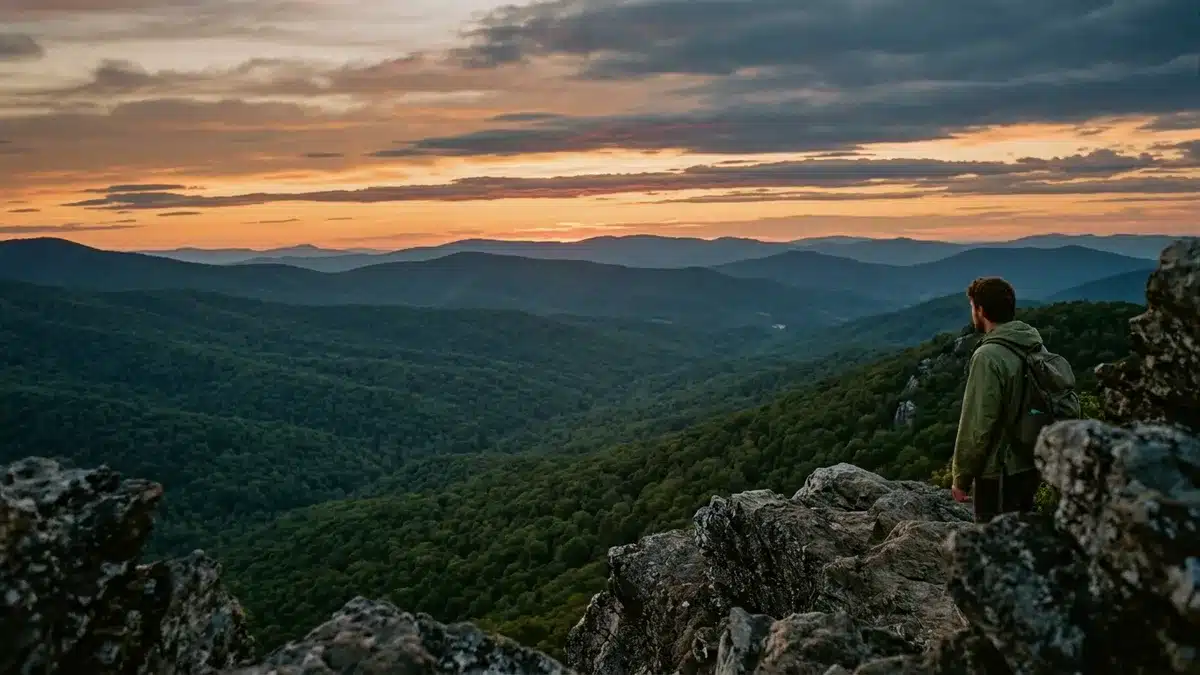
Cycling Skyline Drive is a legitimate and underrated way to experience the park, and the road’s enforced 35 mph speed limit combined with a consistent paved shoulder make it safer for cyclists than most mountain roads. The full 105 miles is a serious undertaking: plan for 6,000 to 8,000 feet of cumulative elevation gain if you attempt the complete route. Most cyclists choose a shorter out-and-back from one of the entrance stations or campgrounds instead.
The northern section from the Front Royal entrance to Dickey Ridge Visitor Center at mile 4.6 makes an accessible warm-up ride with minimal traffic early on weekday mornings: a 9.2-mile round trip with moderate grades that suits a range of fitness levels. The steep pitches throughout the drive turn even short sections into a genuine workout on an unladen bike. Bring more water than you think you need: the ridge offers no services between developed areas, and the exposed climbs in summer heat are dehydrating.
Autumn weekends bring both peak foliage and peak vehicle traffic. A Tuesday or Wednesday morning in October gives you the color without the cars: and with the road clear enough to actually look up at the trees as you ride.
11. Visit Luray Caverns on a Day Trip
Luray Caverns is the largest cavern system in the eastern United States, located approximately 20 minutes from the park’s central district near the town of Luray, Virginia. The caverns hold a 4.5-star rating across more than 5,000 Tripadvisor reviews, placing it among the most consistently praised attractions in the region.
The cave tour covers roughly a mile of illuminated passages featuring stalactites, stalagmites, and the Stalacpipe Organ, a functioning instrument that uses the cavern’s formations to produce sound. Tours run on a fixed schedule without reservations for standard visits, and the underground temperature stays near 54 degrees Fahrenheit year-round, making it a genuinely useful destination on a brutally hot August day or a rainy afternoon.
Skip the combo ticket if the Shenandoah Valley Animal Park add-on does not appeal to you. The caverns alone justify the visit. Budget 90 minutes for the full tour plus parking and entry.
12. Paddle the Shenandoah River
The Shenandoah River flows along the park’s western boundary, offering flatwater and mild whitewater paddling within easy reach of the Front Royal area. Shenandoah River Outfitters runs guided and self-guided canoe and kayak trips with shuttle service, making river logistics manageable without requiring your own gear.
The South Fork of the Shenandoah River near Front Royal runs through a wide limestone valley with views back toward the Blue Ridge that are completely different in character from anything visible on Skyline Drive: you are looking up at the ridge from below, which reframes the entire landscape. Shenandoah River State Park, which carries a 4.7-star rating across more than 1,700 Google reviews, anchors the most popular access points and suits both beginners and strong swimmers.
Half-day float trips covering 4 to 5 miles are the right call for most visitors who want a relaxed afternoon on the water. Full-day trips covering 8 to 10 miles suit those who want a genuine paddling experience. Avoid the river after heavy rainfall when water levels and current strength increase significantly: Shenandoah River Outfitters posts current conditions on their site before you commit to a launch date.
13. Photograph Sunset from Stony Man Overlook
Stony Man Overlook near Skyland Resort at mile 41 on Skyline Drive is one of the park’s best photography positions for late-afternoon light, with a broad western view across layered ridge lines that turn progressively cooler blue as the sun drops. The short 0.4-mile walk from the Skyland parking area to the cliff-edge overlook keeps the crowd manageable compared to more accessible roadside pullouts.
The overlook faces almost due west, which makes it reliable for sunset color regardless of the season. Arrive at least 40 minutes before sunset to secure a position on the rock face. The cliff drops steeply on the western side, so tripod placement requires care. Bring a jacket even in summer: ridge temperatures at elevation drop noticeably after the sun disappears, and the best light comes in the 10 minutes after sunset rather than at the moment itself.
For couples wanting a more private photography experience away from tour groups, the Compton Peak trail near mile 10 on the northern section offers a comparable cliff-edge view with a fraction of the foot traffic: and a north-facing exposure that catches different light qualities worth exploring.
14. Hike Mary’s Rock for Ridge-Top Views
Mary’s Rock Summit Trail is a 3.7-mile out-and-back hike near Thornton Gap at mile 31.5 on Skyline Drive, climbing approximately 1,000 feet to a rocky summit with open north and east views across the Piedmont. It is a genuine hike rather than a stroll , expect a consistent uphill grade for roughly 1.8 miles , but it is well within reach for most reasonably fit adults without the technical demands of Old Rag’s scramble.
The summit itself is a broad open rock face with enough space for several groups to spread out without feeling crowded. The northern exposure means you are looking back toward Front Royal and the Virginia countryside, with the Shenandoah Valley visible to the west on clear days. On a dry October morning, the layered ridge views from Mary’s Rock rival anything you will see from a roadside overlook.
Allow two to three hours for the round trip at a comfortable pace. The trail intersects the Appalachian Trail near the summit, making it straightforward to extend the route along the ridge if time and energy allow: the AT runs south from the junction toward Pinnacles Overlook for another rewarding mile of open ridge walking.
What Not to Miss at Shenandoah National Park?
The three experiences you genuinely cannot skip at Shenandoah National Park are a section of Skyline Drive (specifically the northern 35 miles from Front Royal), at least one viewpoint hike with a genuine summit or cliff edge, and an evening at Big Meadows for wildlife. Everything else is building on that foundation.
The most consistently underestimated experience is the park at night. The NPS lists night sky viewing as a dedicated activity category for good reason: the combination of ridge elevation and distance from the nearest major urban light dome produces genuinely dark skies on clear moonless nights. Most visitors leave before dark and miss the park’s most memorable quality.
Skip the Skyline Caverns near Front Royal if you are also planning a visit to Luray Caverns: the two are comparable experiences, and Luray is the larger, more impressive system. Don’t try to do both in the same day.
For visitors wanting to explore everything the surrounding region offers beyond the park boundary, the nearby experiences page maps out wineries, rivers, and local destinations that pair naturally with a park-focused trip.
How to Spend 2 Days in Shenandoah National Park
Two days in Shenandoah National Park is enough time to cover the park’s northern district thoroughly and add one experience in the central district, provided you are not spending half of each morning deciding what to do. A focused two-day plan prevents the common mistake of driving the full 105 miles and hiking nothing, or hiking all day and never stopping at an overlook. The northern district alone spans 35 miles of Skyline Drive from Front Royal to Thornton Gap: a section that contains more than 25 overlooks and four named trailheads worth stopping for.
Day 1: Enter at Front Royal and drive south on Skyline Drive, stopping at Shenandoah Valley Overlook, Hogback Overlook (mile 21), and the Dickey Ridge Visitor Center at mile 4.6 for orientation. Hike Bearfence Mountain in the early afternoon (1.2 miles, approximately one hour). Stay at Big Meadows for the evening to catch the wildlife hour at dusk. If skies are clear, drive to Hogback Overlook after dark for stargazing before heading back to your base.
Day 2: Start early for Old Rag Mountain if you are fit and comfortable with a boulder scramble. If that description does not fit, substitute Mary’s Rock (3.7 miles, approximately two to three hours) at Thornton Gap. Finish the afternoon at Dark Hollow Falls near Big Meadows for the waterfall , a 1.4-mile round trip that adds contrast after a ridge-top morning , then drive the central section of Skyline Drive south from mile 36 to mile 56 before exiting at Swift Run Gap.
Two days structured this way covers four distinct trail experiences, multiple overlooks, wildlife viewing, and an optional stargazing session: without feeling rushed at any single stop.
Are There Bears in Shenandoah? What Wildlife Should You Expect?
Shenandoah National Park has a healthy black bear population, and bear encounters on the trail are a real possibility, particularly in late summer and fall when bears actively forage before hibernation. There are no grizzly bears in Virginia; grizzlies are native to the northern Rocky Mountains and coastal Alaska, not the Appalachian range.
Black bears in Shenandoah are generally wary of humans and will move away when they hear you coming. The practical precautions are straightforward: store all food in bear boxes or a vehicle at campgrounds, never in a tent; carry food in your pack rather than in a bag you set down on the trail; and make noise at blind corners and dense vegetation sections where a close-range surprise encounter is more likely.
Beyond bears, the park supports white-tailed deer in large numbers, wild turkey, red and gray fox, multiple raptor species, and a recovering population of peregrine falcons that nest on the cliff faces of Stony Man. Big Meadows at dusk is the single best wildlife-watching location in the park. The meadow edge draws deer reliably, and bear sightings there are more common than most first-time visitors expect.
One practical note: do not feed wildlife under any circumstances. The park has had to remove food-conditioned bears that repeatedly approached vehicles and campsites. Fed bears become hazardous bears, and the outcome for them is never good.
Practical Visitor Information: Fees, Entrances, and Logistics
Shenandoah National Park has four vehicle entrance stations: North at Front Royal (the starting point for Skyline Drive), Thornton Gap on US-211, Swift Run Gap on US-33, and Rockfish Gap at the southern terminus near Waynesboro. Each charges an entrance fee, and the America the Beautiful annual pass covers entry at all four. The pass also covers every other national park in the country, making it excellent value if you visit more than two or three federal recreation areas in a year.
Cell service is unreliable throughout the park, particularly in the central and southern districts. Download the NPS app and offline maps before entering. The Shenandoah NPS app includes trail maps and overlook locations that work without a data connection.
Parking at popular trailheads fills quickly on fall weekends. Old Rag’s Weakley Hollow parking area and the Dark Hollow Falls lot near Big Meadows are both typically at capacity by 9 AM on October Saturdays. Arriving before 8 AM or visiting on a weekday avoids the worst of it.
The park’s main administrative address is 3655 US Highway 211 East, Luray, VA 22835, and the main visitor information line is 540-999-3500. For emergencies within the park, contact NPS emergency services at 1-800-732-0911.
The $132 million that visitors spend annually in surrounding gateway communities according to 2026 NPS data reflects how deeply the park economy drives the Front Royal, Luray, Harrisonburg, and Waynesboro areas. Book accommodations well in advance during October: properties genuinely fill weeks out during peak foliage, and last-minute availability in the area is rare.
In 2026, the park continues to expand its reservation requirements for popular trailheads during peak season. Check the Things To Do page on the official NPS site for any day-use permit requirements that may apply to Old Rag Mountain or other high-demand destinations before your trip.
Frequently Asked Questions About Shenandoah National Park
What is the best time of year to visit Shenandoah National Park without crowds?
Late April through early June and the month of September offer excellent conditions with noticeably thinner crowds than peak foliage season. October is the park’s busiest month, typically accounting for roughly 24% of yearly visitation according to NPS data. Winter visits are underrated, particularly for cabin-based stays, because the bare trees open up views that foliage hides and the trails run far quieter than any other season.
How much does it cost to enter Shenandoah National Park in 2026?
The park charges a per-vehicle entrance fee at all four entrance stations, and an America the Beautiful annual pass covers entry across all national parks and federal recreation areas for a flat yearly rate. Check the official NPS website at nps.gov/shen for current fee amounts, as prices are reviewed periodically. The annual pass pays for itself quickly if you plan multiple park visits in a year.
Are there bears in Shenandoah National Park?
Yes, Shenandoah has a healthy black bear population. There are no grizzly bears in Virginia: grizzlies are found in the northern Rocky Mountains and parts of the Pacific Northwest, not the Appalachians. Store all food in bear boxes or your vehicle, never in a tent, and make noise on the trail to avoid surprising a bear at close range.
How far is Shenandoah National Park from Washington D.C.?
The northern entrance to Shenandoah National Park at Front Royal is approximately 70 miles from central Washington D.C., a drive of roughly 90 minutes without significant traffic. Royal Oak Retreat is located in the Shenandoah Farms area near Front Royal, about 40 minutes from the Skyline Drive northern entrance, making it a practical base for DC-area travelers who want a forest stay without a long daily commute to the park.
What is the hardest hike in Shenandoah National Park?
Old Rag Mountain is widely considered the park’s most demanding day hike, featuring a rocky ridge traverse and a genuine boulder scramble near the summit that requires using both hands. The full circuit is approximately 9 miles with around 2,400 feet of elevation gain. It is not suitable for casual walkers or anyone uncomfortable with exposed climbing on uneven granite surfaces.
Can I bring my dog to Shenandoah National Park?
Dogs are permitted in the park but must be kept on a leash no longer than 6 feet at all times. Pets are not allowed on most backcountry trails, in park buildings, or in campground swim areas. Check the NPS website for the current list of pet-permitted trails before planning a dog-friendly hike. Royal Oak Retreat welcomes one dog under 50 lbs with a $100 pet fee, and the forested Shenandoah Farms setting provides genuine outdoor space for a dog-inclusive trip.
What should I do if I only have one day in Shenandoah National Park?
Drive the northern section of Skyline Drive from Front Royal to Thornton Gap, stopping at Shenandoah Valley Overlook and two or three additional pullouts. Add the Dark Hollow Falls hike (1.4 miles round trip) near Big Meadows for a waterfall. Finish at Big Meadows itself for a wildlife watch at dusk. That itinerary covers the park’s three most consistently praised highlights in a single day without feeling rushed or requiring an early-morning trailhead scramble.
Is a reservation required to visit Shenandoah National Park in 2026?
A timed-entry reservation has applied to Old Rag Mountain during peak season in recent years, and the NPS has expanded day-use permit requirements at other high-demand trailheads. As of 2026, check the official NPS site at nps.gov/shen before your trip to confirm current reservation requirements for your specific dates. General park entry at the four entrance stations does not require advance reservations, only the entrance fee or an America the Beautiful pass.
Plan Your Shenandoah Visit with a Real Base in the Forest
Shenandoah National Park rewards visitors who slow down. The 14 things to do in Shenandoah National Park above span the full range of what the park offers: from a four-hour scenic drive to a nine-mile technical hike to an evening watching the Milky Way from a meadow at 3,500 feet. The park drew 1.7 million visitors in 2026, and that number reflects real momentum: the combination of Blue Ridge scenery, trail variety, and dark sky access within 90 minutes of a major metro area is genuinely difficult to replicate anywhere on the East Coast.
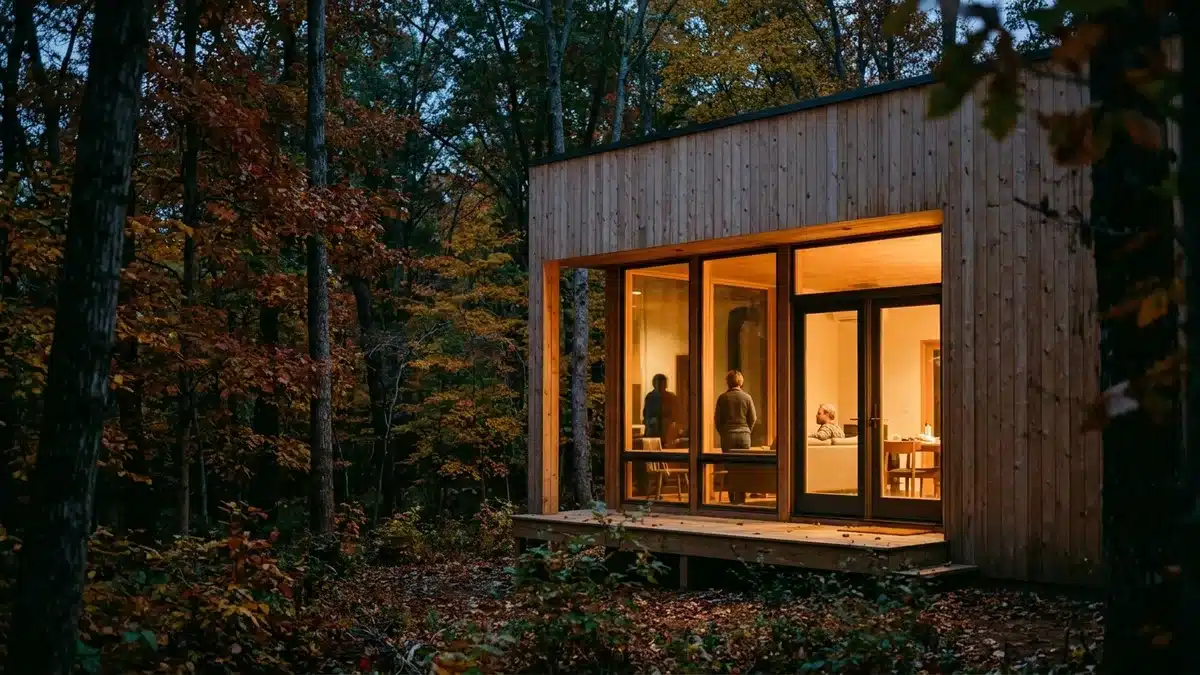
If you are planning a Shenandoah trip and want a home base that holds its own when you return from the trails, the Royal Oak Retreat cabin is located 40 minutes from the park’s northern entrance in the forests of Shenandoah Farms near Front Royal. Couples marking an anniversary can pair a park visit with a romance package add-on for a properly curated arrival evening back at the cabin.
The best Shenandoah weekends are built around one or two genuine park experiences done well, not a checklist of fifteen overlooks driven past at speed. Pick your hike, plan your sunset, and leave time to do nothing at all once you are back in the trees.

If you are returning from Old Rag’s boulder scramble or a full day on Skyline Drive, there is nothing better than stepping into the sauna at Royal Oak Retreat and letting the heat do its work. The cabin sits in a private forested setting 40 minutes from the park entrance, with a sunken stargazing hot tub, Scandinavian sauna, and cold plunge designed specifically for the kind of physical reset a serious hike demands. Check availability and book directly here.
Content powered by inkSTR.co