
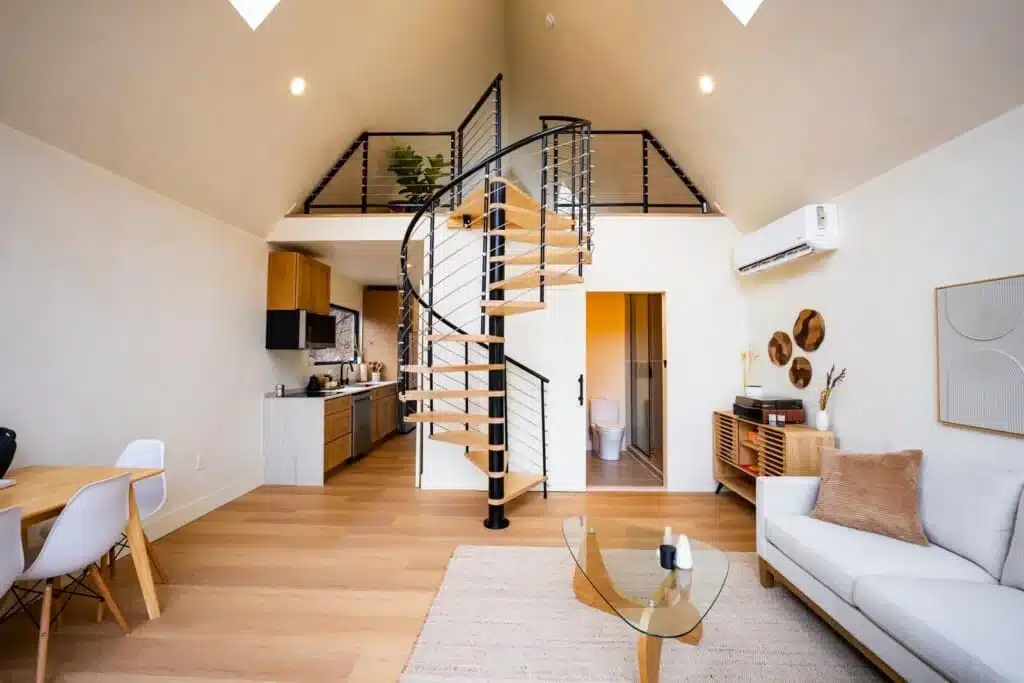
Booking a luxury cabin in Virginia comes down to seven decisions: region, wellness amenities, privacy level, drive time from home, pet policy, seasonal timing, and whether to book direct or through a third-party platform. Get those seven right and you end up in a place like Royal Oak Retreat, a wellness cabin in Shenandoah Farms built around a contrast-therapy island rather than a generic hot tub listing. Get them wrong and you end up in a cookie-cutter rental with a hot tub that barely works and a driveway your sedan can’t handle.
- Shenandoah Valley cabins average around a 65% occupancy rate and a $200 average daily rate, according to Virginia Tourism Corporation’s 2026 STR report, with 3-bedroom river cabins posting closer to $219 a night per AirDNA data.
- Shenandoah National Park drew 1.68 million visitors in 2026, generating roughly $132 million in local spending, per the National Park Service’s 2026 report, so a cabin’s proximity to Skyline Drive matters more than most listings let on.
- Virginia’s short-term rental market grew fast: Shenandoah Valley listings jumped from about 3,491 in January 2022 to 5,791 by February 2026, meaning more choices but also more listings that overstate their amenities.
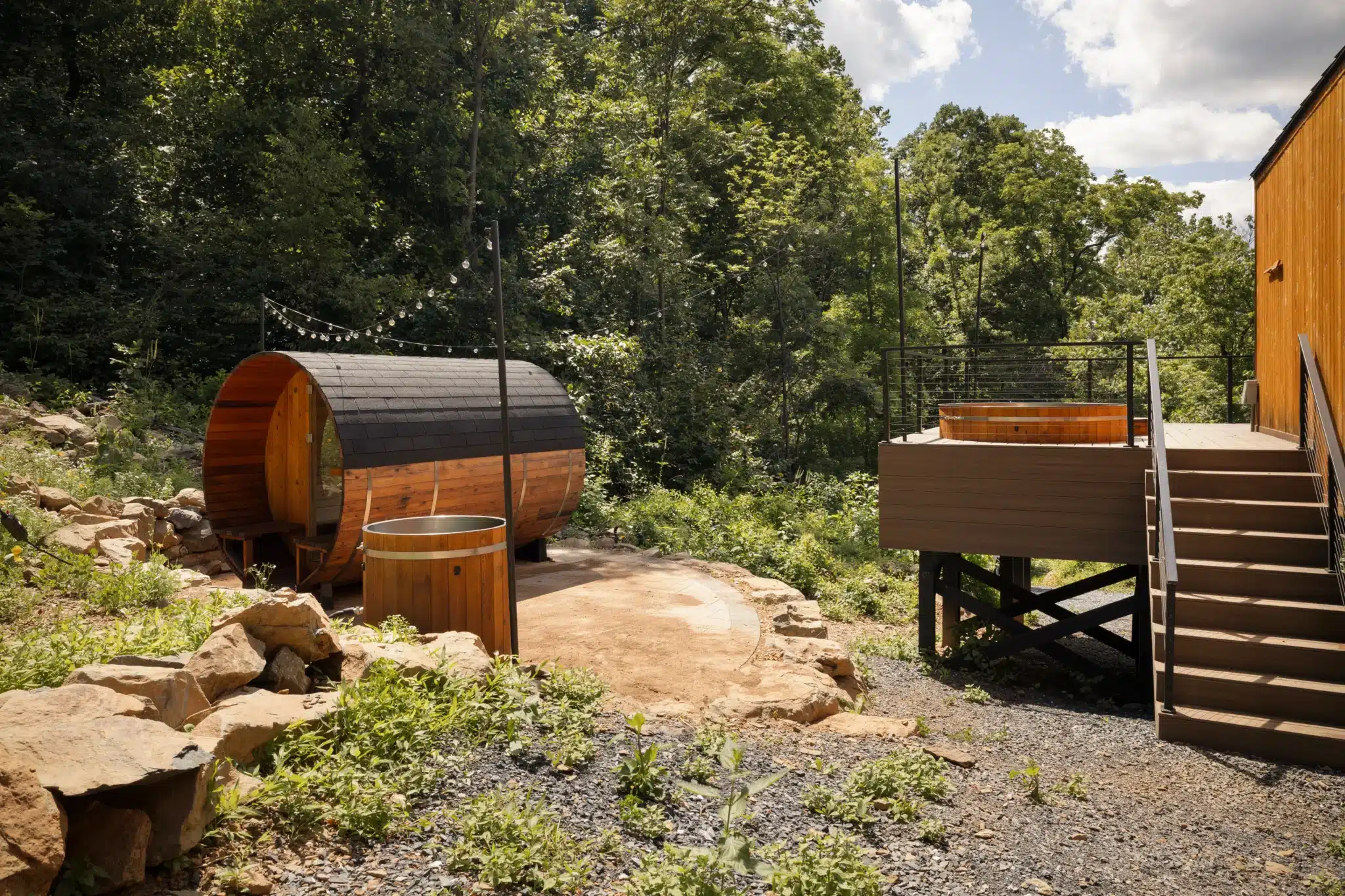
- Royal Oak Retreat sits roughly 1 hour from Washington D.C. and 40 minutes from Shenandoah National Park, with a dedicated sauna, cold plunge, and sunken stargazing hot tub built as a genuine contrast-therapy island, not a checkbox amenity.
- A 4×4 vehicle is recommended for winter stays in Shenandoah Farms due to steep, gravel driveways, a detail most Virginia cabin listings never mention.
- Peak STR revenue in the region runs July through October, so booking six to eight weeks ahead for fall foliage weekends is a realistic minimum, not a suggestion.
If you’ve searched for a luxury cabin in Virginia, you’ve probably scrolled through a dozen listings that all use the same three photos: a hot tub, a fireplace, and a deck. What none of them tell you is how to actually evaluate whether a cabin delivers real restoration or just looks good in a thumbnail. That gap is exactly what this guide fixes.
At Royal Oak Retreat, we’ve hosted guests from across the Washington D.C. metro area who searched “luxury cabin Virginia” expecting a nice view and left talking about the sauna. This is a step-by-step walkthrough for finding and booking a cabin that actually matches what the phrase “luxury” should mean in 2026: intentional design, genuine wellness infrastructure, and a location that earns its seclusion without stranding you.
You’ll get a region-by-region breakdown, a realistic cost picture, the questions to ask before you book, and the mistakes that turn a promising Virginia cabin trip into a disappointing one. Expect concrete numbers throughout, not vague reassurances.
Step 1: Choose Your Region Before You Choose a Cabin
Choosing a region first means comparing the Shenandoah Valley, the Blue Ridge Mountains, and the Richmond Metro area by drive time, scenery, and activity type before you ever open a listing. Most Virginia cabin guides skip this step entirely and jump straight to property photos, which is how travelers end up two hours from the trailhead they actually wanted to hike.
The Shenandoah Valley, specifically the Front Royal and Linden corridor, offers the tightest combination of forest seclusion and drive-time efficiency for Washington D.C. metro travelers. Shenandoah National Park’s Skyline Drive runs the length of the valley, and the region’s wineries cluster within a 15-minute radius of most cabin properties. The Blue Ridge Parkway corridor further south, near Roanoke and Floyd, trades proximity to D.C. for deeper mountain elevation and a longer drive, often 3 to 4 hours from the DMV.
Richmond Metro cabins tend to sit closer to urban amenities but sacrifice the deep-forest feel that defines a genuine wellness retreat. If your priority is a short drive with maximum seclusion, Shenandoah Valley wins. If you want dramatic elevation and don’t mind the extra driving hours, Blue Ridge properties near Bryce Resort are worth a look.
Pro Tip: Match Region to Trip Length
A weekend trip from D.C. favors Shenandoah Valley almost every time. Anything under 48 hours loses value fast once you factor in 3-plus hours each way to the Blue Ridge’s higher elevations. Save the longer drive for a 4-night-or-longer trip.
Step 2: Define What “Luxury” Actually Means for Your Trip
Defining luxury for a Virginia cabin means identifying which specific features separate a genuinely upscale property from a rustic rental with a hot tub bolted onto the deck. In 2026, the term gets applied loosely across Airbnb, Vrbo, and Glamping Hub listings, so the burden falls on the traveler to verify claims before booking.
Real luxury markers include architectural intentionality (floor-to-ceiling windows, non-toxic building materials, cedar or timber-frame construction), functioning wellness infrastructure (a sauna that reaches proper temperature, a cold plunge rather than a cooler with ice, high-speed internet via Starlink rather than spotty rural DSL), and privacy that isn’t shared with neighboring units. Egyptian-cotton linens and spa tubs, the amenities Expedia highlights for properties like Bear’s Lair Cabin on the New River, matter too, but they’re finishing touches, not the foundation.
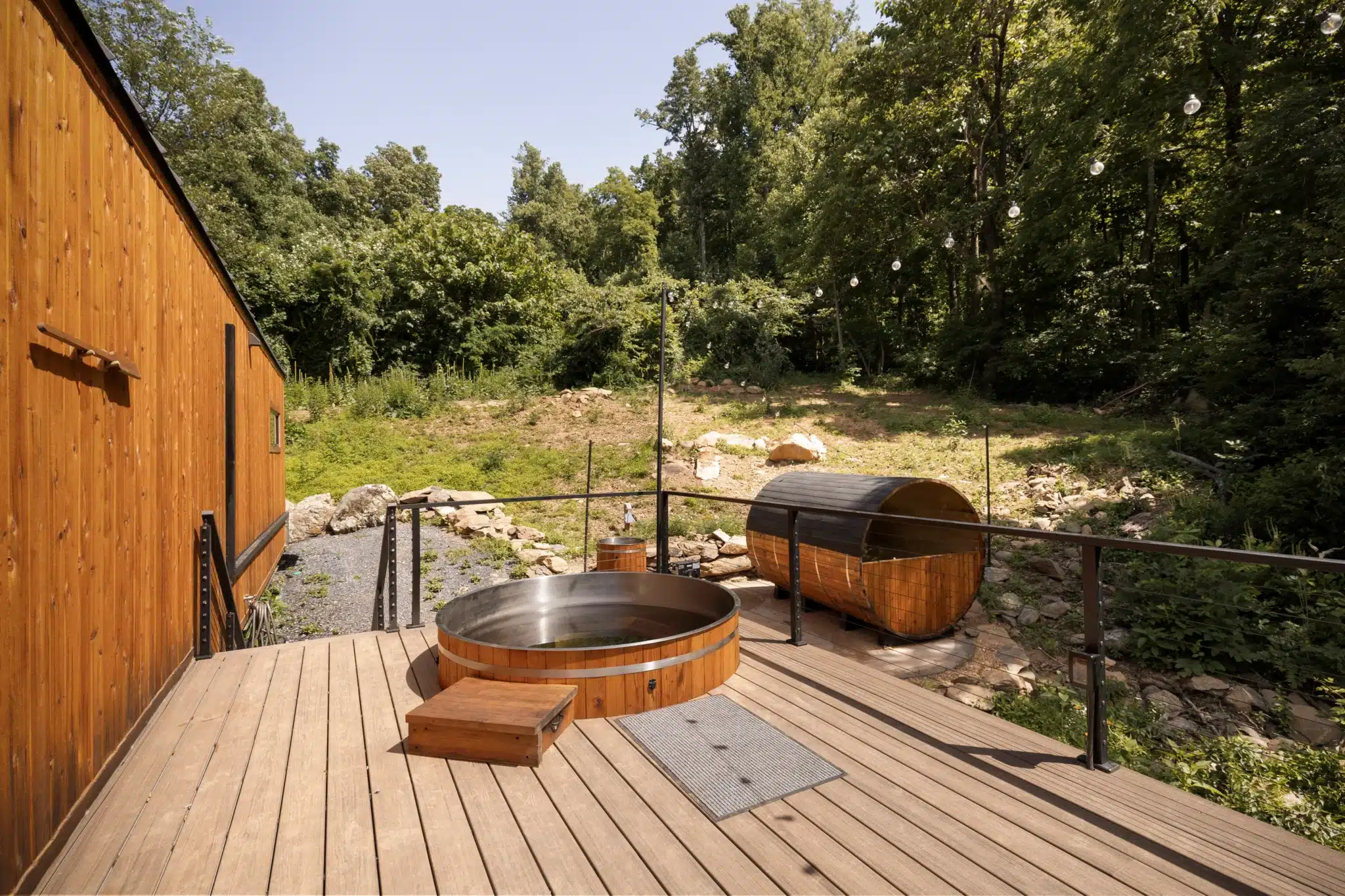
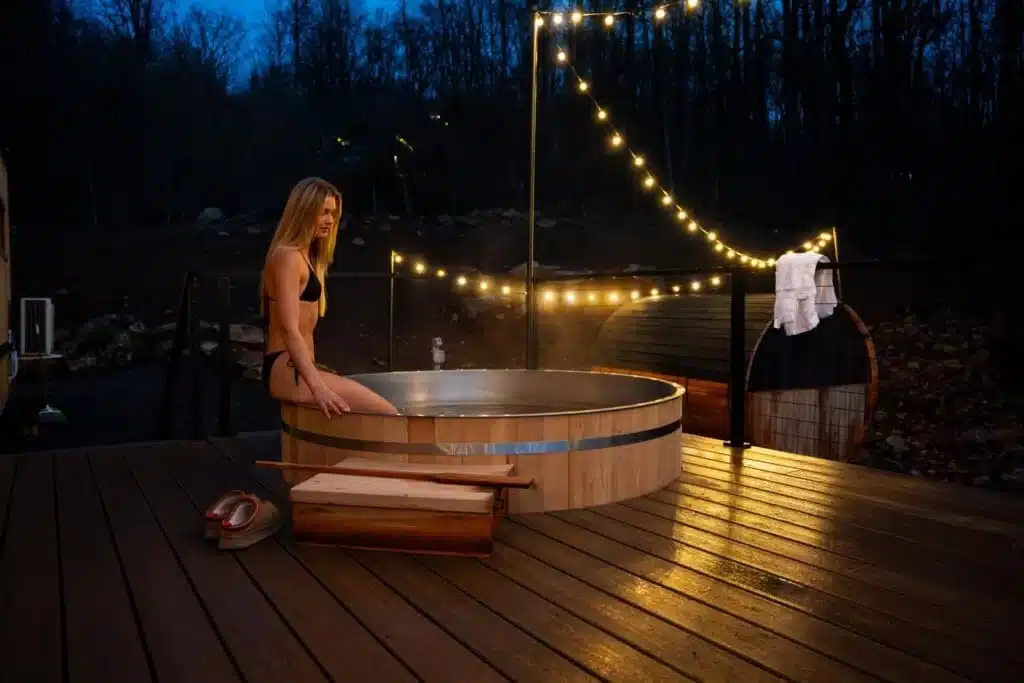
Royal Oak Retreat builds its luxury case around a contrast-therapy island: a Scandinavian-style sauna, a cold plunge, and a sunken outdoor hot tub with a stargazing sightline, all housed in a fully non-toxic, plastic-free build. That’s a different proposition than a listing that simply says “hot tub” in its amenities checklist. As of 2026, few Virginia cabin operators combine all three contrast-therapy elements into one dedicated space, which is why this feature is worth specifically asking about before you book anywhere.
Common Mistake: Trusting the Amenities Checklist Alone
A listing that says “sauna” doesn’t confirm it’s a full-size, properly heated Scandinavian unit versus a small infrared box. Message the host or read recent reviews for specific mentions of sauna temperature, hot tub water clarity, and whether the fireplace is wood-burning or a gas insert. Vague photos plus vague descriptions equal a real risk of disappointment.
Step 3: Match the Cabin’s Size and Layout to Your Group
Matching cabin size to your group means confirming exact bedroom count, bathroom count, and maximum occupancy before booking, not estimating from listing photos. Virginia cabin rentals range from intimate one-bedroom retreats to sprawling lakefront estates, and the gap between them affects both price and privacy.
At the larger end, Avonlea Cottage, a lakefront property in Hiwassee, sleeps up to 23 guests across 4 bedrooms and 4 full bathrooms, with rates starting around $1,017 per night, a scale built for large family reunions rather than couples seeking quiet.
For a couples getaway, milestone celebration, or solo wellness reset, a smaller footprint works better and typically costs less. Royal Oak Retreat sleeps up to 4 guests across a main bedroom with a king bed and a loft with a queen bed, reached by a spiral staircase, with 1 bathroom total in a 1,000-square-foot cabin. That’s an adults-first layout designed for two couples or a small group who want their own space without managing a 10-bedroom property.
The spiral staircase to the loft is worth noting directly: it’s not ideal for guests with mobility limitations, and this kind of practical detail rarely appears in generic Virginia cabin listings. Always ask about staircases, single-level access, and parking surface (gravel versus paved) before booking, especially for winter trips.
How Much Does a Luxury Cabin in Virginia Actually Cost?
Luxury cabin rates in the Shenandoah Valley typically run from around $200 to $220 per night on average, based on 2026 AirDNA and Virginia Tourism Corporation data, though larger or amenity-heavy properties can run considerably higher. A 3-bedroom, 2-bathroom cabin along the Shenandoah River posts an average daily rate of $219, while region-wide averages sit closer to $200 with roughly 65% occupancy.
Cost breakdowns matter more than the nightly rate alone. Most competing guides quote a single number and stop there, but the real total includes cleaning fees, pet fees, and potential minimum-night requirements during peak weekends. Here’s a realistic comparison across common Virginia cabin tiers:
| Cabin Tier | Typical Nightly Rate | Sleeps | Notable Amenities |
|---|---|---|---|
| Standard cabin rental | $150-$200 | 2-6 | Hot tub, fireplace, basic kitchen |
| Wellness-focused cabin (e.g., Royal Oak Retreat) | Varies by season, book direct for current rates | Up to 4 | Sauna, cold plunge, stargazing hot tub, non-toxic build, Starlink, EV charger |
| Large lakefront estate (e.g., Avonlea Cottage) | $1,000+ | Up to 23 | Private dock, multiple bedrooms, event-scale space |
Pet fees are common but inconsistently disclosed. Royal Oak Retreat charges a $100 pet fee for one dog under 50 lbs, a clear, specific policy compared to listings that simply say “pets allowed” without weight limits or fees. Always confirm the pet fee, minimum-night policy, and cancellation terms directly with the host before assuming the advertised nightly rate is your full cost.
What Wellness Amenities Should You Actually Look For?
Wellness amenities worth prioritizing in a Virginia cabin include a functioning sauna, a genuine cold plunge, an outdoor hot tub with real privacy, and construction free of synthetic off-gassing materials. As of 2026, “wellness cabin” has become a marketing label almost as loosely applied as “luxury,” so specificity is what separates a real contrast-therapy setup from a hot tub with a candle next to it.
Contrast therapy works on a straightforward physiological principle. Moving from heat to cold forces your vascular system to cycle rapidly, which improves circulation, reduces muscle soreness, and triggers a parasympathetic response that many guests describe as a genuine mental reset. That’s the mechanism behind Royal Oak Retreat’s dedicated contrast-therapy island, where the Scandinavian-style sauna, cold plunge, and sunken hot tub sit together rather than scattered across the property.
The sunken hot tub design matters specifically for stargazing. Because the tub sits low against the deck line, the sightline clears the roofline and puts the Virginia night sky directly in view without craning your neck. That’s an architectural choice, not an accident, and it’s part of why this cabin draws couples planning anniversaries and solo travelers looking for a genuinely quiet reset.
Construction materials matter too, though almost no competing Virginia cabin content addresses this. Royal Oak Retreat’s build uses no plastics or chemical off-gassing materials, an intentional choice for guests sensitive to synthetic environments or simply looking to spend 48 hours somewhere that feels genuinely clean. If you’re specifically seeking this kind of build, ask any host directly what materials were used, since it’s rarely listed as a standard amenity filter.
Step 4: Check the Property’s Tech and Access Details
Checking tech and access means confirming internet reliability, EV charging availability, and driveway conditions before you commit, three details that generic Virginia cabin listings routinely omit. Rural cabin internet is a common failure point: many properties advertise “Wi-Fi included” without specifying whether it’s satellite, DSL, or cellular hotspot-based, which matters enormously if you plan to work remotely or stream anything.
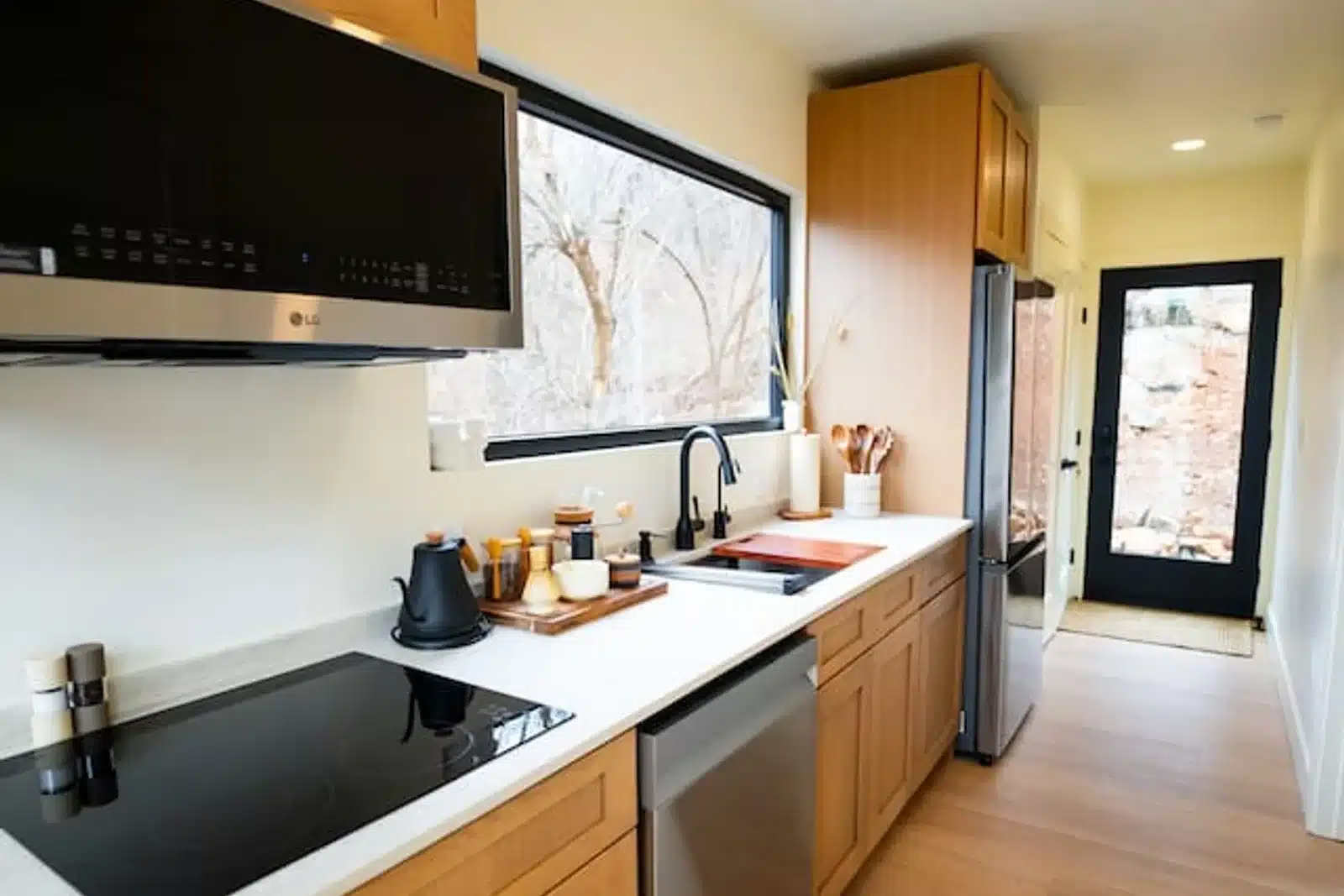
Royal Oak Retreat runs on Starlink high-speed internet, a meaningful upgrade over the spotty rural DSL common across the Shenandoah Valley’s more remote cabin stock. The property also includes an on-site EV charger, addressing a genuine gap in the Virginia cabin rental market. As of 2026, EV-friendly cabin content remains scarce across competing listings, despite a clear and growing traveler segment planning road trips in electric vehicles.
Access matters just as much. A 4×4 vehicle is recommended for winter stays at Royal Oak Retreat due to the steep, gravel driveway typical of Shenandoah Farms properties. This is the kind of detail that prevents a genuinely frustrating arrival: sliding a sedan up an icy grade in the dark is not the relaxing start most travelers picture. Always ask directly about driveway grade and surface, especially for a December through February booking.
Common Mistake: Assuming All Rural Wi-Fi Is Equal
Don’t assume “Wi-Fi available” means reliable enough for video calls or streaming. Ask specifically whether the connection is Starlink, cable, DSL, or hotspot-based, particularly if you’re combining a wellness reset with any remote work.
Step 5: Confirm the Pet Policy in Detail
Confirming a pet policy means getting the exact weight limit, fee, and outdoor access details in writing, not just a “pets allowed” checkbox. Dog owners across the DMV region consistently report frustration with cabin listings that technically welcome pets but clearly weren’t designed with animals in mind, no fenced yard, no nearby trail access, vague size restrictions.
Royal Oak Retreat allows one dog under 50 lbs with a $100 pet fee, a specific, transparent policy paired with genuine forest access right outside the cabin. Because the property sits inside Shenandoah Farms with direct access to surrounding woodland and hiking trails, bringing a dog here enhances the stay rather than requiring extra planning around dog-unfriendly terrain.
Compare that to Shenandoah Valley Cabins’ five-property collection, where only one listing, Pond View, is dog-friendly among an otherwise adults-focused portfolio. That’s useful context: dog-friendly luxury cabins in this region remain the exception, not the rule, so confirm pet policy early in your search rather than assuming it’s a given.
Step 6: Time Your Booking to the Season
Timing a Virginia cabin booking around the season means understanding that fall foliage weekends and July through October generally carry the highest demand and rates. Inflation-adjusted monthly STR revenue in the Shenandoah Valley peaks during this window, and Shenandoah National Park’s Skyline Drive draws its heaviest traffic on October weekends specifically.
If you want a quieter, less crowded stay, consider a winter booking. Virginia forest cabins in January and February offer a genuinely different experience: bare trees open up long sightlines through floor-to-ceiling windows, and a sauna-to-cold-plunge routine feels considerably more purposeful when there’s frost on the ground outside. Spring brings its own advantage, wildflower season along Shenandoah’s lower elevations, though pollen counts run high from late March through May, worth a note for allergy-sensitive travelers.
Winter does require a practical caveat: pack for genuine cold and confirm 4×4 access if you’re staying somewhere with a steep driveway. Summer, meanwhile, means booking 6 to 8 weeks ahead for any weekend date given the region’s 65% average occupancy and rising demand.
Pro Tip: Weekday Stays Cut Both Cost and Crowds
A Tuesday-through-Thursday stay in October gets you the same foliage without the Skyline Drive traffic that clogs weekend mornings. This applies to nearby wineries too. Fox Meadow Winery in Linden, roughly 5 minutes from Royal Oak Retreat, and Crimson Lane Vineyards in Hume, about 8 minutes away, both see noticeably lighter weekday crowds than Saturday afternoons.
Step 7: Decide Between Booking Direct and Using a Platform
Booking direct means reserving a Virginia cabin through the owner’s own website rather than through Airbnb, Vrbo, or Expedia. Both paths are legitimate, and the right choice depends mostly on whether you value platform-based review systems or prefer direct communication with the property owner and potentially better rate visibility.
Royal Oak Retreat offers direct booking through its own reservation page, where guests can view the current calendar, confirm the exact pet policy, and ask specific questions about the sauna schedule or driveway conditions before committing. This works well for travelers who’ve already done their research and know exactly what they’re booking. Platforms like Airbnb, Vrbo, and Glamping Hub remain useful for initial discovery and comparison shopping across dozens of Virginia cabins at once, which is precisely how most travelers land on this search in the first place.
Whichever path you choose, confirm check-in and check-out times directly. Royal Oak Retreat runs a 3 PM check-in and 11 AM check-out, with early check-in sometimes available on request, a detail worth confirming ahead if you’re driving in from D.C. after a half-day at work on a Friday.
Practical Guidance: What to Prioritize and What to Skip
Prioritize proximity to Shenandoah National Park if hiking is part of your plan. Royal Oak Retreat’s roughly 40-minute drive to the park means you can realistically do a morning trail and still be back for an afternoon sauna session, something a Blue Ridge property 3 hours south simply can’t offer on a weekend trip.
Skip cabins that advertise “luxury” based on decor alone. A tastefully staged living room with a farmhouse sink doesn’t tell you whether the hot tub actually heats properly or whether the internet supports a video call. Ask for specifics, or read reviews that mention functional details rather than aesthetic ones.
- Confirm the region matches your drive-time tolerance and activity priorities.
- Verify wellness amenities function as advertised, sauna temperature, cold plunge, hot tub privacy.
- Match cabin size to your actual group, not an inflated occupancy number.
- Check tech infrastructure: internet type, EV charger presence, cell signal.
- Clarify pet policy in writing: weight limit, fee, outdoor access.
- Time your booking around season and crowd tolerance.
- Choose direct booking or a platform based on your comfort level and research stage.
For a deeper dive into regional options, our guide to cabin rentals in Shenandoah Valley Virginia covers property comparisons in more detail, and our Shenandoah National Park hiking trail guide pairs well with any cabin stay focused on outdoor time. If you’re planning a celebration specifically, the birthday celebration package and romance package both add structure to a milestone stay without turning it into an event you have to manage yourself.
Frequently Asked Questions
How far is Royal Oak Retreat from Washington D.C.?
Royal Oak Retreat sits roughly 1 hour from Washington D.C., making it a realistic Friday-evening or Saturday-morning drive for DMV-area travelers without eating into the entire weekend.
Does the cabin have a hot tub that works year-round, or is it seasonal?
The sunken outdoor hot tub at Royal Oak Retreat operates year-round as part of its contrast-therapy island alongside the sauna and cold plunge. Winter use is popular specifically for the stargazing sightline against a clear, cold Virginia sky.
What is the pet policy, and are there weight restrictions?
Royal Oak Retreat allows one dog under 50 lbs with a $100 pet fee. This clear, specific policy contrasts with many Virginia cabin listings that advertise “pet-friendly” without disclosing size limits.
Is a luxury cabin in Virginia close enough to Shenandoah National Park for day hikes?
Royal Oak Retreat sits about 40 minutes from Shenandoah National Park, close enough for a full day on Skyline Drive’s trail network and a return trip for an evening sauna session without excessive driving.
Does Royal Oak Retreat have EV charging?
Yes, an on-site EV charger is available, addressing a gap in the Virginia cabin rental market where EV-friendly properties remain uncommon as of 2026.
What is the best time of year to visit Shenandoah Valley to avoid crowds?
Winter weekdays and early spring (before peak wildflower weekends) tend to see the lightest crowds. Peak demand runs July through October, according to regional STR revenue data, so booking outside that window and avoiding weekends further reduces congestion at trailheads and wineries.
Is it necessary to bring a 4×4 vehicle to Royal Oak Retreat in winter?
A 4×4 vehicle is recommended for winter stays due to the steep, gravel driveway typical of Shenandoah Farms properties, especially after snow or ice.
Final Word on Booking a Luxury Cabin in Virginia
Finding the right luxury cabin in Virginia in 2026 comes down to verifying specifics rather than trusting a listing’s marketing language. Confirm the region matches your drive-time tolerance, check that wellness amenities are functional rather than decorative, and get pet policy and driveway conditions in writing before you book.
Royal Oak Retreat was built around that same principle: a contrast-therapy island, non-toxic construction, and a genuinely private setting in Shenandoah Farms that delivers on what “luxury wellness cabin” should actually mean. The drive from the DMV takes about an hour. What you do with the 48 hours after that is entirely up to you, which is exactly the point.
If the contrast-therapy island, sunken stargazing hot tub, and Starlink-equipped cabin sound like the reset you’ve been putting off, you can check availability at Royal Oak Retreat directly and see current dates for yourself.
Content powered by inkSTR.co