
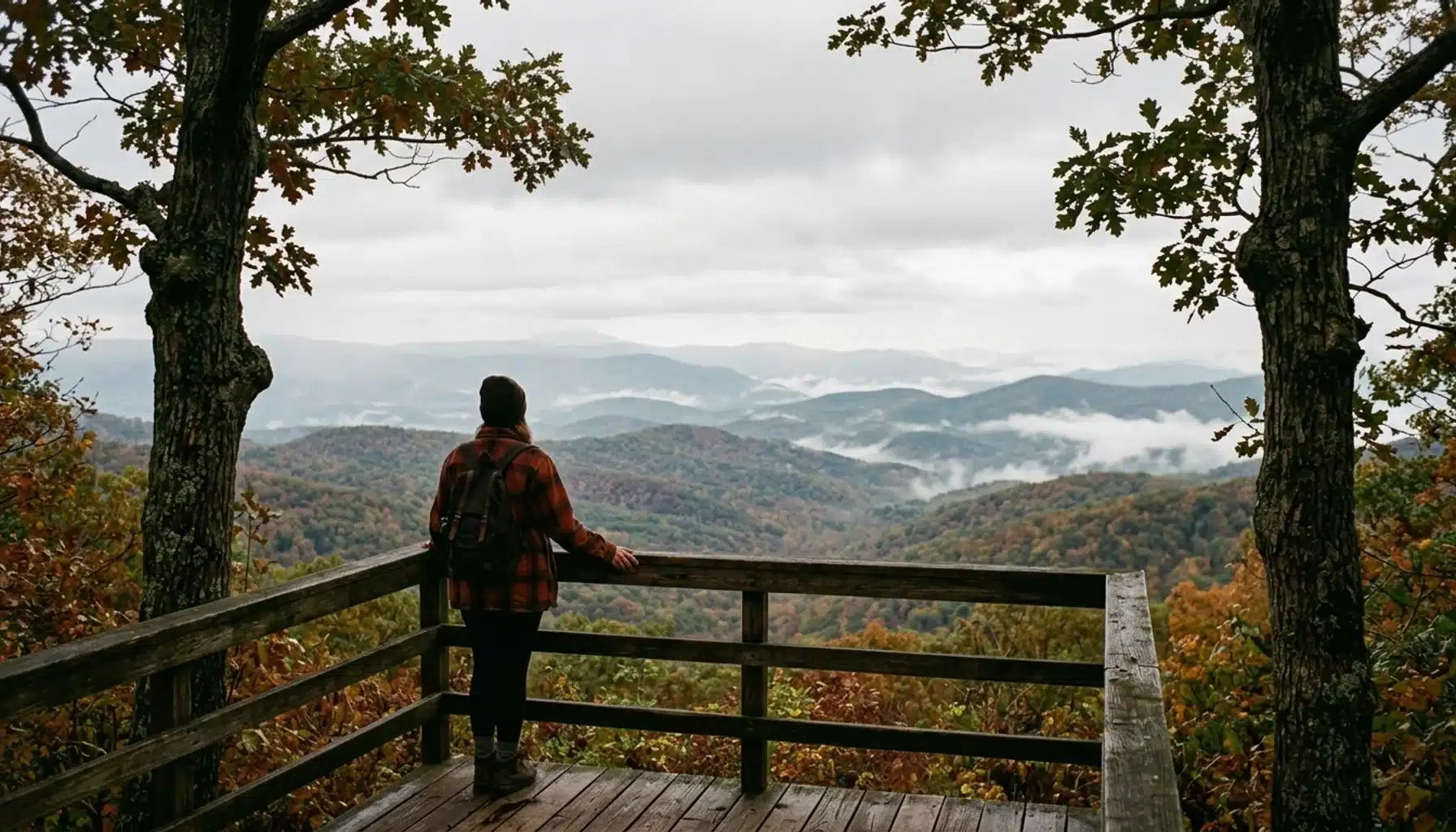
Activities in Virginia’s Shenandoah Valley center on Skyline Drive and Shenandoah National Park, where 500-plus miles of Blue Ridge trails, waterfall hikes, and scenic overlooks anchor a region that also includes cave tours, winery visits, and river paddling, all within an hour or two of Washington D.C.
Key Takeaways
- Shenandoah National Park’s Skyline Drive runs 105 miles through the Blue Ridge Mountains, with the Front Royal entrance roughly 40 minutes from Front Royal-area cabins and about an hour from D.C.
- The Shenandoah Valley generated $1.5 billion in direct visitor spending in 2018 according to U.S. Travel Association data cited by the Shenandoah Valley Travel Association, and statewide tourism topped $26 billion that same year.
- Dark Hollow Falls, Old Rag, and the Bearfence Rock Scramble cover a range of difficulty levels, from an easy 1.4-mile round trip to a strenuous 9-mile summit hike.
- Luray Caverns, roughly 20-30 minutes from the valley’s cabin corridor, remains the region’s single most-visited paid attraction and is worth the admission despite the crowds.
- Tourism supports about 234,000 jobs statewide, making it Virginia’s fifth-largest employer, with the Virginia Employment Commission projecting 12% job growth in hospitality between 2016 and 2026.
- A private wellness cabin near Shenandoah Farms, like Royal Oak Retreat, puts you close enough to hike by day and recover in a sauna and cold plunge by night.
If you’re mapping out activities in Virginia for a 2026 trip, the Shenandoah Valley solves a problem most day-trip guides ignore: how to combine genuine outdoor adventure with somewhere quiet to land afterward. This isn’t a beach-town itinerary or a theme-park checklist. It’s a valley shaped by the Blue Ridge Mountains on one side and the Massanutten range on the other, with the Shenandoah River threading through the middle.
At Royal Oak Retreat, we’ve fielded the same questions from hundreds of guests booking a Front Royal base camp: which trail is actually worth the drive, whether Luray Caverns lives up to the hype, and how to structure a weekend so it doesn’t feel like a scavenger hunt. This guide answers those questions directly, with mileage, drive times, and honest difficulty ratings instead of vague “something for everyone” filler.
What follows covers the national park’s signature hikes, the valley’s wineries and caverns, seasonal timing, and where a wellness-focused cabin fits into the plan. Expect specific trail names, real crowd patterns, and a few honest opinions about what’s overrated.
Is There Anything Fun to Do in Virginia?
Yes: the Shenandoah Valley alone offers hiking on more than 500 miles of trail inside Shenandoah National Park, cave tours at Luray Caverns, river tubing and kayaking, and wine tastings at valley wineries, all reachable within a single day trip from a Front Royal or Linden base.
Specifically, the fun in this corner of Virginia isn’t concentrated in one attraction. It’s distributed across a 105-mile drive along Skyline Drive, a network of rivers including the Shenandoah’s north and south forks, and small towns like Front Royal, Luray, and Stanley that each have their own character. Additionally, the valley’s tourism economy has grown steadily; Virginia’s tourism industry generated a record $26 billion in visitor spending in 2018, and domestic tourists spend roughly $71 million per day statewide.
As a result, you’re not choosing between “nature” and “things to do.” You get both. Morning hike, afternoon cave tour or winery stop, evening back at a cabin with a hot tub. The trick most visitors miss is spacing activities geographically. Skyline Drive runs north-south, so bouncing between the northern and southern district in one day wastes hours in the car. Pick a district and stay in it.
What Is the Number One Attraction in Virginia’s Shenandoah Region?
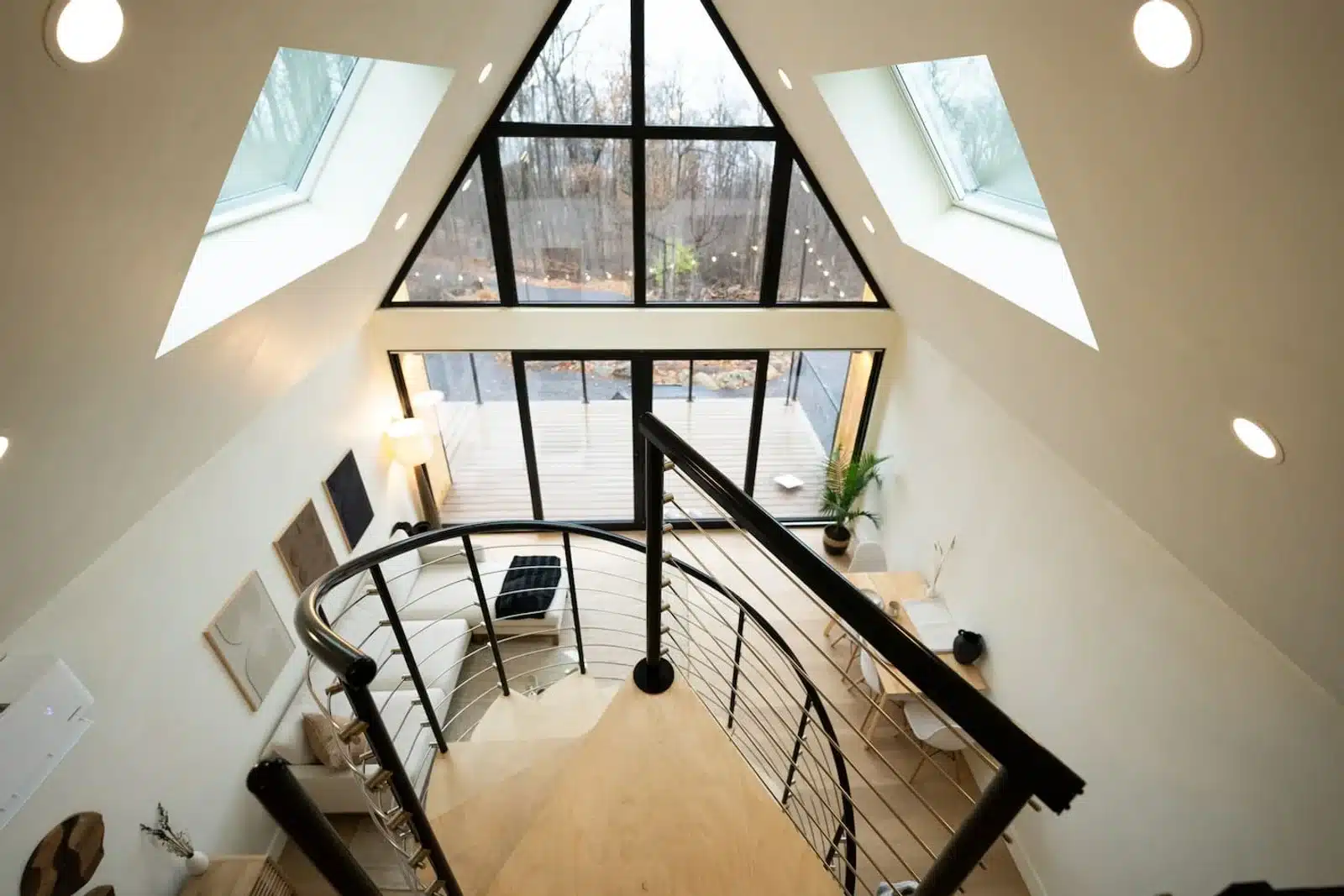
Shenandoah National Park’s Skyline Drive is the region’s signature attraction: a 105-mile scenic road running the length of the park, with 75 overlooks and access points to nearly every major hike, waterfall, and summit in the park.
First, understand what Skyline Drive actually is. It’s not a single road trip stop, it’s the spine of the entire park, connecting four entrance stations to trailheads, visitor centers, and lodges. The Front Royal entrance, at the northern end, is the closest access point for anyone staying in the Shenandoah Farms or Linden area, putting Skyline Drive under 20 minutes from a Front Royal cabin.
For first-timers, Franklin Cliffs Overlook near mile 49 delivers one of the park’s best sunset views without a hike required. The Franklin Cliffs Overlook page from the National Park Service has pull-off details and elevation. Notably, an entrance pass currently runs $30 for a 7-day vehicle pass through Recreation.gov, and travelers planning multiple park visits across the year should look at the America the Beautiful annual pass instead. Confirm current pricing with the official park site before you go, since fees are periodically updated.
Skyline Drive’s speed limit tops out at 35 mph and drops to 25 in some stretches, so budget more driving time than a typical highway trip. In October, weekend traffic backs up at popular overlooks; a Tuesday or Wednesday visit avoids most of it.
What Should Adults Do Today in Virginia?
Adults visiting the Shenandoah Valley in 2026 have strong options in hiking, wine tasting, cave touring, and wellness recovery, none of which require planning around children’s programming or family-oriented attractions.
Specifically, if you’re traveling as a couple or solo, prioritize activities that reward a slower pace: a longer hike with fewer families on it, a winery tasting flight, or an evening soak instead of a packed day of sightseeing. Fox Meadow Winery in Linden, about 5 minutes from Royal Oak Retreat, pours estate-grown Cabernet Franc and Petit Verdot on a patio with valley views, and it’s a reliable stop for an unhurried afternoon tasting. Crimson Lane Vineyards in Hume, roughly 8 minutes away, runs smaller and quieter, better for a weekday visit than a Saturday crowd.
For a slower morning, Coal Ridge Brewery offers a casual, adults-oriented alternative to a formal tasting room. And if the goal is genuine recovery rather than another checklist item, a private hot tub and sauna session does more for a stressed nervous system than a fourth attraction crammed into one day. That’s the entire premise behind Royal Oak Retreat’s Romance Package and Arrival Luxury Touch add-ons: building in deliberate downtime rather than treating rest as an afterthought.
As of 2026, the valley’s wineries, breweries, and farmers markets, including nearby experiences like The Giving Tree Farmers Market in Linden (about 10 minutes from the cabin), have expanded noticeably, giving adult travelers more reasons to linger in one place instead of racing between attractions.
What Is Virginia Most Popular For, and Does the Shenandoah Valley Deliver It?
Virginia is best known nationally for Colonial history, its coastline, and the Blue Ridge Mountains, and the Shenandoah Valley specifically delivers on the mountain half of that reputation with Skyline Drive, Massanutten Ski Resort, and a concentration of caverns found almost nowhere else on the East Coast.
Specifically, the valley’s karst geology created a cluster of show caves, including Luray Caverns, the largest and most visited cave system in the eastern United States. It’s genuinely crowded, especially on summer weekends, and it’s also genuinely worth the admission. The formations, particularly the Great Stalacpipe Organ, an actual musical instrument built from cave formations, aren’t replicated anywhere else in the region. Go on a weekday morning or plan to wait 20-30 minutes for a tour slot in July.
Additionally, Massanutten Ski Resort extends the region’s outdoor reputation into winter, with skiing and an indoor waterpark that runs year-round. In warmer months, Shenandoah River Outfitters and similar operators run tubing and kayak trips on the river’s north and south forks, typically a half-day commitment.
For a different kind of outdoor experience, Raptor Hill Falconry and Appalachian Adventures both offer guided experiences that go beyond a standard hike, worth booking a week or two ahead in peak season.
Which Shenandoah Trails Are Worth the Drive?
The Shenandoah trails worth prioritizing in 2026 are Dark Hollow Falls for an easy waterfall hike, Old Rag for the region’s most demanding and rewarding summit, and Bearfence Rock Scramble for a short, high-reward hands-on climb, each delivering a different experience for a different fitness level.
Specifically, Dark Hollow Falls covers 1.4 miles round trip with about 440 feet of elevation gain, rated moderate mostly because of the return climb, not the descent. It’s the closest waterfall trailhead to Big Meadows and gets crowded by mid-morning on weekends; arrive before 9 a.m. if you want the falls without a line for photos.
Old Rag, by contrast, is a genuinely strenuous 9-mile loop with a rock scramble near the summit that requires using your hands, not just your feet. It requires a separate day-use ticket system during peak season and regularly reaches capacity on fall weekends, so this is not a spontaneous Saturday plan; book ahead and start early.
| Trail | Distance | Difficulty | Best For |
|---|---|---|---|
| Dark Hollow Falls | 1.4 mi RT | Moderate | Families, first-timers, morning visits |
| Bearfence Rock Scramble | ~0.8-1.2 mi loop | Moderate, hands-on | Quick summit view, roughly 25 minutes |
| Blackrock Summit | 1 mi RT | Easy | Talus-field views, minimal elevation gain (175 ft) |
| Upper Hawksbill Summit | ~2.9 mi RT | Moderate | Highest point in the park, panoramic views |
| Old Rag | ~9 mi loop | Strenuous | Experienced hikers, full-day commitment |
Blackrock Summit is the pick for anyone who wants a payoff without much effort, a 1-mile round trip with only 175 feet of gain leading to a boulder field with wide valley views. Bring good shoes anyway; talus rock is uneven. For maps and detailed trail guides beyond what’s posted at trailheads, the Shenandoah National Park Association sells park-specific hiking books and is a better resource than a generic app.
Before any hike, check current conditions and closures at the official NPS activities page, and stop at Dickey Ridge or Harry F. Byrd Visitor Center for trail maps if you’re new to the park. Our own hiking trails guide breaks down elevation profiles and parking logistics in more depth.
What Are the Best Months to Plan Activities in Virginia’s Shenandoah Region?
Late September through late October delivers peak fall foliage and the highest crowd levels, while May and early June offer comparable scenery, wildflower blooms, and noticeably thinner trail traffic, making late spring the better trade-off for most travelers planning activities in Virginia’s mountains.
Specifically, foliage typically peaks along the ridgeline in mid-to-late October, roughly a week or two before it does at the cabin’s lower elevation around Shenandoah Farms. That timing gap means you can catch color on Skyline Drive even after it’s faded at the base of the mountain. Weekends in October see the heaviest Skyline Drive traffic of the year; if your schedule allows it, a Monday-through-Wednesday trip cuts wait times at overlooks significantly.
Spring brings its own advantages: dogwoods and redbuds bloom in April, wildflowers carpet the forest floor through May, and river flow is higher for tubing and kayaking outfitters. Note that spring also brings pollen; oak and pine pollen counts run high in April and early May, worth knowing if allergies are a factor in your trip planning.
Winter is the valley’s overlooked season. Massanutten Ski Resort runs through the colder months, and a quieter, snow-dusted Skyline Drive (weather permitting, sections do close in ice or heavy snow) has real appeal for travelers who want solitude over scenery. A 4×4 vehicle is worth having in winter given steep, sometimes unplowed driveways common to the region’s cabin properties.
What Do Most Visitors Get Wrong About Planning a Shenandoah Trip?
Most first-time visitors underestimate how much time Skyline Drive itself consumes and overestimate how many trailheads they can realistically hit in one day. This section covers the planning mistakes that separate a smooth Shenandoah trip from a rushed one.
First, the 35 mph speed limit means driving the full 105-mile length takes about four hours without stops. Plan on visiting one district (north, central, or south) per day trip rather than trying to cover the whole park. Second, cell service is unreliable inside the park; download offline maps before you go rather than relying on real-time navigation once you’re on Skyline Drive.
Third, parking at popular trailheads like Old Rag and Dark Hollow Falls fills by mid-morning on fall weekends. Arriving by 8 a.m. isn’t just a suggestion, it’s often the difference between parking at the trailhead and parking a half-mile down the shoulder.
Fourth, and this is the gap most generic guides skip entirely: the region’s short-term rental supply has grown fast. According to AirROI’s 2026 market data, listing supply in the Shenandoah, Virginia market grew 29.3% over the past year, which means booking a cabin with real availability during October weekends now requires more lead time than it did a couple of years ago. AirROI also reports an average 45-day booking lead time for the area, so last-minute fall trips are increasingly a gamble.
Fifth, don’t assume “secluded” means disconnected. Guests planning to work remotely or stream in the evening should confirm connectivity before booking; Royal Oak Retreat runs Starlink specifically because standard rural internet in Shenandoah Farms is inconsistent.
How Should You Structure a Weekend of Activities in Virginia’s Shenandoah Valley?
A well-structured Shenandoah weekend pairs one demanding activity per day with built-in recovery time, rather than stacking three attractions into a single afternoon. This approach respects both drive times and the physical toll of hiking at elevation.
For a Friday arrival, check into your cabin by early evening, unpack, and skip any additional driving. Saturday morning, tackle your main hike, Dark Hollow Falls for an easier day, Old Rag if you’re prepared for a full-day commitment. Early afternoon, head to Front Royal or Linden for lunch, then a winery stop at Fox Meadow or Crimson Lane before the light fades. Saturday evening is for the hot tub, not another attraction.
Sunday, before checkout at 11 a.m., consider a shorter activity: Luray Caverns’ underground tour runs about an hour and doesn’t require the physical output of a hike, making it a smart choice for a travel day. Alternatively, a slower morning at the cabin, coffee on the deck, one more soak, extends the reset before the drive back to D.C.
This pacing matters more for burnout recovery travelers than for anyone else. Cramming five attractions into 48 hours defeats the purpose of leaving the city in the first place. The point of a Shenandoah weekend is contrast: strenuous activity followed by genuine rest, not a checklist executed at city-trip speed.
Where Should You Stay to Access These Shenandoah Activities?
The best base for Shenandoah Valley activities sits within a 30-to-45-minute drive of the Front Royal Skyline Drive entrance, close enough for an early trailhead start without sacrificing privacy or comfort in the evening.
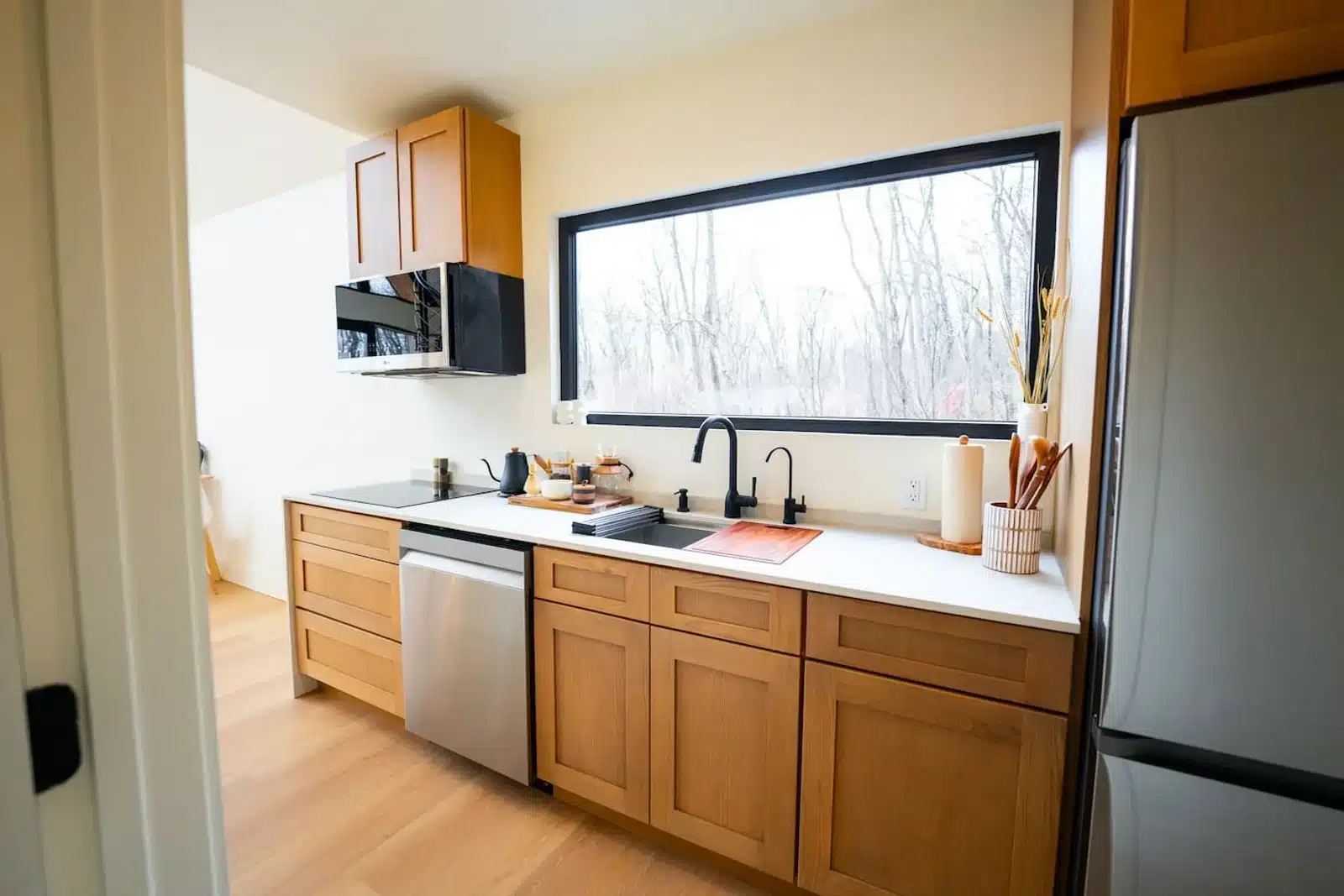
Royal Oak Retreat sits in Shenandoah Farms, about 40 minutes from Shenandoah National Park and roughly an hour from Washington D.C., putting Fox Meadow Winery five minutes away and Crimson Lane Vineyards eight minutes out. This adults-first, 1,000-square-foot cabin sleeps up to four across a king bedroom and a loft with a queen bed, reached by a spiral staircase, so it’s not the right fit for guests with mobility limitations on stairs. The single bathroom and two-bedroom layout keep the footprint intimate rather than sprawling.
What separates it from most cabins in the valley is the contrast-therapy island: a sunken outdoor hot tub with unobstructed stargazing views, a Scandinavian-style sauna, and a cold plunge, all steps apart on the same deck. After a day on Old Rag or Bearfence, alternating a few minutes in the sauna with a short cold plunge is a legitimate way to speed muscle recovery, not just a spa gimmick. The whole build is fully non-toxic, no plastics or chemical treatments were used in construction, which matters if you’re sensitive to off-gassing in typical vacation rentals.
Practical details worth knowing before you book: check-in is 3 p.m., check-out 11 a.m., one dog under 50 lbs is welcome with a $100 pet fee, and a 4×4 vehicle is recommended in winter due to a steep driveway. On-site EV charging and Starlink internet solve two problems DC-area travelers ask about constantly: whether a secluded cabin means no connectivity, and whether an electric vehicle can make the trip without range anxiety. Rates are best when booking direct through royaloakretreat.com rather than through a third-party platform.
For a broader look at options in the area, our guide to cabin rentals in Shenandoah Valley Virginia compares layouts and amenities across the region, and the cabins near Shenandoah National Park guide focuses specifically on proximity to trailheads. If you’re weighing a park lodge instead of a private cabin, Skyland Lodge and Big Meadows Lodge, both run by Delaware North inside the park, are worth comparing for location versus privacy trade-offs.
What Should You Know About Fees, Permits, and Practical Logistics?
Shenandoah National Park charges a vehicle entrance fee that covers seven consecutive days, purchasable in advance online to avoid gate-line waits, and travelers planning multiple park visits within a year should compare that cost against an annual interagency pass.
Specifically, buy your pass through the official Recreation.gov site before arrival; gate lines at Front Royal and Thornton Gap regularly back up on October Saturdays, and a pre-purchased pass lets you skip the transaction at the booth. If your travel plans include other national parks this year, the America the Beautiful pass through the USGS store covers entrance fees at any federal site nationwide, a better value for frequent park visitors. Confirm current pricing directly on those official sites, since fees are adjusted periodically.
Additionally, if you’re staying at a short-term rental in the surrounding counties, be aware the region operates under specific zoning rules: Shenandoah County allows short-term rentals with four bedrooms or fewer by right with an annual zoning permit, while larger properties require a special use permit and public hearing. None of this affects a standard weekend booking, but it explains why some larger group houses in the area have limited availability compared to smaller cabins.
One more logistics point most guides skip: parking at trailheads is free, but it’s limited. Old Rag’s lot fills by 8 a.m. on fall weekends, and overflow parking adds a 10-15 minute walk to the actual trailhead. Plan your start time accordingly rather than assuming a spot will be waiting.
Frequently Asked Questions
What is the number one thing to do in Virginia’s Shenandoah Valley?
Driving Skyline Drive through Shenandoah National Park is the region’s top activity, offering 75 overlooks and access to nearly every major hike in the park across its 105-mile length. Pair it with at least one hike, Dark Hollow Falls for an easy option or Old Rag for a full-day challenge, rather than treating the drive alone as the destination.
Is Luray Caverns worth visiting if it’s crowded?
Yes. Luray Caverns is genuinely popular and can mean a 20-30 minute wait on summer weekends, but the scale of the formations and the Great Stalacpipe Organ aren’t replicated anywhere else in the region. Visit on a weekday morning to minimize the wait while still seeing the main attraction.
How far is Royal Oak Retreat from Shenandoah National Park?
Royal Oak Retreat sits about 40 minutes from Shenandoah National Park’s Front Royal entrance and Skyline Drive, and roughly an hour from Washington D.C. Fox Meadow Winery is a 5-minute drive and Crimson Lane Vineyards is about 8 minutes from the cabin.
Is Royal Oak Retreat pet-friendly, and are there restrictions?
Royal Oak Retreat welcomes one dog under 50 lbs with a $100 pet fee. The non-toxic, chemical-free construction and adults-first setting still apply with a dog on the property, so it works well for guests who travel with a well-behaved smaller or medium-sized dog.
What’s the best time of year for activities in Virginia’s Shenandoah region?
Late September through late October brings peak fall foliage but the heaviest crowds, while May and early June offer wildflowers, dogwood blooms, and noticeably lighter trail traffic. Winter is quieter still and pairs well with skiing at Massanutten Ski Resort, though a 4×4 vehicle is recommended for steep, potentially snowy driveways in the area.
Is there EV charging available near Shenandoah National Park cabins?
Royal Oak Retreat has an on-site EV charger, addressing a common concern for DC-area travelers planning an electric vehicle trip into a rural mountain area. Confirm charger type and availability directly with the property before booking if you have a specific charging need.
Why book a Shenandoah cabin direct instead of through a third-party site?
Booking directly through royaloakretreat.com gives you the best available rate and direct communication with the property rather than routing questions through a third-party platform. Direct booking also gives you more flexibility to ask about specific needs, like early check-in or pet accommodations, before you arrive.
Is Old Rag suitable for a first-time hiker?
Old Rag is a strenuous 9-mile loop with a rock scramble near the summit that requires using your hands, making it a poor choice for a first Shenandoah hike. Start with Dark Hollow Falls or Blackrock Summit instead, then work up to Old Rag on a return trip once you know your pace on mountain terrain.
Conclusion: Planning Your Shenandoah Valley Activities
Activities in Virginia’s Shenandoah Valley reward travelers who pick a district on Skyline Drive, commit to one serious hike per day, and leave room for genuine recovery rather than a packed itinerary. Whether that means Dark Hollow Falls followed by a winery stop, or Old Rag followed by an evening you don’t have to think about, the valley delivers on outdoor adventure without requiring you to sacrifice comfort or planning sanity. As 2026 brings continued growth to the region’s tourism economy and its short-term rental supply, booking your base camp with some lead time matters more than it used to.
Shenandoah rewards travelers who slow down enough to notice it: the specific mile marker where a scenic pullout thins out, the week in October when the ridgeline turns before the valley floor does, the quiet of a forest deck after dark. A well-chosen cabin, close enough to the trailheads and far enough from the noise, makes that slower pace possible.
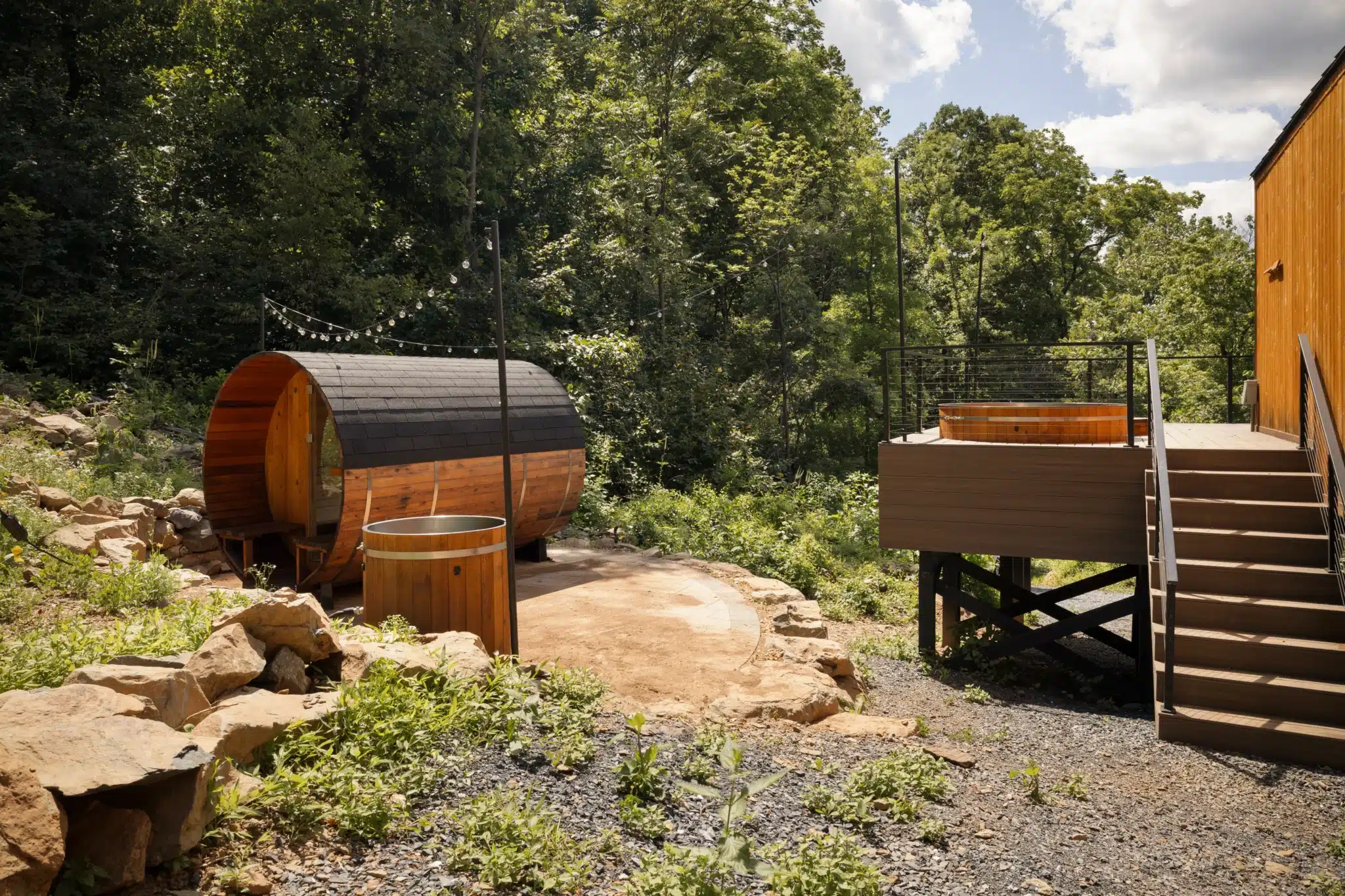
If your Shenandoah itinerary includes a full day on Old Rag or Bearfence, Royal Oak Retreat puts the contrast-therapy island, sauna, cold plunge, and stargazing hot tub, within a short drive of the trailhead so recovery starts the same evening. Check current availability here.
Content powered by inkSTR.co