Cabins at Shenandoah National Park fall into two very different categories, and most articles blur the line between them: rustic in-park lodging operated by Delaware North, and private cabin rentals in the surrounding valley towns like Front Royal and Luray. If you want a fireplace, a working outlet, and a private bathroom without a shared bathhouse, you need to know which category actually delivers that before you book.
Key Takeaways
- Shenandoah National Park has exactly three in-park lodging options: Skyland (mile 41.7), Big Meadows Lodge (mile 51), and Lewis Mountain Cabins (mile 57.5), all run by concessionaire Delaware North.
- Lewis Mountain Cabins have no in-room phones or internet access, a detail most competitor sites leave out entirely.
- Shenandoah National Park welcomed more than 1.7 million visitors in 2026, the highest total in seven years, and October alone accounts for roughly 24% of annual visitation according to the National Park Service.
- Dogs are permitted on 480 of the park’s 500 miles of trails, per Delaware North Parks and Resorts, making pet policy a real differentiator between in-park cabins and private rentals.
- Private cabins outside the park boundary, including Royal Oak Retreat in Shenandoah Farms, typically offer modern amenities like hot tubs, saunas, and reliable internet that in-park lodging does not provide.
- Short-term rental data for the Shenandoah, Virginia market shows a 2-bedroom average daily rate of $292, useful context when comparing private cabin pricing to in-park lodges.
Planning a trip to Shenandoah in 2026 means sorting through two distinct lodging worlds that get lumped together in search results. One is government-concessionaire lodging built for hikers who want proximity to Skyline Drive and don’t mind a bathhouse walk. The other is the private rental market in towns like Front Royal, Luray, and Linden, where cabins compete on design, wellness amenities, and connectivity.
Most articles about cabins at Shenandoah National Park just list the three Delaware North properties with mile markers and phone numbers, the same structure the National Park Service itself uses. That’s useful if you’re booking a bare-bones stay steps from a trailhead. It tells you almost nothing about pricing, seasonal sellouts, or what a “rustic” cabin actually means when you show up without wifi and discover the room has no phone either.
This guide breaks down both categories honestly, including the parts competitor content skips: what Lewis Mountain Cabins are missing, how far in advance to book during fall foliage season, and why a growing number of DC-area travelers are choosing private cabins in the surrounding valley instead of fighting for an in-park reservation.
What Are the Three In-Park Lodging Options at Shenandoah?
Shenandoah National Park operates exactly three lodging facilities inside its boundaries: Skyland, Big Meadows Lodge, and Lewis Mountain Cabins. All three sit directly on Skyline Drive and are run by Delaware North, the park’s official concessionaire, meaning every reservation, rate, and cancellation policy runs through one company rather than individual owners.
Specifically, Skyland sits at mile 41.7, the highest point on Skyline Drive at 3,680 feet elevation, spanning 27 acres across 28 separate buildings. Big Meadows Lodge sits at mile 51, and Lewis Mountain Cabins sit at mile 57.5, the most rustic and southernmost of the three. As a result, your choice among them often comes down less to amenities and more to which section of the 105-mile drive you plan to explore.
Booking any of the three requires going through Delaware North directly, either online at Go Shenandoah or by phone. Skyland’s line is 540-999-2212, Big Meadows Lodge is 540-999-2222, and Lewis Mountain is 540-843-2115. In contrast, private cabins in the surrounding valley, including options detailed in our guide to cabin rentals in Shenandoah Valley Virginia, book directly with the owner or manager, which usually means faster email responses and more flexibility on arrival timing.
What Makes Lewis Mountain Cabins Different From Skyland and Big Meadows?
Lewis Mountain Cabins are the park’s most stripped-down lodging option, offering private baths, heat, electric lights, towels, and linens, but no in-room phones and no internet access of any kind. That last detail rarely appears in competitor roundups, and it matters if you’re planning to work remotely or need connectivity for any reason during your stay.
Each cabin also has access to an adjacent outdoor pit grill and charcoal fire area, so cooking happens outside rather than in a kitchenette. According to the official NPS lodging page, updated October 2026, Lewis Mountain remains open seasonally rather than year-round, so confirm current dates directly with Delaware North before locking in travel plans, especially for shoulder-season trips in early spring or late fall.
Skyland, by comparison, offers a wider range: premium rooms, small detached cabins, preferred and traditional rooms, suites, and pet-friendly rooms. Newly renovated premium rooms include air conditioning, television, wood-plank laminate flooring, and private patios or balconies, a meaningfully different experience from Lewis Mountain’s grill-and-linens setup. Big Meadows Lodge splits the difference, with 29 rooms in its 1939 stone main building plus 63 additional accommodations including cabins with working fireplaces.
If connectivity or in-room comfort matters to your trip, Lewis Mountain is the option to skip. If you want the rustic Shenandoah cabin experience without sacrificing a private bath, Big Meadows Lodge’s fireplace cabins are the better middle ground among the three.
How Much Does It Cost to Stay in an In-Park Cabin at Shenandoah?
Exact nightly rates for Skyland, Big Meadows Lodge, and Lewis Mountain Cabins change seasonally and are set entirely by Delaware North, so the only reliable source for current pricing is the Go Shenandoah booking site or a direct call to the reservation lines listed above. No competitor article currently publishes a real pricing comparison table for these three properties, which is one of the biggest information gaps in existing Shenandoah lodging content.
For context on what private cabins near the park cost, short-term rental data for the broader Shenandoah, Virginia market shows an average daily rate around $324, with 1-bedroom units averaging $227 per night, 2-bedroom units averaging $292, and larger 3-bedroom cabins averaging $421 per night. These figures come from industry rental market analysis rather than the park concessionaire, but they give you a real benchmark before you call for in-park rates.
As a result, many travelers find that a private 2-bedroom cabin outside the park, in the $290 to $330 nightly range, delivers more privacy and modern amenities than an in-park lodge room at a comparable price point. The trade-off is proximity: in-park lodging puts you steps from a trailhead, while valley cabins require a short drive to reach Skyline Drive’s entrance stations.
Should You Book a Cabin Inside the Park or a Private Rental Nearby?
Private cabin rentals outside Shenandoah National Park’s boundary generally offer more amenities, more flexible booking, and better connectivity than the three in-park lodging options, while in-park cabins offer unmatched proximity to Skyline Drive trailheads. The right choice depends on whether your trip centers on early trailhead access or on the stay itself as a wellness reset.
If sunrise hikes and minimal drive time matter most, Lewis Mountain or Big Meadows put you on Skyline Drive before the day-tripper traffic arrives. But if you’re prioritizing rest, working remotely for part of the trip, or traveling with a dog under 50 pounds, private cabins in Front Royal or Linden typically deliver more of what you actually need.
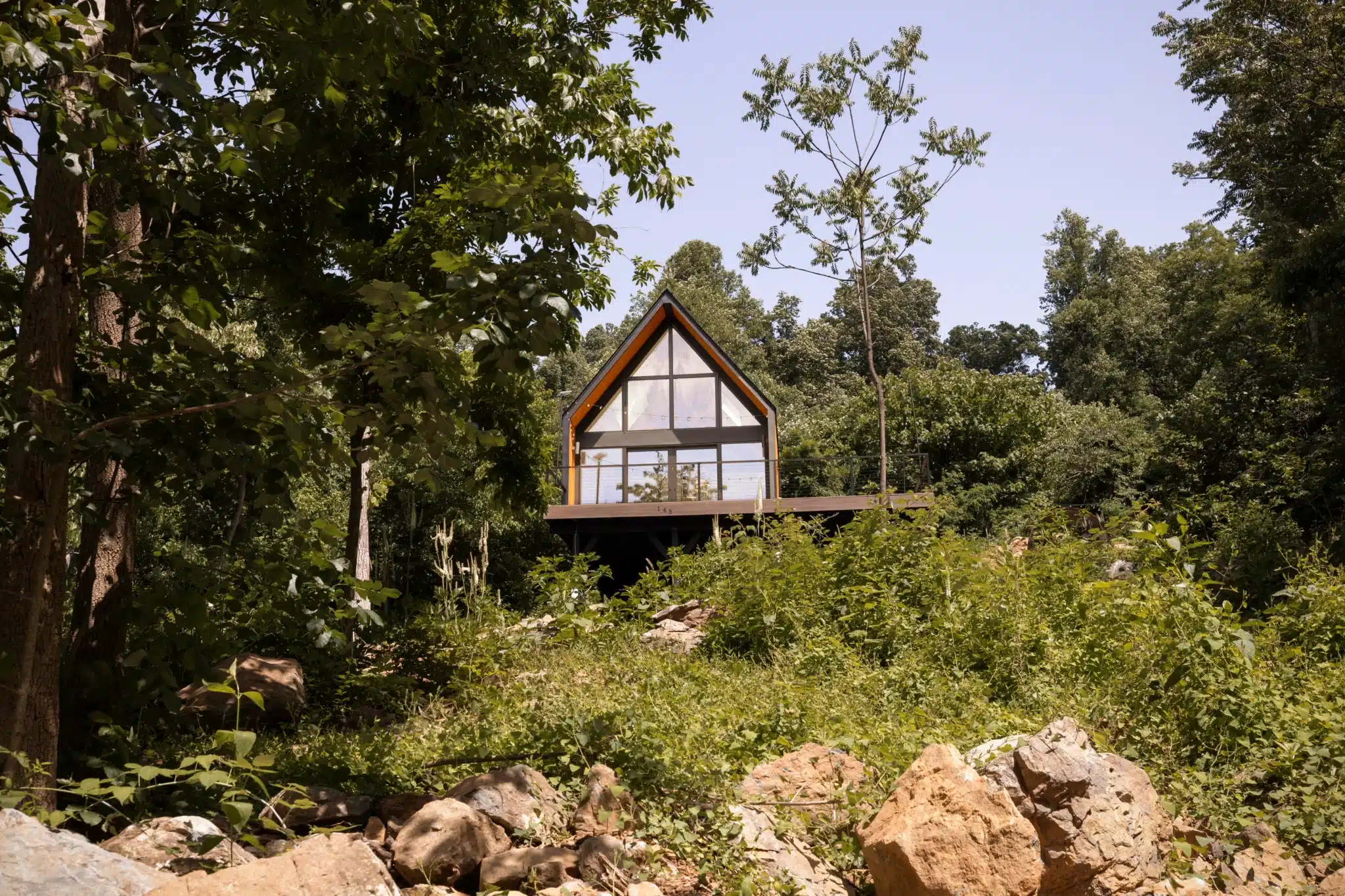
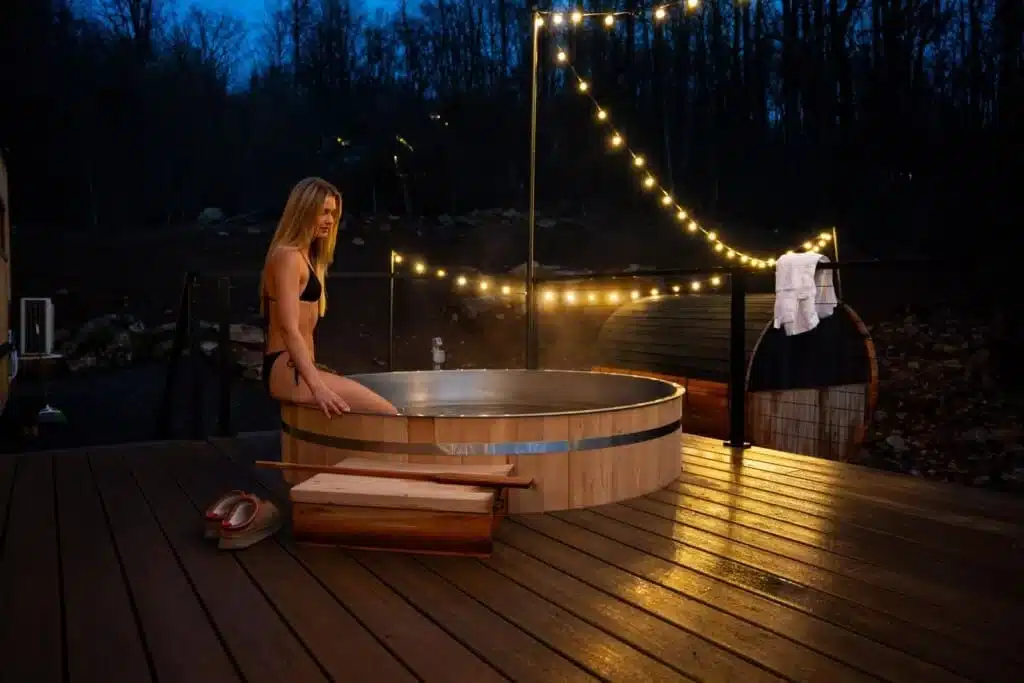
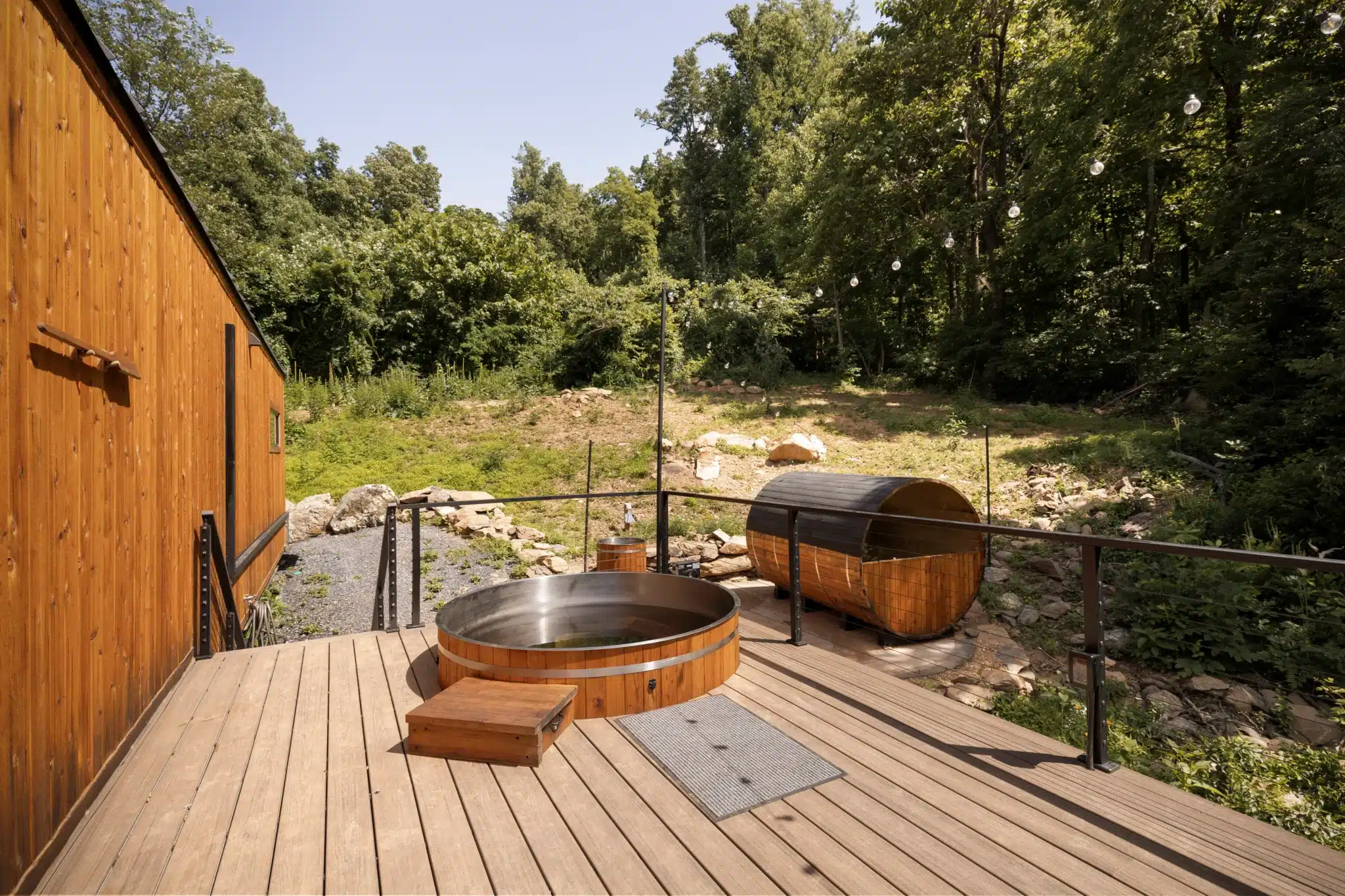
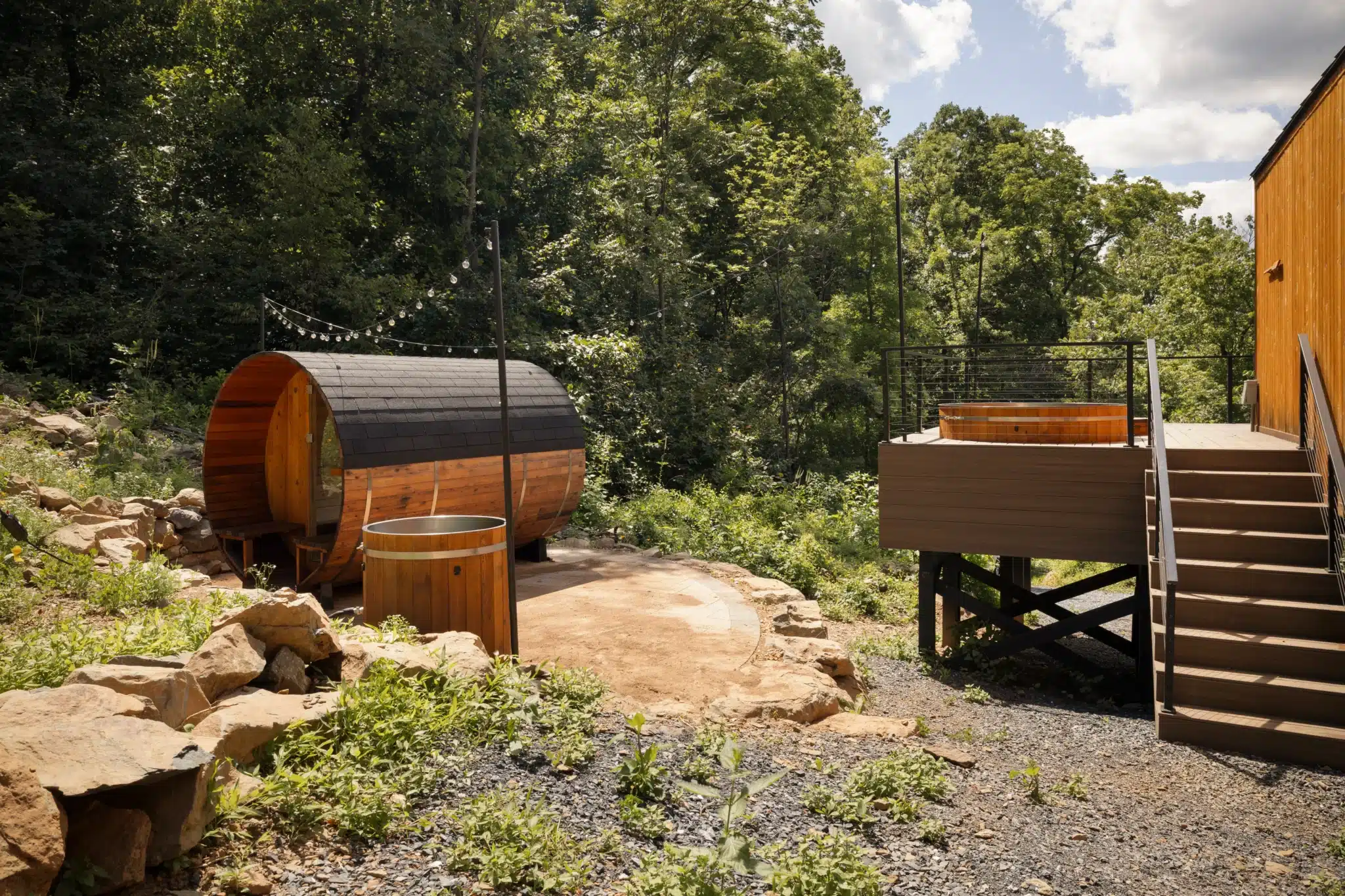
Royal Oak Retreat, a private cabin in Shenandoah Farms roughly 40 minutes from the park’s Skyline Drive entrance, illustrates the gap well. The 1,000 square foot cabin sleeps up to four across a main bedroom with a king bed and a loft with a queen bed, reached by a spiral staircase, so it’s not the right fit for guests with mobility concerns. What it does offer that no in-park lodging option matches: a sunken outdoor hot tub built for stargazing, a Scandinavian-style sauna, and a cold plunge arranged as a single contrast-therapy island, plus Starlink internet and an on-site EV charger.
That connectivity detail matters more than it sounds. Lewis Mountain Cabins have zero internet access, and even Skyland’s renovated rooms don’t advertise high-speed internet as a feature. For DC-area travelers who want a real forest break without going fully offline, Royal Oak Retreat solves a problem in-park cabins simply weren’t built to solve.
What Should You Know About PATC’s Primitive Cabins?
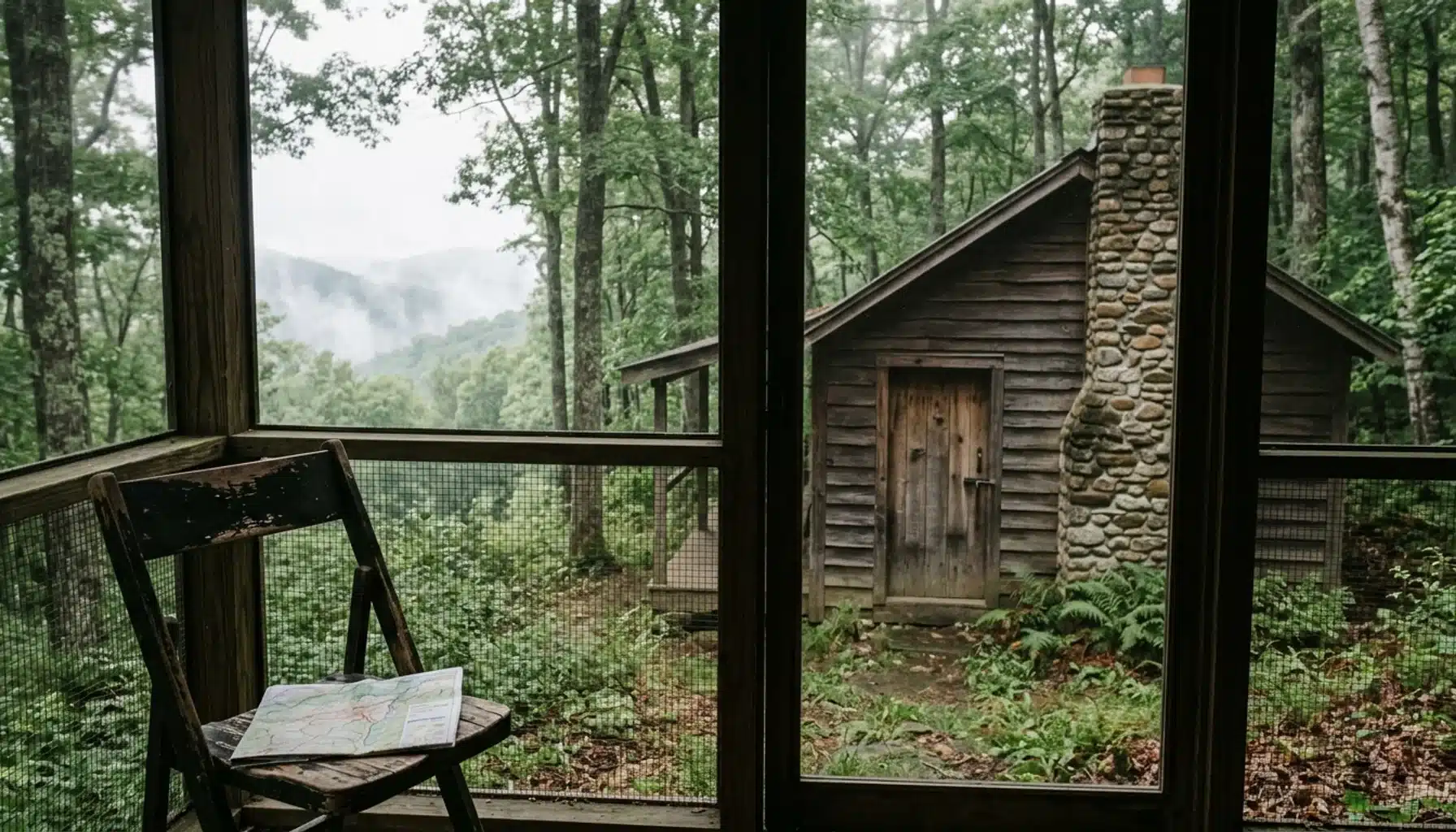
The Potomac Appalachian Trail Club maintains six locked, primitive public-use cabins scattered throughout Shenandoah National Park, offering the most rustic lodging category available inside the park boundary. Each cabin comes equipped with mattresses, blankets, and cookware, plus access to a pit toilet and nearby spring water, but no electricity or running water inside the structure itself.
Reservations for all six locations run through the Potomac Appalachian Trail Club website rather than Delaware North, which trips up travelers who assume all Shenandoah lodging books through one system. You’ll need to create an account and reserve through the club’s cabin reservation portal directly, and popular cabins near well-trafficked trail sections fill up weeks ahead during peak fall foliage season.
These cabins suit backcountry hikers who want a step up from tent camping, not travelers looking for a relaxing weekend. There’s no cell service at most locations, no on-site host, and you’ll need to pack in food and water purification since spring water requires treatment before drinking. If that sounds appealing, it’s a genuinely different trip than anything Skyland or a private valley cabin offers, and it’s worth knowing the option exists even if it’s not the right fit for most getaway travelers.
When Should You Book Cabins at Shenandoah National Park to Avoid Sellouts?
Fall foliage season, roughly early October through early November, is the tightest booking window for any lodging near Shenandoah National Park, in-park or private. October alone accounts for approximately 24% of the park’s total annual visitation according to National Park Service data, and the park logged over 1.7 million total visitors in 2026, the highest figure in seven years.
As a result, Skyland and Big Meadows Lodge rooms for peak color weekends typically sell out three to six months ahead, and Lewis Mountain’s smaller inventory goes even faster. Private cabins follow a similar pattern but with more flexibility. Booking direct with an owner, rather than through a third-party platform, often means better luck snagging a late cancellation since you’re communicating with one person instead of navigating a call center queue.
Summer weekends and any three-day holiday weekend also compress availability, though less dramatically than fall. Winter is the quietest season for in-park lodging, and several sections close seasonally, so always confirm current operating dates directly with Delaware North before planning a winter trip. For private cabins in the surrounding valley, winter access can bring its own logistics: steep gravel driveways in areas like Shenandoah Farms often require a 4×4 vehicle after snowfall, a detail worth asking about before you book.
What Do In-Park Cabins Offer for Dining and Activities?
Skyland and Big Meadows Lodge both operate on-site restaurants, giving guests a dining option without leaving Skyline Drive. Skyland’s dining room serves regional fare with sustainable menu selections, while Big Meadows Lodge’s Spottswood Dining Room covers breakfast, lunch, and dinner, and its New Market Taproom adds lighter fare plus nightly entertainment. Both terraces allow pets, a detail that matters if you’re traveling with a dog.
Lewis Mountain Cabins have no dining room, so guests cook at the adjacent outdoor grill or drive to Big Meadows, about six miles north. Skyland also offers horseback riding through nearby stables and a gift shop stocked with regional souvenirs, activities that fill an afternoon between hikes without requiring a drive off Skyline Drive.
For a broader look at trail options near any of these lodging bases, our hiking trails guide for Shenandoah National Park breaks down mileage and difficulty for the park’s most popular routes, including which trailheads sit closest to each lodging cluster.
What Should You Look for in a Private Cabin Near Shenandoah National Park?
A quality private cabin near Shenandoah National Park should have verified amenities rather than marketing photos, clear pet policy terms, and honest distance claims to the park entrance rather than vague “nearby” language. Specifically, ask whether listed amenities like hot tubs or saunas are functioning features, not staged photography, and confirm exact drive time to the Front Royal or Luray entrance stations.
Pet policy is one of the most commonly obscured details in Shenandoah cabin listings. Royal Oak Retreat, for example, states its policy plainly: one dog under 50 pounds, with a $100 pet fee, rather than a vague “pet-friendly” claim buried in fine print. That clarity matters more than it seems, especially since dogs are permitted on 480 of the park’s 500 miles of trails, meaning most travelers bringing a dog want a cabin that treats the arrangement as straightforward rather than a hidden exception.
Also confirm construction and connectivity details before booking. Royal Oak Retreat’s cabin was built without plastics or added chemicals in construction, a non-toxic standard that’s uncommon in the regional rental market, paired with Starlink internet and an on-site EV charger, both practical for DC-area travelers driving electric vehicles or needing to stay reachable during a getaway. Our guide on what to know before booking a Shenandoah cabin covers additional verification steps worth running through before you commit.
Is a Wellness-Focused Cabin Worth It Over a Standard Rental?
A wellness-focused cabin near Shenandoah National Park is worth the difference in price when the trip’s actual goal is rest rather than sightseeing volume. Standard rental cabins typically offer a bedroom, kitchen, and maybe a fire pit. A dedicated wellness cabin adds infrastructure built specifically for physical recovery, which changes what the stay accomplishes.
At Royal Oak Retreat, that infrastructure means a contrast-therapy island where the sauna and cold plunge sit steps apart, so alternating between heat and cold is a short walk rather than a planned production. A common pattern guests use is four minutes in the sauna followed by sixty to ninety seconds in the cold plunge, though tolerance varies and first-timers should ease in gradually. The sunken hot tub adds a third option, positioned for stargazing on the deck rather than tucked against a wall.
This matters most for travelers dealing with genuine burnout rather than those wanting a checklist of park activities. If your goal is bagging trail mileage and covering as much of Skyline Drive as possible, a standard rental or an in-park cabin closer to the trailhead makes more sense. If the goal is doing as little as possible on purpose, the wellness infrastructure earns its price difference. Our seasonal guide to things to do in Shenandoah Valley covers how to balance both goals across a single trip.
Common Mistakes to Avoid When Booking Shenandoah Cabins
Booking cabins at Shenandoah National Park goes wrong most often when travelers assume all lodging near the park works the same way. Here’s what trips people up:
- Confusing in-park and private cabin booking systems. In-park lodging books only through Delaware North; private cabins book directly with owners or through rental platforms. Calling the wrong number wastes time during peak season.
- Assuming all cabins have internet. Lewis Mountain Cabins have none. Confirm connectivity directly if it matters for your trip, rather than assuming any Shenandoah cabin includes wifi.
- Waiting too long to book fall trips. With October alone representing roughly a quarter of annual park visitation, fall foliage weekends require booking months out, not weeks.
- Overlooking winter driveway conditions. Cabins on steep gravel roads in areas like Shenandoah Farms often need a 4×4 vehicle after snow. Ask before booking a winter stay.
- Not verifying pet policy specifics. “Pet-friendly” can mean anything from no restrictions to a strict weight limit. Get the exact terms, including any fee, before arrival.
- Skipping the entrance pass. Every vehicle entering Shenandoah National Park needs a valid pass. You can buy a Shenandoah entrance pass online ahead of time to skip gate lines, or get the America the Beautiful annual pass if you’re visiting multiple national parks in 2026.
Frequently Asked Questions
Does Royal Oak Retreat actually have a private hot tub, or is it shared?
The hot tub at Royal Oak Retreat is private, sunken into the deck, and reserved exclusively for guests during their stay, positioned for stargazing views rather than shared with other travelers or cabins on the property.
Is Royal Oak Retreat pet-friendly, and are there restrictions?
Royal Oak Retreat welcomes one dog under 50 pounds with a $100 pet fee. This is a specific, stated policy rather than a vague pet-friendly label, so confirm the weight limit applies before booking if you’re traveling with a larger dog.
How far is Royal Oak Retreat from Shenandoah National Park?
Royal Oak Retreat sits about 40 minutes from Shenandoah National Park’s Skyline Drive, and roughly one hour from Washington D.C., making it accessible for both a park-focused day trip and a DC-area weekend getaway.
Do the in-park cabins at Skyland and Lewis Mountain have wifi?
Skyland’s renovated premium rooms do not advertise wifi as a standard amenity, and Lewis Mountain Cabins have no internet access or in-room phones at all. Travelers who need reliable connectivity should look at private cabins in surrounding towns instead.
What is the best time of year to visit Shenandoah Valley for a wellness getaway?
Late spring and early fall typically offer the mildest weather for a wellness-focused stay, avoiding both summer humidity and the heaviest October foliage crowds. October remains the most popular month overall, accounting for roughly 24% of the park’s annual visitation, so book well ahead if you want that specific window.
Why book a private cabin direct instead of through a booking platform?
Booking direct means communicating with the actual property owner rather than a third-party call center, which typically means faster responses on arrival timing, pet policy questions, or last-minute changes. Royal Oak Retreat’s best rates are available when booking direct through its own site.
Is a 4×4 vehicle really necessary for winter cabin stays in Shenandoah Farms?
Yes, for cabins on steep gravel driveways in areas like Shenandoah Farms, a 4×4 vehicle is genuinely recommended during winter months due to snow and driveway grade. Confirm this detail with any cabin owner before booking a winter trip in the region.
Final Thoughts on Choosing Cabins at Shenandoah National Park
Cabins at Shenandoah National Park split cleanly into two categories once you know what to look for: rustic, concessionaire-run lodging at Skyland, Big Meadows Lodge, and Lewis Mountain Cabins inside the park boundary, and private rentals in the surrounding valley towns that offer more amenities and flexibility. Neither is universally better. The right pick depends on whether your priority is trailhead proximity or a genuinely restorative stay.
If you’re chasing sunrise at a Skyline Drive overlook, book early with Delaware North and expect fewer comforts. If the trip is really about slowing down, a private wellness cabin forty minutes from the park delivers what in-park lodging was never built to offer: a contrast-therapy setup, real internet, and a driveway you can pull an EV up to.
If your Shenandoah trip is really about the reset, not the checklist, Royal Oak Retreat puts you 40 minutes from Skyline Drive with a sauna and cold plunge waiting when you get back. Check current dates here.
Content powered by inkSTR.co