
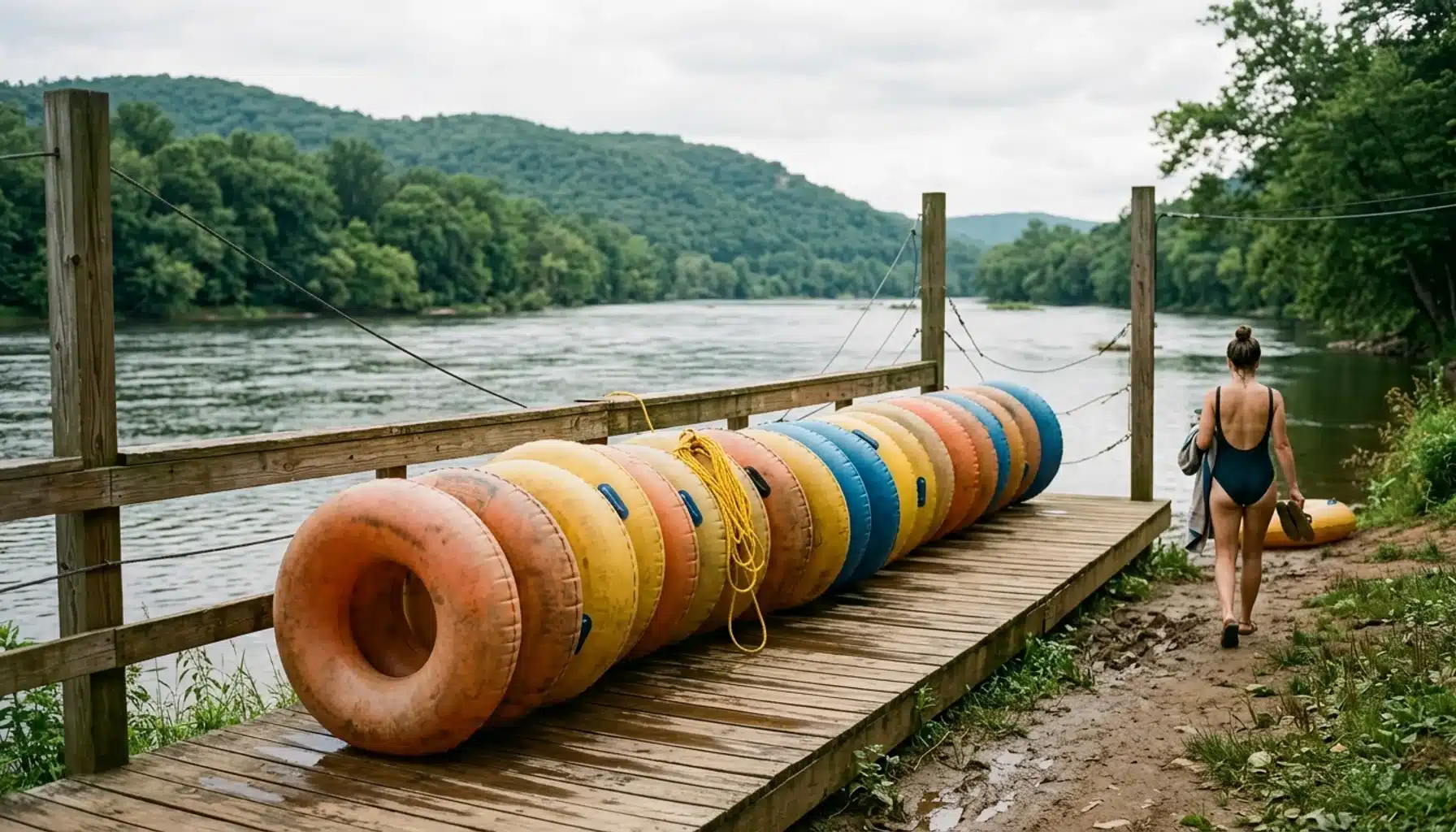
Shenandoah River tubing means floating a section of the South Fork Shenandoah River on an inflatable tube, usually with an outfitter providing shuttle service, life jackets, and a set launch window. Trips typically run 2 to 5 hours depending on the outfitter and water levels, with prices generally falling between $25 and $40 per person across the region’s operators.
Key Takeaways
- Shenandoah River tubing trips run through outfitters in Luray, Front Royal, Bentonville, Shenandoah (town), and Harpers Ferry, with float times ranging from roughly 1.5 hours (Harpers Ferry flatwater) to 5 hours (Shenandoah River Outfitters’ low-water route).
- Standard tube rentals cost about $25 to $32 per person, cooler tubes run $6 to $12.50, and specialty options like dog tubes at Front Royal Outdoors cost around $40.
- The tubing season generally runs mid-May through mid-September, with outfitters like Watermelon Park listing a 2026 opening date of June 6.
- Minimum ages vary by outfitter, from age 4 at River Riders’ Harpers Ferry trip to age 5 at Shenandoah River Outfitters and Front Royal Outdoors.
- Independent, non-outfitted access is available at Shenandoah River State Park near Bentonville and at Virginia Department of Wildlife Resources access points along the South Fork.
- Royal Oak Retreat in Shenandoah Farms sits roughly 40 minutes from Shenandoah National Park and within a reasonable drive of the Luray and Front Royal tubing put-ins, making it a workable home base for a river day followed by a soak in a private hot tub.
If you’re weighing a summer float trip down the South Fork against a lazy weekend of cabin time, this guide breaks down every outfitted stretch of Shenandoah River tubing currently running in 2026, what each one actually costs, and where the water gets interesting versus where it’s just a drift. It also covers the parts most outfitter websites leave out: how water levels change your route, what happens if you show up with a dog, and where to go if you’d rather skip the shuttle bus entirely.
Virginia tourism overall keeps climbing. The state logged 46.6 million domestic and international overnight visitors in 2026, according to the Virginia Tourism Corporation, and Shenandoah National Park alone drew 1.7 million visitors in 2026 who spent $132 million in nearby communities, per National Park Service figures. A meaningful share of that traffic ends up on the river between June and September, which is exactly why knowing the outfitter differences before you book saves a wasted afternoon.
Does Shenandoah Have Tubing?
Yes, the Shenandoah River supports commercial tubing at multiple locations along its South Fork, from Luray down through Front Royal and Bentonville, plus a separate flatwater stretch near Harpers Ferry, West Virginia. The river’s gentle gradient through this stretch makes it one of the more approachable tubing rivers on the East Coast for casual floaters rather than whitewater enthusiasts.
Specifically, four named outfitters currently run trips: Shenandoah River Outfitters near Luray, Front Royal Outdoors in Front Royal, Watermelon Park in Clarke County, and Shenandoah River Adventures in the town of Shenandoah. Additionally, River Riders operates a flatwater trip on a separate section near Harpers Ferry. As a result, tubers have a genuine choice between a longer Class I-II float with light rapids and a shorter, calmer flatwater drift depending on which section they book.
Water source matters too. The South Fork Shenandoah runs about 55 miles through Page Valley alone, according to Page Valley Tourism (2026), giving outfitters plenty of river to rotate launch points as conditions shift through the season.
Where Can I Go Tubing Near Luray, VA?
Near Luray, Shenandoah River Outfitters runs the most established tubing operation on the South Fork, launching from a check-in point at 6502 South Page Valley Road. The outfitter alternates between two three-mile routes depending on water level, so the specific stretch you float can change week to week.
When water runs higher in early summer, Shenandoah River Outfitters uses the Bealer’s Ferry to Foster’s Landing section, a three-mile stretch that typically takes about three hours and passes a limestone cliff with small waves along the way. When levels drop later in summer, the outfitter switches to the Seekford’s-to-Burner’s Bottom route, also three miles but featuring deep pools and the Class II Compton Rapids, a float that generally runs 3 to 5 hours.
Pricing runs $30 per tube and $6 per cooler tube, plus a 5.3% Virginia sales tax and a 3% National Forest fee, so budget slightly above the sticker price. Participants must be at least 5 years old and under 250 pounds per tube. Arrival windows are set at 9:30, 10:30, and 11:30 a.m., the last shuttle bus departs at noon, and every trip must be off the water by 5 p.m. The season generally runs mid-May through mid-September; if you’re tubing in September, book the 10:30 or 11:30 a.m. slot since mornings run noticeably cooler.
What Should You Know Before Tubing in Front Royal?
Front Royal Outdoors runs a three-mile float from Karo Landing on the South Fork to its base location, a trip that typically takes 3 to 4 hours and includes one Class II rapid near the start followed by several Class I rapids and riffles. This route delivers noticeably more movement than a purely flat drift, which makes it a good match for tubers who want a little texture without full whitewater.
Front Royal Outdoors prices standard tubes at $32, deluxe tubes at $37, and dog tubes at $40, a detail worth knowing if you’re traveling with a pet since not every regional outfitter accommodates dogs on the water. Check-in happens at 8567 Stonewall Jackson Highway in Front Royal. Tubers must be at least 5 years old and wear shoes or sandals with a heel strap, since flip-flops tend to come off in the current near the Class II section.
Shuttle timing differs by day: the last bus leaves at noon on weekdays and 1 p.m. on weekends, and the outfitter recommends arriving at least 30 minutes before your slot to get fitted for gear and watch the safety briefing. Front Royal sits closer to the northern end of the valley, which makes it a shorter drive for Washington D.C. travelers than the Luray put-ins.
Is the Shenandoah Safe to Swim In?
The South Fork Shenandoah is generally considered safe for swimming and tubing under normal summer flow conditions, though safety depends heavily on current water levels, weather, and the specific section. Outfitters classify most of their routes as Class I with occasional Class II features, meaning small rapids and riffles rather than serious whitewater.
That said, conditions change fast after rain. Water levels dictate which route Shenandoah River Outfitters runs, and heavy rainfall upstream can raise both the current speed and the water’s turbidity within hours. If a storm has passed through the valley in the prior 24 to 48 hours, call the outfitter directly before driving out, since trips sometimes pause when the river runs high or fast.
Practical safety notes that most tubing pages skip: never tube during or immediately before a thunderstorm, since open water and exposed tubes are a poor place to be caught in lightning. All the commercial outfitters provide life jackets and require them to stay on, which matters most at the Class II sections like Compton Rapids near Luray or the rapid near the start of the Front Royal Outdoors route. Non-swimmers should still wear a life jacket and stick to the flatwater option near Harpers Ferry rather than a route with rapids. Finally, alcohol and river currents are a bad mix; if an outfitter allows coolers, treat that privilege with more caution than you would on dry land.
What Is Shenandoah River Tubing Like at Watermelon Park?
Watermelon Park in Clarke County runs a full-service tubing operation with online or in-person ticketing and school-bus shuttle service, making it one of the more streamlined options if you’d rather not coordinate check-in times over the phone. The float typically lasts 2 to 3 hours, shorter than the Luray or Front Royal routes, which makes it a solid pick for families with younger kids or anyone tubing for the first time.
Tube rentals run $25 and cooler tubes cost $12.50, both including the shuttle. According to Experience Clarke County’s tourism listing, Watermelon Park’s 2026 season opens June 6, with operating hours of 10 a.m. to 4 p.m. Monday, Wednesday, Thursday, Friday, Saturday, and Sunday; the operation is closed Tuesdays. Watermelon Park also runs an adjoining campground, so it’s a reasonable pick if you’re combining a river day with an overnight camping stay rather than a cabin.
What’s the Flatwater Tubing Option at Harpers Ferry?
River Riders’ Harpers Ferry flatwater trip covers roughly 2.5 miles from Millville Dam to the outfitter’s rafting put-in, a route that normally takes 1.5 to 3 hours depending on current water levels. Notably, this trip does not pass through the historic town of Harpers Ferry itself, so don’t expect town views from the tube.
River Riders classifies this as a true flatwater, Class I trip, making it the calmest of the outfitted Shenandoah River tubing options covered here. Minimum requirements are looser than the Virginia outfitters: participants must be at least 4 years old and 30 pounds, and reservations require a minimum of two people. The season runs May through September, and a season pass is available from Memorial Day through Labor Day on Thursdays through Sundays, with operating times of 10:30 a.m. to 2:30 p.m. If you’re traveling with a young child or a nervous first-timer, this is the gentlest entry point of the group.
How Much Does Shenandoah River Tubing Cost Per Person?
Shenandoah River tubing prices generally range from $25 to $40 per person depending on the outfitter, tube type, and any added fees. Watermelon Park offers the lowest entry price at $25 for a standard tube, while Front Royal Outdoors’ dog tube option tops the range at $40.
Below is a side-by-side comparison of the region’s main outfitted options as of 2026, using only the figures each outfitter publishes.
| Outfitter | Location | Route Length / Duration | Standard Tube Price | Cooler Tube Price | Minimum Age |
|---|---|---|---|---|---|
| Shenandoah River Outfitters | Luray | 3 miles, 3 to 5 hours | $30 (plus 5.3% VA tax, 3% forest fee) | $6 | 5 years |
| Front Royal Outdoors | Front Royal | 3 miles, 3 to 4 hours | $32 standard / $37 deluxe / $40 dog | Included in standard | 5 years |
| Watermelon Park | Clarke County | Not specified, 2 to 3 hours | $25 | $12.50 | All ages accepted |
| River Riders (Harpers Ferry) | Millville, WV area | 2.5 miles, 1.5 to 3 hours | Varies by season pass or single trip | Not specified | 4 years / 30 lbs minimum |
Beyond the tube rental itself, factor in gas, a cooler of water (not alcohol if you’re the one navigating rapids), and cash for tipping shuttle drivers, since several of these operations run school-bus-style shuttles staffed by seasonal employees.
How Do Water Levels Change Your Shenandoah River Tubing Route?
Water level is the single biggest variable in Shenandoah River tubing, and it directly determines which section of river an outfitter runs on a given day. Shenandoah River Outfitters, for example, explicitly switches between two different three-mile sections near Luray depending on whether the river is running high or low.
In high water, typically early summer after spring rains, outfitters favor sections with more current and shorter float times, since the extra flow moves tubes along faster. As a result, the Bealer’s Ferry to Foster’s Landing route near Luray runs about three hours in high water. In low water, later in the season, outfitters shift toward deeper-pool sections that take longer to drift through; the Seekford’s-to-Burner’s Bottom route stretches to 3 to 5 hours specifically because the current slows down.
Practically, this means an August float can take nearly twice as long as a June float on paper-identical mileage. If your schedule is tight, call the outfitter the morning of your trip and ask which section is running that day, rather than assuming the duration listed on a website months earlier still applies. Rain in the 24 to 48 hours before your trip is the other wildcard: heavy upstream rainfall can push water levels high enough that outfitters pause trips entirely until conditions settle.
What Should You Bring and What Should You Skip?
Most tubing pages list a generic packing checklist, but a few details actually matter more than others once you’re on the water. Here’s a sequence that avoids the most common first-timer mistakes.
- Wear closed-toe water shoes or sandals with a secured heel strap. Front Royal Outdoors specifically requires this because flip-flops come off in the current near the Class II rapid.
- Pack sunscreen in a small dry bag or waterproof pouch rather than a standard bottle; reapply at your midpoint stop if the float runs longer than two hours.
- Bring a cooler tube only if the outfitter offers one (most do, for $6 to $12.50), and keep contents to water and snacks rather than assuming alcohol is welcome; policies vary by outfitter and should be confirmed at booking.
- Leave valuables in the car. Phones and wallets go in a dry bag if you must bring them; most swamped tubes lose loose items within the first 20 minutes.
- Arrive at least 30 minutes before your shuttle departure. Front Royal Outdoors and Shenandoah River Outfitters both run hard shuttle cutoffs (noon on weekdays for Front Royal Outdoors, noon for the last Luray bus), and missing it means rebooking for a later slot or a different day.
- Bring a change of clothes and a towel for the drive home; most put-in locations have limited or no changing facilities.
- Check the weather forecast the morning of, not the night before. A thunderstorm forecast for early afternoon should push you toward the earliest available launch window.
Can You Tube the Shenandoah River Without an Outfitter?
Yes, independent tubing and floating is possible at Shenandoah River State Park near Bentonville and at public boating access points identified by the Virginia Department of Wildlife Resources, though this requires your own tube, life jacket, and a plan for shuttling a vehicle between put-in and take-out points.
Shenandoah River State Park sits at 350 Daughter of Stars Drive in Bentonville, Virginia, is open daily from 8 a.m. to dusk, covers more than 1,600 acres, and includes 5.2 miles of shoreline where wading and floating are permitted. Cabin and campsite rentals at the park start from $58. Virginia DWR also identifies 20 public access points along the South Fork, with the Port Republic-to-Island Ford float covering a full 10 miles, considerably longer than any outfitted commercial trip listed above. That distance makes it a better fit for experienced paddlers with their own gear and a second vehicle than for a casual afternoon tube float.
The tradeoff with independent access is obvious: no shuttle, no life jacket rental, and no one checking water conditions on your behalf. For a first Shenandoah River tubing trip, an outfitted route through Luray or Front Royal removes that logistics burden entirely.
What Is the Best Time to Go Tubing on the Shenandoah?
The best time for Shenandoah River tubing generally falls between mid-June and late August, when water temperatures are warmest and outfitters run their fullest schedule of daily departures. Early morning slots, typically the 9:30 or 10:30 a.m. windows offered by outfitters like Shenandoah River Outfitters, avoid both the midday heat and the busiest afternoon crowds at popular put-ins.
September tubing is still available at most outfitters through mid-month, but mornings run cooler, so booking the 10:30 or 11:30 a.m. arrival rather than the earliest slot gives the air and water time to warm up. Weekday trips also see noticeably lighter shuttle traffic than weekend trips, which matters most at Front Royal Outdoors, where the last shuttle cutoff shifts an hour later on weekends specifically to handle demand.
For travelers weighing tubing against the Shenandoah Valley’s broader visitor season, note that fall foliage remains the region’s single biggest draw, with roughly 70% of annual visitation concentrated between June and October and October typically the peak month. Tubing wraps up well before peak leaf season, so treat it as a summer activity and save the Skyline Drive overlooks for your fall trip instead.
Where Should You Stay for a Shenandoah River Tubing Trip?
For a river day followed by genuine recovery time, Royal Oak Retreat in Shenandoah Farms works as a home base within a manageable drive of both the Luray and Front Royal put-ins, and roughly 40 minutes from Shenandoah National Park’s Skyline Drive entrance if you want to add a hike the next day.
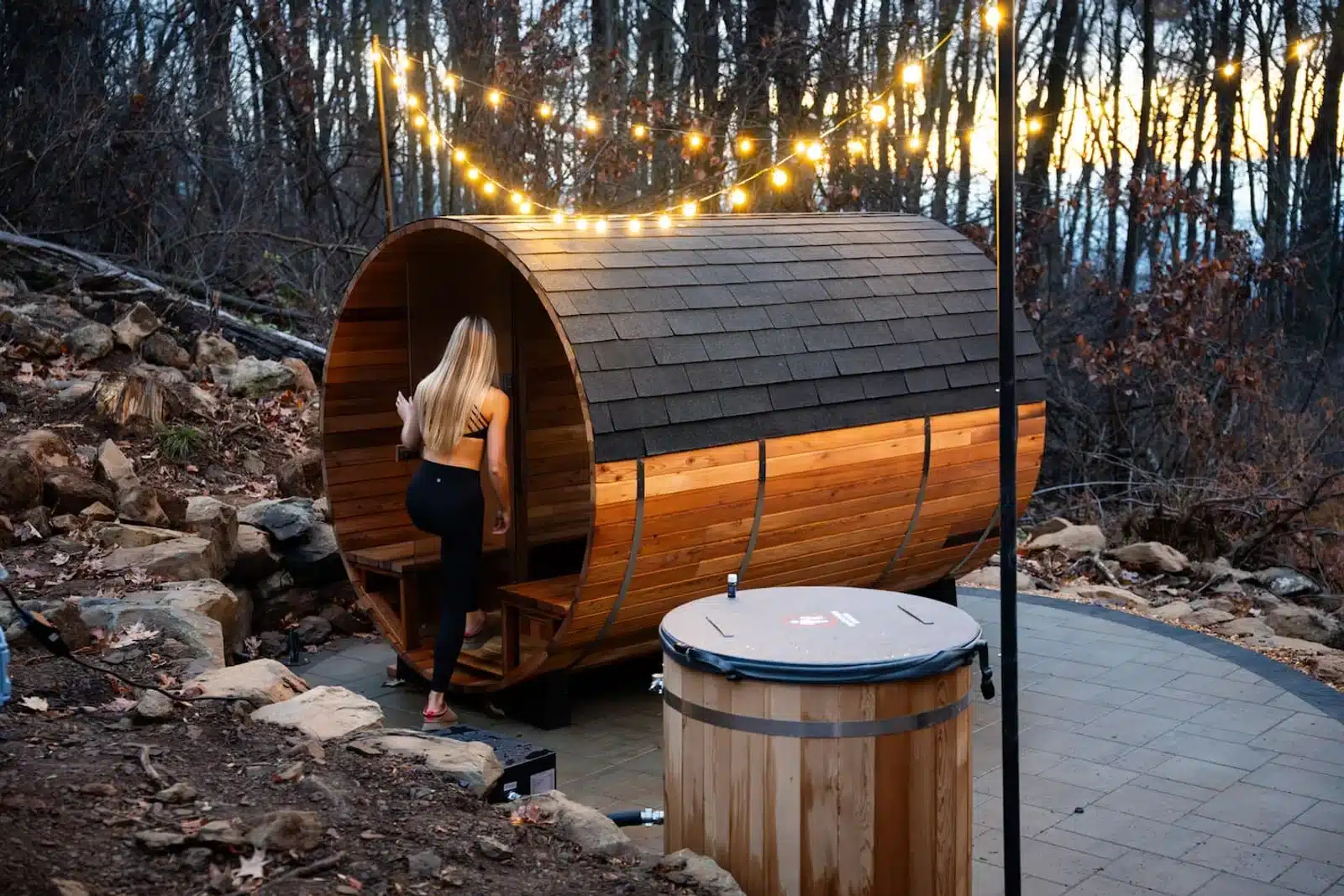
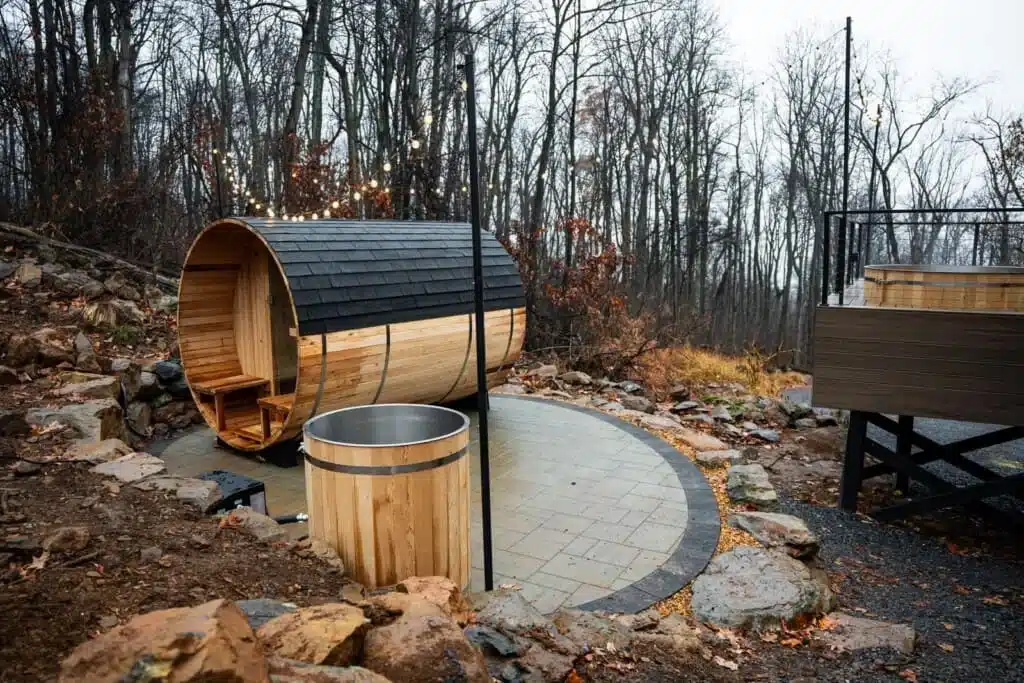
The cabin itself is a one-bedroom-plus-loft retreat built for two, with a king bed in the main bedroom and a queen bed in the loft reached by a spiral staircase, sleeping up to 4 guests total across its 1,000 square feet. After a few hours of sun and current, the property’s outdoor contrast-therapy island, a sunken hot tub with stargazing views paired with a Scandinavian sauna and cold plunge, is a genuinely different kind of recovery than a hotel shower. The cabin was built without plastics or off-gassing chemicals, a detail that shapes how the air actually feels indoors after a day spent outside.
Royal Oak Retreat is adults-first by design, which makes it a fit for couples or solo travelers looking to pair an active river day with a genuinely quiet evening rather than a packed resort schedule. It’s also pet-friendly for one dog under 50 lbs with a $100 pet fee, useful if you booked the dog tube at Front Royal Outdoors and want your pup along for the whole trip. On-site EV charging and Starlink internet round out the practical details for travelers driving in from the D.C. metro area. For a broader look at lodging options in the region, the site’s guide to best cabin rentals in Shenandoah Valley Virginia covers additional context, and the hiking trails in Shenandoah National Park guide pairs well if you’re stacking a hike onto your river day.
Winter access requires a 4×4 vehicle due to a steep driveway, though that’s a non-issue for a summer tubing trip. Direct booking through royaloakretreat.com gets you the property’s current rates without a third-party platform in between.
What Else Is Nearby If You’re Staying in Shenandoah Farms?
Beyond the river, Shenandoah Farms sits close to a handful of wineries and markets worth folding into a multi-day trip. Fox Meadow Winery in Linden is about a 5-minute drive from Royal Oak Retreat, and Crimson Lane Vineyards in Hume sits roughly 8 minutes out, both reasonable stops for a post-tubing glass of wine on a shaded patio. The Giving Tree Farmers Market in Linden, about 10 minutes away, is worth a stop for produce if you’re cooking in the cabin’s fully equipped kitchen.
If caverns interest you more than caves-adjacent wineries, Luray Caverns makes a solid rainy-day backup plan given its proximity to the Luray tubing put-in. For those exploring the broader region, the site’s seasonal guide to things to do in Shenandoah Valley and the complete 2026 Shenandoah National Park guide both go deeper on planning a multi-day itinerary around the park’s overlooks and trailheads.
Practical Mistakes to Avoid on Your Tubing Trip
First, don’t assume every outfitter’s tube price includes tax and fees; Shenandoah River Outfitters’ $30 rate excludes a 5.3% Virginia sales tax and a 3% National Forest fee, so the actual charge runs slightly higher. Second, don’t skip the footwear rule. Flip-flops are explicitly discouraged at outfitters running rapids, and losing a shoe mid-float is a common, avoidable annoyance.
Third, don’t book the last shuttle slot if you want flexibility. Front Royal Outdoors’ final weekday shuttle leaves at noon, and if you arrive even a few minutes late, you’ve lost the trip entirely, not just a portion of your float time. Fourth, don’t ignore the age and weight minimums when planning a family trip; River Riders’ Harpers Ferry flatwater route accepts children as young as 4 and 30 pounds, making it the better pick over the Virginia routes’ 5-year minimum if you have a younger child in tow.
Finally, don’t treat a rainy forecast as a minor inconvenience. Outfitters adjust or cancel trips around water levels and storms for real safety reasons, not liability theater, so a rescheduled trip is a reasonable trade for staying off the water during unstable weather.
Frequently Asked Questions
Are there any vacation rentals available in Shenandoah National Park, Virginia?
Yes, but options inside the park boundary itself, like Skyland and Big Meadows Lodge, are operated by the National Park Service’s lodging concessionaire rather than as private vacation rentals. For a private cabin experience with amenities like a hot tub and sauna, properties in nearby Shenandoah Farms, such as Royal Oak Retreat, sit about 40 minutes from the park entrance and offer more privacy than in-park lodging.
How long does it take to drive Skyline Drive through Shenandoah National Park?
Skyline Drive runs 105 miles through the park with a speed limit of 35 mph, so driving the full length without stops typically takes around 3 hours. Most visitors budget closer to a full day when factoring in overlook stops, short hikes, and visitor center visits along the way.
How long does it take to drive through Shenandoah National Park overall?
Driving straight through the park via Skyline Drive generally takes 2.5 to 3 hours without stops, given the winding road and consistent 35 mph limit. Add extra time for popular stops like Dark Hollow Falls or Franklin Cliffs Overlook if you plan to hike or take photos.
Where should you stay in the Shenandoah Valley?
Where to stay in the Shenandoah Valley depends on your priorities: private cabins in Shenandoah Farms and Front Royal offer seclusion and amenities like hot tubs, while in-park lodging such as Skyland or Big Meadows Lodge puts you directly on Skyline Drive. Royal Oak Retreat is a strong option for travelers who want a quiet, adults-first base with a private hot tub, sauna, and cold plunge within reach of both river tubing put-ins and the national park.
What is Shenandoah River tubing like for beginners?
Shenandoah River tubing is beginner-friendly on most sections, especially the flatwater Harpers Ferry route and Watermelon Park’s shorter float, both of which avoid significant rapids. Outfitters provide life jackets, safety briefings, and river maps before launch, and first-timers should choose a shorter, lower-intensity route like Watermelon Park’s 2 to 3 hour trip over a longer route with Class II features.
Can I book Shenandoah River tubing online?
Most outfitters, including Watermelon Park, Shenandoah River Outfitters, and Front Royal Outdoors, offer online ticketing or reservation systems through their official websites, alongside in-person or phone booking. Booking ahead is recommended during peak summer weekends, since shuttle capacity is limited and popular arrival windows fill up.
What should you do if the river is running high after rain?
Call your chosen outfitter directly before driving out, since heavy rainfall in the prior 24 to 48 hours can raise water levels enough to change routes or pause trips entirely. Shenandoah River Outfitters, for example, switches its entire route depending on current water levels, so a phone call the morning of your trip is more reliable than a website description written months earlier.
Final Thoughts on Planning Your Shenandoah River Tubing Trip
Shenandoah River tubing in 2026 comes down to matching the right outfitter to your group. Families with young kids or first-timers do best at Watermelon Park’s shorter float or River Riders’ flatwater Harpers Ferry trip, while tubers wanting a bit more current should book Front Royal Outdoors or Shenandoah River Outfitters near Luray, both of which mix Class I riffles with a Class II feature. Prices across the region run $25 to $40 per person, and the season generally runs mid-May through mid-September, so plan your trip inside that window.
Whichever put-in you choose, the drive back to a private hot tub beats a shared hotel pool every time. As the Shenandoah Valley’s visitor numbers keep climbing into 2026, booking your cabin and your tubing slot a few weeks ahead, rather than the week of, keeps your options open on both fronts.
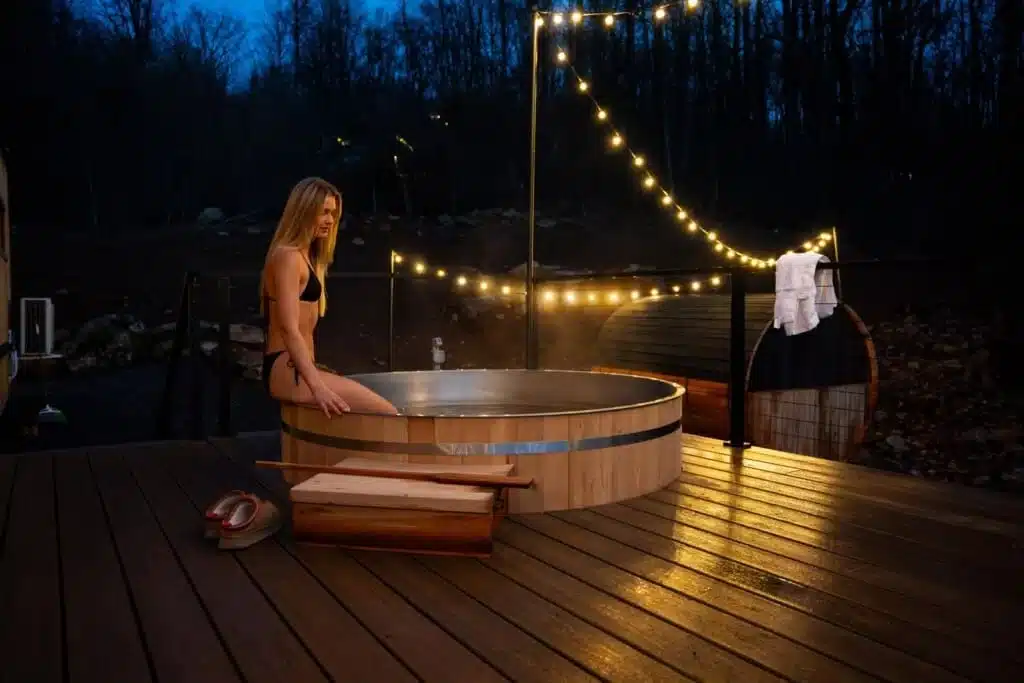
After a few hours on the South Fork, there’s a specific kind of relief in a sunken hot tub under real dark sky. Royal Oak Retreat’s contrast-therapy setup, hot tub, sauna, and cold plunge together, was built for exactly that kind of recovery after a river day. Check availability and book direct here.
Content powered by inkSTR.co