
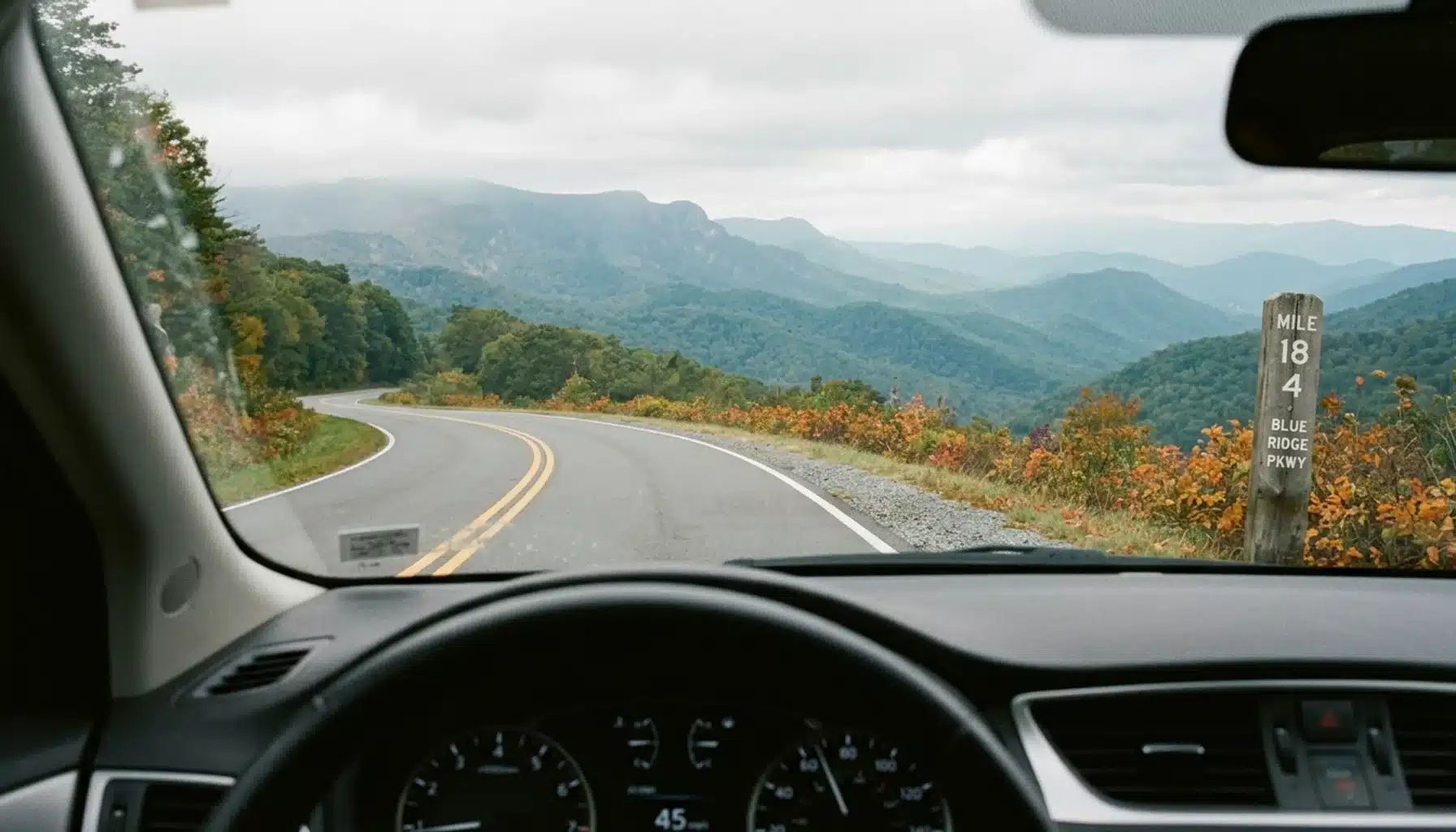
Driving Skyline Drive Virginia means covering a 105-mile road that runs along the crest of the Blue Ridge Mountains through Shenandoah National Park, with 75 scenic overlooks and a posted 35 mph speed limit the entire way. The National Park Service says a clear-day, no-stops drive takes about three hours; plan on 6 to 8 hours if you want to actually stop.
Key Takeaways
- Skyline Drive is 105 miles long, running north-south from Front Royal (mile 0) to Rockfish Gap (mile 104.6), where it connects to the Blue Ridge Parkway.
- The speed limit is 35 mph for the entire route, and the National Park Service warns against relying on GPS for park navigation.
- There are four entrance stations: Front Royal (mile 0), Thornton Gap (mile 31.5), Swift Run Gap (mile 65.5), and Rockfish Gap (mile 104.6).
- Shenandoah National Park drew 1.7 million visitors in 2026, generating $132 million in nearby community spending, according to the National Park Service.
- Marys Rock Tunnel, just south of Thornton Gap, has a clearance of 12 feet 8 inches, a detail that matters if you drive anything oversized.
- Fuel is limited inside the park; a driving guide recommends filling up before you enter since gasoline is available at only one point along the route.
If you’ve typed “driving Skyline Drive Virginia” into a search bar, you’re probably staring down a road trip and wondering how much time to actually block off. This is a fair question. The road looks short on a map, 105 miles isn’t much compared to a cross-country drive, but the 35 mph limit and the sheer number of overlooks change the math fast.
In 2026, Shenandoah National Park continues to see strong visitation, and Skyline Drive remains the park’s only public road, meaning it’s the backbone of nearly every visit. Whether you’re threading this into a weekend escape from the DMV area or making it the centerpiece of a longer Blue Ridge trip, the practical logistics matter more than the scenery photos suggest. This guide breaks down mileposts, fees, timing, and the details competitor guides tend to skip: what happens when fog rolls in, where you’ll actually find gas, and how to plan around closures without wasting a day.
We run Royal Oak Retreat, a wellness cabin in Shenandoah Farms near Front Royal, and we’ve fielded enough guest questions about Skyline Drive logistics to know where people get tripped up. This guide is built from those recurring questions plus the current official route data.
How Long Does It Take to Drive the Whole Skyline Drive in Virginia?
Driving the entire length of Skyline Drive takes about three hours without stopping, according to the National Park Service, but a realistic sightseeing pace runs closer to 6 to 8 hours, per National Geographic. The gap between those two numbers is the entire point of this section.
Three hours assumes clear weather, no wildlife on the road, and zero stops at any of the 75 overlooks. That’s not how most people actually experience the drive. Specifically, the 35 mph speed limit alone stretches out a 105-mile route considerably compared to highway driving, and switchbacks near Thornton Gap and Swift Run Gap slow things further.
Add in overlook stops, a short hike or two, a lunch break, and photo time at sunrise or sunset viewpoints, and the day fills up quickly. For example, stopping at even 10 of the 75 overlooks for five minutes each adds nearly an hour on its own. If you’re driving north to south starting from Front Royal, budget a full day if you want more than a drive-by experience.
Many travel guides recommend against attempting the full 105 miles in one day if hiking is part of the plan. One regional guide suggests a two-day trip based near Big Meadows, or three days splitting nights between Mathews Arm, Big Meadows, and Loft Mountain. Staying at a fixed base and driving sections of Skyline Drive on different days, rather than the whole thing in one push, tends to produce a far better trip.
How Much Does It Cost to Drive on Skyline Drive in Virginia?
Skyline Drive requires a Shenandoah National Park entrance pass, which is paid at one of the four entrance stations or online in advance. The exact current fee amounts change periodically, so confirm the official current pricing directly through the National Park Service before you go rather than relying on any third-party figure.
You can purchase a Shenandoah entrance pass online through Recreation.gov ahead of time, which is worth doing if you want to skip a line at the gate during a busy fall foliage weekend. If you’re planning to visit multiple national parks in 2026, the America the Beautiful National Park Pass covers annual admission across the federal park system and can pay for itself if Shenandoah is one stop on a bigger trip.
Beyond the entrance fee, driving Skyline Drive itself costs nothing extra, no tolls, no parking fees at overlooks. Your real costs are gas (limited availability inside the park, so fill up beforehand), food at the handful of in-park dining options, and lodging if you’re staying overnight. According to Virginia Tourism Corporation data, Shenandoah Valley visitors in 2023 spent an average of $65.20 per person per day across the region, a figure that includes lodging, food, and activities well beyond just the park entrance.
Is It Worth Driving All of Skyline Drive?
Driving the full 105 miles of Skyline Drive is worth it if you have at least a full day and genuine interest in overlooks, short hikes, or wildlife viewing, but it’s not worth rushing. Attempting the entire route in a few hours defeats the reason the road exists.
The drive passes through nearly 200,000 acres of protected forest and connects to more than 500 miles of hiking trails, according to Travel + Leisure. That trail access is a major reason locals treat Skyline Drive as a gateway rather than a destination in itself. Short hikes like the Blackrock Summit Trail at mile 84.4 (about 1 mile round trip, easy, 175 feet of elevation gain) or the Bearfence Rock Scramble pair well with a driving day and add maybe 25 to 45 minutes each.
If your schedule only allows a half day, driving one section rather than the whole route is the better call. The Front Royal entrance gets you to Dickey Ridge Visitor Center and the North District quickly, which works well if you’re staying nearby. Guests based at Royal Oak Retreat, roughly 40 minutes from the Front Royal entrance, often drive just the North District on one day and save Big Meadows and points south for a return trip rather than cramming everything into a single exhausting loop.
Where the full drive genuinely pays off is fall foliage season, when the ridgeline color gradient from Front Royal down to Rockfish Gap shifts noticeably by elevation and latitude. Doing the entire route during peak color, typically mid-October, shows you a range of foliage stages you’d miss driving only one section.
Which Is Better, Blue Ridge Parkway or Skyline Drive?
Skyline Drive and the Blue Ridge Parkway are two separate but connected roads: Skyline Drive is 105 miles inside Shenandoah National Park with a strict 35 mph limit and an entrance fee, while the Blue Ridge Parkway runs roughly 469 miles from Rockfish Gap into North Carolina with no fee and no single speed limit.
Neither road is objectively “better.” They serve different trips. Skyline Drive is compact enough to drive in a day and pairs naturally with a Shenandoah-based stay, hiking access, and wellness-focused lodging near Front Royal. The Blue Ridge Parkway is a multi-day proposition if you want to drive its full length, though many travelers sample a shorter stretch near the Rockfish Gap junction.
If you’re coming from the DC metro area for a weekend, Skyline Drive is the more realistic choice. It’s roughly a 75 to 90 minute drive from DC to the Front Royal entrance, and the full route can be experienced meaningfully in one day, unlike the Parkway’s much longer mileage. As of 2026, most weekend travelers from the DMV area default to Skyline Drive for exactly this reason: it fits the time they actually have.
What Are the Entrances, Mileposts, and Districts Along Skyline Drive?
Skyline Drive has four vehicle entrances and uses a milepost system running from 0 to about 105, with markers on the west side of the road (right when driving south, left when driving north). Understanding this system before you go prevents the confusion that sends people down the wrong exit.
| Entrance Station | Milepost | Nearby Access Road | District |
|---|---|---|---|
| Front Royal Entrance Station | Mile 0 | Routes 66 and 340 | North (Dickey Ridge, Mathews Arm) |
| Thornton Gap Entrance Station | Mile 31.5 | Route 211 near Luray | Central (Skyland) |
| Swift Run Gap Entrance Station | Mile 65.5 | Route 33 near Elkton | Central (Big Meadows) |
| Rockfish Gap Entrance Station | Mile 104.6 | Routes 64 and 250 | South (Loft Mountain), meets Blue Ridge Parkway |
Specifically, the North District runs from Front Royal down through Dickey Ridge Visitor Center and Mathews Arm campground. The Central District, the most visited section, includes Skyland at miles 41.7 and 42.5, the park’s highest-elevation lodging, and Big Meadows further south. The South District around Loft Mountain sees noticeably fewer crowds, according to multiple regional guides, making it a good pick if you’re avoiding weekend traffic.
As a result, your entrance choice should match your lodging base. If you’re staying in Front Royal or Shenandoah Farms, entering at mile 0 keeps your drive time down and puts North District overlooks first. Guests at Royal Oak Retreat typically use the Front Royal entrance since it’s the closest access point to the cabin, roughly 40 minutes away by the property’s own trip data.
What Are the Best Scenic Overlooks and Stops Along the Route?
Skyline Drive has 75 designated scenic overlooks connecting visitor centers, campgrounds, lodges, picnic areas, and trailheads along its 105-mile length, according to Virginia Is For Lovers. Not all 75 are equally worth a stop, and picking a handful strategically beats trying to hit them all.
Franklin Cliffs Overlook, near Big Meadows in the Central District, is one of the most photographed sunset spots on the drive thanks to its unobstructed western view. For sunrise, overlooks on the eastern side near the North District tend to catch the light earlier since they face toward the Shenandoah Valley floor.
If you only have time for a short hike alongside a drive, the Dark Hollow Falls Trail near mile 50.7 is one of the most popular waterfall hikes in the park, short enough to fit into a half-day itinerary but busy enough on weekends that an early morning start (before 9 AM) avoids the worst of the crowd. The Upper Hawksbill Summit Trail gets you to the highest point in the park with a moderate effort, worth the detour if visibility is good.
Skip overlooks entirely in dense fog. Multiple guides note that ridge-top fog can reduce visibility to near zero, and an overlook stop in that weather shows you nothing but white mist. Pull off, wait it out at a visitor center, or reschedule that stretch for later in the day.
What Should You Know About Fees, Hours, and Closures?
Skyline Drive is generally open 24 hours a day, seven days a week, but weather-related closures, particularly snow and ice, can shut sections or the entire road with little notice. The regional tourism authority also notes the drive can close at night during deer-hunting season in certain areas, so this isn’t purely a winter concern.
Before heading out, call the official road status line at 540-999-3500 (option 1, then option 1) or check the road status page directly. This single step prevents the single most common frustration among first-time visitors: driving an hour to an entrance station only to find the gate closed.
If you hit a closure at Front Royal, Thornton Gap offers the next nearest alternate entrance, about 31.5 miles south, reachable via Route 211 without re-entering the park. Building in this kind of backup plan matters most in winter, when a 4×4 vehicle becomes genuinely necessary on steeper access roads, including the driveway at properties like Royal Oak Retreat in Shenandoah Farms.
As of 2026, the park continues to see visitation near record highs, so weekend closures during peak fall color can also stem from parking capacity limits at popular overlooks and trailheads, not just weather. Arriving before 9 AM on October weekends avoids most of this.
How Should You Plan for Fuel, Food, and Cell Service?
Fuel availability inside Shenandoah National Park is limited to a single point along the entire 105-mile route, so filling your tank before entering at any of the four stations is essential. This is one of the most consistently overlooked planning details in general Skyline Drive guides.
Specifically, gas up in Front Royal, Luray, Elkton, or Waynesboro depending on which entrance you’re using, since running low mid-drive with no shoulder pull-offs beyond overlooks creates a genuinely stressful situation. Cell signal is also inconsistent along the ridge; do not count on real-time GPS rerouting if you take a wrong turn, a limitation the National Park Service explicitly warns about, since map apps can give incorrect directions inside the park.
For food, Big Meadows Wayside and Skyland offer sit-down and casual options in the Central District, while the North and South Districts have thinner service. Packing a cooler with sandwiches and water covers the gaps, especially useful if you’re timing a picnic stop at one of the overlooks near mile 50 to catch Dark Hollow Falls before or after lunch.
Print or download an offline map before you go. The Shenandoah National Park Association sells detailed trail maps and guidebooks that don’t depend on signal, a low-cost backup worth having in the glovebox.
What Are the Best Wildlife and Weather Safety Practices?
White-tailed deer and black bears regularly cross or stand in the roadway along Skyline Drive, making the 35 mph limit a safety requirement rather than a suggestion. Dawn and dusk are the highest-risk windows for wildlife encounters, so slowing further during those hours, especially near meadows and forest edges, reduces collision risk.
Fog is the other major hazard. Ridge-top fog can develop quickly and reduce visibility dramatically, particularly in the Central District near Skyland’s higher elevation. If visibility drops, turn on headlights or hazard flashers, slow well below the posted limit, and pull into the nearest overlook rather than pushing through blind curves.
Rain on the ridge behaves differently than rain in the valley below, arriving faster and lingering longer at elevation. Checking the forecast for Shenandoah’s higher elevations specifically, not just Front Royal or Luray at the base, gives a more accurate picture before you commit to a full day on the drive.
In 2026, park rangers continue to post seasonal wildlife and weather advisories at visitor centers and entrance stations; a quick stop at Dickey Ridge or a Thornton Gap gate check-in is worth the two minutes it takes.
What Time of Year Is Best for Driving Skyline Drive?
Fall, specifically mid-to-late October, is the most popular season for driving Skyline Drive due to peak foliage color across the ridgeline, though it’s also the most crowded window of the year. Staystra market data shows October short-term rental occupancy in the Shenandoah region running notably higher than the shoulder months, a reasonable proxy for how many additional travelers descend on the area during foliage season.
Spring brings wildflower blooms and thinner crowds, plus cooler driving temperatures that make longer stops at overlooks more comfortable. Summer offers the longest daylight hours for a full end-to-end drive but also brings the thickest ridge-top haze on humid afternoons, which can dull long-distance overlook views.
Winter driving is the most restrictive. Snow and ice cause the closures mentioned earlier, and a 4×4 vehicle becomes genuinely necessary on steep secondary roads leading to lodging in the surrounding valley. If solitude matters more to you than foliage color, a clear winter weekday can deliver nearly empty overlooks, worth considering if you’ve already seen the drive in autumn once before.
Whichever season, weekday drives consistently beat weekends for crowd levels, according to multiple regional guides, particularly in the Central District around Skyland and Big Meadows.

Where Should You Stay Before or After Driving Skyline Drive?
Basing your trip near the Front Royal entrance puts you closest to the North District and shaves real time off your daily drive compared to staying farther south or east toward DC. This matters most if you’re spreading Skyline Drive across two days rather than rushing the whole route in one.
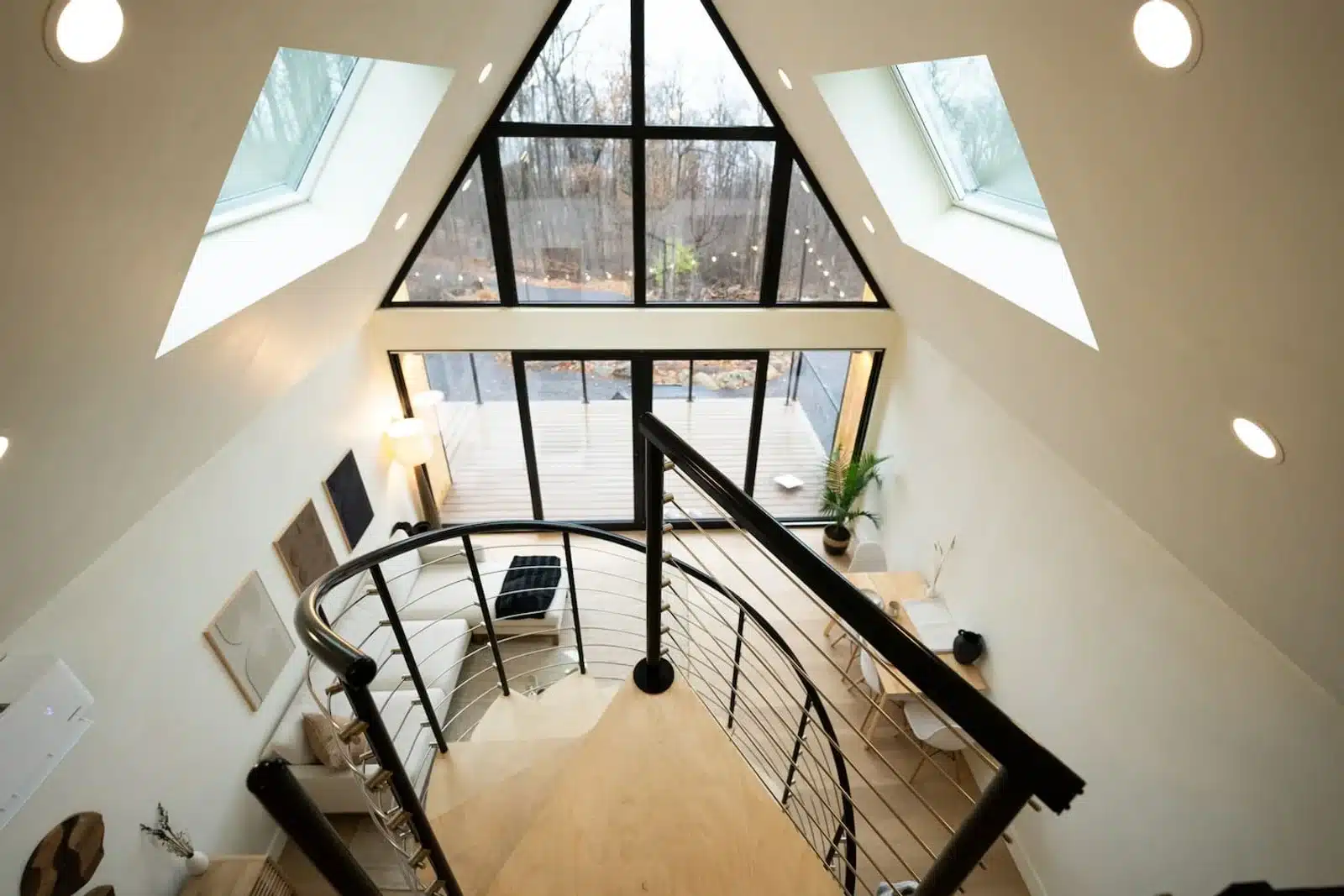
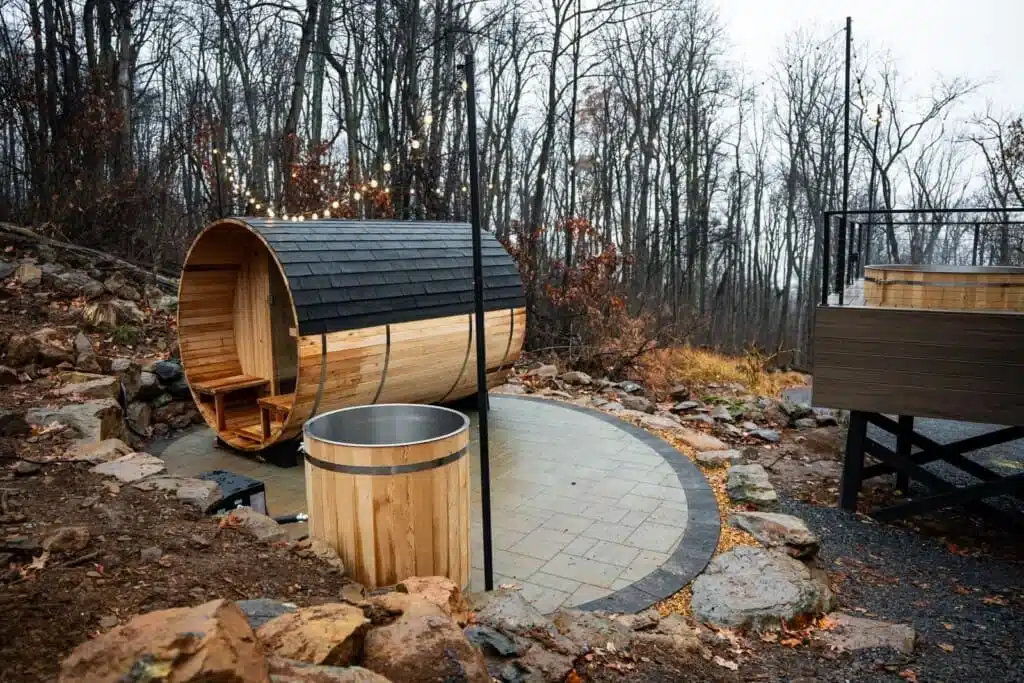
Royal Oak Retreat sits in Shenandoah Farms, about 40 minutes from the park’s Front Royal entrance and roughly an hour from Washington DC, making it a practical home base for a Skyline Drive weekend without an early-morning highway slog. The cabin sleeps up to four across a main bedroom and a loft reached by a spiral staircase, and it’s built around a dedicated contrast-therapy setup: a sunken outdoor hot tub with stargazing views, a Scandinavian-style sauna, and a cold plunge, useful after a long day of stop-and-go ridge driving and short hikes.
If you’re bringing a dog, this cabin allows one dog under 50 lbs with a pet fee, so you don’t have to choose between a Skyline Drive trip and leaving your dog behind. On-site EV charging and Starlink internet also solve two common friction points for DC-area travelers worried a forest stay means going fully off-grid.
For those wanting to combine the drive with a wine stop, Fox Meadow Winery in Linden sits about 5 minutes from the cabin, and Crimson Lane Vineyards in Hume is roughly 8 minutes out, both easy additions to a day that starts or ends on Skyline Drive. If you want a broader look at cabin options in the region before deciding where to stay, our guide to cabin rentals in Shenandoah Valley Virginia covers the landscape in more depth, and our hiking trails guide pairs well with any Skyline Drive itinerary that includes trail time.
If you’d rather stay inside the park itself, Shenandoah National Park’s official lodging page lists in-park options including Skyland at the highest elevation on the drive and Lewis Mountain Cabins at mile 57.5. These put you directly on the route but book up quickly during fall foliage season.
What Practical Mistakes Should You Avoid?
The most common mistake is treating Skyline Drive as a quick highway bypass rather than a slow scenic route. At 35 mph with 75 overlooks tempting a stop, trying to “make good time” defeats the purpose and creates frustration when the drive takes longer than a GPS estimate suggests.
- Don’t skip fueling up beforehand. With gas available at only one point inside the park, running low mid-route is avoidable with a five-minute stop before the entrance station.
- Don’t trust GPS blindly inside the park. The National Park Service specifically warns that map apps can misdirect drivers; carry a printed map or the official park brochure as backup.
- Don’t attempt the whole 105 miles in a rushed half day. Pick a district, or split the drive across two days from a fixed base.
- Don’t ignore fog. Pull off at an overlook rather than pushing through low-visibility curves at speed.
- Don’t forget the entrance fee changes periodically. Confirm current pricing on the official NPS site or via Recreation.gov rather than relying on an old blog post.
- Don’t drive an oversized vehicle through Marys Rock Tunnel without checking clearance. The tunnel’s 12-foot-8-inch limit catches taller RVs and roof-rack setups off guard.
Booking your lodging directly with the property, rather than through a third-party platform, also tends to produce clearer communication about check-in times and driveway conditions, something particularly relevant in winter when 4×4 access matters. If you’re weighing a cabin’s amenities against its marketing photos, our guide to what to know before booking a cabin in Shenandoah walks through what to verify.
Frequently Asked Questions
How long does it take to drive Skyline Drive?
Driving the full 105-mile length takes about three hours with no stops, according to the National Park Service, but a realistic sightseeing pace with overlooks and a short hike runs 6 to 8 hours. Most travelers split it across two days rather than driving it end to end in one push.
How long is Skyline Drive in Shenandoah National Park?
Skyline Drive is 105 miles long, running north-south from the Front Royal entrance at mile 0 to Rockfish Gap at mile 104.6. It is the only public road inside Shenandoah National Park and connects directly to the Blue Ridge Parkway at its southern end.
How many miles is Skyline Drive?
Skyline Drive covers 105 miles along the crest of Virginia’s Blue Ridge Mountains. Mileposts are numbered from 0 at Front Royal to roughly 105 at Rockfish Gap, and they appear on the west side of the road throughout the route.
Is Skyline Drive open at night?
Skyline Drive is generally open 24 hours a day, seven days a week, though the road can close due to snow, ice, or during deer-hunting season in certain sections. Always check the official road status by calling 540-999-3500, option 1 then option 1, or checking the NPS road status page before a night drive.
What is Skyline Drive?
Skyline Drive is a 105-mile scenic road running the length of Shenandoah National Park along the Blue Ridge Mountain crest, featuring 75 overlooks, a 35 mph speed limit, and four entrance stations. Construction began in the 1930s, and Travel + Leisure reports roughly 500,000 visitors during its 1934 to 1935 inaugural period.
How much does it cost to drive on Skyline Drive?
An entrance fee applies at each of the four entrance stations, with the exact current amount subject to periodic change, so confirm current pricing on the official NPS Skyline Drive page or purchase a pass in advance through Recreation.gov. Beyond the entrance fee, the drive itself has no tolls or overlook parking charges.
Is it worth driving all of Skyline Drive?
Driving the full route is worth it if you have a full day and plan to stop at overlooks, hike a short trail, or chase fall foliage color across the whole ridgeline. If your time is limited, driving just one district, North, Central, or South, and saving the rest for a return trip is usually more rewarding than rushing.
Which is better, Blue Ridge Parkway or Skyline Drive?
Skyline Drive is the better choice for a single-day or weekend trip since it’s 105 miles with an entrance fee inside Shenandoah National Park, while the Blue Ridge Parkway runs roughly 469 miles into North Carolina with no fee and typically requires multiple days. Most DC-area travelers pick Skyline Drive because it fits a weekend timeframe.
Final Thoughts on Driving Skyline Drive Virginia
Driving Skyline Drive Virginia rewards travelers who treat the 105 miles as a slow, deliberate route rather than a highway to cover quickly. Between the 35 mph limit, 75 overlooks, and limited fuel access, the drive asks for a full day, or two, if you want more than a windshield tour.
Plan your entrance around your lodging base, fuel up before you enter, check road status if there’s any weather risk, and pick a handful of overlooks and a short hike rather than trying to see everything in one pass. As Shenandoah National Park continues drawing strong visitation into 2026, arriving early on weekends and building in flexibility for fog or seasonal closures makes the difference between a stressful loop and a genuinely restorative day on the ridge.

If a day of stop-and-go overlooks on Skyline Drive leaves you wanting a slow evening afterward, Royal Oak Retreat is about 40 minutes from the Front Royal entrance, close enough for an early start the next morning without a long drive back into the DC area. The sunken hot tub on the deck looks straight up at the sky, a fitting way to close out a day spent on the ridge. Check availability here.
Content powered by inkSTR.co