
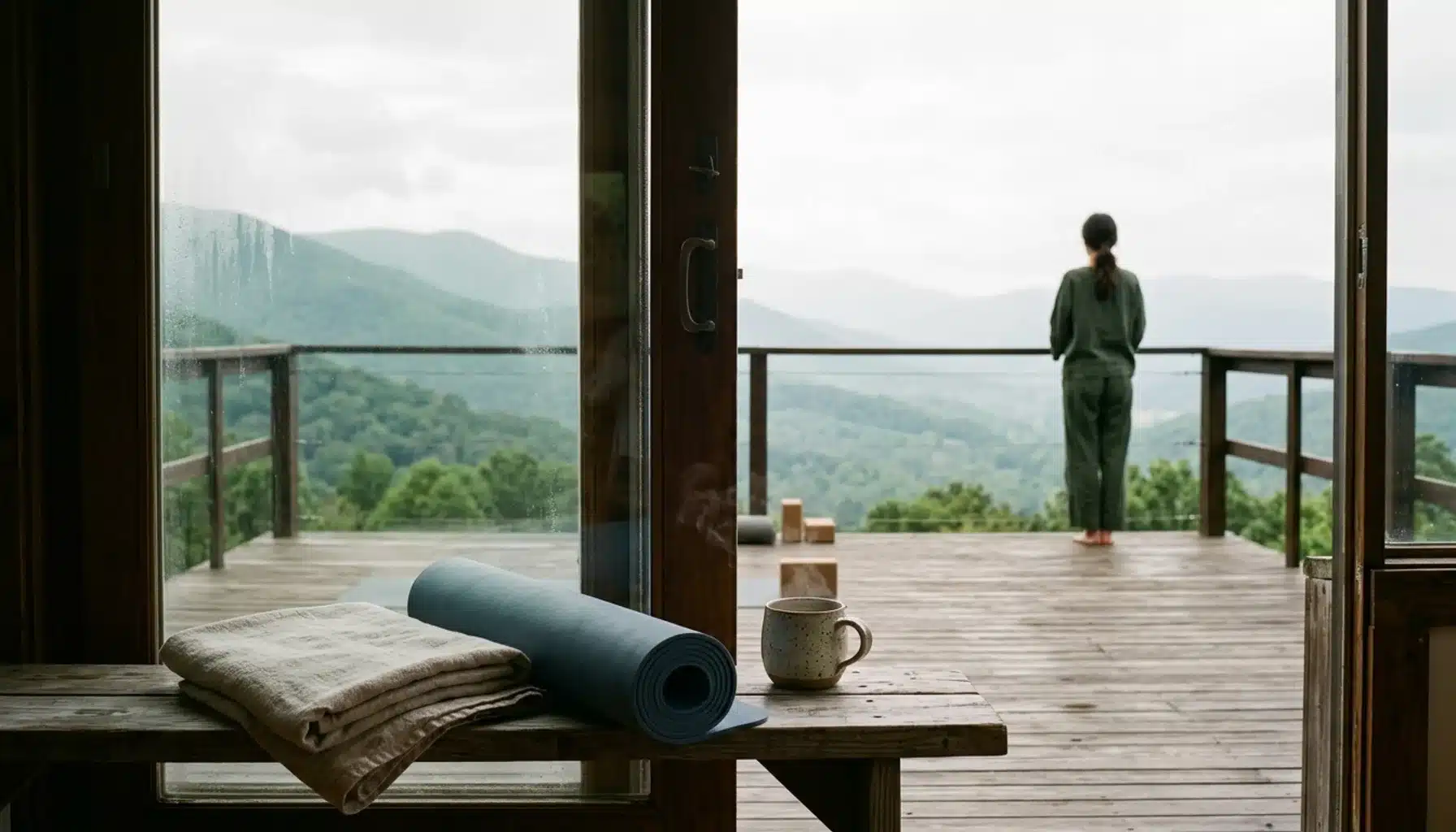
A wellness retreat is a stay built specifically around physical and mental restoration, typically combining nature immersion with recovery-focused amenities like saunas, cold plunge pools, hot tubs, and unscheduled time. Unlike a standard vacation rental, the entire property and itinerary are designed around rest rather than sightseeing.
Key Takeaways
- A wellness retreat centers on recovery infrastructure (sauna, cold plunge, hot tub) and low-stimulation surroundings, not packed itineraries.
- Costs vary widely: destination wellness resorts often run several hundred dollars per night per person including programming, while private wellness cabins price per night for the whole space, independent of headcount.
- According to Virginia Tourism Corporation data, Virginia generated $35.1 billion in visitor spending in 2026, with lodging representing about 26% of traveler spending statewide, a sign that overnight wellness stays are a meaningful and growing share of travel dollars.
- The Shenandoah Valley recorded 63.4% hotel occupancy and a $109.67 average daily rate in June 2026, according to the Virginia Tourism Corporation’s STR report, while AirDNA puts short-term rental occupancy in the broader Shenandoah, Virginia market at 52% annually.
- Royal Oak Retreat, a two-bedroom cabin in Shenandoah Farms, Virginia, is built around a dedicated contrast therapy island: a sunken stargazing hot tub, a Scandinavian sauna, and a cold plunge, all inside a fully non-toxic build.
- Whether insurance covers a retreat, how much a stay costs, and what separates a genuine wellness retreat from a spa weekend are the questions most travelers get wrong before booking.
Interest in wellness travel has moved well past spa days and juice cleanses. In 2026, travelers are asking sharper questions: does this place actually have working recovery amenities, or just a marketing photo of a hot tub? Is a $4,000 destination resort worth it compared to a private cabin with the same core features? Does insurance cover any of it?
This guide answers those questions directly, using verified market data from the National Park Service, the Virginia Tourism Corporation, and AirDNA, alongside a close look at what separates a real wellness retreat from a place that simply uses the word in its listing description. Along the way, we’ll cover how the Shenandoah Valley, roughly an hour from Washington, D.C., fits into the national wellness retreat landscape, and where a place like Royal Oak Retreat fits for travelers who want the amenities without the resort price tag or the group-programming structure.
Whether you’re recovering from a stretch of eighty-hour workweeks, planning a milestone weekend with a partner, or trying to figure out if a wellness retreat is worth the money compared to a regular hotel, the sections below are written to stand on their own and answer exactly what you searched for.
What Is a Wellness Retreat, Exactly?
A wellness retreat is a lodging stay structured around physical recovery and mental decompression, typically featuring amenities like saunas, cold plunge pools, hot tubs, and yoga or meditation space, combined with a schedule that is intentionally light or entirely open. Specifically, the defining trait is not luxury finishes but functional recovery infrastructure paired with an environment low on noise, screens, and obligations.
Wellness retreats range from large destination resorts with structured programming, like Canyon Ranch locations in Tucson, Lenox, and Woodside, to single-property escapes with no group activities at all. Both formats qualify as wellness retreats if the core purpose is restoration rather than entertainment. As of 2026, the category has split into two distinct experiences: programmed resort retreats with daily class schedules, and unstructured private retreats where guests set their own pace.
The Lodge at Woodloch in Hawley, Pennsylvania, and Lake Austin Spa Resort in Texas represent the programmed end of the spectrum, with scheduled treatments and communal meals. A private cabin retreat sits at the opposite end: no roommates, no group schedule, and no shared amenities. For travelers who find structured programming stressful rather than relaxing, the private model tends to deliver more actual rest.
How Much Does a Wellness Retreat Typically Cost?
Wellness retreat pricing depends heavily on format: destination resorts with full programming often price per person per night in the hundreds of dollars including meals and classes, while private wellness cabins price per night for the entire property regardless of how many guests share it. This structural difference means a couple often pays less at a private cabin than either person would pay solo at a resort.
According to the Virginia Tourism Corporation’s June 2026 STR report, Shenandoah Valley hotels averaged a $109.67 daily rate at 63.4% occupancy, up from $107.73 the prior year. That figure covers standard hotel stock, not dedicated wellness properties, but it establishes a regional baseline. AirDNA separately reports the Shenandoah, Virginia short-term rental market running 52% annual occupancy with $168 in annual RevPAR, a measure of revenue per available rental night.
For destination wellness resorts, published sources like The Luxury Spa Edit’s 2026 roundup of 50 spa resorts show a wide range depending on program length and inclusions. Costs typically scale with the number of scheduled treatments, meal plans, and whether the stay includes multiple nights of programming rather than a single night. Private cabin retreats, by contrast, charge a flat nightly rate for the space itself, with amenities like a sauna or cold plunge included rather than billed as add-on treatments.
A 2016 Virginia travel profile found that lodging represented 26% of total traveler spending statewide, with spa, health club, and wellness amenities accounting for a smaller 2% slice of the overall spending mix, a reminder that lodging choice itself is often the single biggest wellness-travel expense.
Does Insurance Pay for Wellness Retreats?
Standard health insurance generally does not cover wellness retreats, because most plans classify these stays as lifestyle or leisure travel rather than medical treatment. Coverage becomes more likely only when a retreat includes specific, prescribed medical services delivered by licensed providers, such as certain clinical longevity programs, and even then, coverage varies by plan and provider.
Sanctum Stay’s categorization of U.S. retreats draws a useful distinction here: Canyon Ranch Tucson is positioned for clinical longevity programs with medical oversight, while properties like Esalen Institute focus on somatic practice and depth psychology, a wellness category rather than a medical one. This distinction matters directly for insurance purposes. A stay built around massage, sauna use, and unstructured rest is a lifestyle expense. A stay involving diagnostic testing, physician consultations, or prescribed therapeutic protocols may occasionally intersect with insurance coverage, but travelers should confirm details directly with their insurer before assuming any reimbursement.
Flexible spending accounts and health savings accounts sometimes cover specific line items, like a massage prescribed for a diagnosed condition, but rarely cover an entire retreat stay. Travelers hoping to offset the cost of a wellness getaway should ask their insurer two direct questions: is any component of this stay classified as medical treatment, and does a licensed provider need to submit documentation for reimbursement. Absent that paperwork, the retreat is almost always an out-of-pocket lifestyle expense, similar to how a private cabin stay like the one at Shenandoah Farms is priced and booked.
What Are the Best Wellness Retreats Worth Traveling For?
The strongest wellness retreats in the U.S. span a range of formats, from large destination resorts with structured programming to smaller, nature-immersed private properties, and the right pick depends on whether a traveler wants group programming or total privacy. Notable named examples include Canyon Ranch, Miraval, and The Ranch Malibu on the resort side, and private cabin-style retreats like Royal Oak Retreat on the unstructured side.
Vacayou’s U.S. roundup opens with Carillon Miami Wellness Resort in Florida and also includes Omni Grove Park Inn in Asheville, North Carolina, and Lake Austin Spa Resort in Texas. These properties suit travelers who want daily classes, spa menus, and communal dining as part of the package. Miraval operates locations in Tucson, Austin, and the Berkshires, while Canyon Ranch spans Tucson, Lenox, and Woodside, giving travelers multiple regional options within the same program philosophy.
For travelers drawn to yoga specifically, Condé Nast Traveler highlights Feathered Pipe Ranch in Helena, Montana, which has run yoga retreats since 1975, making it one of the longest-running dedicated yoga retreat operations in the country. Sanctum Stay separately names Kripalu Center as a leader in yoga immersion and teacher training, and Ojo Santa Fe for a quieter high-desert reset.
On the East Coast, closer to the Shenandoah Valley market, The Lodge at Woodloch in Pennsylvania is positioned by Sanctum Stay as an adults-only spa destination, a format that overlaps meaningfully with the adults-first positioning at Royal Oak Retreat in Virginia, though the Shenandoah property operates as a single private cabin rather than a full-service resort with communal facilities.
Winter-specific options covered by Condé Nast Traveler include Beyul Retreat in Meredith, Colorado, about an hour from Aspen, Taylor River Lodge in Almont, Colorado, and Deplar Farm on Iceland’s Troll Peninsula, all built around cold-weather recovery themes similar in spirit to a contrast therapy setup, though at a much larger scale and price point.
How Do You Choose Between a Resort Retreat and a Private Cabin Retreat?
Choosing between a destination resort and a private cabin retreat comes down to whether you want structured programming with other guests, or full control over your own schedule and privacy. Resorts suit travelers who want a curriculum handed to them; private cabins suit travelers who already know what rest looks like for them and just need the right infrastructure and quiet.
What Resort Retreats Deliver
Resort wellness retreats, such as those Vacayou and Condé Nast Traveler cover nationally, typically include daily fitness classes, spa treatments, curated meal plans, and communal social spaces. This model works well for solo travelers who want built-in structure and social contact, or for anyone who has never tried a wellness-focused stay and wants guidance on what to actually do with unscheduled time.
The tradeoff is less privacy and less flexibility. Meal times are often fixed, class schedules are set in advance, and shared spa facilities mean coordinating around other guests rather than having exclusive access.
What Private Cabin Retreats Deliver
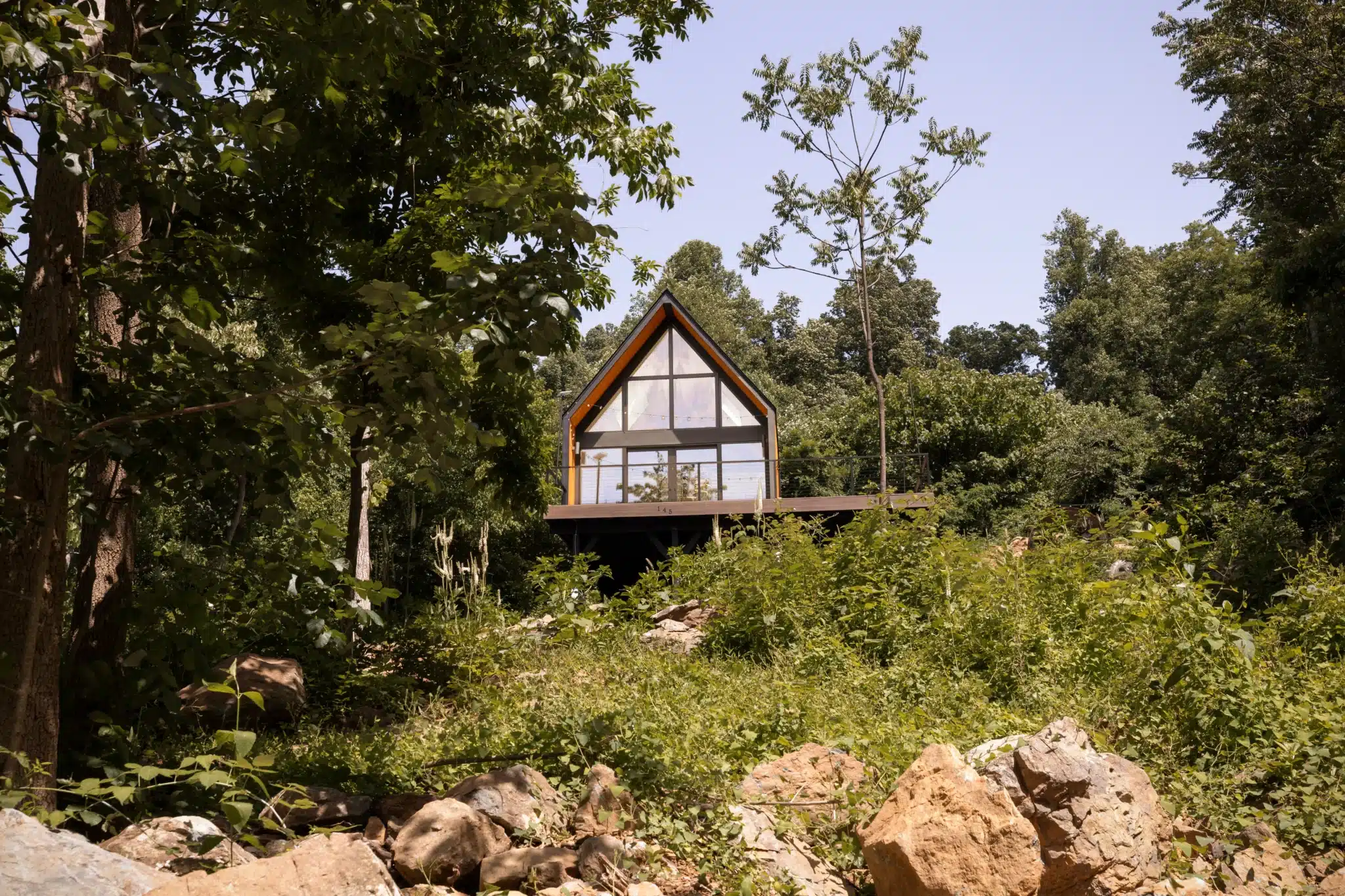
A private cabin retreat removes the schedule entirely. At Royal Oak Retreat in Shenandoah Farms, Virginia, the entire 1,000-square-foot cabin, hot tub, sauna, and cold plunge belong to one group for the length of the stay. There is no shared spa, no class schedule, and no communal dining room. Guests set their own contrast therapy pattern, cook their own meals in the fully equipped kitchen, and decide entirely whether a day includes a hike on nearby Skyline Drive or nothing at all.
This format suits couples, solo travelers who value privacy over social programming, and anyone recovering from an intense work stretch who wants the amenities of a wellness resort without the itinerary of one. The property sleeps up to four guests across a main bedroom with a king bed and a loft with a queen bed, reached by a spiral staircase, making it a fit for two couples or a small group who all want the same slow pace.
What Amenities Actually Matter for a Wellness Retreat?
The amenities that matter most for a genuine wellness retreat are contrast therapy infrastructure (sauna paired with cold exposure), private soaking access, and an environment with minimal noise and light pollution. Cosmetic spa touches like scented candles or a nice bathrobe do not substitute for functional recovery equipment.
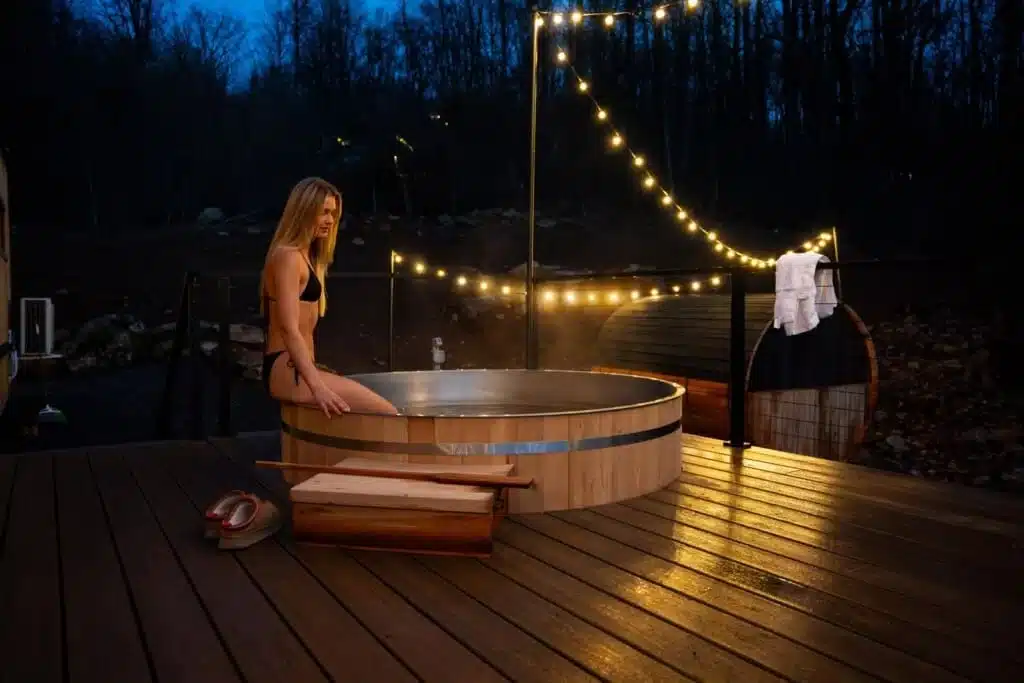
Contrast therapy, alternating heat exposure with cold exposure, is one of the more evidence-discussed recovery practices in circulation, and it requires two specific pieces of infrastructure: a heat source and a cold source positioned close enough together to move between them easily. At Royal Oak Retreat, the sauna, cold plunge, and hot tub form what the property calls a contrast therapy island, meaning the walk between hot and cold is a few steps on the same deck rather than a drive between two separate facilities.
A common contrast therapy pattern involves several minutes in the sauna followed by a much shorter interval in the cold plunge, though the right ratio depends entirely on individual tolerance, and guests should never push past their comfort level just to follow a routine. Building materials matter too. Royal Oak Retreat’s cabin was constructed without plastics or synthetic chemicals, a detail relevant to travelers sensitive to off-gassing or artificial scents common in mass-produced vacation rentals.
Connectivity is a less obvious but increasingly requested amenity. The property runs on Starlink high-speed internet and includes an on-site EV charger, meaning a wellness stay does not require guests to go fully off-grid or arrive with a half-charged vehicle after the drive from the D.C. metro area.
Are Wellness Retreats Worth It for Burnout Recovery?
Wellness retreats are worth the cost for burnout recovery when the property actually removes obligations rather than replacing one schedule with another. A retreat with back-to-back scheduled classes can leave a burned-out traveler more depleted than they arrived, while a retreat with zero required activities gives the nervous system the unstructured downtime that burnout recovery typically requires.
The National Park Service reports that Shenandoah National Park drew 1.7 million visitors in 2026, with those visitors spending $132 million in nearby communities, a jump from 1.5 million visitors and $114 million in spending the year before. That growth signals rising demand for exactly this kind of nature-based recovery travel within driving distance of major East Coast cities, and Front Royal, Virginia sits at the park’s northern Skyline Drive entrance, about 40 minutes from Royal Oak Retreat.
For a burnout-specific trip, the honest answer is that doing nothing on purpose is the point. A weekend with no dinner reservations, no hiking quota, and no group check-ins tends to produce more actual recovery than a packed resort itinerary. Guests who need permission to sit by a fire pit and stare at the tree line rather than “make the most” of the trip are, in practice, the target traveler for a private wellness cabin.
How Do You Plan a Weekend Wellness Reset in the Shenandoah Valley?
Planning a weekend wellness reset in the Shenandoah Valley works best as a two-night stay built around one lightly scheduled activity per day and open evenings for the sauna and hot tub. Front Royal, Virginia anchors the region at the northern end of Skyline Drive, roughly an hour from Washington, D.C., making it a realistic Friday-evening departure for DMV-area travelers.
A practical framework for a two- or three-day reset:
- Arrive Friday evening and skip any activity beyond settling in. Use the cold plunge and sauna once before bed to reset your sleep cycle after the drive.
- Saturday morning, choose one low-key outdoor activity rather than a full itinerary. A short visit to Fox Meadow Winery in Linden, about five minutes from the cabin, or Crimson Lane Vineyards in Hume, roughly eight minutes away, gives you scenery and a slow pace without requiring a full day.
- Saturday afternoon, if you want elevation and forest immersion, drive roughly 40 minutes to Shenandoah National Park’s Skyline Drive, and stop at an overlook rather than committing to a summit hike unless you specifically want the exertion.
- Saturday evening, treat the contrast therapy island as the main event, not a nightcap. Sauna, cold plunge, then the stargazing hot tub, with the fire pit afterward if the night is clear.
- Sunday, keep the morning unscheduled. A stop at Coal Ridge Brewery or a slow breakfast in the cabin’s kitchen beats rushing to check out one more attraction before the drive home.
This structure deliberately caps outdoor commitments at one per day, which sounds underwhelming compared to a typical travel itinerary, but it is the actual mechanism by which a wellness retreat produces rest rather than a second job of sightseeing.
What Should You Check Before Booking a Wellness Retreat?
Before booking a wellness retreat, verify that advertised amenities are genuinely private and functional, not shared with other units or decorative. Specifically, confirm sauna and cold plunge access is included in the base rate, check the property’s pet policy if traveling with an animal, and confirm whether the location requires special driving conditions.
- Confirm amenities are private, not shared. A listing photo of a hot tub does not guarantee exclusive access. At Royal Oak Retreat, the sauna, cold plunge, and hot tub belong solely to the booking group for the length of the stay.
- Ask about pet policy specifics. Vague “pet-friendly” language can hide restrictions. Royal Oak Retreat allows one dog under 50 pounds with a pet fee, giving travelers a clear yes-or-no answer rather than fine print to decode.
- Check seasonal access requirements. The driveway at Royal Oak Retreat requires a four-wheel-drive vehicle in winter months due to steep grade and potential snow, a detail worth knowing before arriving in a low-clearance sedan in January.
- Understand the loft or stair situation if mobility is a concern. The loft at Royal Oak Retreat is reached via a spiral staircase, which is not ideal for guests with climbing difficulties, so ground-floor sleeping should be confirmed if that matters.
- Book directly with the property when possible. Booking direct through royaloakretreat.com gives guests the best available rates and puts you in direct contact with the property for questions before arrival, rather than routing every message through a third-party platform.
What Time of Year Is Best for a Shenandoah Valley Wellness Retreat?
Fall and late spring are the strongest windows for a Shenandoah Valley wellness retreat, offering mild hiking temperatures and the region’s most requested scenery, while winter suits travelers specifically seeking a contrast therapy experience against a snowy backdrop. Summer brings the highest visitor volume to Shenandoah National Park and correspondingly busier trailheads.
October delivers peak foliage along the ridgeline oaks and hickories visible from Front Royal, typically arriving a week or two after the higher elevations along Skyline Drive have already turned. This makes early-to-mid October a strong window for scenery without the earliest, thinnest color that shows up at higher elevations in late September.
Winter changes the character of a wellness stay rather than closing it down. Cold air makes the sauna-to-cold-plunge transition more dramatic, and a light snow on the forest canopy outside floor-to-ceiling windows is, by most guest accounts, one of the more memorable settings for a contrast therapy session. The tradeoff: the property’s driveway requires a four-wheel-drive vehicle during winter months, a real logistical consideration rather than a minor caveat.
Spring brings wildflowers and active wildlife but also the region’s brief pollen season, worth noting for travelers with seasonal allergies planning outdoor time. Summer is peak park season; Shenandoah National Park’s 1.7 million annual visitors in 2026 concentrate heavily in the June-through-August window, so popular overlooks and trailheads along Skyline Drive get considerably busier than an October weekday.
How Does Direct Booking Compare to Booking Through a Platform?
Booking directly with a wellness retreat property connects you straight to the owner or manager for questions before arrival, rather than routing communication through a third-party app. For Royal Oak Retreat specifically, the best available rates are offered through direct booking at royaloakretreat.com rather than through outside platforms.
Direct communication matters more for a wellness-specific stay than a standard hotel booking, because questions about contrast therapy setup, the non-toxic build, or the winter driveway situation often need a specific, detailed answer that a general platform message thread handles poorly. A direct line to the property means those questions get answered before you’re already driving up the mountain.
Frequently Asked Questions
What is the difference between a wellness retreat and a regular vacation rental?
A wellness retreat is built around recovery-specific amenities like saunas, cold plunge pools, and low-stimulation surroundings, with the goal of rest rather than sightseeing or entertainment. A regular vacation rental may have a pool or hot tub, but it is not designed around a restorative purpose the way a dedicated wellness property is.
How much does a wellness retreat typically cost?
Costs vary widely by format. Destination resorts with structured programming and meal plans often price per person per night in the hundreds of dollars, while private wellness cabins charge a flat nightly rate for the entire property regardless of group size, which can make a private cabin more cost-effective for couples or small groups.
Does insurance pay for wellness retreats?
Standard health insurance generally does not cover wellness retreats, since most plans treat these stays as lifestyle travel rather than medical treatment. Coverage becomes more plausible only when specific components involve licensed medical providers and documented treatment, and travelers should confirm details directly with their insurer beforehand.
Is Royal Oak Retreat suitable for families with children?
Royal Oak Retreat is positioned as an adults-first retreat, designed for couples, solo travelers, and small adult groups seeking a quiet, schedule-free environment. The atmosphere, amenities, and layout are built around adult relaxation rather than family activities.
Is there EV charging available on-site at Royal Oak Retreat?
Yes, Royal Oak Retreat includes an on-site EV charger, along with Starlink high-speed internet, making it accessible for electric vehicle travelers making the roughly one-hour drive from the Washington, D.C. area without worrying about charging logistics on arrival.
What is included in the contrast therapy setup at Royal Oak Retreat?
The contrast therapy island at Royal Oak Retreat includes a Scandinavian-style sauna, a cold plunge, and a large sunken outdoor hot tub with stargazing views, all positioned together on the deck so guests can move between hot and cold exposure easily.
Is Royal Oak Retreat pet-friendly?
Royal Oak Retreat welcomes one dog under 50 pounds with a pet fee, rather than offering a vague pet-friendly claim without restrictions. This gives dog owners a clear answer before booking rather than fine print to sort through later.
What is the best time of year to visit Shenandoah Valley for a wellness getaway?
Fall, particularly early to mid-October, offers peak foliage and mild hiking conditions, making it a strong choice for a Shenandoah Valley wellness retreat. Winter offers a distinct contrast therapy experience against a snowy backdrop, though a four-wheel-drive vehicle is recommended for the property’s driveway during that season.
Final Thoughts on Choosing a Wellness Retreat
A genuine wellness retreat is defined by functional recovery infrastructure and unscheduled time, not by how many spa treatments appear on a menu. Whether that means a destination resort like Canyon Ranch or Miraval, or a private cabin retreat in Shenandoah Farms, Virginia, the right choice depends on whether you want programming handed to you or full control over your own pace.
Shenandoah Valley rewards travelers who slow down enough to notice it: the specific bend in the river, the mile marker where the crowds thin out along Skyline Drive, the quiet of a forest deck after dark. As of 2026, with Virginia visitor spending at a record $35.1 billion and Shenandoah National Park drawing 1.7 million annual visitors, the region has clearly earned its place on the national wellness travel map, without losing the seclusion that made it worth visiting in the first place.
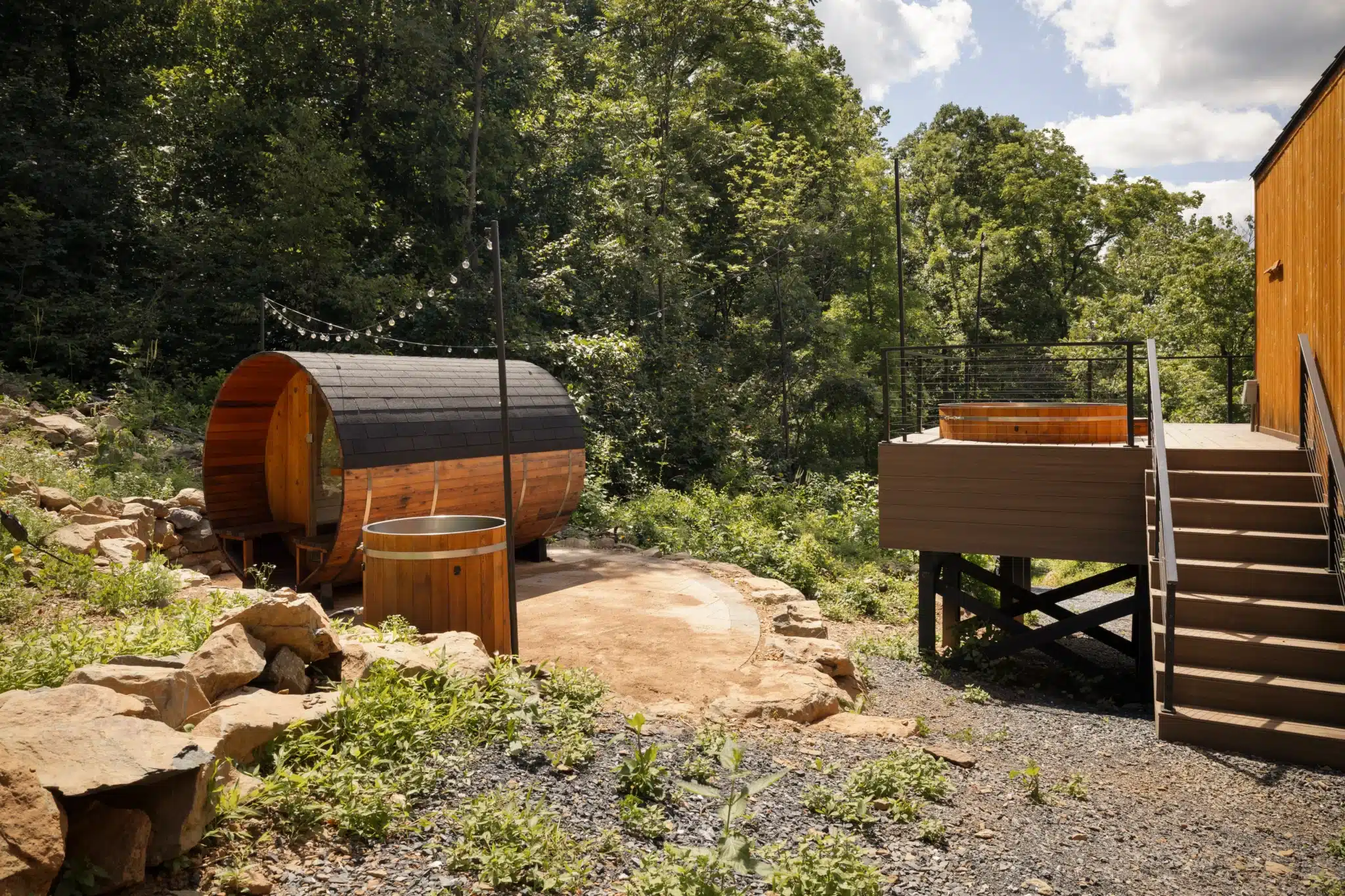
If a private sauna, a cold plunge a few steps away, and a stargazing hot tub sound like the reset you’ve been postponing, Royal Oak Retreat in Shenandoah Farms is booking direct, with the contrast therapy island included in every stay rather than billed as an add-on.
Content powered by inkSTR.co