
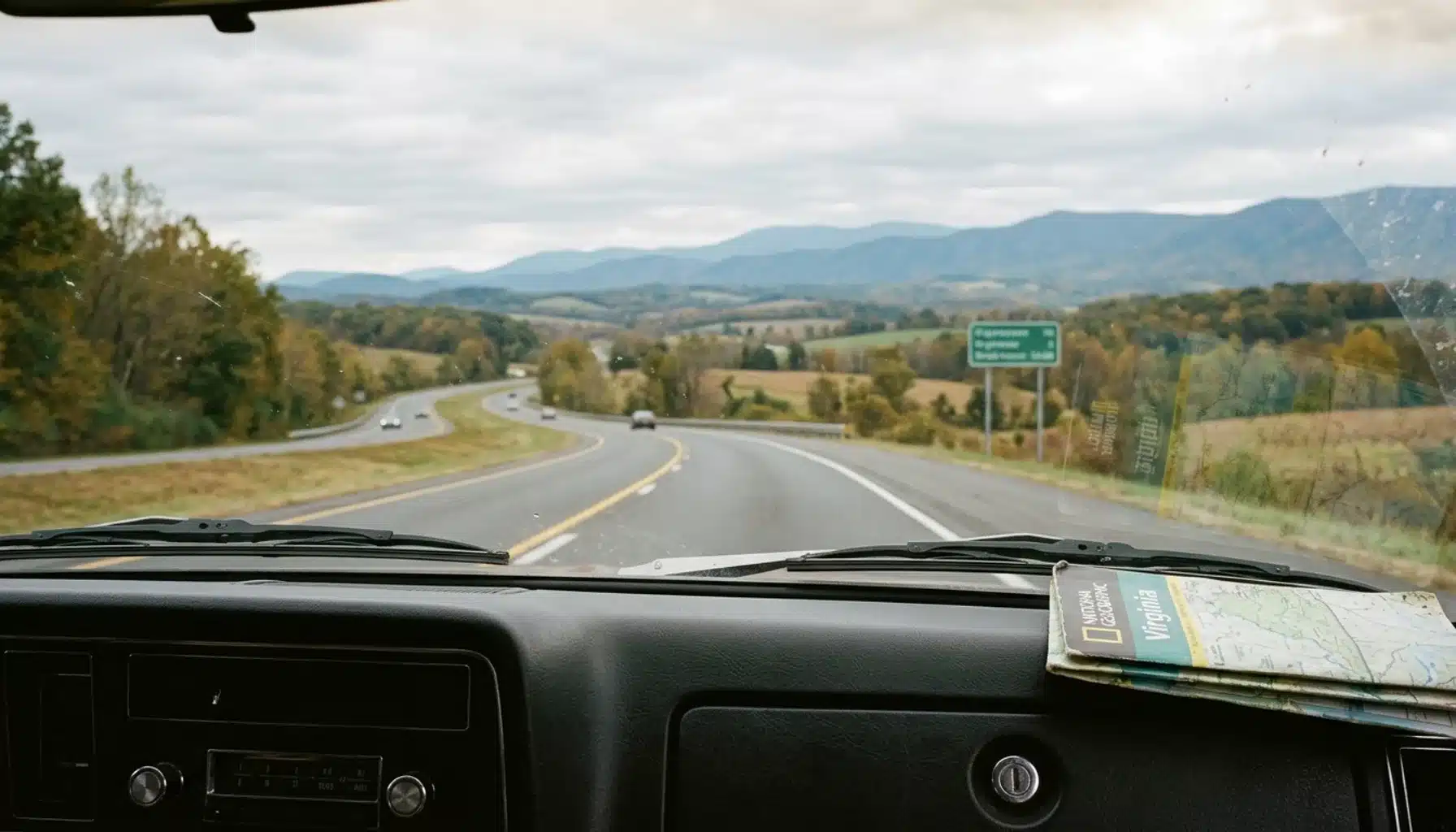
The answer depends on where you’re starting, but as a benchmark, Luray, Virginia sits about 92 miles (roughly 1 hour 49 minutes) from Washington, D.C., according to TravelMath and 1map driving-distance data. From Charlottesville it’s a shorter 61.1 miles, about 1 hour 24 minutes. Most trips from the DMV, Richmond, or the Shenandoah Valley itself land somewhere in that same one-to-two-hour range.
Key Takeaways
- Washington, D.C. to Luray, VA runs approximately 92 miles (148 kilometers) and takes about 1 hour 49 minutes to 2 hours depending on traffic, per TravelMath and 1map data.
- Charlottesville to Luray is a shorter trip at 61.1 miles, roughly 1 hour 24 minutes, according to Rome2Rio.
- Luray is 10 minutes from the Central Entrance to Skyline Drive and about 15 minutes from I-81 at New Market, per Visit Shenandoah.
- I-66, US-211, and US-340 are the primary highways feeding into Luray from the DC metro, Charlottesville, and the Shenandoah Valley corridor.
- Fall foliage season (October) is the heaviest traffic window; Rome2Rio notes driving is generally the cheapest way in, at roughly $40 to $60 in fuel from farther-out origin points.
- Royal Oak Retreat, a wellness cabin in the Front Royal and Linden area of the Shenandoah Valley, sits about 40 minutes from Shenandoah National Park and roughly 1 hour from Washington D.C., putting it on the same general corridor travelers use to reach Luray.
If you’re mapping out a trip to Luray Caverns or planning a Shenandoah Valley weekend, “how far is Luray VA from me” is really a question about which highway you’ll be on and how much traffic you’ll hit along the way. Luray sits in Page County, tucked between the Blue Ridge Mountains and the Massanutten range, which means the drive itself is part of the scenery rather than something to just get through.
This guide breaks down real drive times from the most common origin points, the specific roads you’ll take to get there, and what actually changes the math: season, entrance point, and whether you’re coming from the east or west side of the mountains. It also covers what’s waiting for you once you arrive, since a trip to Luray usually means more than just the caverns.
As of 2026, Virginia recorded 46.6 million domestic and international overnight visitors in 2026, a gain of nearly a million over the prior year, and Shenandoah Valley lodging has been one of the state’s stronger-performing regional markets. That growth means more travelers than ever are asking exactly this question before they leave home.
How Far Is Luray VA From Washington DC?
Washington, D.C. to Luray, VA covers approximately 92 miles (148 kilometers) by road, with a drive time of about 1 hour 49 minutes under normal traffic, according to TravelMath and 1map distance calculators. That number can stretch closer to 2 hours during Friday evening rush hour or peak fall foliage weekends in October.
The most direct route out of DC runs west on I-66 through Fairfax and Manassas, then splits toward US-211 West near Warrenton, carrying you straight through Sperryville and over the Blue Ridge at Thornton Gap. Specifically, this route puts you right at the Thornton Gap entrance station for Shenandoah National Park, which Travel + Leisure notes is located in Luray itself, meaning you can detour into the park before finishing the drive into town.
An alternative path takes I-81 South from the DC area through Winchester and Strasburg, then east on US-211 into Luray. This adds a few minutes but avoids the mountain curves on US-211 if you’re not comfortable with switchback driving, especially in winter conditions.
For travelers based in Arlington, Alexandria, or Northern Virginia generally, expect the same 1 hour 45 minute to 2 hour range, with minor variation depending on which side of the Beltway you start from.
How Far Is Luray VA From Charlottesville?
Charlottesville to Luray is a considerably shorter drive at 61.1 miles, about 1 hour 24 minutes, according to Rome2Rio route data. That makes Charlottesville one of the closer major cities to Luray, closer in practice than the DC metro despite Charlottesville’s smaller population.
The route runs north on US-29 to Ruckersville, then west on US-33 through Elkton, crossing the Blue Ridge before dropping into the South Fork Shenandoah River valley near Luray. This road climbs through Swift Run Gap, another access point into Shenandoah National Park, so travelers coming from Charlottesville effectively drive right past a second entrance option along the way.
Because this route is shorter and involves less interstate traffic than the DC approach, it tends to run more predictably, though the mountain crossing at Swift Run Gap can slow down in fog or early winter ice. If you’re staying in the Shenandoah Valley area near Front Royal for a few days, the Charlottesville-to-Luray leg is a reasonable half-day add-on if you want to see both towns.
What Towns Are Close to Luray, Virginia?
Luray sits within a cluster of small Shenandoah Valley towns, most within a 20 to 30 minute drive, including New Market, Front Royal, Stanley, and Elkton. Luray is 15 minutes from I-81 at New Market, per Visit Shenandoah, making New Market a practical stop for gas or food if you’re arriving from the interstate.
Front Royal, at the northern end of Skyline Drive, sits roughly 30 to 40 minutes north of Luray via US-340 and US-211, and functions as the gateway town for travelers coming from I-66 and the DC metro. Front Royal also anchors the surrounding Shenandoah Farms area, home to several wellness-focused cabin rentals set back in the forest.
Stanley, a small community just southeast of Luray on US-340, sits close enough that many visitors don’t distinguish the two towns during a day trip. Elkton, on the Rockingham County side near Swift Run Gap, connects Luray to the southern end of the valley and US-33 traffic from Charlottesville.
Within this cluster of towns, cabin rentals in Shenandoah Valley, Virginia range from rustic to modern, and location within this small-town network matters more than most listings make clear, since a 20-minute difference in drive time is common depending on exactly which town a property sits nearest.
Where Is Luray Located in Virginia?
Luray is the county seat of Page County, Virginia, positioned in the Shenandoah Valley between the Blue Ridge Mountains to the east and the Massanutten mountain range to the west. The town sits along the South Fork Shenandoah River, roughly two hours west of Washington, D.C. and just south of the midpoint on Skyline Drive.
Geographically, Luray occupies what locals call Page Valley, a narrower, quieter valley separated from the main Shenandoah Valley floor by the Massanutten ridge. That separation is part of why Luray feels distinctly its own place rather than an extension of Front Royal or Harrisonburg, even though all three towns sit within the same broader region.
The town’s position directly beneath the Blue Ridge is also why it functions as a primary access point into Shenandoah National Park. As of 2026, Shenandoah National Park drew 1.7 million visitors in 2026 who spent $132 million in nearby communities, according to National Park Service figures, and Luray captures a meaningful share of that spending given its proximity to the Thornton Gap entrance.
What Is Luray, Virginia Known For?
Luray is best known for Luray Caverns, described by Visit Shenandoah as the largest cavern system in Eastern America and the most visited cave in the United States. The attraction sits at 101 Cave Hill Road, Luray, VA 22835, and includes several bundled experiences beyond the cave tour itself.
General admission covers Luray Caverns, the Car and Carriage Caravan Museum, Shenandoah Heritage Village, and the Luray Valley Museum, all on the same property. Luray Caverns holds a 4.5 rating from over 5,000 reviews on Tripadvisor as of 2026, a strong signal given how many visitors pass through annually.
Beyond the cave, Luray Caverns’ Garden Maze is one of the largest hedge mazes in the Mid-Atlantic, a one-acre ornamental garden the site describes as a half-mile mystery mission through evergreen hedges. Families and history-minded travelers can add Toy Town Junction and the Rope Adventure Park to a full-day visit at the same complex.
Outside the caverns, Luray is known for its walkable historic downtown, a small but growing arts scene, and river access for tubing on the South Fork Shenandoah. The Luray-Hawksbill Greenway is a paved, four-mile, multi-use trail that follows Hawksbill Creek through town, a favorite for an easy morning walk or bike ride that doesn’t require a car.
How Long Is the Luray Caverns Tour?
A standard self-guided walk through Luray Caverns typically takes visitors about an hour to complete at a comfortable pace, though exact timing varies by group size and how often you stop to read the interpretive signage. The cave path is paved and lit, making it accessible for most fitness levels, though it stays cool year-round, so bring a light jacket even in summer.
Visitors combining the caverns with the Car and Carriage Caravan Museum, Shenandoah Heritage Village, and the Luray Valley Museum should plan for a half-day, roughly three to four hours total if you want to see everything included in general admission without rushing. Adding the Garden Maze or Rope Adventure Park pushes a full visit closer to a full day.
For travelers timing their arrival, mornings tend to run less crowded than afternoons, especially during peak fall foliage season in October when Shenandoah Valley visitation climbs sharply. Weekday visits, particularly Tuesday through Thursday, consistently see shorter lines than weekend mornings.
How Does Traffic and Season Change the Drive to Luray?
Seasonal traffic changes the drive to Luray more than most travelers expect, with October fall foliage weekends adding significant time to routes over US-211 and US-33 as both locals and leaf-peepers converge on Skyline Drive. Historical data shows about 70% of annual visitation to the Shenandoah Valley occurs between June and October, with October typically the single busiest month.
Winter driving introduces a different challenge: the mountain crossings at Thornton Gap and Swift Run Gap can ice over, and Skyline Drive itself sometimes closes entirely during snow events, which the National Park Service tracks on its official site. If you’re driving into Luray from the east side of the Blue Ridge in December through February, check conditions before committing to a mountain route, and consider the I-81 approach through the valley floor instead, since it avoids the higher elevation entirely.
Summer weekends bring steady but manageable traffic, mostly concentrated around midday arrivals at Luray Caverns. Rome2Rio notes that driving remains the cheapest way to reach Luray from farther-out Virginia origin points, generally in the $40 to $60 range for fuel, while flying and driving is faster for cross-country travelers but costs considerably more, often between $90 and $800 depending on flight availability.
As of 2026, through June, Virginia hotel demand statewide increased 3.1% year over year, compared with 1.8% nationally, with the Shenandoah Valley cited as one of the strongest regional lodging markets. That growth means booking lodging, and planning your drive time, further ahead than you might have a few years back is worth doing, especially for October travel.
What Roads and Highways Lead Into Luray?
Four highways handle nearly all traffic into Luray: I-81, I-66, US-211, and US-340. I-81 runs north-south along the valley floor and is the fastest way to cover long distances before cutting east on US-211 near New Market, about 15 minutes from town.
I-66 serves as the primary connector for DC-metro traffic, running west from the Beltway before travelers exit toward US-211 near Warrenton or Front Royal. US-211 itself is the most direct east-west road through Luray, crossing the Blue Ridge at Thornton Gap and continuing west to intersect I-81.
US-340 runs north-south through Page Valley, connecting Luray to Front Royal to the north and Elkton to the south, and serves as the local backbone road for anyone hopping between the small towns in this cluster. For travelers using GPS apps, note that mountain sections of US-211 sometimes lose signal briefly near the Skyline Drive crossing, so it helps to have your route saved or written down before you lose cell coverage.
| Starting Point | Approximate Distance | Approximate Drive Time | Primary Route |
|---|---|---|---|
| Washington, D.C. | 92 miles (148 km) | 1 hr 49 min to 2 hrs | I-66 W to US-211 W |
| Charlottesville, VA | 61.1 miles | 1 hr 24 min | US-29 N to US-33 W |
| New Market, VA | Under 15 min drive | Approx. 15 minutes | I-81 to US-211 E |
| Front Royal, VA | Roughly 30 to 40 min drive | Approx. 30 to 40 minutes | US-340 S |
What Should You Do Once You Arrive in Luray?
Once you’ve made the drive, Luray Caverns is the anchor stop most visitors build a day around, but Page Valley offers enough outside the caverns to justify a full weekend rather than a single day trip. Downtown Luray’s Main Street has a walkable, small-town feel with local dining and shops, a nice contrast after a morning underground.
For outdoor time, Lake Arrowhead and the Luray-Hawksbill Greenway give you options that don’t require a car once you’re parked downtown. The Ralph H. Dean Recreation Park adds ballfields and open green space if you’re traveling with active teenagers or just want a break from driving.
River recreation is a defining part of a Luray visit for warm-weather travelers, with tubing, rafting, and horseback riding all available along the South Fork Shenandoah through outfitters like Shenandoah River Outfitters. Because Luray sits 10 minutes from the Central Entrance to Skyline Drive, per Visit Shenandoah, it’s also a practical launch point for a Skyline Drive scenic loop before heading back to your lodging for the evening.
If you want to extend the trip into Shenandoah National Park itself, our guide to hiking trails in Shenandoah National Park breaks down which routes suit a casual afternoon versus a serious day hike, and our Shenandoah National Park guide covers entrance fees and seasonal access in more detail.
Where Should You Stay When Visiting Luray and the Shenandoah Valley?
Most travelers visiting Luray choose lodging somewhere in the broader Front Royal to Luray corridor rather than directly in town, since the small-town lodging inventory in Luray itself is limited compared to the surrounding valley. Royal Oak Retreat, a wellness cabin set in the Shenandoah Farms area near Front Royal, sits roughly on that same corridor, about 40 minutes from Shenandoah National Park and within reach of Luray via US-340 and US-211.
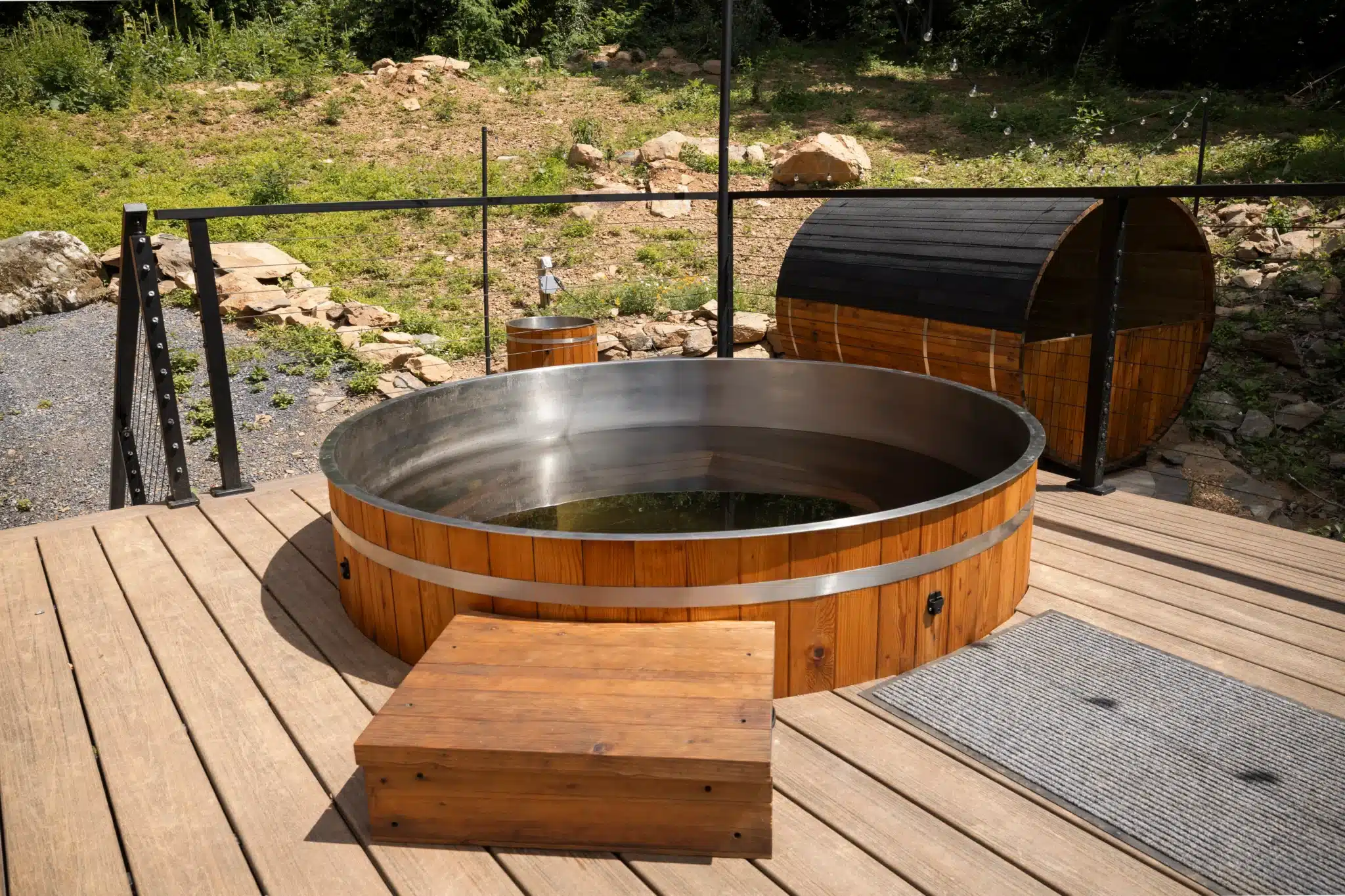
This 1,000-square-foot cabin sleeps up to four across a main bedroom with a king bed and a loft with a queen bed reached by a spiral staircase, giving couples or small groups a private base for exploring Page Valley without staying in a hotel room. Rather than a generic hot tub listing, Royal Oak Retreat centers its layout around a dedicated contrast therapy island: a large sunken outdoor hot tub with stargazing views, a Scandinavian-style sauna, and a cold plunge, all built into the deck.

The cabin is built fully non-toxic, with no plastics or off-gassing chemicals used in construction, which shapes how the air inside actually feels compared to a standard cabin build. It’s an adults-first retreat, so it suits couples’ retreats, milestone celebrations, or a solo wellness reset rather than a family vacation, and one dog under 50 lbs is welcome with a $100 pet fee.
For anyone planning a Luray trip that includes wine, Fox Meadow Winery in Linden sits about 5 minutes from the cabin, and Crimson Lane Vineyards in Hume is roughly 8 minutes away, both easy additions to a weekend built around Skyline Drive and the caverns. If you’d rather browse the full range of options in the region first, our guide to cabins near Shenandoah National Park lays out what to look for before booking.
What Mistakes Do Travelers Make Planning the Drive to Luray?
The most common mistake is underestimating fall traffic. Travelers who assume the same 1 hour 49 minute drive from DC that works in June often find themselves adding 30 to 45 minutes on an October Saturday, when Skyline Drive overlooks and US-211 fill up with leaf-peeping traffic simultaneously.
A second mistake is relying entirely on GPS through the mountain crossings without a backup plan, since signal gaps near Thornton Gap and Swift Run Gap can leave you without directions at the exact moment the road gets curviest. Screenshot your route or write down the key turns before you lose service.
Third, many visitors treat Luray Caverns as a quick stop rather than budgeting the half-day it actually takes to see the bundled museum and village attractions included in general admission, then feel rushed trying to fit in Lake Arrowhead or the Greenway afterward. Build in the extra time up front instead of trying to compress the visit.
Finally, winter travelers sometimes forget that steep, rural driveways in the surrounding valley, including at forest cabin properties, often require a 4×4 vehicle when snow is on the ground. If you’re staying somewhere off the main roads, confirm vehicle requirements with the host before you arrive.
Frequently Asked Questions
Is it are there vacation rentals available in Luray, Virginia?
Yes, the Luray and broader Page Valley area has vacation rentals ranging from cabins to riverfront cottages, though inventory is smaller directly in town compared to the surrounding Front Royal and Shenandoah Farms corridor. Many travelers base themselves in nearby Front Royal, roughly 30 to 40 minutes from Luray, where properties like Royal Oak Retreat offer more privacy and wellness amenities than typical in-town lodging.
How far is Luray VA from me if I’m driving from Washington DC?
Washington, D.C. to Luray is approximately 92 miles, or about 1 hour 49 minutes under normal traffic conditions, according to TravelMath distance data. Expect closer to 2 hours during Friday rush hour or October leaf-peeping weekends.
What is Luray, Virginia known for?
Luray is best known for Luray Caverns, the largest cavern system in Eastern America and the most visited cave in the United States according to Visit Shenandoah. It’s also known for its walkable historic downtown, the Luray-Hawksbill Greenway, river tubing on the South Fork Shenandoah, and access to Skyline Drive through the nearby Thornton Gap entrance.
How long is the Luray Caverns tour?
The self-guided cave walk typically takes about an hour at a comfortable pace. If you’re visiting the bundled Car and Carriage Caravan Museum, Shenandoah Heritage Village, and Luray Valley Museum included in general admission, plan for a half-day, roughly three to four hours total.
What towns are close to Luray, Virginia?
New Market sits about 15 minutes from Luray near I-81, Front Royal is roughly 30 to 40 minutes north via US-340, and Stanley and Elkton are both nearby small communities within Page Valley. These towns form a small cluster that many visitors treat as one regional trip rather than separate destinations.
Where is Luray located in Virginia?
Luray is the county seat of Page County, sitting in the Shenandoah Valley between the Blue Ridge Mountains and the Massanutten range, along the South Fork Shenandoah River. It’s roughly two hours west of Washington, D.C. and sits near the midpoint of Skyline Drive.
What’s the fastest way to get to Luray if I’m not driving from a nearby city?
Rome2Rio data indicates flying into a regional airport and driving the remaining distance is the fastest overall option for travelers coming from farther away, taking roughly 3 hours 45 minutes total but costing considerably more than driving alone. For most East Coast travelers within a few hours’ radius, driving directly remains both the simplest and cheapest option.
Does the drive to Luray change much by season?
Yes, October fall foliage weekends bring the heaviest traffic, since roughly 70% of annual Shenandoah Valley visitation happens between June and October. Winter can also slow mountain routes over Thornton Gap and Swift Run Gap due to ice, making the I-81 valley-floor approach a safer alternative during snow events.
Final Thoughts on the Drive to Luray
However you’re getting there, the honest answer to “how far is Luray VA from me” almost always lands in the one-to-two-hour range for anyone starting within Virginia or the broader DC metro, with 92 miles from Washington and 61.1 miles from Charlottesville as the two most useful reference points. The bigger variable isn’t distance, it’s season and route: October traffic and winter mountain crossings add real time that a straight mileage number won’t show you.
Once you’ve accounted for those factors, Luray rewards the drive with a genuinely walkable small town, one of the country’s most visited cave systems, and direct access to Skyline Drive. As Shenandoah Valley tourism continues its strong run into 2026, planning your route and your lodging a little further ahead than you might have a few years ago is worth the extra effort.
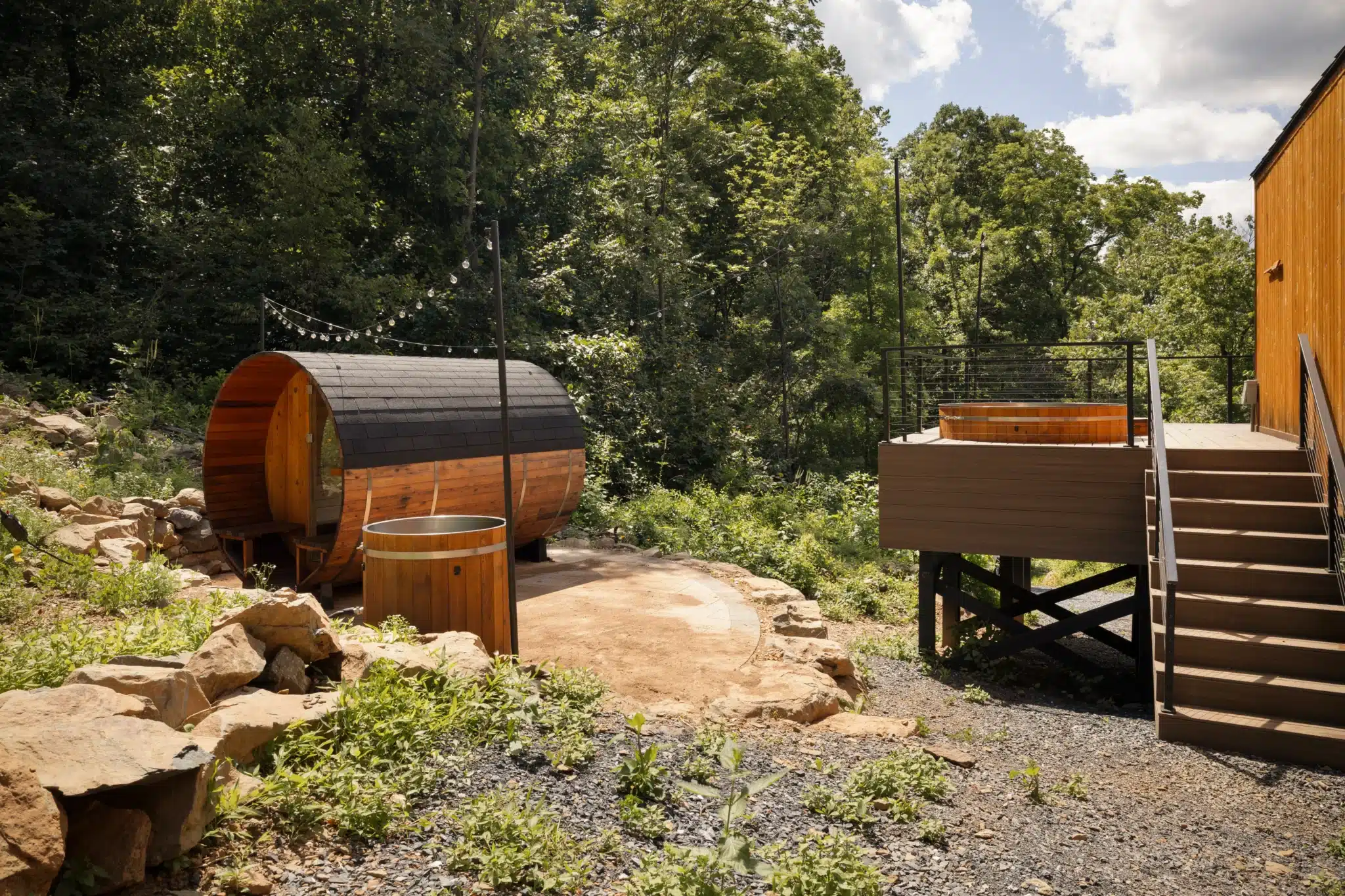
If your trip to Luray is really about slowing down once you get there, Royal Oak Retreat gives you a private contrast therapy setup, sunken hot tub, sauna, and cold plunge, set back in the Front Royal forest about 40 minutes from Shenandoah National Park. Check current availability and book direct through the official Royal Oak Retreat listing.
Content powered by inkSTR.co