
Yes, Shenandoah National Park is dog friendly. Leashed dogs are allowed on the majority of the park’s more than 500 miles of hiking trails, in every campground, and at picnic areas along Skyline Drive. Fewer than 20 miles of trail are off limits to pets, and the exceptions are clearly marked at trailheads.
Key Takeaways
- Shenandoah National Park permits leashed dogs on more than 480 of its 500-plus miles of trails, according to the National Park Service’s official Pets page.
- A physical leash no longer than 6 feet is required at all times; retractable leashes and voice control do not meet the rule.
- Dogs are prohibited on eight named trails, including Old Rag, Dark Hollow Falls, and Stony Man Trail (though dogs may still use the Appalachian Trail portion near Stony Man).
- Pet-friendly lodging inside the park includes Skyland, Big Meadows Lodge, and Lewis Mountain Cabins, each charging a non-refundable per-pet cleaning fee.
- Shenandoah National Park drew 1.7 million visitors in 2026 who spent $132 million in nearby communities, per National Park Service economic impact data, making pet policy clarity a real planning issue for a large share of travelers.
- Outside the park, Royal Oak Retreat in Shenandoah Farms welcomes one dog under 50 lbs with a $100 pet fee, putting guests 40 minutes from Skyline Drive with a private hot tub waiting at the end of the trail.
If you’re mapping out a trip to the Shenandoah Valley with a dog in the back seat, the question isn’t really “is Shenandoah dog friendly.” It’s which specific trails, campgrounds, and lodges actually allow dogs, and which ones will turn you away at the trailhead. Both matter, and the answer changes depending on whether you’re talking about the national park itself or the wider Shenandoah Valley region surrounding it.
This guide breaks down the National Park Service’s actual leash and waste rules, names the specific trails where dogs are banned (and why), and covers dog-friendly lodging both inside the park and in the valley towns around Front Royal, Luray, and Linden. As of 2026, Shenandoah remains one of the more genuinely pet-permissive national parks in the country, but “dog friendly” comes with real conditions worth knowing before you load the car.
What Are the Official Pet Rules at Shenandoah National Park?
Shenandoah National Park’s pet policy requires a physical leash no longer than 6 feet at all times, on every trail, in every campground, and at every picnic area. The rule applies regardless of how well-trained your dog is; voice control and retractable leads longer than 6 feet do not satisfy the requirement, according to the National Park Service’s official Pets page.
Waste disposal is the second pillar of the policy. Owners must bag pet waste and carry it out to a trash receptacle; leaving bags along trail posts or in the woods is not permitted, even temporarily. Rangers do check for this, especially near popular overlooks along Skyline Drive.
Dogs are barred from all ranger-led programs, including campfire talks and guided walks, regardless of leash status. This surprises a lot of first-time visitors who assume a well-behaved dog can tag along to an evening program at Big Meadows. It cannot.
The park’s baseline stance is permissive: leashed pets can access most of the trail network, all developed campgrounds, and outdoor seating at park dining locations. That access is broader than what many national parks offer, and it’s the reason Shenandoah shows up repeatedly in searches from Washington D.C.-area dog owners planning a weekend trip.
What Are the Best Dog-Friendly Trails in Shenandoah National Park?
The best dog-friendly trails in Shenandoah span easy half-mile loops to full-day ridge hikes, and the park’s own trail guides list options like Hightop Trail, Hawksbill Mountain, and Mary’s Rock Summit as solid choices for hiking with a leashed dog. Because the prohibited-trail list covers fewer than 20 miles, the vast majority of the park’s mileage, including most of the Appalachian Trail corridor and the Rose River Loop, remains open to pets.
Mary’s Rock Summit, reached from the Panorama area near mile 31.5 on Skyline Drive, delivers a genuine summit payoff without the crowds that swarm Old Rag on a fall Saturday. Hawksbill Mountain, the park’s highest point, is a shorter climb than its elevation suggests and rewards dogs and owners alike with a 360-degree view from the summit platform.
For a mellower option, the Appalachian Trail segment running through Shenandoah offers long, relatively flat stretches ideal for a dog that tires on steep switchbacks. Rose River Loop combines a waterfall, a creek crossing dogs generally love, and moderate elevation change over a few miles, a good pick for a first-time Shenandoah hike with a dog that hasn’t done serious mountain terrain before.
None of these routes appear on the park’s prohibited list, but conditions change with weather and maintenance closures. Check the Things To Do page on the official NPS site before you go, since Skyline Drive sections occasionally close for ice or fallen trees, especially in shoulder seasons.
| Trail | Dog Status | Approx. Difficulty | Notable Feature |
|---|---|---|---|
| Hightop Trail | Allowed, leashed | Moderate | Ridge views, quieter than nearby summits |
| Hawksbill Mountain (Upper Hawksbill Summit) | Allowed, leashed | Moderate | Park’s highest peak, 360-degree summit view |
| Mary’s Rock Summit | Allowed, leashed | Moderate | Summit rock outcrop, fewer crowds than Old Rag |
| Rose River Loop | Allowed, leashed | Easy-Moderate | Waterfall and creek access |
| Appalachian Trail (within Shenandoah) | Allowed, leashed | Varies | Long flat stretches, thru-hiker traffic |
| Blackrock Summit | Allowed, leashed | Easy (1 mile round trip) | Low elevation gain, boulder field summit |
| Bearfence Rock Scramble | Prohibited | Strenuous scramble | Rock scramble unsafe for paws |

Which Trails Ban Dogs in Shenandoah National Park?
Eight named trails in Shenandoah National Park prohibit dogs entirely, and the restricted sections total fewer than 20 miles out of the park’s 500-plus miles of trail. These bans typically apply to routes with steep rock scrambles, narrow ledges, or heavy foot traffic where a dog on a 6-foot leash creates a safety bottleneck for other hikers.
Old Rag is the most talked-about restriction. Dogs cannot access the section from Post Office Junction to Old Rag Shelter, the Old Rag Ridge Trail, the Old Rag Saddle Trail, or the Ridge Access Trail. Given that Old Rag’s rock scramble already draws timed-entry crowds during peak fall weekends, this ban also happens to spare dogs from the mountain’s most congested bottlenecks.
Stony Man Trail, near mile 41.7, has a nuance worth understanding. Dogs may walk the initial shared Appalachian Trail portion, but they cannot turn onto the blue-blazed Stony Man Trail that leads to the actual summit overlook. Miss this distinction and you’ll hike most of the way with your dog only to have to turn back or split the group at the junction.
The remaining prohibited routes are Fox Hollow Trail at mile 4.6, Limberlost Trail at mile 43, Dark Hollow Falls Trail at mile 50.7, Story of the Forest Trail at mile 51, Bearfence Mountain Trail at mile 56.4, and Frazier Discovery Trail at mile 79.5. Several of these, like Dark Hollow Falls, involve steep, wet stone steps where footing is already tricky for people, let alone a dog on a leash.
Are Dogs Allowed on Skyline Drive?
Yes, dogs are allowed on Skyline Drive itself, since the 105-mile scenic road is a vehicle corridor rather than a trail, and leashed pets can accompany you at every overlook and pull-off along the route. The rule that governs trails, a physical leash no longer than 6 feet, still applies the moment you step out of the car at an overlook or picnic area.
Overlooks like Franklin Cliffs Overlook make an easy stretch-and-photo stop for a road-tripping dog that doesn’t need a full trail to burn energy. Picnic grounds along the drive, including those near the Harry F. Byrd and Dickey Ridge visitor centers, allow leashed dogs at the tables and lawns.
Skyline Drive traffic slows considerably in October, the park’s busiest month, when leaf-peepers stack up at overlooks. If you’re traveling with a dog that gets carsick or anxious in stop-and-go traffic, plan drive segments for early morning before 9 a.m., when the road is noticeably clearer.
One operational detail most guides skip: never leave a dog in a parked car along Skyline Drive, even briefly. Elevations above 3,000 feet keep interior temperatures cooler than lowland Virginia, but direct sun through a windshield still raises cabin temperature fast, and ranger patrols do respond to reports of dogs left unattended in vehicles.
What Is the Most Dog-Friendly National Park?
Shenandoah ranks among the most dog-friendly national parks in the country because it opens over 96% of its trail mileage to leashed pets, a figure few other major parks match. Many western parks, including several in the Rocky Mountain and desert Southwest regions, restrict dogs to parking lots, roads, and campgrounds only, banning them from backcountry trails entirely because of wildlife concerns.
Shenandoah’s approach differs because its Blue Ridge terrain has fewer large predator conflicts than parks with active grizzly or wolf populations, and its trail network was designed with multi-use access in mind from the start. That structural difference is why a dog owner searching “is Shenandoah dog friendly” gets a much more encouraging answer than someone asking the same question about a park out west.
The tradeoff is that Shenandoah’s popularity brings volume. With 1.7 million annual visitors as of 2026 according to National Park Service data, popular trailheads and overlooks get crowded on weekends, especially during October’s peak foliage window. A dog that’s uneasy in tight crowds does better on Tuesday through Thursday visits, or on the less-trafficked southern district trails near Loft Mountain.
For DC-area travelers weighing where to go with a dog, Shenandoah’s blend of high trail access and manageable drive time, roughly an hour and a half from most of the metro area, is hard to match. Few East Coast parks combine 500-plus dog-legal trail miles with this kind of proximity to a major metro population.
Are Dogs Allowed Inside Luray Caverns?
No, dogs are not allowed inside Luray Caverns, since the cave’s narrow passages, delicate formations, and enclosed environment make pet access impractical for both safety and preservation reasons. This is a common point of confusion for travelers assuming a “dog friendly region” means every attraction accepts pets.
Luray Caverns, roughly 20 minutes from the Shenandoah Farms area, offers outdoor grounds including a garden maze and a car and carriage museum that some travelers visit with dogs on leash while a second person tours the cave itself. Check current pet policy directly with Luray Caverns’ official site before planning around this, since outdoor-area rules can change seasonally.
This is the broader lesson for Shenandoah Valley trip planning: the national park’s trail system is genuinely dog friendly, but attractions in surrounding towns each set their own policy. Wineries, breweries, and museums vary widely, and none should be assumed pet-friendly without checking first.
The Frontier Culture Museum, a regional stop outside Staunton, follows the same pattern. Dogs cannot enter exhibit areas because the museum includes live farm animals, but the site provides lockable covered kennels for visitors who want to tour the grounds without leaving a dog in a hot car.
Where Can You Stay With a Dog Near Shenandoah National Park?
Dog-friendly lodging near Shenandoah National Park exists both inside the park boundaries and throughout the surrounding valley, ranging from rustic in-park cabins to modern wellness retreats in Shenandoah Farms. Inside the park, pet-friendly rooms are available at Skyland, Big Meadows Lodge, and Lewis Mountain Cabins, all operated by Delaware North under contract with the National Park Service.
These in-park options typically charge a non-refundable cleaning fee per pet per night, and guests should call ahead to confirm pet-room availability since inventory is limited. Pets must be crated when left unattended in the room, a policy consistent across all three in-park lodges according to the National Park Service’s official lodging page.
Outside the park, Royal Oak Retreat in Shenandoah Farms takes a different approach to pet-friendly lodging. The cabin welcomes one dog under 50 lbs with a $100 pet fee, and it sits about 40 minutes from Shenandoah National Park’s northern entrances, close enough for a full day on the trails without an early wake-up call.
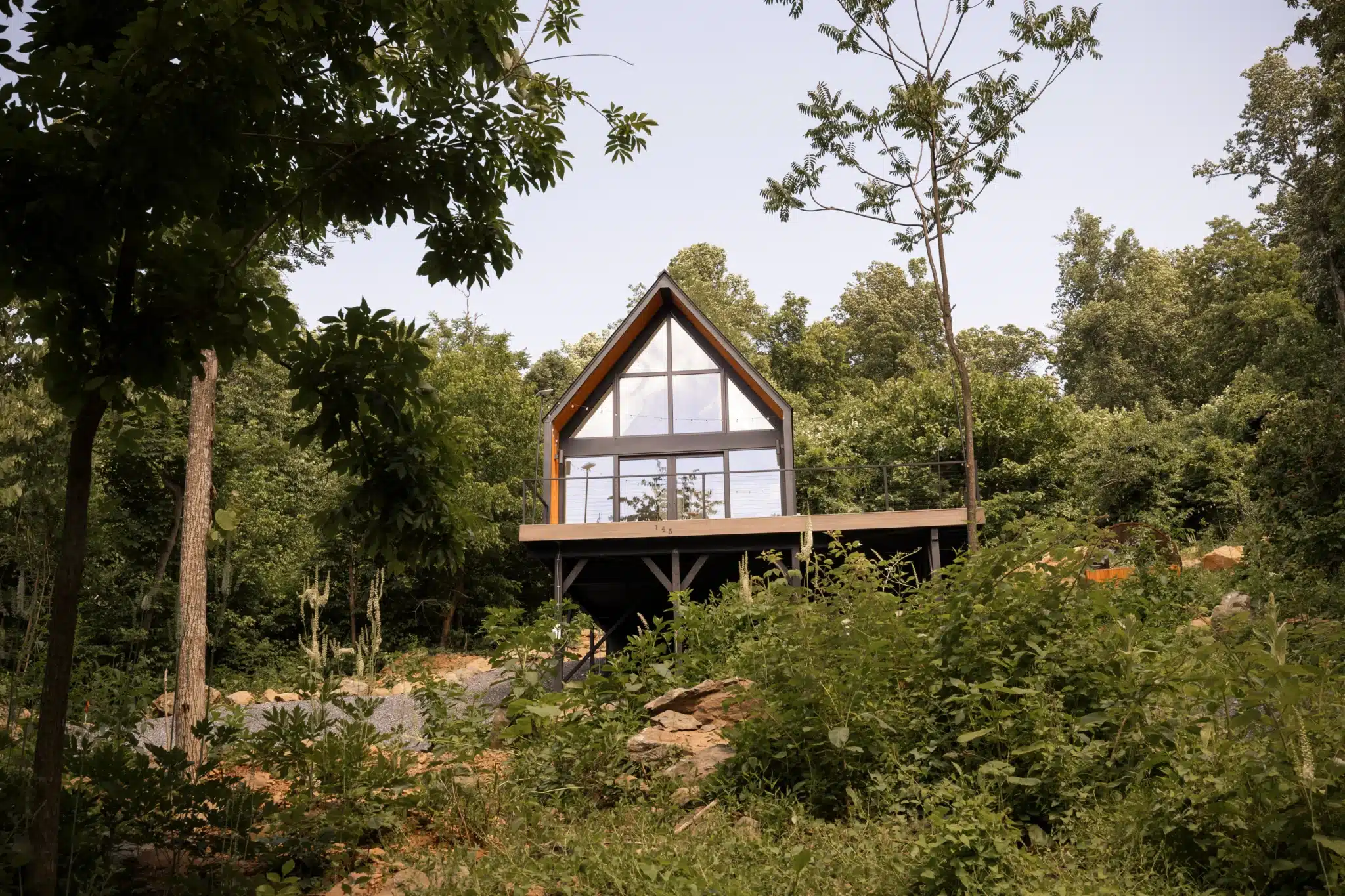
Unlike in-park lodges built around trail access alone, this 1,000-square-foot cabin adds a sunken outdoor hot tub, a Scandinavian-style sauna, and a cold plunge, a contrast-therapy setup that works well after a long hike with a dog that’s also ready to crash by the fire pit. The property sleeps up to four across a king bedroom and a queen loft, and it sits close to Fox Meadow Winery in Linden, about a 5-minute drive, and Crimson Lane Vineyards in Hume, roughly 8 minutes out, for owners who want a wine stop after a trail day. Guests planning a broader loop through the valley can also check our guide to cabin rentals in Shenandoah Valley Virginia for additional context on the local lodging market.

What Should Dog Owners Know Before Hiking Shenandoah in 2026?
Dog owners hiking Shenandoah in 2026 should plan around three practical factors most guides skip: heat and hydration, tick exposure, and paw protection on rocky terrain. Shenandoah’s Blue Ridge trails include long stretches of exposed granite and schist that heat up considerably by early afternoon in summer months.
Carry water specifically for your dog, not just yourself; a collapsible bowl and at least a liter of extra water per dog on any hike over three miles is a reasonable baseline. Trails like Hawksbill and Mary’s Rock have limited shade on their upper sections, and there is no reliable water source along most ridge routes.
Ticks are a genuine concern in Virginia’s Blue Ridge forests from spring through fall. Check your dog thoroughly after every hike, paying particular attention to ears, between toes, and the base of the tail. Talk to your vet about a current tick preventive before a Shenandoah trip if your dog isn’t already on one.
Paw protection matters more on rocky scramble-adjacent trails than most owners expect. Even on legal trails like Hightop or the approach to Bearfence’s legal sections, granite surfaces can be abrasive over several miles. Owners of dogs with sensitive paws sometimes carry protective booties for longer routes.
Wildlife encounters, mainly white-tailed deer and the occasional black bear, are common enough in Shenandoah that a dog off leash creates real risk, both to wildlife and to your dog. This is one more reason the park’s 6-foot leash rule isn’t just bureaucratic, it’s a functional safety measure in an active bear habitat.
What Dog-Friendly Activities Exist Beyond the National Park Trails?
Beyond the national park’s trail system, the broader Shenandoah Valley offers dog-friendly stops including farmers markets, brewery patios, and outdoor picnic areas that extend a trip well past a single day hike. Virginia’s tourism board itinerary for the region names the Staunton Farmers Market and breweries along the Shenandoah Beerwerks Trail as pet-welcoming stops for a valley-wide dog trip.
The Sunspots Studios glassblowing studio and the outside grounds of the Woodrow Wilson Presidential Library round out a broader Staunton-area itinerary for travelers extending beyond park boundaries. The Appalachian Trail Conservancy is a useful resource if your trip includes any AT segment planning, since thru-hiker traffic on Shenandoah’s AT miles picks up notably in spring and fall.
For lodging in town rather than in a forest cabin, the Stonewall Jackson Hotel is named as pet friendly in regional tourism materials, an option worth considering if your itinerary centers more on Staunton’s downtown than on trail access. Closer to Front Royal, our seasonal guide to things to do in Shenandoah Valley VA covers additional stops timed to each season.
Wineries deserve a specific mention since they’re one of the valley’s biggest draws for weekend travelers. Fox Meadow Winery and Crimson Lane Vineyards both sit within a short drive of Front Royal and Linden, and outdoor patio seating at most valley wineries generally accommodates leashed dogs, though policies vary by property and by event day, so a quick call ahead avoids surprises.
How Should You Plan a Dog-Friendly Trip to Shenandoah in 2026?
Planning a dog-friendly Shenandoah trip in 2026 starts with picking a home base close enough to the park entrances to allow flexible trail timing without a long daily commute. Given Skyline Drive’s speed limit and winding grades, staying more than an hour from your target trailhead eats into actual hiking time fast.
- Pick trails from the confirmed dog-allowed list (Hightop, Hawksbill, Mary’s Rock, Rose River Loop, Blackrock Summit) rather than assuming access at popular names like Old Rag or Dark Hollow Falls.
- Buy your park entrance pass online in advance through Recreation.gov’s 7-day vehicle pass page to skip gate-line waits, especially useful on October weekends.
- Confirm pet policy and fees directly with any in-park lodge before booking, since Skyland, Big Meadows, and Lewis Mountain Cabins have limited pet-room inventory.
- Book cabin lodging outside the park, like Royal Oak Retreat in Shenandoah Farms, if you want a private hot tub and sauna to recover in after trail days rather than a shared lodge setting.
- Pack a collapsible water bowl, tick preventive, and a copy of your dog’s vaccination record, since some campgrounds and lodges ask for proof on arrival.
- Check Shenandoah’s visitor center hours before your trip; rangers at Dickey Ridge and Harry F. Byrd centers are a reliable source for current trail conditions and closures.
One mistake worth flagging: travelers frequently assume that because the national park is dog friendly, every attraction within the broader Shenandoah Valley shares that policy. Luray Caverns’ interior, most winery tasting rooms, and the Frontier Culture Museum’s exhibit areas are the clearest exceptions, and checking ahead saves a wasted stop.
Fall foliage season, roughly the last two weeks of October, is Shenandoah’s single busiest stretch, historically drawing a large share of the park’s annual visitation. If your dog does better with fewer crowds, a mid-week visit or an early spring trip when wildflowers are out delivers a calmer experience with the same trail access.
Frequently Asked Questions
Is Shenandoah National Park dog friendly overall?
Yes. Shenandoah allows leashed dogs on the large majority of its 500-plus miles of trails, in every campground, and at picnic areas, with fewer than 20 miles of trail restricted, according to the National Park Service.
Are there any vacation rentals available in Shenandoah National Park, Virginia?
Lodging directly inside the park is limited to Delaware North-operated properties like Skyland, Big Meadows Lodge, and Lewis Mountain Cabins. Private vacation rentals and cabins, including pet-friendly options like Royal Oak Retreat, sit just outside the park boundaries in surrounding communities like Shenandoah Farms and Front Royal.
Where to stay in Shenandoah National Park or the surrounding valley?
Inside the park, Skyland and Big Meadows Lodge offer the most services and trail proximity. Outside the park, Front Royal, Luray, and Shenandoah Farms offer private cabins with more amenities; Royal Oak Retreat, about 40 minutes from the park, adds a private hot tub, sauna, and cold plunge for travelers wanting recovery space after a hiking day.
What to do in Shenandoah National Park with a dog?
Hike dog-allowed trails like Hightop, Hawksbill, Mary’s Rock, and Rose River Loop, drive Skyline Drive with stops at overlooks like Franklin Cliffs, and use developed picnic grounds near the visitor centers. Avoid the eight named trails, including Old Rag and Dark Hollow Falls, where dogs are prohibited.
Are there any cabins available in Shenandoah National Park, Virginia?
Lewis Mountain Cabins at mile 57.5 is the park’s rustic in-park cabin option and does accept pets in designated rooms with a per-pet fee. For a more amenity-rich cabin experience, private rentals just outside the park boundary, such as those in Shenandoah Farms, offer more space and features than the park’s rustic concessionaire cabins.
Do I need a leash the entire time, even at overlooks and campgrounds?
Yes. The 6-foot physical leash rule applies everywhere in the park, including Skyline Drive overlooks, campgrounds, and picnic areas, not just on backcountry trails. Retractable leashes longer than 6 feet do not meet the requirement.
Can I bring my dog to a ranger program or visitor center talk?
No. Pets are not permitted at any National Park Service ranger-led program, including campfire talks and guided walks, regardless of leash status or training level.
Conclusion
Shenandoah National Park earns its dog-friendly reputation honestly: leashed pets can access the overwhelming majority of the park’s trail network, every campground, and Skyline Drive’s overlooks, with only eight specific trails, including Old Rag, Stony Man’s summit spur, and Dark Hollow Falls, off limits. As of 2026, that combination of access and proximity to the DC metro area keeps Shenandoah near the top of the list for East Coast dog owners planning a hiking trip.
The real planning work is in the details: knowing which trails to skip, carrying enough water for the exposed ridge sections, and picking a home base that doesn’t add an hour of driving to every trail day. Whether you stay inside the park at a Delaware North lodge or outside it in Shenandoah Farms, a dog-friendly Shenandoah trip in 2026 comes down to matching your itinerary to the specific, verified rules rather than assuming blanket access.

If your Shenandoah trip includes a dog and a day of hiking dog-legal trails like Hawksbill or Rose River Loop, Royal Oak Retreat gives you a private hot tub and sauna to recover in, just 40 minutes from the park entrances, with one dog under 50 lbs welcome for a $100 pet fee. Check availability and book direct here.
Content powered by inkSTR.co