

Peak fall foliage on Skyline Drive typically arrives between October 10 and October 25, though the exact window shifts by elevation. Higher ridgelines near Big Meadows and Skyland turn first, in early October, while the Shenandoah Valley floor below 1,500 feet doesn’t peak until late October or early November.
Key Takeaways
- Peak color on Skyline Drive generally falls between October 10 and October 25, with the third week of October the most reliable window for broad, ridge-to-valley color.
- Skyline Drive runs 105 miles through Shenandoah National Park with 75 named overlooks, and the road’s four entrances (Front Royal, Thornton Gap, Swift Run Gap, Rockfish Gap) each set up a different day trip.
- Color moves downhill: elevations above 3,000 feet (Hawksbill, Stony Man, Mary’s Rock) turn in early to mid-October, while the valley floor below 1,500 feet peaks in late October to early November.
- October is the park’s busiest month, running roughly 70% higher in visitation than July, so weekday visits and arrival before 9 a.m. matter more here than almost any other time of year.
- Weather changes the calendar: a cold snap with sunny days and cool nights accelerates color, while a warm, wet stretch can push peak back by a week or more.
- Royal Oak Retreat, a wellness cabin in Shenandoah Farms about 40 minutes from the park, gives DC-area travelers a private base with a hot tub and sauna to recover in after a long day of overlook-hopping.
If you’ve ever tried to time a fall trip to Shenandoah National Park around a work calendar instead of a weather forecast, you already know the frustration. Foliage doesn’t follow a fixed date, and a guide written in July telling you “peak week” without elevation context is functionally useless once you’re standing at an overlook in late September wondering why everything is still green.
This guide breaks down exactly how color progresses along the 105-mile length of Skyline Drive, from the high country near Big Meadows down to the valley floor, and how to plan around it in 2026. We’ll cover which of the 75 overlooks earn a stop, how to structure a one-day versus two-day drive, which entrance to use based on where you’re coming from, and how a cold snap or a rainy week can shift everything by seven to ten days.
At Royal Oak Retreat, we watch this same pattern play out every autumn from our own ridge in Shenandoah Farms, roughly 40 minutes from the park’s Front Royal entrance. Guests who book in early October are usually chasing high-elevation color at Skyland and Big Meadows. Guests who book the first week of November are catching the valley floor and the vineyards along Route 522. Both trips work. They’re just different trips.
What Is the Best Time to See Fall Foliage on Skyline Drive?
The best time to see fall foliage on Skyline Drive is generally the third week of October, when color has moved down from the highest peaks but hasn’t yet faded from the mid-elevation forests that make up most of the drive. This single week offers the broadest simultaneous color across the park’s elevation range, from roughly 2,000 to 3,500 feet.
Specifically, early October color belongs to the high country: Big Meadows sits around 3,500 feet and typically peaks in the first two weeks of October, alongside Hawksbill, Stony Man, and Mary’s Rock, all above 3,000 feet. As a result, if you visit the first weekend of October, plan your stops in the Central District near mile 51.
By contrast, late October through early November belongs to the valley floor below 1,500 feet, including the views toward Luray and Front Royal from lower overlooks. Weather remains the wildcard: a warm, wet October can delay everything by a week, while a cold snap with clear, dry days accelerates the turn. In 2026, check the National Park Service’s weekly fall color report the week before you drive rather than relying on a fixed calendar date.
Where Is Fall Foliage Peaking Now on Skyline Drive?
Fall foliage progresses on Skyline Drive from north to south and high to low, meaning the answer to “where is it peaking now” changes almost weekly through October. In late September and the first week of October, the highest color sits above 3,000 feet near Hawksbill, Stony Man, and the ridges around Skyland at mile markers 41.7 and 42.5.
Moving into mid-October, color drops to the 2,000 to 3,000 foot range, which covers most of the Central District, including Thornton Hollow Overlook at mile 33.8, Pinnacles Overlook at mile 36.7, and Thorofare Mountain Overlook at mile 40.5. This is typically the widest window of simultaneous color across the park, which is why the third week of October gets cited so consistently as the safest bet.
By late October and into early November, peak color shifts to elevations below 1,500 feet, meaning the Shenandoah Valley floor itself, the area around Front Royal, and the lower stretches near Rockfish Gap at the park’s south end. Big Run Overlook at mile 81.2 and Crimora Lake Overlook at mile 92.6, both in the South District, tend to hold color slightly later than the Central District. Because timing shifts weekly, cross-reference your travel dates against Virginia’s Virginia is for Lovers weekly fall foliage reports before finalizing your itinerary.

What Is the Most Beautiful Part of Skyline Drive in Fall?
The most beautiful stretch of Skyline Drive during peak fall foliage is widely considered the Central District, roughly between mile 31 and mile 51, where high-elevation overlooks deliver layered ridge views without the drive-time commitment of the park’s northern or southern ends. This section concentrates several of the drive’s strongest viewpoints within a 20-mile span.
Thorofare Mountain Overlook at mile 40.5 is frequently cited as one of the strongest layered-ridge viewpoints on the entire drive, especially in late afternoon light. Franklin Cliffs Overlook near mile 49 faces west and offers one of the widest unobstructed valley views on Skyline Drive; visiting in late afternoon intensifies the color saturation as the sun angles lower. For a short hike paired with a view, Stony Man Overlook at mile 38.6 connects to a 1.6-mile round-trip trail leading to a 4,011-foot summit view, a good option if you want to stretch your legs without committing to a full-day hike.
The Point, at mile 53.4, requires a short scramble beyond a stone wall but rewards with a west-facing panoramic view that many photographers treat as the drive’s best sunset spot. If you’re short on time, prioritize Thorofare Mountain, Franklin Cliffs, and The Point over trying to stop at all 75 overlooks; quality over quantity matters more here than almost anywhere else on the route.
What Is the Best Time to See Fall Colors in Shenandoah National Park?
The best time to see fall colors in Shenandoah National Park is a two-week window centered on mid-October, though the National Park Service and regional trackers consistently note that exact timing cannot be predicted months in advance because it depends on weekly temperature and rainfall patterns. As a general framework, plan flexible travel dates rather than locking in a single weekend far in advance.
First, if your schedule is fixed and you must choose one weekend, the third week of October offers the statistically safest broad-color window across most of the park’s elevation range. Second, if you can travel on short notice, checking the park’s National Park Service fall color updates the week before your trip lets you react to whether the season is running early or late. Third, October visitation runs roughly 70% higher than July, so timing your visit for a weekday, particularly Tuesday through Thursday, meaningfully reduces overlook crowding even during peak weeks.
Notably, species composition affects the visual experience too: red maple and sourwood tend to turn earlier and redder, while white oak and hickory hold yellow and bronze tones later into the season, giving the Central District its mixed-color character during the peak window.
How Long Does It Take to Drive Skyline Drive?
Driving the full 105 miles of Skyline Drive without stopping takes roughly 3 hours, since the 35 mph speed limit and winding mountain curves keep the pace slow even in light traffic. With stops at overlooks, a realistic full-length drive takes 4 to 6 hours, and during peak fall foliage weekends, add another hour or more for overlook parking and entrance station delays.
For a one-day trip, most visitors don’t drive the entire length. Instead, pick one district (North, Central, or South) and drive it thoroughly, then exit and return another day for the rest. A Central District loop from Thornton Gap to Swift Run Gap, roughly 30 miles, takes about 3 to 4 hours with stops for photos, a short hike, and lunch.
For a two-day trip, split the drive at Big Meadows: cover Front Royal to Big Meadows on day one, and Big Meadows to Rockfish Gap on day two. This lets you overnight nearby, which matters during peak color weeks when driving the full length in a single day means missing golden-hour light on either end. There is no shortcut around the pace; Skyline Drive rewards a slow, deliberate drive over a rushed one.
| Segment | Approximate Length | Drive Time (with stops) | Key Overlooks |
|---|---|---|---|
| North District (Front Royal to Thornton Gap) | 31 miles | 2 to 3 hours | Range View (mi 17.1), Hogback (mi 21.0) |
| Central District (Thornton Gap to Swift Run Gap) | 34 miles | 3 to 4 hours | Pinnacles (mi 36.7), Stony Man (mi 38.6), Thorofare Mountain (mi 40.5), Franklin Cliffs (mi 49), The Point (mi 53.4) |
| South District (Swift Run Gap to Rockfish Gap) | 40 miles | 3 to 4 hours | Big Run (mi 81.2), Crimora Lake (mi 92.6) |
How Much Does It Cost to Drive Skyline Drive?
Driving Skyline Drive requires a Shenandoah National Park entrance pass, which covers unlimited entries for seven consecutive days per vehicle. Rather than paying at the gate, you can buy a Shenandoah entrance pass online in advance to skip the line at the entrance station, a real advantage during peak foliage weekends when Front Royal and Thornton Gap stations back up significantly.
If you plan to visit multiple national parks within a year, the America the Beautiful National Park Pass covers entry at Shenandoah plus other federal recreation sites for an annual fee, which can be worth it if you’re combining this trip with visits elsewhere. Beyond the entrance fee, budget for gas, since the drive itself covers over 100 miles at low speed, and factor in food, as options inside the park are limited to a handful of waysides and lodges like Big Meadows Lodge and Skyland.
There’s no cost to park at individual overlooks, and no reservation system currently required for the drive itself, unlike some western national parks. Confirm current fee amounts directly through the Recreation.gov site before you go, since fee structures are reviewed periodically.
How Should You Plan a Skyline Drive Foliage Trip by Entrance and District?
Choosing the right Skyline Drive entrance depends on where you’re starting from and which district’s overlooks match your travel dates during peak fall foliage. The park has four entrances: Front Royal in the north, Thornton Gap and Swift Run Gap in the middle, and Rockfish Gap in the south, and each sets up a distinctly different day trip.
For DC-area travelers, the Front Royal entrance is the natural starting point, putting you into the North District first. This works well for an early-October visit since North District elevations still hold decent color into mid-October as the higher Central District peaks slightly earlier. Thornton Gap, roughly midway up the drive, gives faster access to the Central District’s strongest overlooks, Thorofare Mountain and Franklin Cliffs, without the drive time through the North District first.
Swift Run Gap works well for visitors approaching from Charlottesville or the south who want to hit peak mid-October color in the Central District without driving the full length. Rockfish Gap, the southernmost entrance, is the better choice in late October and into November, when the South District’s lower elevations near Big Run and Crimora Lake are holding their best color while the north has already faded. Matching entrance to district and timing avoids the common mistake of driving 60 miles to reach color that peaked a week earlier.
How Do You Avoid Crowds During Peak Fall Foliage on Skyline Drive?
Avoiding crowds on Skyline Drive during peak fall foliage means visiting on a weekday and arriving before 9 a.m., since October traffic runs roughly 70% higher than July and mid-October weekends are consistently the single busiest period on the entire drive. Entrance stations, overlook parking, and even the Big Meadows and Skyland waysides all fill noticeably by mid-morning on fall weekends.
First, weekday visits, especially Tuesday through Thursday, cut wait times at entrance stations dramatically compared to Saturday. Second, arriving before 9 a.m. means you’ll find parking at popular overlooks like Franklin Cliffs and Stony Man before tour buses and day-trippers arrive; by 11 a.m. on a peak Saturday, some overlook lots are full and cars queue along the shoulder. Third, if an overlook is full when you arrive, keep driving. With 75 named overlooks spaced along 105 miles, a backup option is rarely more than a mile or two away, and less-famous stops like Thornton Hollow Overlook at mile 33.8 often have open parking even during busy weekends.
Additionally, consider a shoulder-week visit, either the first week of October for high-elevation color or the final week of October into early November for valley-floor color, when crowds thin noticeably compared to the mid-October peak. This is also when staying outside the park, rather than fighting for one of the limited in-park rooms at Skyland Lodge or Big Meadows Lodge, gives you more flexibility to start early without a long approach drive.
What Does Nobody Tell You About Photographing Fall Foliage on Skyline Drive?
Most Skyline Drive foliage guides tell you to bring a camera and stop at overlooks, but few explain how lighting direction and midday haze actually affect your photos, which is the single biggest factor separating a flat, washed-out shot from a saturated one. The fix is simple once you know it: drive south to north in the morning and north to south in the afternoon, keeping the sun at your back rather than facing into it.
Specifically, midday light between roughly 11 a.m. and 2 p.m. tends to wash out color saturation and create haze in valley views, particularly from west-facing overlooks like Franklin Cliffs and The Point. Shooting these in the last two hours before sunset instead produces noticeably richer color, since low-angle light rakes across the ridgelines rather than flattening them from above.
For east-facing overlooks like Thornton Hollow, sunrise light works better, and arriving before 8 a.m. also means beating the crowds to a parking spot. If your primary overlook’s lot is full, which happens often during the mid-October peak, having a backup planned in advance saves the trip. Pair Franklin Cliffs with a backup at The Point for sunset, and pair Stony Man with a backup at Pinnacles for morning light. A 24-70mm lens covers most overlook compositions, while a longer zoom helps isolate individual ridgelines from Hogback Overlook’s long, curving pullout at mile 21.0.
What Should You Know About Weather and Real-Time Foliage Conditions?
Fall foliage timing on Skyline Drive is weather-dependent, not calendar-fixed, which means historical averages like the October 10-25 window should be treated as a starting estimate rather than a guarantee. A warm, wet September and early October can delay peak color by a week or more, while a sudden cold snap with clear skies and cool nights accelerates the change and often intensifies red and orange tones.
As a result, checking real-time conditions before you commit to travel dates matters more here than for almost any other Virginia trip. The park updates its own foliage status through the park’s weekly fall color report, and the statewide Virginia is for Lovers weekly fall foliage reports compare Shenandoah’s progression against the Piedmont and Tidewater regions, useful if you’re deciding between a mountain trip and a lower-elevation alternative.
Notably, an early frost can accelerate the drop of leaves at higher elevations even before full color develops, occasionally shortening the visual peak at Big Meadows and Skyland to just a few days. In 2026, build a one-week buffer into your travel plans if possible, since a fixed non-refundable trip booked six months out for “peak week” is genuinely a gamble against variables no forecast can nail down that far in advance.
Where Should You Stay for a Skyline Drive Foliage Trip?
Staying near the park’s northern entrances puts DC-area travelers closest to both the drive and a quiet place to recover after a long day of overlook-hopping, and Royal Oak Retreat in Shenandoah Farms sits roughly 40 minutes from Shenandoah National Park’s Skyline Drive corridor, making it a practical base for both a one-day North District trip and a two-day run down to the Central District.
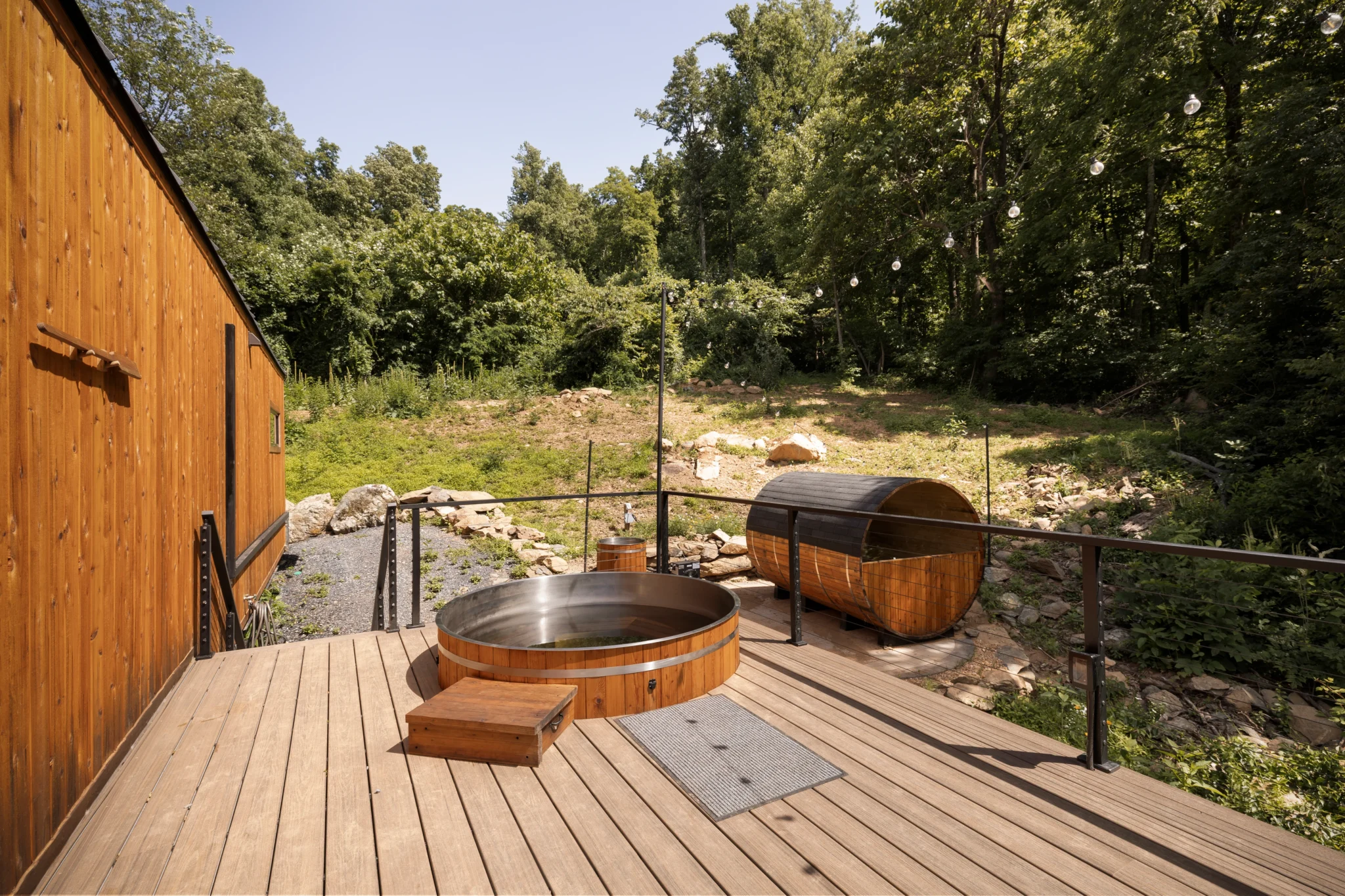
This is a one-bedroom-plus-loft cabin sleeping up to four, built around a sunken outdoor hot tub with stargazing views, a Scandinavian-style sauna, and a cold plunge, a dedicated contrast-therapy island that makes genuine sense after a day spent standing at overlooks in October’s cold morning air. The cabin’s floor-to-ceiling windows frame the surrounding Front Royal forest, and the whole space was built without plastics or off-gassing chemicals, which shapes how the air actually feels inside after a long day outdoors. Starlink internet and an on-site EV charger round out the practical side of the stay, useful if you’re driving an EV up from the DMV and want to charge overnight before a full day on Skyline Drive.
Royal Oak Retreat is adults-first and pet-friendly, welcoming one dog under 50 lbs with a pet fee, and check-in runs 3 p.m. with checkout at 11 a.m. Note that a 4×4 vehicle is recommended in winter months given the steep driveway, though this matters less for a fall foliage trip than a January stay. Nearby, Fox Meadow Winery in Linden is a five-minute drive, and Crimson Lane Vineyards in Hume is about eight minutes out, both solid options for an afternoon between drive segments. For a broader look at lodging options in the region, our guide to the best cabin rentals in Shenandoah Valley covers additional considerations for picking a base camp during leaf season.

What Mistakes Do First-Time Fall Foliage Visitors Make?
The most common mistake first-time visitors make is locking in a single non-refundable weekend for “peak color” months in advance, when the actual peak shifts by up to two weeks depending on weather. Building flexibility into travel plans, or at minimum checking conditions the week before, avoids the disappointment of arriving to a still-green ridgeline or bare branches past their color window.
- Ignoring elevation. Assuming the whole park peaks on the same date leads visitors to the wrong district entirely; check whether you’re targeting high country (Big Meadows, Skyland) or the valley floor before choosing dates.
- Driving the full 105 miles in one day. This sounds efficient but means rushing past strong overlooks and missing golden-hour light on one end of the drive; splitting into a two-day trip at Big Meadows works better.
- Skipping the weekday option. Since October traffic runs about 70% higher than July, a Saturday visit during mid-October peak means real parking delays at popular overlooks.
- Not checking current conditions. Relying on last year’s dates instead of the current season’s weekly foliage report leads to mistimed trips.
- Underestimating drive time. The 35 mph speed limit and winding curves mean 105 miles takes far longer than it looks on a map, especially with stops.
Beyond timing, pack layers regardless of the forecast; overlook elevations run 15 to 20 degrees cooler than the valley floor, and morning temperatures at Big Meadows in October can dip into the 30s even on a warm afternoon down in Front Royal.
Frequently Asked Questions
How long does it take to drive Skyline Drive?
Driving all 105 miles of Skyline Drive without stopping takes roughly 3 hours because of the 35 mph speed limit and winding mountain terrain. With stops at overlooks for photos and short walks, plan on 4 to 6 hours, and add extra time during peak fall foliage weekends when entrance stations and overlook parking see heavier traffic.
How long does it take to drive the Skyline Drive during peak fall foliage?
During peak fall foliage, typically mid-October, the same 105-mile drive can take 5 to 7 hours with stops, since overlook parking lots fill faster and entrance station lines run longer than during the off-season. Visiting on a weekday and arriving before 9 a.m. keeps the trip closer to the standard 4 to 6 hour range.
How long is Skyline Drive?
Skyline Drive runs 105 miles along the crest of the Blue Ridge Mountains through Shenandoah National Park, connecting Front Royal in the north to Rockfish Gap in the south. The road passes 75 named overlooks along its length, offering views into both the Shenandoah Valley to the west and the Piedmont region to the east.
How much does it cost to drive Skyline Drive?
Driving Skyline Drive requires a Shenandoah National Park entrance pass, valid for seven consecutive days per vehicle, which you can purchase in advance online or at any entrance station. Travelers visiting multiple national parks within a year may find the America the Beautiful annual pass a better value; confirm current fee amounts directly through Recreation.gov before your trip.
What is the best time to see fall foliage on Skyline Drive?
The best time is generally mid-October, specifically the window between October 10 and October 25, when color has descended from the highest peaks but remains strong across most mid-elevation forest along the drive. Exact timing shifts year to year based on temperature and rainfall, so check the park’s weekly foliage report close to your travel date.
Does Royal Oak Retreat allow pets during a fall foliage trip?
Yes. Royal Oak Retreat welcomes one dog under 50 lbs with a pet fee, making it a workable base for travelers who don’t want to leave their dog behind during a Skyline Drive foliage trip. The surrounding Front Royal forest and nearby trails also give dogs room to walk off a long car ride.
How far is Royal Oak Retreat from Shenandoah National Park?
Royal Oak Retreat sits in Shenandoah Farms, about 40 minutes from Shenandoah National Park’s Skyline Drive corridor, and roughly an hour from Washington D.C. This makes it a practical overnight base for a one or two-day fall foliage drive without a long approach from the DMV area.
What is the most beautiful part of Skyline Drive?
The Central District, roughly between mile 31 and mile 51, is widely considered the most scenic stretch, concentrating strong overlooks like Thorofare Mountain, Franklin Cliffs, and The Point within a compact 20-mile span. This section offers some of the widest unobstructed valley views on the entire drive, particularly in late-afternoon light.
The Bottom Line on Timing Your Skyline Drive Foliage Trip
Peak fall foliage on Skyline Drive comes down to elevation and weather more than any fixed calendar date. Aim for the third week of October if you need one target weekend, but track the National Park Service’s weekly reports and build a few days of flexibility into your plans, since a cold snap or a wet stretch can shift the color window by a week in either direction. Pick your district based on timing, drive slowly, and don’t try to cover all 105 miles and 75 overlooks in a single rushed day.
As Virginia’s fall tourism season continues to grow into 2026, expect mid-October weekends to stay the busiest stretch on the drive, which makes weekday visits and early arrivals worth the schedule adjustment. Whether you’re chasing high-country color at Big Meadows or valley-floor gold near Front Royal, the drive rewards patience over speed.

After a full day chasing color along Skyline Drive, Royal Oak Retreat puts you about 40 minutes from the park with a sunken hot tub waiting under the stars back at the cabin. Check availability and book direct here.
Content powered by inkSTR.co