
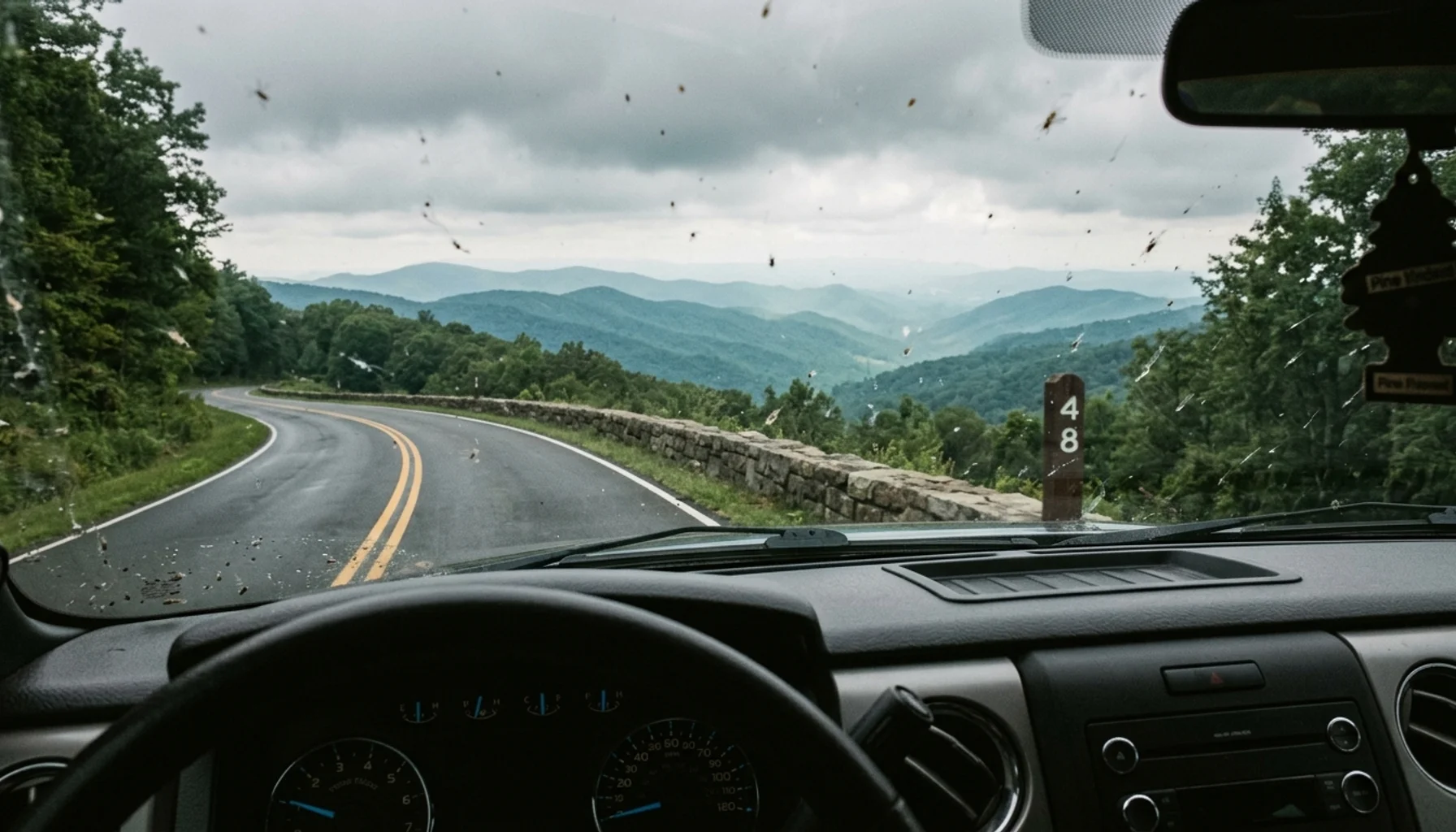
A road trip through Shenandoah Valley typically combines the 105-mile Skyline Drive along the park’s ridgeline with valley-floor detours through Front Royal, Luray, Harrisonburg, and Staunton. Most travelers need two to four days to cover the drive, a few hikes, and the gateway towns without rushing.
Key Takeaways
- Skyline Drive runs 105 miles from Front Royal to Rockfish Gap through Shenandoah National Park, with a posted speed limit of 35 mph that makes the full drive alone take roughly three and a half hours without stops.
- The park recorded 1.7 million visitors in 2026, up from 1.5 million in 2023, and that traffic spent $132 million in nearby communities, according to the National Park Service.
- Most itineraries budget two to three days: one for the northern district near Front Royal, one for the central district around Big Meadows and Skyland, and an optional third for Waynesboro, Staunton, or Charlottesville.
- Old Rag Mountain requires a day-use ticket during its seasonal reservation period, and the hike itself runs 8.7 miles round trip.
- Virginia’s Shenandoah Valley region generated more than $1.45 billion in direct tourism spending as reported by the Virginia Tourism Corporation, with hotel occupancy around 46-63% depending on the month and segment.
- Basing your trip in Front Royal or Shenandoah Farms cuts real driving time to Skyline Drive’s northern entrance to well under an hour, compared with staying near Charlottesville and driving up each morning.
Planning a road trip Shenandoah Valley style is less about picking one attraction and more about sequencing a corridor. Skyline Drive is the spine, but the valley towns flanking it, from Front Royal down through Luray and Staunton, hold the wineries, waterfalls, and diners that turn a single scenic drive into an actual trip. In 2026, with park visitation still climbing and Virginia overnight travel at a record 44.7 million visitors statewide, timing your stops matters more than it used to.
This walkthrough breaks the route into a sequence you can actually follow: which entrance to use, how many days to allow, which hikes are worth the parking hassle, and where the drive-through mistakes happen. It also covers the logistics competitor itineraries tend to skip, fuel stops, cell coverage gaps, and realistic hike durations, because those details are what separate a smooth trip from a stressed one.
How Long Does It Take to Drive Through the Shenandoah Valley?
Driving the length of Skyline Drive alone takes about three and a half hours at its 35 mph speed limit, but a full Shenandoah Valley road trip covering the park plus gateway towns typically runs two to four days. The 105-mile drive from Front Royal to Rockfish Gap is the backbone; the valley towns add the rest of the time.
If you’re only driving Skyline Drive with a couple of overlook stops and no hikes, budget four to five hours door to door. Add a short hike like Dark Hollow Falls or Bearfence Rock Scramble, and that stretches to six or seven hours. Most first-time visitors underestimate this and end up rushing the southern district in fading light.
For the broader valley loop, including Front Royal, Luray, Harrisonburg, and Staunton, plan on covering roughly 150 to 200 total driving miles across your trip once you factor in the town detours and the return leg. Interstate 81 runs parallel to the park for the entire valley floor and is the fastest way to skip ahead if you need to bypass a section of Skyline Drive.
Guests staying at Royal Oak Retreat in Shenandoah Farms are roughly 40 minutes from the park, which means the drive time above starts fresh each morning rather than eating into a commute from farther out.
Is There a Scenic Drive in Shenandoah Valley?
Skyline Drive is the primary scenic drive in Shenandoah Valley, a 105-mile road that follows the crest of the Blue Ridge Mountains from Front Royal in the north to Rockfish Gap in the south, entirely inside Shenandoah National Park. A second scenic option, the Fort Valley loop out of Front Royal, threads a “valley within a valley” formed by Massanutten Mountain.
Skyline Drive has four entrance stations: Front Royal, Thornton Gap, Swift Run Gap, and Rockfish Gap. The National Park Service divides the road into three districts. The Northern District runs from Front Royal to Thornton Gap, passing near Linden and Strasburg. The Central District, from Thornton Gap to Swift Run Gap, includes Big Meadows, Byrd Visitor Center, and Skyland Resort. The Southern District continues to Rockfish Gap near Waynesboro and Charlottesville.
If you’d rather stay off the ridge for a stretch, the Front Royal loop follows U.S. 340/522 north toward Riverton, then turns onto Strasburg Road (VA 55), and after about five miles picks up State Route 678, also called Fort Valley Road. This road runs through the valley Massanutten Mountain creates on the west side of the park, with the Alleghenies visible to the right. After roughly 20 miles, Route 675 crosses Massanutten toward Luray, making this a solid half-day detour if you’ve already driven Skyline Drive once and want a different view.
For a broader look at cabin-based lodging options along this corridor, our guide to cabin rentals in Shenandoah Valley Virginia breaks down which towns put you closest to each district.

How Many Days Do You Need for Shenandoah?
Most travelers need two to three days to see Shenandoah National Park properly, and three to four days if the trip includes gateway towns like Staunton, Luray, or Charlottesville. A rushed one-day visit is possible but only covers a single district of Skyline Drive.
Day one typically covers the Northern District: enter at Front Royal, stop at Dickey Ridge Visitor Center for trail maps and ranger schedules, then work south toward Thornton Gap with overlook stops along the way. Day two shifts to the Central District, where Skyland, Big Meadows, and the park’s most popular waterfall hikes sit within a short drive of each other. A third day, if you have it, either pushes into the Southern District toward Waynesboro or pivots off-mountain entirely toward Luray Caverns or the Fort Valley loop.
Here’s roughly how the days stack up depending on your pace:
| Trip Length | What You Cover | Best For |
|---|---|---|
| 1 day | Northern or Central District only, 1-2 short hikes | Day-trippers from the DMV area |
| 2 days | Full Skyline Drive plus 2-3 hikes and one waterfall | Weekend getaways |
| 3 days | Full park plus Luray Caverns or a gateway town | Couples and wellness resets |
| 4+ days | Park, Fort Valley loop, and a southern town like Staunton or Charlottesville | Full valley exploration |
Because Shenandoah National Park drew 1.7 million visitors in 2026 according to the National Park Service, and because 44% of visitation to the nearby Battlefields district historically falls in summer, a three-day trip in shoulder season (late September through mid-October, or April into early May) gives you the best odds of open overlooks without gridlocked parking.
Which Town Is the Best to Stay in the Shenandoah Valley?
Front Royal is generally the best base for a Skyline Drive-focused road trip because it sits directly at the park’s northern entrance, cutting commute time to zero for the Northern District and to under an hour for the Central District. Luray works well if Luray Caverns and Old Rag are priorities; Staunton or Waynesboro suit travelers building the trip around the Southern District or a Charlottesville extension.
Front Royal’s advantage is straightforward: you’re not driving 45 minutes each morning just to reach the entrance station. That extra time goes toward an earlier start on trails like Old Rag or Stony Man, both of which get crowded by mid-morning on weekends. Staying near Linden, VA, just north of Front Royal, keeps you within a few minutes of Fox Meadow Winery and Crimson Lane Vineyards for an evening after a full day on the mountain.
If a wellness-focused stay matters as much as the driving math, Royal Oak Retreat sits in Shenandoah Farms outside Front Royal, about 40 minutes from Skyline Drive and roughly an hour from Washington, D.C. The cabin’s sunken hot tub and Scandinavian sauna make it a genuinely different kind of home base than a roadside motel near the highway; after a day of hiking, contrast therapy on the deck does more for sore legs than another hour of driving to reach dinner. For a full comparison of where to post up in the region, see our best place to stay in Shenandoah Valley VA breakdown.
Harrisonburg and Staunton work better if your trip leans south. The official Virginia Tourism Corporation route between the two, via Route 33 and Route 29 through Massanutten Resort, covers 61 miles in about one hour and 21 minutes, with an alternate via Route 340 and Route 250 through Waynesboro running roughly parallel to the park.
Step 1: Choose Your Entrance and Direction
Choosing an entrance point determines the shape of your entire trip, since Skyline Drive has only four access stations: Front Royal, Thornton Gap, Swift Run Gap, and Rockfish Gap. Entering from the north at Front Royal and driving south is the standard approach for anyone coming from Washington, D.C. or Northern Virginia.
From D.C., the standard route is I-66 west to Front Royal, then Exit 13 onto Route 55/John Marshall Highway West for about five miles, followed by a short stretch south on Route 340 to the Skyline Drive entrance. That’s roughly a 75 to 90 minute drive from the district depending on traffic, which is consistent with the “DMV area” framing most Front Royal-based itineraries use.
If your trip includes Charlottesville or the Southern District, entering at Rockfish Gap and driving north reverses the order but covers the same ground. Interstate 81 runs the length of the valley floor and lets you skip ahead to any entrance if weather or road closures affect one section, which happens occasionally in winter above 3,000 feet elevation.
Pro tip: Buy your park pass online before arrival. A 7-day vehicle pass through Recreation.gov lets you skip the entrance-station line, and if you’re stacking multiple national park visits in 2026, the America the Beautiful annual pass pays for itself after two or three park entries.
Step 2: Build Your Day-by-Day Stop List
Building a stop list means matching hikes and overlooks to the district you’re driving each day, rather than trying to hit every named trail on a single pass. The Central District around milepost 41 to 51 has the highest concentration of well-known stops: Skyland, Big Meadows, and several short hikes within a 10-minute drive of each other.
For a one-day express version, the National Park Service-adjacent itineraries recommend entering at Thornton Gap, driving to Skyland for the Stony Man or Hawksbill summit trails, lunch at Big Meadows, then a stop at Dark Hollow Falls before exiting at Swift Run Gap. Dark Hollow Falls runs about a 45-minute round trip from the parking lot and is one of the most popular short hikes in the park, so arrive before 9 a.m. on weekends or expect to circle the small lot.
For a two-day version, split the districts. Day one: Front Royal to Thornton Gap, with a stop at Dickey Ridge Visitor Center and the Meadow Spring Trailhead at milepost 33.5 for a 2.6-mile out-and-back to Mary’s Rock via the Appalachian Trail. Day two: Thornton Gap through Big Meadows to Swift Run Gap, adding the Bearfence Rock Scramble, a short but genuinely hands-on trail with a summit reachable in about 25 minutes.
Old Rag Mountain deserves its own planning line. It’s an 8.7-mile round-trip hike with a rock scramble section near the summit, and it requires a day-use ticket during the park’s seasonal reservation period. This is not a spontaneous add-on; check current ticket requirements before you leave home, because it’s the one hike in this itinerary that can derail a day if you show up unprepared.
Step 3: Plan Your Meals Along the Route
Planning meals on a Skyline Drive road trip means choosing between in-park dining at Big Meadows Lodge or Skyland Resort, and gateway-town options in Front Royal, Luray, or Staunton, since the drive itself has no fuel or food between entrance stations aside from those two lodges. Both operate seasonally, so confirm hours before you rely on them for lunch.
Inside the park, the Spottswood Dining Room at Big Meadows Lodge is the most-cited lunch stop in competitor itineraries, and the New Market Taproom inside the same lodge works for a lighter, faster option if you’re trying to keep moving. The blackberry ice cream pie at Big Meadows shows up repeatedly in local recommendations for good reason: it’s a genuinely regional specialty, not a generic dessert.
Outside the park in gateway towns, Staunton has Devil’s Backbone Basecamp for a post-hike beer and Crucible Coffee Roasters for a morning stop before continuing toward Natural Bridge. In Front Royal and Linden, the wineries double as light-bite stops: Fox Meadow Winery in Linden (about 5 minutes from Royal Oak Retreat) and Crimson Lane Vineyards in Hume (about 8 minutes) both work as an early-evening wind-down after a day of driving.
Gap most guides miss: cell service on Skyline Drive is inconsistent, especially in the Central District’s deeper valleys. Download offline maps and screenshot your lunch stop’s hours before you lose signal, because you cannot assume you’ll be able to check ahead once you’re on the ridge.

Step 4: Add a Waterfall, Cave, or Winery Detour
Adding a detour off Skyline Drive works best when it targets one signature attraction per day rather than stacking several, since most detours add 30 to 90 minutes of driving each way. Luray Caverns, Skyline Caverns, and the Fort Valley loop’s Kennedy Peak are the three most common additions for a Front Royal-based trip.
Luray Caverns, about 20 minutes from a Front Royal or Shenandoah Farms base, is a genuinely well-known attraction, not a lesser-known find, and it draws crowds accordingly, especially midday in summer. Go early or plan it as a rainy-day backup when a hike isn’t appealing. Closer to Front Royal itself, Skyline Caverns offers a smaller-scale cave experience if Luray’s crowds don’t appeal to you.
For river access rather than caves, Shenandoah River State Park near Bentonville sits along the Front Royal loop and is worth a stop if you want to swap hiking boots for a paddle. Shenandoah River Outfitters runs canoe and tube trips on this stretch if you’d rather be on the water than the ridge for an afternoon.
On the winery side, Fox Meadow Winery and Crimson Lane Vineyards both sit within 5 to 8 minutes of Shenandoah Farms, making a late-afternoon tasting an easy add-on without reshuffling your whole day. Neither requires the drive time that Charlottesville’s wine country does, which sits closer to an hour south near the Southern District exit at Rockfish Gap.
Step 5: Handle Logistics Most Itineraries Skip
Handling road trip logistics for Shenandoah Valley means planning for limited fuel stops, inconsistent cell service, and seasonal road conditions before you leave, since these details determine whether your day runs smoothly more than any single attraction does. Skyline Drive has no gas stations along its 105-mile length; the last reliable fuel is in Front Royal, Luray, or Waynesboro depending on your entrance point.
Fill up before entering the park, not after you’ve already committed to a district. Restroom facilities exist at each visitor center and at Big Meadows and Skyland, but are otherwise limited to trailhead vault toilets, so plan around the visitor center schedule rather than assuming frequent stops.
Winter driving deserves a specific warning. Steep access roads in the surrounding hills, including the approach to properties in Shenandoah Farms, can require a 4×4 vehicle after snow, and Skyline Drive itself closes sections during ice events without much notice. Check the park’s current conditions before a late-fall or winter trip, and build in a flexible day if snow is forecast.
For hikes, footwear matters more than most guides admit. Old Rag and Bearfence both include rock scrambling sections where sneakers with worn tread are a genuine hazard; trail runners or hiking boots with real grip are worth the extra bag space. Mary’s Rock and Stony Man are more forgiving but still uneven enough that flip-flops are a bad idea.
Reference maps and trail guides from the Shenandoah National Park Association are sold at every visitor center and are more reliable than cell-phone GPS once you’re on the ridge, where signal drops in and out.
What Should You Pack and Prepare Before You Go?
Packing for a Shenandoah Valley road trip means preparing for temperature swings of 10 to 15 degrees between the valley floor and the ridge, since elevation changes of 2,000 to 4,000 feet along Skyline Drive shift the weather noticeably even in the same afternoon. A layer system beats a single heavy jacket for this reason.
Beyond clothing, bring a paper map or the downloaded NPS app before you lose signal, cash for the few cash-only roadside stands in gateway towns, and a cooler if you’re planning a picnic lunch rather than relying on the two in-park lodges. Sunscreen matters even in fall; the exposed rock scrambles on Old Rag and Bearfence have almost no canopy cover.
If you’re traveling with a dog, note that Shenandoah National Park allows pets on most trails but not on a handful of protected routes, so check current pet policy by trail before assuming your dog can join every hike. Back at your lodging, a pet-friendly base matters: at Royal Oak Retreat, one dog under 50 lbs is welcome for a modest pet fee, which keeps a multi-day hiking trip from turning into a boarding-kennel logistics problem.
Common Mistakes on a Shenandoah Valley Road Trip
The most common mistake is treating Skyline Drive as a single day trip when the park’s own three-district structure practically forces a slower pace if you want to see more than one section well. Rushing the Southern District at the end of a long day means driving some of the most scenic overlooks, like Franklin Cliffs Overlook, in fading or no light.
A second common mistake is skipping Old Rag’s reservation requirement and showing up without a ticket during the seasonal window, only to find the trailhead inaccessible. A third is underestimating Dark Hollow Falls’ popularity; it’s a short hike, but the parking lot is genuinely small and fills fast on fall weekends when foliage peaks.
Finally, many trip planners base their entire stay near Charlottesville because it has more hotel inventory, then discover the daily commute to the park’s Central District eats an hour or more each way. Basing closer to Front Royal, even for a Southern District-focused trip, usually nets more time on trail overall once the math is done.
Quick-Reference Summary: The 5-Step Shenandoah Valley Road Trip
- Choose your entrance and direction: Front Royal for a north-to-south trip from D.C., Rockfish Gap for a Charlottesville-based southern approach.
- Build your day-by-day stop list: match hikes and overlooks to whichever district you’re driving that day, and lock in an Old Rag reservation early if it’s on your list.
- Plan meals along the route: Big Meadows Lodge or Skyland inside the park, gateway-town restaurants and wineries outside it.
- Add one signature detour per day: Luray Caverns, Shenandoah River State Park, or a Front Royal-area winery, not all three at once.
- Handle the logistics: fuel up before entering the park, download offline maps, pack layers, and check winter road conditions before a late-season trip.
Frequently Asked Questions
Where should you stay in the Shenandoah Valley for a road trip?
Front Royal and the surrounding Shenandoah Farms area work best for a Skyline Drive-focused trip because they sit right at the park’s northern entrance. Staunton or Waynesboro suit trips that lean toward the Southern District or a Charlottesville extension. For an adults-first stay with wellness amenities, Royal Oak Retreat in Shenandoah Farms is about 40 minutes from the park.
What is there to do in Shenandoah Valley besides driving Skyline Drive?
Beyond the scenic drive itself, the valley offers Luray Caverns, Shenandoah River State Park for paddling, wineries like Fox Meadow Winery and Crimson Lane Vineyards, and gateway towns such as Staunton and Harrisonburg with their own dining and historic sites. Short hikes ranging from the easy Kennedy Peak loop to the more demanding Old Rag scramble cover a wide range of fitness levels.
Are there any cabins available in Shenandoah Valley, Virginia?
Yes, the region has a range of cabin rentals, from rustic in-park options like Lewis Mountain Cabins to private wellness-focused properties outside the park. Royal Oak Retreat, a two-bedroom cabin in Shenandoah Farms with a sunken hot tub, sauna, and cold plunge, sleeps up to 4 and is available through direct booking.
How long does it take to drive through the Shenandoah Valley?
Driving Skyline Drive’s full 105 miles takes about three and a half hours at the posted 35 mph limit with no stops. A realistic day that includes overlooks and one short hike runs six to seven hours, and most complete road trips through the valley, including gateway towns, span two to four days.
Is there a scenic drive in Shenandoah Valley besides Skyline Drive?
Yes. The Front Royal loop via U.S. 340/522, Strasburg Road, and Fort Valley Road (Route 678) runs through a separate valley created by Massanutten Mountain, offering a different perspective than the ridge-top view from Skyline Drive. It connects back toward Luray after about 20 miles.
How many days do you need for Shenandoah National Park?
Two to three days covers the park itself well, while three to four days allows time for gateway towns like Luray, Staunton, or Charlottesville. A single day is possible but limits you to one of the park’s three districts, Northern, Central, or Southern.
Which town is the best to stay in for a Shenandoah Valley road trip?
Front Royal is the strongest base for a Skyline Drive-centered trip since it sits at the park’s northern entrance, cutting commute time significantly compared to staying near Charlottesville. Luray works well for those prioritizing Luray Caverns and Old Rag, while Staunton and Waynesboro suit Southern District-focused itineraries.
What is the best time of year for a Shenandoah Valley road trip?
Shoulder seasons, late September through mid-October for fall foliage and April into early May for spring, offer the best balance of open facilities and manageable crowds. Summer sees the heaviest visitation, with historical data from the nearby Battlefields district showing 44% of annual visits occurring then, while winter brings the risk of road closures above higher elevations.
Final Thoughts on Planning Your Shenandoah Valley Road Trip
A road trip through Shenandoah Valley rewards travelers who plan by district rather than trying to see the entire 105-mile Skyline Drive in one rushed pass. Match your entrance point to your starting location, lock in an Old Rag reservation early if it’s on the list, and budget real time for fuel, food, and the inevitable overlook you’ll want to stop at twice.
As park visitation continues climbing into 2026, the travelers who have the smoothest trips are the ones who base themselves close to an entrance station and build slack into their schedule rather than a checklist. That’s true whether you’re doing a single-day express version or a full four-day loop through the valley’s towns and wineries.
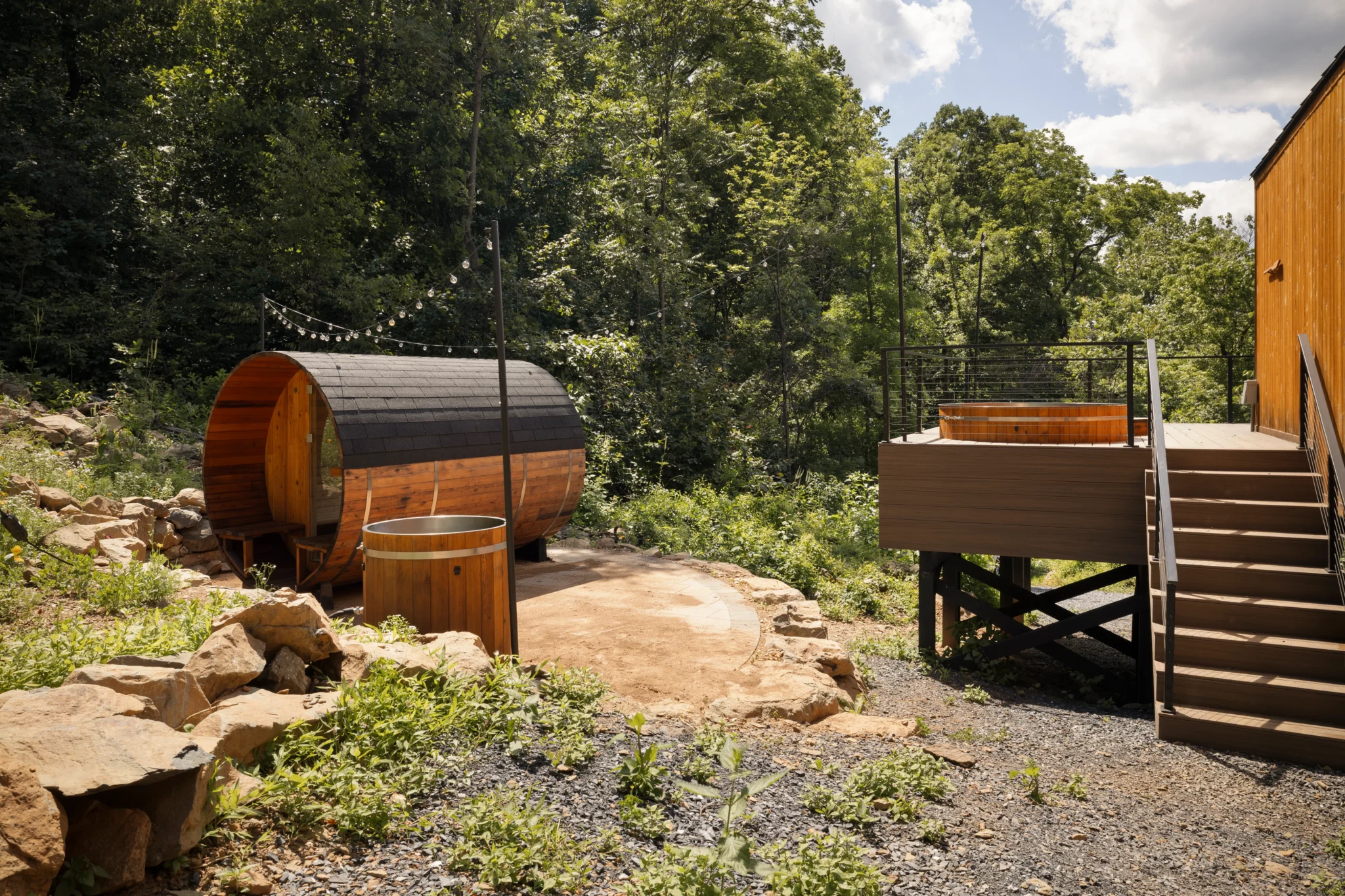
After a day covering the Northern District and a scramble up Mary’s Rock, Royal Oak Retreat puts the contrast-therapy island, sauna, cold plunge, and stargazing hot tub, about 40 minutes from Skyline Drive’s Front Royal entrance. Check current availability here.
Content powered by inkSTR.co