
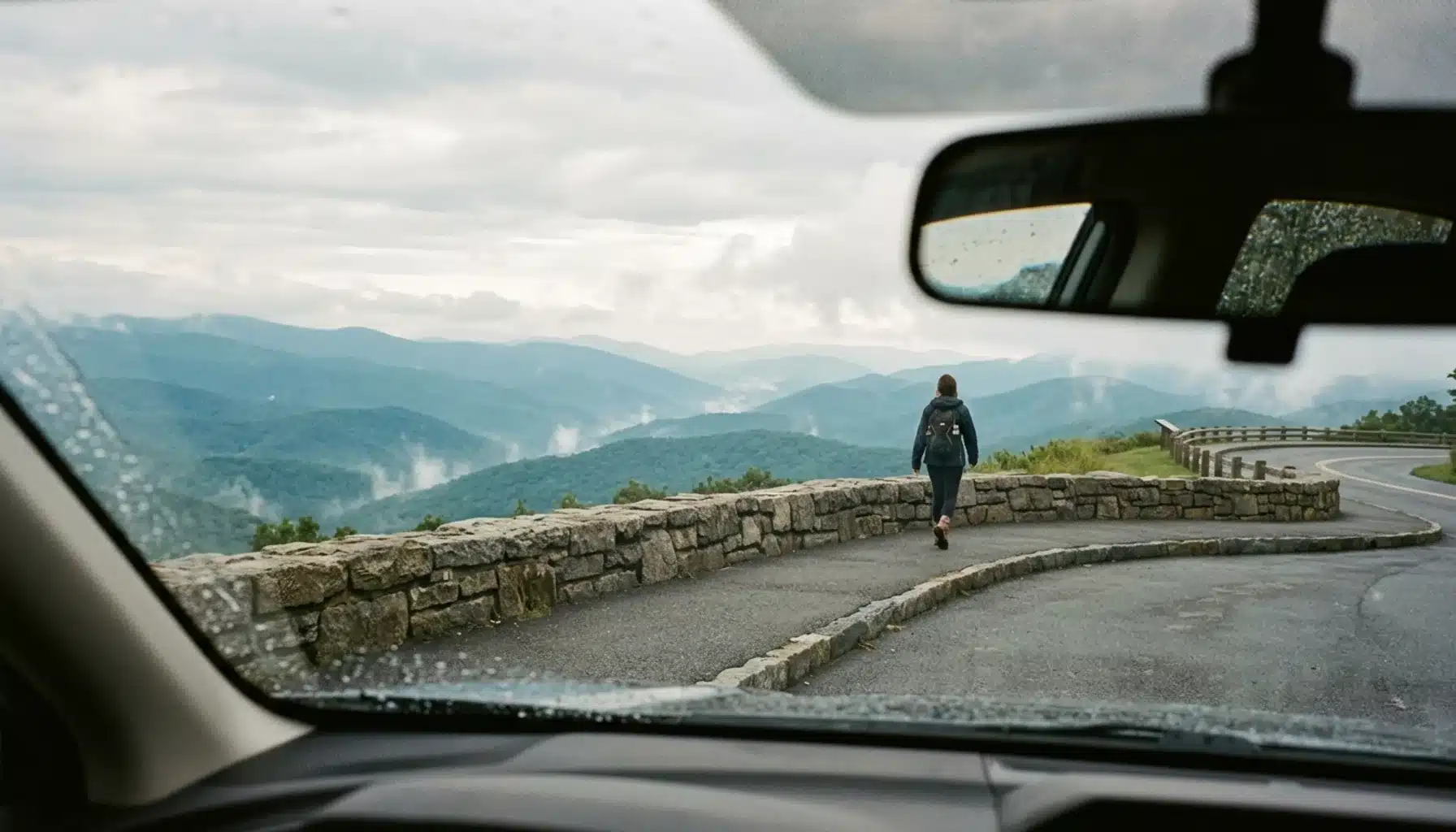
Shenandoah National Park is special because it puts a 105-mile ridgeline road, more than 500 miles of hiking trails and Appalachian forest into a park about 75 miles from Washington D.C. Few national parks combine that much scenery with such easy access. Skyline Drive, waterfalls, wildlife and CCC-era history all sit within one Blue Ridge corridor.
Key Takeaways
- The park protects more than 200,000 acres and sits about 75 miles from Washington D.C., according to the National Park Service.
- Skyline Drive runs 105 miles along the ridge, and the park has more than 500 miles of trails, including about 101 miles of the Appalachian Trail.
- No waterfalls are visible from Skyline Drive. You must hike to see them, and the climb back up is the hard part.
- The endangered Shenandoah salamander lives nowhere else in the world, and the park counts about 190 bird species.
- Royal Oak Retreat, a luxury wellness cabin in Shenandoah Farms, sits about 40 minutes from the park’s northern entrance and sleeps up to four adults.
- The park drew about 1.7 million visitors in 2026, and October is the busiest month, so plan accordingly.
If you are weighing a weekend from D.C., a first visit to the Blue Ridge, or a rest-focused reset with a few good outings, the park rewards planning. Royal Oak Retreat, a luxury wellness cabin in the forests of Front Royal, hears one question from guests constantly: how do you balance the park’s big views with real downtime?
This guide covers what makes Shenandoah National Park distinctive in 2026, from Skyline Drive and waterfall hikes to the history most summaries skip. It also answers the practical questions of when to go, how long the drive takes and where to stay nearby.
What Makes Shenandoah National Park Unique?
The National Park Service describes Shenandoah as protecting more than 200,000 acres of the Blue Ridge Mountains, roughly 75 miles from Washington D.C. Wild terrain, a dense trail network and a short drive from a major city rarely come together like this.
First, there is the shape of the park. It is long and narrow, stretched along the crest of the Blue Ridge, so the views run in both directions: the Shenandoah Valley to the west and the Virginia Piedmont to the east. Ridge layers fade to blue at distance, especially on humid mornings.
Second, the park was built by hand. It was designated in 1935 and dedicated by President Franklin D. Roosevelt in 1936, and it drew 700,000 visitors in its first full year. The Civilian Conservation Corps arrived in 1933 and built the trails, the facilities and the ridgeline road.
Third, scale matters. About 1.7 million visitors came in 2026 and spent $132 million in nearby communities, per the National Park Service. The park is popular, but it is large enough that a quiet trail is rarely far away. The official park site is the best place to check conditions before you go.
What Can You See Along Skyline Drive?
Skyline Drive is a 105-mile road that runs the length of Shenandoah National Park along the Blue Ridge crest. It has about 75 scenic overlooks. Most are paved pull-offs a few steps from the car, so you get big views without a hike.
Plan the drive as a series of stops rather than a single trip. The road has a low speed limit and frequent wildlife crossings, so the full length takes several hours with stops. White-tailed deer and black bears appear throughout the park, usually near dawn and dusk.
Two stops are worth building a morning around. The Franklin Cliffs Overlook is one of the scenic pull-offs the park highlights, and the Blackrock Summit trail near mile 84.4 is an easy 1-mile round trip with 175 feet of climbing and a rocky summit view.
Overlooks get busy by noon on fall weekends. Go early, and skip the stops that are already full rather than circling for parking. Skyline Drive conditions change with weather, so check the park’s status page the morning you drive.
For lodging inside the park, Skyland sits at mile 41.7 and is the highest point on the drive at 3,680 feet. Big Meadows Lodge is at mile 51 and Lewis Mountain Cabins at mile 57.5. The park’s concessionaire runs all three.
How Long Does It Take to Drive Skyline Drive?
Driving all 105 miles of Skyline Drive typically takes about 3 to 4 hours without stops, and a full day once you add overlooks, a short hike and a meal. Traffic, fog, wildlife and weather change the pace, so treat any drive time as an estimate and leave extra room.
The speed limit is low and the road curves constantly, so it does not behave like a normal highway. If you only have half a day, drive the northern section from the Front Royal entrance, which is the closest approach from northern Virginia and D.C.
From Royal Oak Retreat, the park’s northern entrance is about 40 minutes by car, which lets you start the drive in the soft morning light that photographs best. Our guide to Shenandoah Valley National Park lays out entrance options in more detail.
Is it worth driving the whole road?
Only if you have a full day. For a weekend with limited time, choose one section, two overlooks and one short hike. You will see more by stopping than by covering every mile.
What Are the Best Things to Do in Shenandoah National Park?
Driving Skyline Drive, hiking to a summit or waterfall, and watching sunrise from an overlook top the list. The park’s activities page also lists ranger programs, and the official things to do page keeps seasonal options current.
For a casual couple, two short hikes beat one long one. The Bearfence Rock Scramble reaches summit views in roughly 25 minutes, and Blackrock Summit is gentler still. Both leave room for a slow afternoon.
Ready for something longer? The Upper Hawksbill Summit climbs to one of the park’s high points. Our full guide to Shenandoah hiking trails compares routes by effort.
Skip Old Rag on a fall Saturday unless you enjoy crowds. Its summit is spectacular, but the day-use ticket system during peak season changes, so verify current rules with the park before planning. A quieter trail gives a similar sense of height with room to breathe.
For a rest-first weekend, pair one outing with an unscheduled afternoon. Our seasonal guide to things to do in the Shenandoah Valley adds off-park options such as wineries and caverns.
Which Shenandoah Waterfalls Are Easiest to Hike To?
Shenandoah’s waterfalls are reached only by hiking, and every route goes downhill to the falls and uphill on the way back. The National Park Service states that no waterfalls are visible from Skyline Drive. For the easiest choice, start with Dark Hollow Falls, a short and popular route near the central section of the park.
The Dark Hollow Falls trail is the park’s best-known waterfall hike. Heavier routes trade effort for height. Confirm the figures below with the park before you go.
| Waterfall | Height | Round trip | Climb | Starting point |
|---|---|---|---|---|
| Overall Run Falls | 93 feet (tallest in the park) | 6.4 miles | 1,850 feet | Mile 21.1 |
| Rose River Falls | 67 feet | 2.6 miles | 720 feet | Mile 49.4 |
| South River Falls | 83 feet | 2.6 miles | 850 feet | Mile 62.8 |
Rose River Falls can form as many as four cascades after heavy rain, so go after a wet week for the fullest flow. Overall Run Falls suits strong hikers, since its 1,850 feet of climbing makes it the hardest of the three.
Never walk on top of waterfalls. The National Park Service warns that wet rocks are slippery and that serious or fatal injuries have occurred. Other named falls in the park include Whiteoak Canyon Falls, Cedar Run Falls, Lewis Falls and Doyles River Falls.
How Many Hiking Trails Does Shenandoah National Park Have?
Shenandoah National Park has more than 500 miles of hiking trails, according to the National Park Service. About 101 miles of that network is the Appalachian Trail, which runs the length of the park along the ridge. Routes range from easy overlook strolls to rocky scrambles with big payoffs.
A quick note on mileage: sources sometimes cite different Appalachian Trail figures for the park, since some summaries count the broader trail network differently. The NPS overview reports 101 miles, so use that number when planning.
Dogs are permitted on most of the park’s trails, which makes it workable for travelers with a pet. Leash rules apply, so confirm current regulations with the park.
Closer to Royal Oak Retreat, the Fiery Run Road access point leads to the Appalachian Trail about 3 miles from the Linden community center. Day hiking from that access requires no permit and no fee, and it sees only a fraction of the weekend traffic that Old Rag draws. For maps and trail books, the Shenandoah National Park Association is a trusted park partner.
What Is the Significance of the Shenandoah Valley and the Park’s History?
The Shenandoah Valley is the broad agricultural lowland west of the Blue Ridge, and the national park protects the mountains above it. Mountain settlement, the Civilian Conservation Corps and a 1950 milestone make up the park’s history. Few summaries cover all three.
Mountain families once farmed hollows and ridgetops on land that became the park, and their displacement is part of the story. The National Park Service tells this history on its history and culture page, and it adds depth to any visit. Stone walls and old foundations still turn up beside trails in the woods.
The Civilian Conservation Corps arrived in 1933 and built trails, facilities and the ridgeline road. Planners treated that road as the park’s single greatest feature. Skyland, Rapidan Camp and CCC structures are named historic landmarks in the park’s foundation document.
In 1950, Shenandoah became a legally desegregated public space with integrated visitor facilities, more than a decade before the 1964 Civil Rights Act, according to the NPS foundation overview. Rapidan Camp, once President Herbert Hoover’s woodland getaway, is reachable by a route down Laurel Prong from Hazeltop, the park’s third-highest peak.
What Wildlife and Nature Make the Park Distinctive?
Shenandoah’s biodiversity includes the endangered Shenandoah salamander, which lives nowhere else in the world, according to the NPS foundation overview. The park also counts about 190 bird species, resident and transient.
Larger animals are easier to spot. White-tailed deer, black bears and wild turkeys appear throughout the park. Dawn and dusk give the best odds, and the quiet of a forest floor in November lets you hear wildlife before you see it.
Nature here changes sharply with the seasons. Spring brings wildflowers and swollen waterfalls, summer suits early starts, and fall peaks in color and crowds. Winter is the quietest season, and it pairs well with a warm evening back at your base.
Follow Leave No Trace principles, keep your distance from bears and never feed wildlife. Giving animals space protects you and the species that make the park special.
When Is the Best Time to Visit Shenandoah National Park?
The best time to visit Shenandoah National Park is spring or fall for scenery, with fall as the busiest season. October accounts for roughly 24% of annual visitation, so book early and start hikes at first light. Winter is quiet, and summer works best with early mornings.
Fall rewards patience. Peak foliage weekends are the hardest to book, and a reasonable rule of thumb is 6 to 8 weeks of lead time for valley cabins. Around Linden, peak wine country and foliage season runs roughly September through late October, and 90-plus days of lodging lead time is common.
Winter is slower, and some park facilities close seasonally. Lewis Mountain Cabins, for example, run a 2026 season from April 10 through November 8. Skyline Drive can close in bad weather, so check conditions before you leave.
Winters in northern Virginia are cold with occasional snow, and Royal Oak Retreat requires a 4×4 vehicle in winter because of its steep driveway. Many couples find a snowy weekend with a sauna and hot tub the best use of the quiet season.
What Are Some Tips for Visiting Shenandoah National Park?
Buy your entrance pass in advance, start early, carry water and plan around weather. Overlook parking fills by midday on busy weekends, and cell service is patchy along the ridge, so download maps first.
- Buy your entrance pass online. You can buy the Shenandoah entrance pass to skip gate lines, or choose the America the Beautiful pass if you visit several parks. Confirm current prices on each site.
- Start before 9 AM. Early light, fewer cars and cooler air improve every stop.
- Pick one anchor hike and one easy outing instead of stacking activities.
- Stop at a visitor center. The park visitor centers list current hours and conditions.
- Pack layers. Ridge temperatures run cooler than the valley, and fog is common.
- Plan the climb back. Waterfall trails end uphill, so save energy for the return.
Pets are welcome on most trails, but keep dogs leashed and check current rules. For lodging inside the park, book only through goshenandoah.com, since Skyland, Big Meadows Lodge and Lewis Mountain Cabins are all booked there.
Where Should You Stay Near Shenandoah National Park?
Lodging near Shenandoah National Park falls into two types: in-park lodging on Skyline Drive and private cabins in valley towns such as Front Royal, Luray and Stanley. In-park options put you on the ridge, while private cabins offer more privacy and amenities.
In-park lodging is simple and scenic. Lewis Mountain Cabins are the park’s most stripped-down option, with private baths but no in-room phones or internet. If you want a wellness-focused stay, the valley offers more choice. Our guide to where to stay in the Shenandoah Valley compares towns and cabin styles.
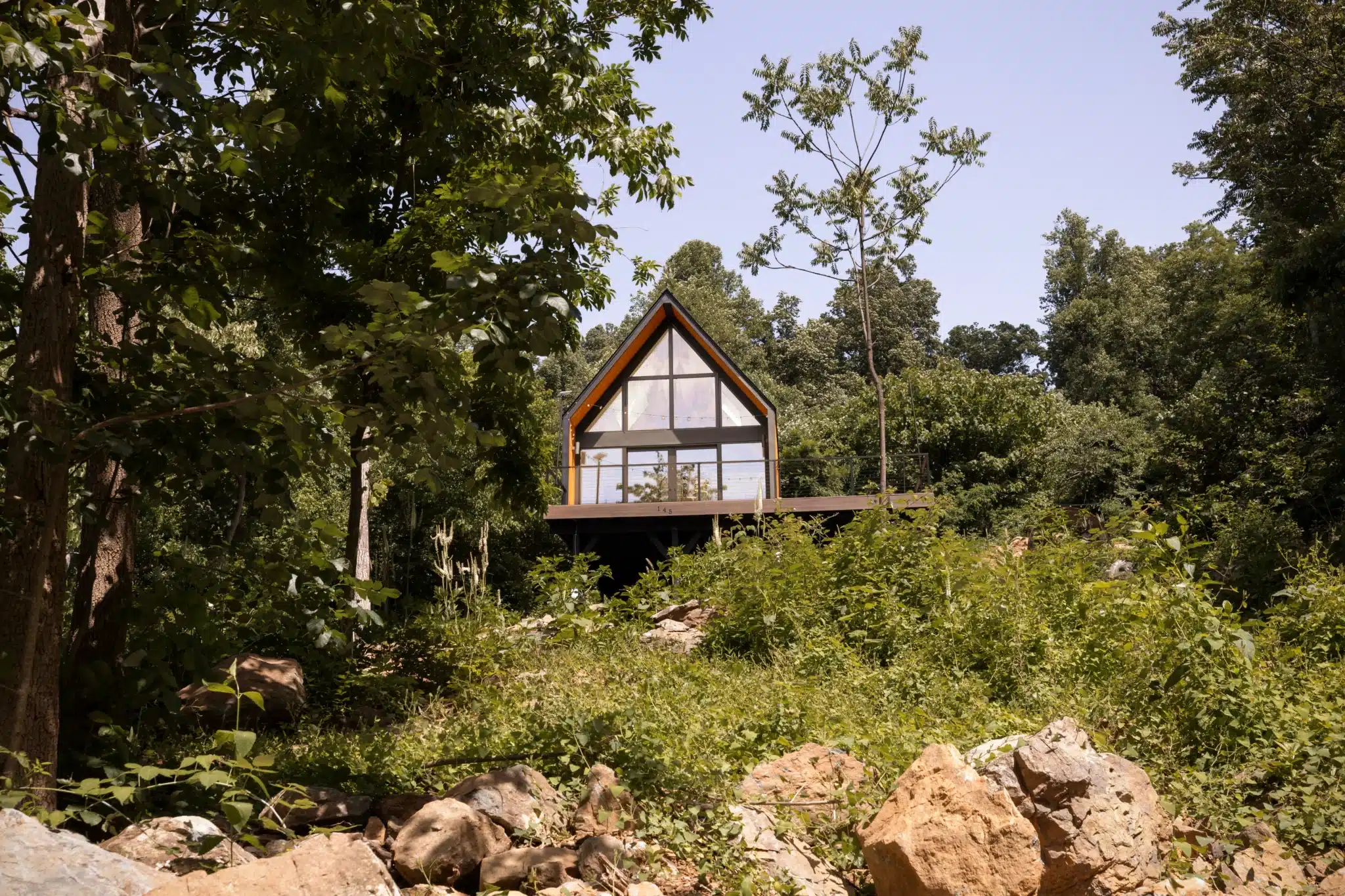
Royal Oak Retreat is a modern wellness cabin in Shenandoah Farms, outside Front Royal and Linden. It is roughly 40 minutes from the park’s northern entrance and about an hour from Washington D.C. Forest surrounds it on all sides, with no neighboring guests visible.
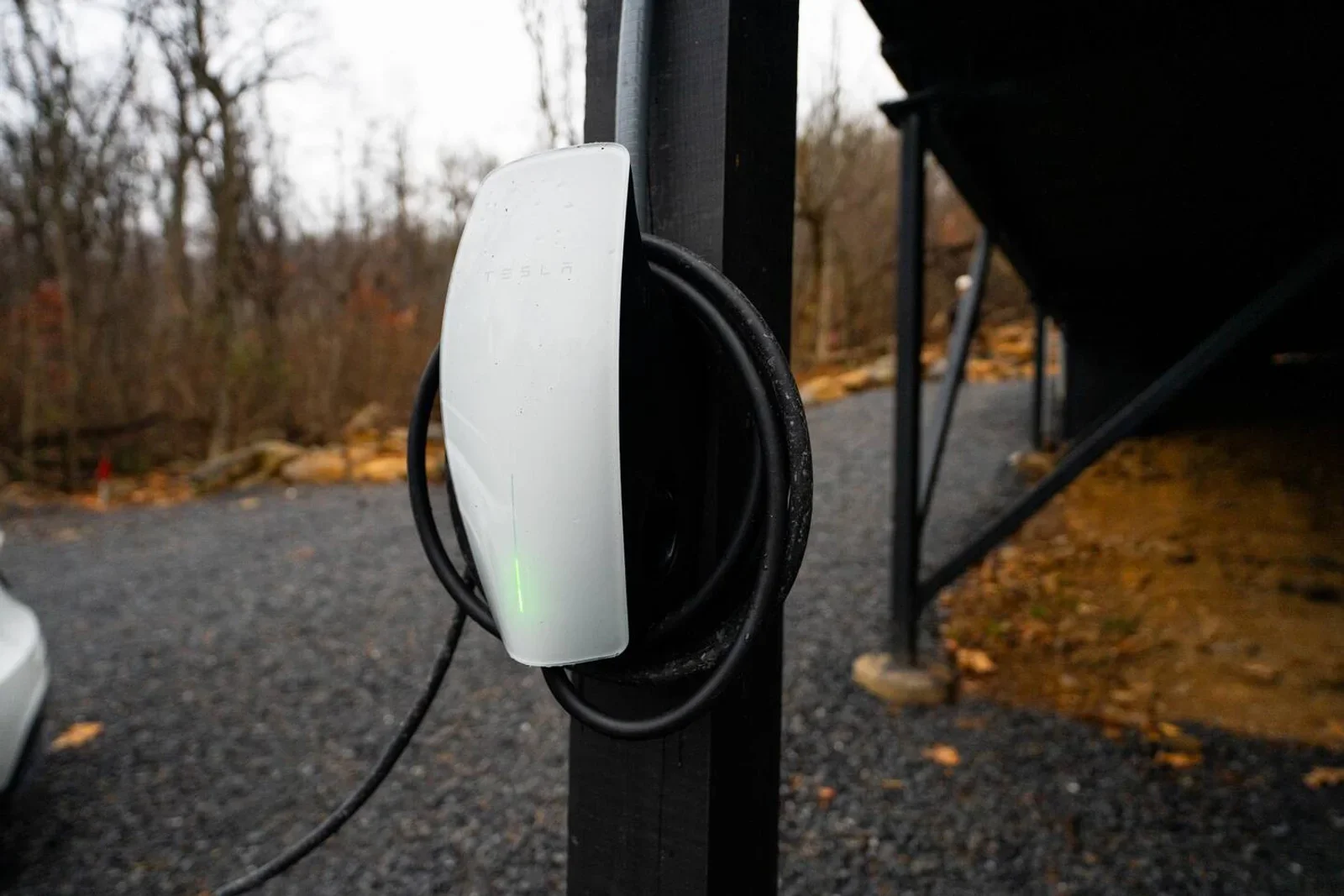
The cabin is about 1,000 square feet, with a king bedroom, a queen loft reached by a spiral staircase, one bathroom, and room for up to four guests. Outside, a private contrast therapy island groups a sunken stargazing hot tub, a Scandinavian-style dry sauna and a cold plunge on one deck. Starlink internet and an on-site EV charger are included.
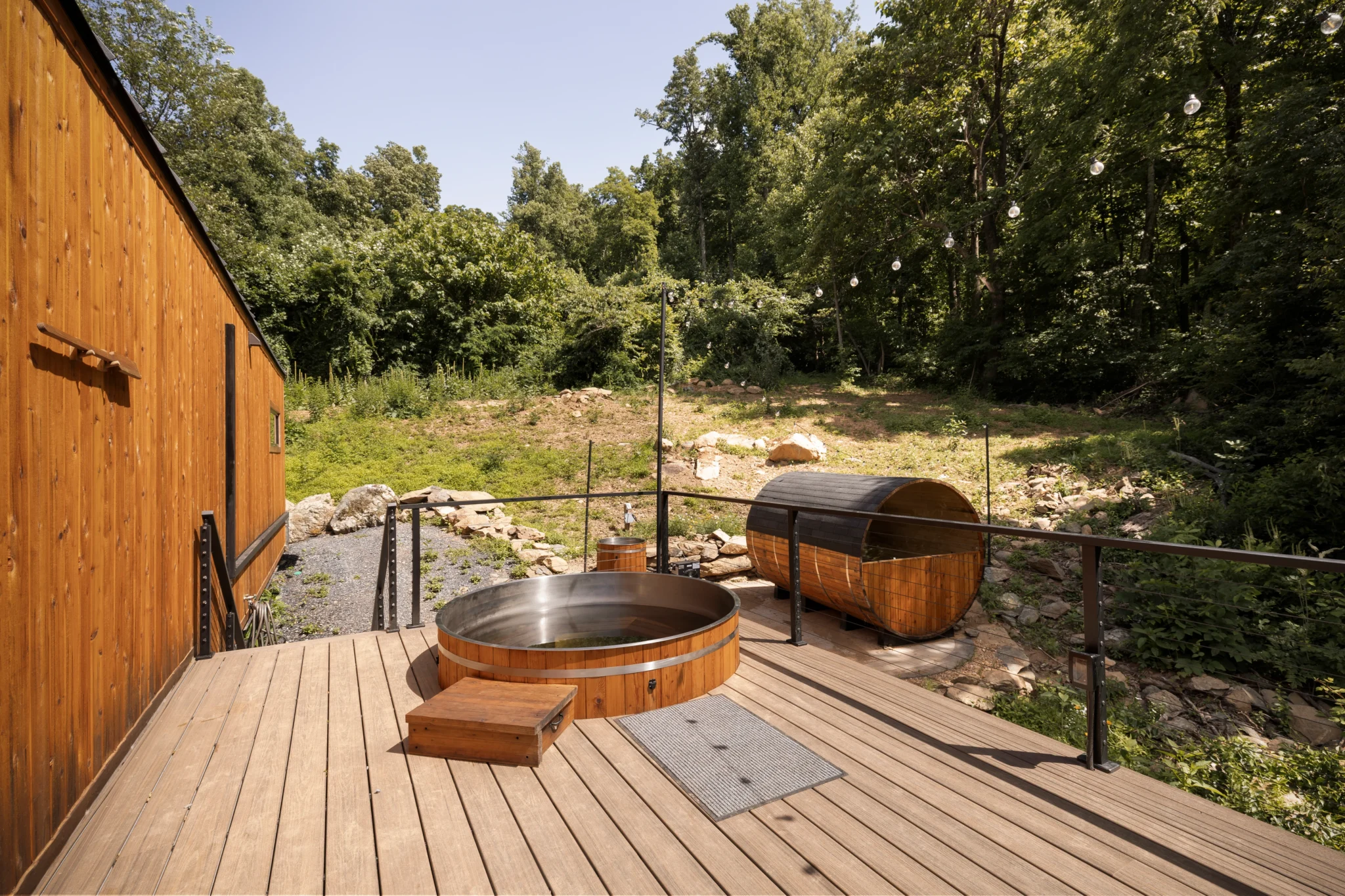
The cabin is adults-first and pet-friendly for one dog under 50 lbs with a $100 pet fee. Check-in is 3 PM and check-out is 11 AM. Guests with heart or circulatory conditions, or who are pregnant, should check with a doctor before using contrast therapy.
What is nearby the cabin?
Luray Caverns is about 55 minutes by car, and the park is about 41.5 miles away in a straight line. Luray Caverns makes an easy rainy-day outing. Closer to home, Fox Meadow Winery in Linden is about 5 minutes away and Crimson Lane Vineyards in Hume is about 8 minutes away. All drive times are estimates and vary with traffic and weather.
Is It Better to Stay Inside the Park or in a Valley Cabin?
Staying inside Shenandoah National Park suits travelers who want to wake up on the ridge, while a valley cabin suits those who want privacy, kitchens and wellness amenities. In-park rooms sell out early in fall, and valley cabins usually book directly with the owner or manager.
Inside the park, you gain location. Skyland and Big Meadows Lodge sit about 10 to 12 minutes apart on Skyline Drive, so you can move between viewpoints easily. The tradeoff is simpler rooms and fixed seasons.
In the valley, you gain amenities. Private cabins often include hot tubs and full kitchens, and Shenandoah Valley pricing ranges widely, from about $99 a night for one-bedroom stays to about $975 for five-bedroom lodges, with most private cabins between $210 and $595. Cleaning, pet and tax fees can add 15 to 25 percent, so check the total at checkout.
For a rest-focused trip, many couples choose the valley and drive in for one or two good outings. Browse cabins near Shenandoah National Park to compare locations by drive time.
Frequently Asked Questions
What is so special about Shenandoah National Park?
Shenandoah National Park combines a 105-mile ridgeline road, more than 500 miles of trails and Appalachian forest about 75 miles from Washington D.C. It also holds the endangered Shenandoah salamander and a layered history built by the Civilian Conservation Corps.
When is the best time to visit Shenandoah National Park?
Spring and fall deliver the most scenery, and fall is the busiest, with October drawing roughly 24% of annual visitors. Winter is quiet and pairs well with a sauna and hot tub. Summer suits early hikes and evening stargazing.
How long does it take to drive Skyline Drive?
Skyline Drive runs 105 miles and typically takes 3 to 4 hours without stops. Plan a full day if you want overlooks and a short hike. Weather, fog and wildlife slow the pace, so treat times as estimates.
Are there vacation rentals available near Shenandoah National Park, Virginia?
Yes, in valley towns such as Front Royal, Luray and Stanley. Inside the park, lodging is limited to Skyland, Big Meadows Lodge and Lewis Mountain Cabins, booked through goshenandoah.com. Royal Oak Retreat, a wellness cabin in Shenandoah Farms, is about 40 minutes from the park.
What county is Linden, VA in?
Linden sits in the Front Royal area of northern Virginia, near the northern gateway to Shenandoah National Park. Confirm the exact county with a local government or mapping source. The northern Skyline Drive entrance is roughly a 15 to 20 minute drive from Linden.
What are winters like in Virginia?
Winters in the northern Shenandoah area are cold, with occasional snow and ice, especially at higher elevations. Skyline Drive can close in bad weather. Royal Oak Retreat requires a 4×4 vehicle in winter because of its steep driveway.
Where is the best place to stay in the Shenandoah Valley?
Royal Oak Retreat is a luxury wellness cabin in Shenandoah Farms with a sunken stargazing hot tub, Scandinavian sauna and cold plunge, about 40 minutes from Shenandoah National Park. To compare options, weigh privacy, drive time to the park, and whether wellness amenities are private to your stay.
Are dogs allowed in Shenandoah National Park?
Dogs are permitted on most of the park’s trails and must be leashed. Royal Oak Retreat welcomes one dog under 50 lbs with a $100 pet fee.
What Should You Take Away From Shenandoah National Park in 2026?
So what is so special about Shenandoah National Park? Its ridgeline road, trail network, waterfalls and history sit within easy reach of Washington D.C., and in 2026 the park remains one of the most accessible big landscapes in the mid-Atlantic. Choose one anchor hike and one scenic drive section, then leave room for slow mornings.
Expect to hike for waterfalls, start early in fall, and verify park conditions before you go. If you want a private base, Royal Oak Retreat offers a luxury wellness cabin in the forests of Front Royal, about 40 minutes from the park, with a sauna, cold plunge and sunken stargazing hot tub waiting at the end of the day. For more ideas, see Virginia romantic getaways or the nearby experiences page.
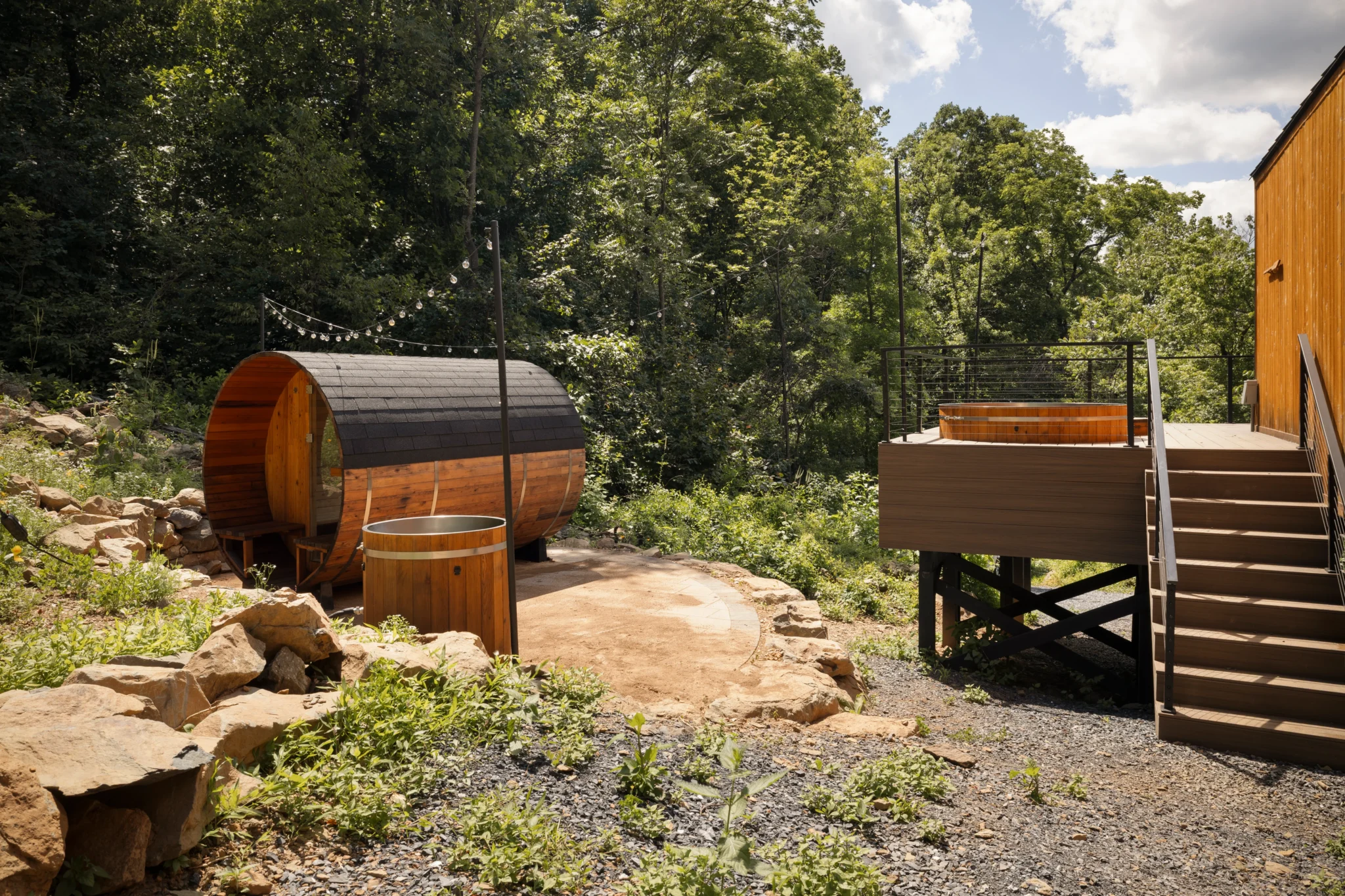
If a weekend of hiking followed by a quiet soak sounds right, see availability and details for Royal Oak Retreat and choose dates that suit you.
Content powered by inkSTR.co