
White water rafting in the Shenandoah Valley is gentle by rafting standards: the Shenandoah River offers mostly flat water with mild rapids, including the Class II Compton Rapids near Luray. Bigger whitewater lives on the Potomac near Harpers Ferry. Pick your river by the thrill level you want, then match the outfitter and season.
Key Takeaways
- The Shenandoah River is mostly calm with small waves; the Class II Compton Rapids are the standout section, so expect a scenic float more than a thrill ride.
- For larger rapids, River & Trail Outfitters runs trips from Harpers Ferry on the Potomac.
- Shenandoah River Outfitters lists tubing season from around mid-May into mid-September, with river activities operating April 1 through October 31.
- One outfitter lists $30 per person for a tube, a minimum age of 5, and a 250-pound tube weight limit; cancellations need 48 hours’ notice for a refund.
- Royal Oak Retreat, about 55 minutes from Luray Caverns, gives you a sauna, cold plunge, and sunken hot tub for recovery after the river.
If you searched for white water rafting in the Shenandoah Valley, you probably want one of two things: a splashy day with real rapids, or an easy, scenic float with a few bumps. The valley delivers the second far better than the first, and knowing that before you book saves a wasted drive. If you are driving in from Washington, D.C., that matters even more, because the trip eats a good part of a day each way once you add traffic.
This guide walks you through the process in order: choosing a river, picking an outfitter, timing the season, preparing, and building a weekend around it. It reflects what operators publish for 2026 trips, so confirm current prices and conditions before you go. Where an operator does not publish a detail, the guide says so instead of guessing, and it tells you which question to ask on the phone.
Many readers come from the D.C. area planning a quiet weekend. Royal Oak Retreat, a luxury wellness cabin in the forests of Front Royal, works as a private base for it, and you can see more things to do in the Shenandoah Valley to round out the trip.
Step 1: Is There Real White Water Rafting on the Shenandoah River?
Real white water rafting on the Shenandoah River is limited. The river is best known for calm pools, small waves, and mild rapids, so most outfitters sell unguided tubing, canoe, and kayak trips rather than guided whitewater runs. Set your expectations accordingly, and you will enjoy the day far more. Plenty of visitors arrive expecting roaring rapids and leave pleasantly surprised by the scenery, while others feel let down, and the difference is almost always expectation.
Specifically, the most notable rapids are the Class II Compton Rapids on the South Fork of the Shenandoah River near Luray, which Shenandoah River Outfitters includes on its lower-water tubing route. Class II means small to moderate waves with clear channels, which suits first-timers. It is nothing like the Class IV-V runs people picture from rafting videos.
The distinction matters. Tubing is a self-propelled float in an individual tube. Rafting means a multi-person inflatable raft, often with a guide, through stronger current. In the Shenandoah Valley, you will mostly find the first. Treat any listing that blurs the two with caution, and call to ask exactly what the trip involves, who steers, and whether a guide rides along.
My recommendation: choose the Shenandoah for scenery, limestone cliffs, and mountain views, and choose the Potomac if adrenaline is the point. Both are reachable in one trip, but not in one day. Give each river its own morning so neither feels rushed.
Step 2: What Class Rapids Should You Expect on the Shenandoah and Potomac?
River rapid classes run from Class I (moving water with tiny waves) to Class VI (extreme, for experts). On the Shenandoah near Luray, you will meet Class I water and the Class II Compton Rapids; the Potomac near Harpers Ferry offers stronger whitewater for guided rafting.
Here is how the options compare, based on what operators publish:
| Option | Where | Typical difficulty | Best for |
|---|---|---|---|
| Higher-water tubing route | Bealer’s Ferry to Foster’s Landing, Shenandoah River | Small waves, calm stretches | Relaxed scenic floats |
| Lower-water tubing route | Seekford’s to Burner’s Bottom, Shenandoah River | Deep pools plus Class II Compton Rapids | First taste of rapids |
| Guided rafting | Potomac River near Harpers Ferry, West Virginia | Stronger whitewater; confirm with outfitter | Adrenaline seekers |
The higher-water route runs about 3 miles and roughly 3 hours. The lower-water route is also about 3 miles but usually takes 3 to 5 hours, depending on conditions. Water level, not the calendar, decides which one you get. Slow, shallow stretches add time, so pack water and snacks for the longer estimate.
For Potomac rafting, River & Trail Outfitters in Harpers Ferry can be reached at (301) 834-9950. Published detail on specific rapid classes is thin, so ask directly which sections they run on your date, what the minimum age is, and whether the trip changes with water level. Current pricing varies too, and the outfitter can quote you a figure for your group size.

Step 3: Which Outfitter Should You Choose for Rafting in the Shenandoah Valley?
The right outfitter depends on whether you want an unguided Shenandoah float or a guided Potomac raft. For the Shenandoah, Shenandoah River Outfitters in Luray is the operator with the most published detail. For Potomac whitewater, River & Trail Outfitters is the main name to start with.
Shenandoah River Outfitters lists its address as 6502 S Page Valley Rd, Luray, VA 22835, with phone numbers 800-6CANOE2 and 540-743-4159. Its tubing trips are unguided and run rain or shine. They may change based on water level, so call ahead for conditions and ask which route is running that day.
Two other names worth knowing in the area are Shenandoah River Adventures LLC, reachable at (888) 309-7222, and Massanutten Adventures. Ask each one the same four questions. Which river section is it, and is it guided or unguided? What is included, and what is the cancellation window? Comparing the answers side by side tells you more than any review will.
A practical warning: most search results for this topic are tubing and rental pages. Do not assume “raft” in a listing means a guided whitewater raft. If you want a guide, say so on the phone, and ask for the answer in writing if you are booking for a group.
Step 4: When Is the Best Time and Water Level for Rafting?
The best window for floating the Shenandoah is late spring through early fall, when outfitters operate regularly. Shenandoah River Outfitters lists tubing season from around mid-May into mid-September and river activities from April 1 through October 31, so those dates frame most planning. Early April and late October are possible for paddlers, but the water runs cold and you should dress for it.
Water level shapes the experience more than the month. Higher early-summer flows push you to the Bealer’s Ferry route with small waves. Lower flows move trips to the section with deep pools and Compton Rapids. As a result, a dry August can feel like a lazy float and a wet June can feel livelier.
Crowds follow the weather. According to Royal Oak Retreat’s 2026 analysis, about 70% of historical Shenandoah Valley visitation falls between June and October. Weekends fill first, so reserve early. A weekday may give you a quieter river and an easier time finding parking.
You can pair the trip with other seasonal ideas. Our guide on the Shenandoah Valley National Park covers timing for Skyline Drive, and the park’s own National Park Service page lists current conditions. If you are weighing seasons broadly, spring and fall give the most scenery, with fall busiest.
Step 5: What Do Trips Cost and What Is Included?
Shenandoah River trip prices are set per person and per piece of equipment, and extras are added on top. One published example: Shenandoah River Outfitters lists $30 per person for a tube and $6 for a cooler tube, plus 5.3% Virginia sales tax and a 3% National Forest fee. For a group of four with one cooler tube, that works out to roughly $126 before tax and fees.
Rentals at that outfitter include a tube and life jacket, plus a river map and safety video. Basic instructions and transportation to and from the river are also included. River shoes and dry bags are not included, so budget for them separately. Prices change, so confirm the current rate when you book.
Timing is tight. Tubing arrival times are listed at 9:30, 10:30, or 11:30 a.m.; the last bus departs at noon, and trips must finish by 5 p.m. Arrive on the early slot if you want a relaxed pace and a margin for slower water.
Logistics at check-in are unusual. You may unload belongings near the office, then move your vehicle to a larger lot past the campground. The outfitter keeps car keys, and you receive a map you will need to find a driver afterward. Read the instructions twice, and ask staff if anything is unclear before you board the bus.
For Potomac rafting, pricing depends on trip class and group size, so ask River & Trail Outfitters directly rather than relying on an old figure. Ask what the quote includes, such as guide, helmet, and shuttle, so you can compare it fairly against a Shenandoah tube rental.
Step 6: What Should You Wear, Bring, and Know About Safety?
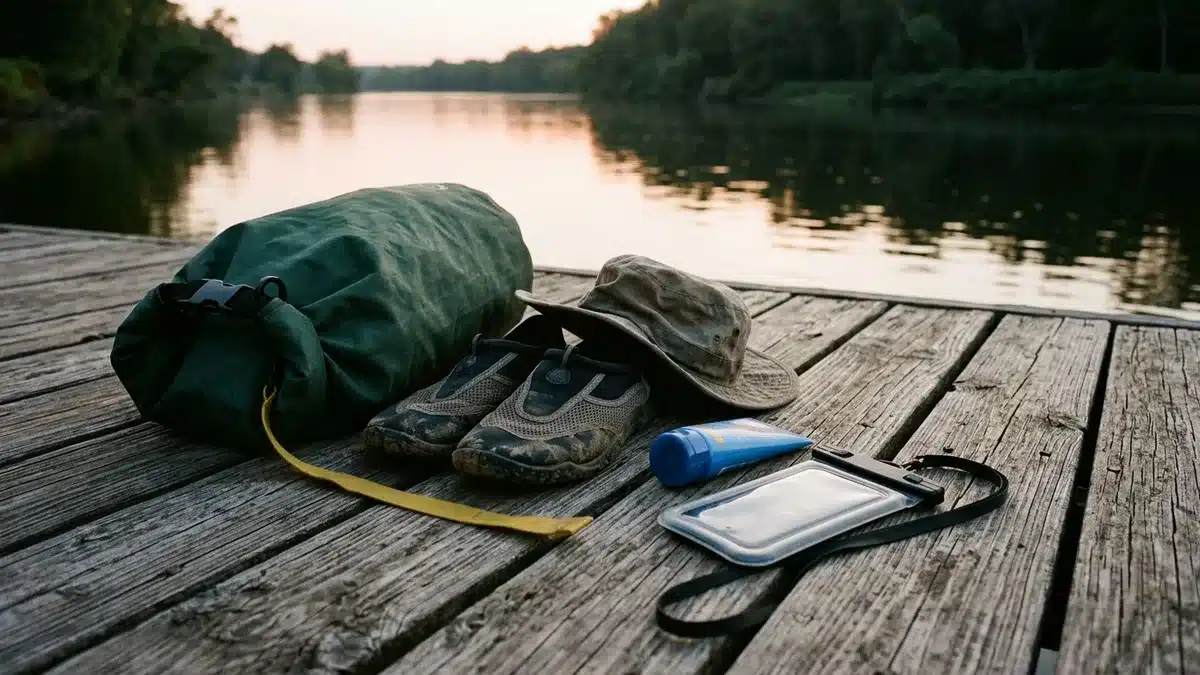
A safe river day starts with a life jacket and secure footwear. Sun protection and honest self-assessment matter too. Outfitters generally supply life jackets; you supply the rest, and you should wear river shoes rather than flip-flops, which slip off in current. Wear them from the moment you board the bus, because the put-in can be rocky.
Pack the following, based on one outfitter’s published advice:
- Sunscreen, swimsuit, hat, and sunglasses
- A change of clothes for after the float
- River shoes that strap on securely
- Water and snacks
- A waterproof container for phone and keys
Glass and Styrofoam are prohibited, and the same outfitter warns that alcohol and river activities do not mix. Pets are allowed in canoes and kayaks only, not tubing.
Is It Safe for Everyone?
Age and Weight: One outfitter lists a minimum age of 5 and a tube weight limit of 250 pounds. Other operators set their own limits, so check before you book. If someone in your group is near the weight limit, ask about alternatives such as a canoe.
Swimming Ability: You should be comfortable in moving water. A life jacket helps, but a calm swimmer handles a tip-over far better. If you are unsure, practice floating in a pool first.
Water and Weather: Rain raises the river and can change your route. Call the outfitter on the morning of your trip. If you have a heart condition or mobility concern, talk to your doctor first.
Step 7: How Do You Book, Handle Shuttles, and Plan Cancellations?
Booking a Shenandoah River trip means reserving a time slot, confirming the route for your date’s water level, and arranging a driver for the end of the float. Reserve ahead, especially for weekends. Slots and flexibility shrink in peak summer, and groups of six or more should book even earlier.
Shuttle service is usually part of the rental. At Shenandoah River Outfitters, transportation to and from the river is included, and you need someone to retrieve your vehicle or a plan to get back to it. Confirm the pickup and drop-off points when you call.
Cancellation rules are strict. The same outfitter requires cancellations 48 hours in advance for a refund, and meal packages need one week’s notice. Because rain can change a trip but not cancel it, check the forecast two days out and decide before the refund window closes.
Plan the drive, too. Luray is about 55 minutes from Royal Oak Retreat by car, an approximate figure that shifts with traffic and weather. Add buffer time on summer Fridays. Harpers Ferry is a separate day trip, so do not stack it onto a Luray float.
- Decide whether you want a mild Shenandoah float or Potomac whitewater.
- Call the outfitter and ask about the current water level and route.
- Reserve a morning time slot and confirm the cancellation window.
- Pack river shoes, sun protection, and a waterproof container.
- Arrange a driver or shuttle plan for the end of the trip.
- Book your cabin and recovery time for that evening.
Step 8: Where Should You Stay After a Day on the River?
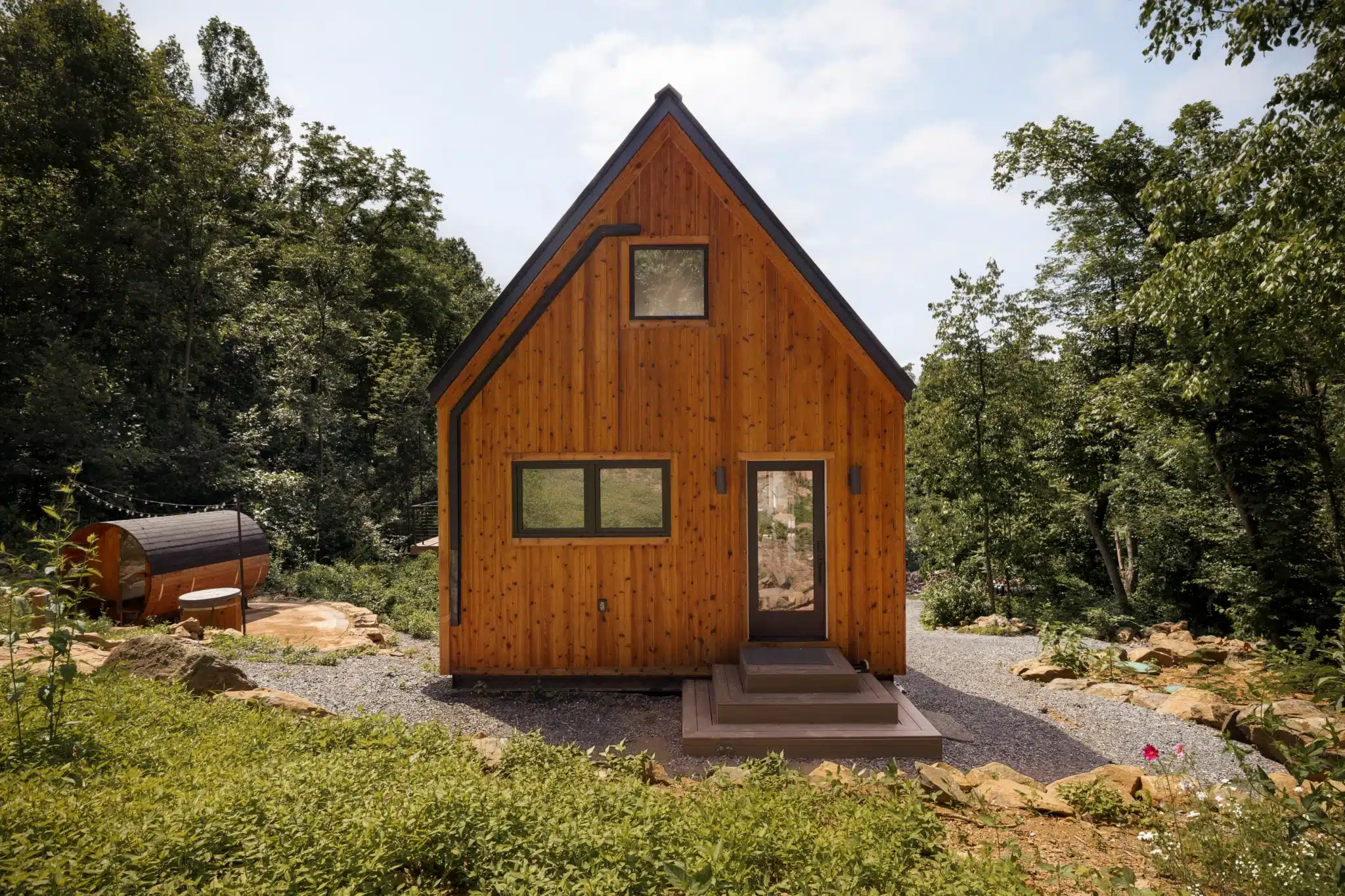
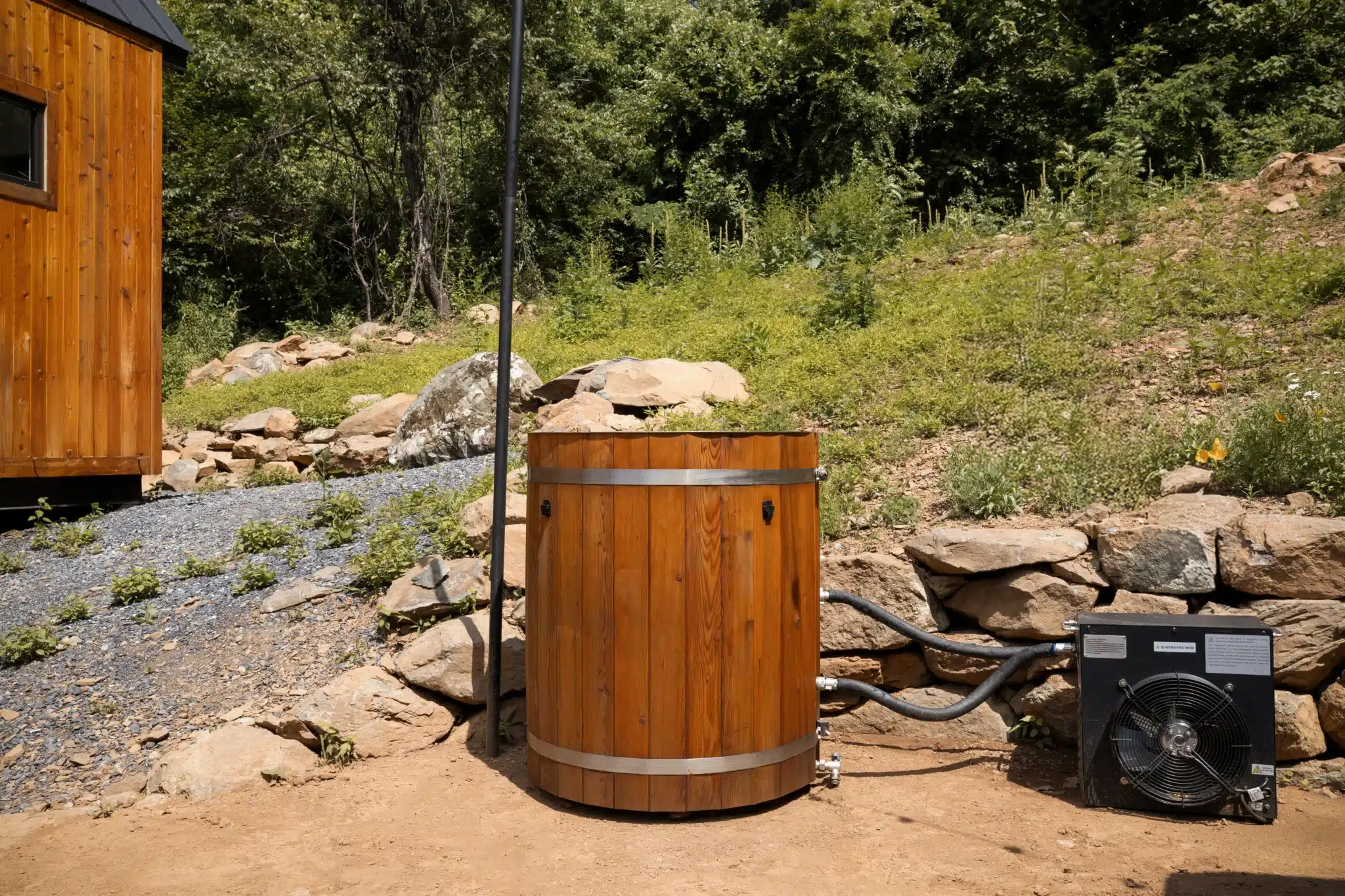
The best base for a rafting weekend is a private, quiet cabin with a place to warm up and recover. Royal Oak Retreat is a luxury wellness cabin in Shenandoah Farms, near Front Royal and Linden, with a sunken outdoor hot tub, a Scandinavian-style sauna, and a cold plunge on one private deck.
The cabin has a king bedroom, a loft with a queen bed reached by a spiral staircase, and one bathroom, so it sleeps up to four guests in an adults-first atmosphere. Floor-to-ceiling windows frame the forest, and the build is fully non-toxic. The sauna runs on the property’s own power, so it works in any season.
After cold river water or a long day in the sun, many people enjoy a simple recovery routine of moving between sauna heat and a cold plunge, then settling into a warm soak. Starlink internet and an on-site EV charger help if you are driving an electric car from the D.C. area.
Luray Caverns is about 55 minutes away and makes a good rainy-day backup if the river rises; the Luray Caverns site lists current hours. Shenandoah National Park is also reachable, and you can compare other places to stay in the Shenandoah Valley if you are choosing a base.
Frequently Asked Questions
Is there white water rafting on the Shenandoah River?
Limited. The river is mostly calm with small waves, and the Class II Compton Rapids near Luray are the main rapids. Most outfitters offer unguided tubing and canoes. Kayaks are available too. For stronger whitewater, the Potomac near Harpers Ferry is the better choice.
What class rapids are on the Shenandoah River?
Mostly Class I water, with the Class II Compton Rapids as the standout. Class II means small to moderate waves with clear channels, which suits beginners. Conditions change with water level, so ask your outfitter before you go.
When is the best time for Shenandoah River rafting?
Late spring through early fall. One outfitter lists tubing from around mid-May into mid-September and river activities from April 1 through October 31. Weekends are busiest, so reserve early.
How much does Shenandoah River rafting cost?
One published example lists $30 per person for a tube and $6 for a cooler tube, plus Virginia sales tax and a National Forest fee. Prices change, so confirm the current rate. Guided Potomac trips are priced separately; ask the outfitter.
What age can children start rafting in the Shenandoah Valley?
Age limits vary by operator and trip. One outfitter lists a minimum age of 5 for tubing. Guided whitewater trips often set higher minimums, so check directly. Royal Oak Retreat itself is an adults-first cabin, so plan child-friendly lodging elsewhere.
Which Shenandoah River rafting outfitter is best for families?
That depends on your group’s ages and comfort in water. Compare operators on minimum age and included equipment, and look at the route. Shenandoah River Outfitters publishes detailed trip information, which makes comparing easier. Call and ask about the gentlest route for your date.
How long does it take to drive through Shenandoah National Park?
Skyline Drive is a slow, scenic road. Most visitors plan on several hours end to end. Traffic and weather stretch the time, and so do overlook stops. Check the National Park Service page for current conditions before you drive.
Where is the best place to stay near Shenandoah River rafting?
Royal Oak Retreat is a luxury wellness cabin in Shenandoah Farms, about 55 minutes from Luray Caverns. It has a private hot tub and a sauna with a cold plunge. It sleeps up to four adults. Compare drive times to your outfitter before booking.
Conclusion: What Is the Best Way to Plan White Water Rafting in the Shenandoah Valley?
White water rafting in the Shenandoah Valley is a gentle, scenic experience built around calm pools and the Class II Compton Rapids, while the Potomac handles bigger water. Pick your river and check the water level. Then reserve early and confirm cancellation terms. In 2026, operators still publish details that change, so call before you drive.
Leave an evening open after the river. A warm soak and a sauna session turn a tiring day into the best part of the trip.
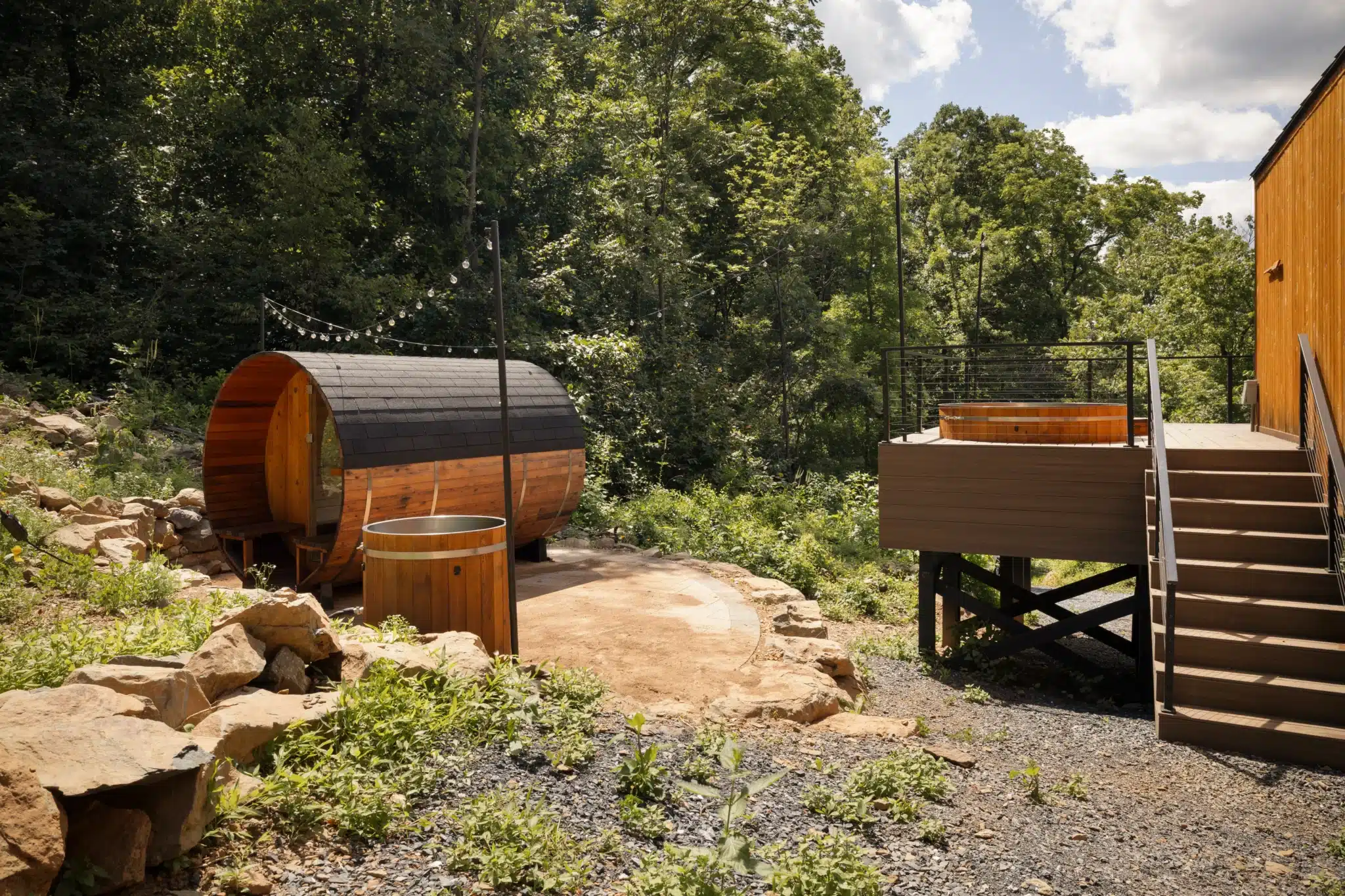
If you are planning a river weekend, Royal Oak Retreat puts a sauna, cold plunge, and sunken stargazing hot tub a few steps apart for the evening after your float. See availability and details here.
Content powered by inkSTR.co