
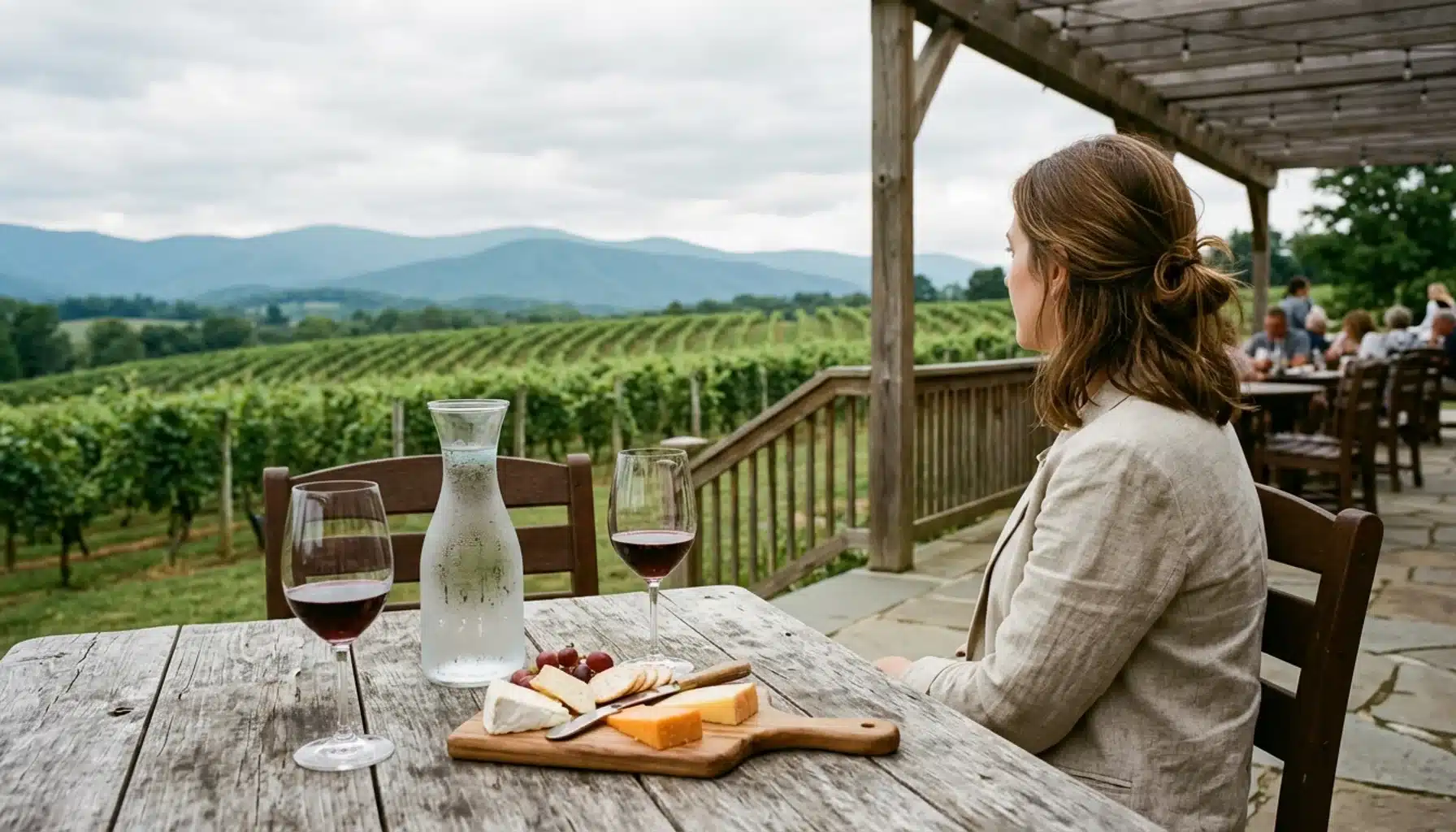
Wine tasting in Shenandoah Valley means visiting one of the roughly 22 member wineries of the Shenandoah Valley Wine Trail, spread across a limestone-rich AVA that runs from Winchester down through Harrisonburg. The honest answer: only about half of those stops are worth a special trip, and this guide tells you which ones and why.
Key Takeaways
- The Shenandoah Valley AVA (American Viticultural Area) spans several counties along the Blue Ridge and Allegheny foothills, and its limestone soil and cooler nighttime temperatures are what set it apart from Virginia’s other wine regions, according to Virginia Wine.
- Cave Ridge Vineyards earned a Silver medal at the Virginia Governor’s Cup competition in 2021 for its Pet Nat, one of the region’s few sparkling wines worth seeking out.
- Most tasting rooms in the valley charge in a similar range for a flight, and reservations are recommended on weekends between May and October.
- Fox Meadow Winery in Linden, Virginia sits about 5 minutes from Royal Oak Retreat, making it the easiest pour to reach after a morning hike.
- 2026 continues the trend of steady weekend crowds at the trail’s best-known stops, so weekday visits between Tuesday and Thursday remain the quietest window.
- No competitor guide currently ranks these wineries by whether they’re actually worth the drive. This one does.
If you’ve spent any time researching wine tasting Shenandoah Valley trips, you’ve probably noticed every article reads the same way: a cheerful list of wineries with tasting notes and addresses, zero critique, and no help deciding where to actually spend your Saturday. That’s a real gap, and it’s the one this guide is built to close.
I’ve spent enough weekends driving Route 11 and the back roads between Front Royal and Harrisonburg to know that not every tasting room earns the drive. Some are worth rearranging your whole day around. Others are fine if you’re already passing through, and a few are skippable unless you have a specific reason to go. This guide sorts them into those categories, with tasting fees, hours, food policies, and a route that lets you hit three or four spots without spending your whole trip in the car.
This is also a natural companion to a Shenandoah getaway built around slowing down. If you’re staying at a Shenandoah Valley cabin rental for the weekend, wine tasting pairs easily with a quiet morning hike and an evening in the hot tub, no packed itinerary required.
What Makes the Shenandoah Valley AVA Different From Other Virginia Wine Regions?
The Shenandoah Valley AVA is a federally recognized wine-growing region defined by its limestone-based soil, elevation, and the cooling effect of the Blue Ridge and Allegheny mountains on either side. Unlike the clay-heavy soils common in Northern Virginia’s Piedmont, the valley floor’s limestone base drains well and retains mineral character that shows up in the glass, particularly in whites.
Specifically, the AVA stretches across multiple counties from Winchester south toward Harrisonburg, according to Virginia Wine, the state’s official wine authority. As a result, the region grows a wider mix of grapes than you’d expect from a single AVA: Cabernet Franc and Chambourcin do well in the warmer valley floor sites, while cooler elevations support Petit Manseng, Viognier, and even Austrian varietals like Gruner Veltliner.
Additionally, the diurnal temperature swing (warm days, cool nights) helps grapes retain acidity, which is why Shenandoah whites tend to taste brighter than their Piedmont counterparts. For a 2026 visit, that means the trail’s stronger pours skew toward crisp whites and lighter reds rather than big, jammy Cabernets. Notably, the Shenandoah Valley Wine Trail organization counts more than 22 member wineries as of this year, but AVA boundaries and membership rolls are worth double-checking directly through the trail’s site before you plan a multi-stop day.

Which Shenandoah Valley Wineries Are Actually Worth the Drive?
Four wineries consistently deliver an experience worth building a day around: Muse Vineyards, Cave Ridge Vineyards, North Mountain Vineyard, and Shenandoah Vineyards. Each has a distinct reason to visit, whether that’s the tasting room design, the view, the varietal list, or the region’s history.
Muse Vineyards: The Tasting Room Itself Is the Draw
Muse Vineyards, near Woodstock, is regularly singled out in regional coverage for its tasting room architecture, a clean, modern space that feels more like a design showcase than a rustic barn pour. The property leans into Bordeaux-style blends, and its Cabernet Franc is a strong representation of what the valley’s warmer sites can produce. Go for the setting first, the wine second, though the wine holds its own.
Cave Ridge Vineyards: The Hilltop View and the Award-Winning Pet Nat
Cave Ridge Vineyards sits on a hill outside Mount Jackson with sightlines across the valley floor toward the mountains on both sides. It’s one of the few stops on this trail pouring a Pet Nat (a naturally sparkling wine), which took Silver at the 2021 Virginia Governor’s Cup. If you only try one sparkling wine on this trip, make it this one. The view alone justifies the stop; the Pet Nat is the bonus.
North Mountain Vineyard: The Austrian Varietal Specialist
North Mountain Vineyard stands out because it grows grapes almost nobody else in the valley bothers with: Gruner Veltliner and Zweigelt, both Austrian varietals that thrive in the region’s cooler pockets. If you’ve tasted your way through the standard Virginia lineup of Viognier and Cabernet Franc and want something genuinely different, this is the stop that delivers it.
Shenandoah Vineyards: The Historical Anchor
Shenandoah Vineyards, one of the valley’s oldest operations, functions as a useful starting point for understanding how the region’s wine industry developed. Check the Shenandoah Vineyards official site for current hours before visiting, since long-established wineries sometimes have more limited weekday schedules than newer tasting rooms.
Which Wineries Should You Skip Unless You’re Already Nearby?
Not every stop on the trail justifies a dedicated trip, and no competing guide will tell you that directly. A winery earns a “skip unless nearby” label when it lacks a standout view, a distinctive varietal, or a notable award, and functions more as a convenient stop than a destination.
The Winery at Kindred Pointe falls into a middle category worth flagging honestly: it’s a solid, build-your-own-flight experience with a nice Petit Manseng, and it’s genuinely pleasant if you’re driving Route 11 and want a break. But it doesn’t have the singular hook that Cave Ridge or North Mountain offer, so don’t rearrange your whole day to get there. Check the Winery at Kindred Pointe official site for current flight pricing if it fits your route.
Similarly, smaller, newer tasting rooms on the trail, several of which pour pleasant but unremarkable wines, are best treated as bonus stops on a drive you’re already making rather than reasons to leave your cabin an hour early. This isn’t a knock on quality control across the region; it’s a reflection of how young some of these vineyards are relative to the valley’s oldest producers. Give the newer operations another few harvest seasons before expecting a Muse- or Cave Ridge-level experience.
| Winery | Best For | Standout Feature | Verdict |
|---|---|---|---|
| Muse Vineyards | Architecture and Bordeaux blends | Modern tasting room design | Worth the drive |
| Cave Ridge Vineyards | Views and sparkling wine | Governor’s Cup Silver Pet Nat | Worth the drive |
| North Mountain Vineyard | Unusual varietals | Gruner Veltliner, Zweigelt | Worth the drive |
| Shenandoah Vineyards | History | One of the valley’s oldest wineries | Worth the drive |
| The Winery at Kindred Pointe | Route 11 convenience | Build-your-own flights, Petit Manseng | Skip unless nearby |
| Bluestone Vineyard | Casual weekend stop | Family-run operation | Skip unless nearby |
How Much Does Wine Tasting Cost in the Shenandoah Valley?
Tasting fees at Shenandoah Valley wineries typically fall in a similar mid-teens-to-twenties per person range for a standard flight of five to six pours, though exact pricing varies by winery and changes seasonally. Most tasting rooms waive the fee with a bottle purchase, a common practice across Virginia’s wine regions.
Specifically, expect flight sizes to run five to six wines at most valley tasting rooms, with some offering a build-your-own option like Kindred Pointe. As a result, a couple visiting three wineries in a day should budget for tasting fees at each stop, plus whatever bottles you decide to bring home. Notably, several wineries offer a trail passport or multi-stop discount seasonally, worth asking about at your first stop.
For current, exact pricing, check each winery’s official site before you go, since 2026 rates have shifted slightly at some tasting rooms compared to prior years. Reservations are recommended, not always required, for weekend visits between May and October, when the region sees its heaviest tourist traffic tied to Shenandoah National Park visitation.
What’s the Best Time of Year for Wine Tasting Shenandoah Valley Trips?
Fall is the strongest season for wine tasting Shenandoah Valley trips, specifically the harvest window from mid-September through late October, when foliage color peaks along the ridgeline and several wineries host harvest-related events. Spring, particularly April and May, is the second-best window, with mild temperatures and fewer crowds than autumn weekends.
Summer works but comes with heat and higher crowd volume, especially on weekends when day-trippers from the DMV area combine a wine tasting with a Shenandoah National Park visit. Winter tasting rooms are quieter and some wineries reduce hours, so call ahead. As of 2026, harvest season crowds at the valley’s most popular stops, Muse and Cave Ridge among them, remain heaviest on Saturday afternoons between noon and 4 PM. Arrive at opening instead, typically late morning, to taste before the tour buses and bachelorette groups show up.
How Do You Plan a Wine Tasting Route Through the Valley?
The most efficient wine tasting Shenandoah Valley route clusters two to three wineries by geographic proximity rather than trying to cover the whole 22-plus member trail in one day. Realistically, most visitors can comfortably taste at three to four stops before palate fatigue and driving fatigue both set in.
For example, a northern loop starting near Front Royal and Linden could pair Fox Meadow Winery with Crimson Lane Vineyards before continuing south toward Cave Ridge and North Mountain near Mount Jackson. A central-valley loop around Harrisonburg could combine Bluestone Vineyard, Ecco Adesso Vineyards, and CrossKeys Vineyard for travelers based further south.
Additionally, build in a lunch stop between your second and third winery. Few tasting rooms serve full meals, so plan around a picnic (many wineries allow outside food and have picnic tables) or a stop in a nearby town. As a result, a well-planned route covers ground efficiently without turning the day into a rushed checklist. If you want a broader sense of what else fills a Shenandoah Valley weekend beyond wine, the seasonal guide to things to do in Shenandoah Valley covers hiking, caverns, and small-town stops that pair naturally with a tasting day.
What Do Competitor Guides Miss About Shenandoah Valley Wine Tasting?
Most published guides to wine tasting Shenandoah Valley trips skip the practical logistics that actually determine whether your day goes smoothly: reservation policies, pet and group accommodations, food availability, and honest crowd timing. That gap is exactly where this section adds value.
Are Shenandoah Valley Wineries Dog-Friendly?
Policies vary winery to winery and change seasonally, so call ahead rather than assuming. Several valley tasting rooms allow leashed dogs on outdoor patios but not inside tasting rooms, a common Virginia wine country policy. If you’re traveling with a dog, confirm directly with each winery before building your route around it.
What About Food and Picnics?
Full-service restaurants are the exception, not the rule, at Shenandoah Valley wineries. Most offer cheese boards or light snacks for purchase, and many allow guests to bring their own picnic and use on-site tables, but confirm this policy at each stop since it’s not universal. If you want a real meal between tastings, plan a stop in a nearby town like Woodstock or Harrisonburg rather than counting on the winery itself.
Group Size and Large-Party Policies
Larger groups, bachelorette parties in particular, are common on valley weekends, and several tasting rooms cap group sizes or require advance notice for parties over six to eight people. If you’re planning a group outing, call ahead specifically to confirm capacity rather than showing up and hoping for space.
Parking and Accessibility
Parking is free and typically gravel or grass lots at most valley wineries, a step down from paved Piedmont properties but rarely a real problem outside peak fall weekends. Accessibility varies by property age; older converted-farmhouse tasting rooms may have steps or uneven ground, while newer builds like Muse Vineyards tend to be more accommodating.
What Should You Do Besides Wine Tasting in Shenandoah Valley?
Wine tasting pairs naturally with the valley’s broader outdoor draw, particularly proximity to Shenandoah National Park and Skyline Drive, both about 40 minutes from the Front Royal area. A day that starts with a morning hike and ends with an afternoon flight is the most common way visitors structure their trip.
The Luray Caverns are a reasonable pairing for a rainy or midday break between tastings, roughly 30 to 40 minutes from the northern winery cluster. If hiking is part of your plan, the complete guide to hiking trails in Shenandoah National Park breaks down mileage and difficulty for trails ranging from an easy afternoon walk to a full-day summit hike. For farmers market browsing near Linden, The Giving Tree Farmers Market sits about 10 minutes from the Front Royal area wineries, a good stop for local produce and baked goods on your way between tastings.
Where Should You Stay for a Shenandoah Valley Wine Tasting Trip?
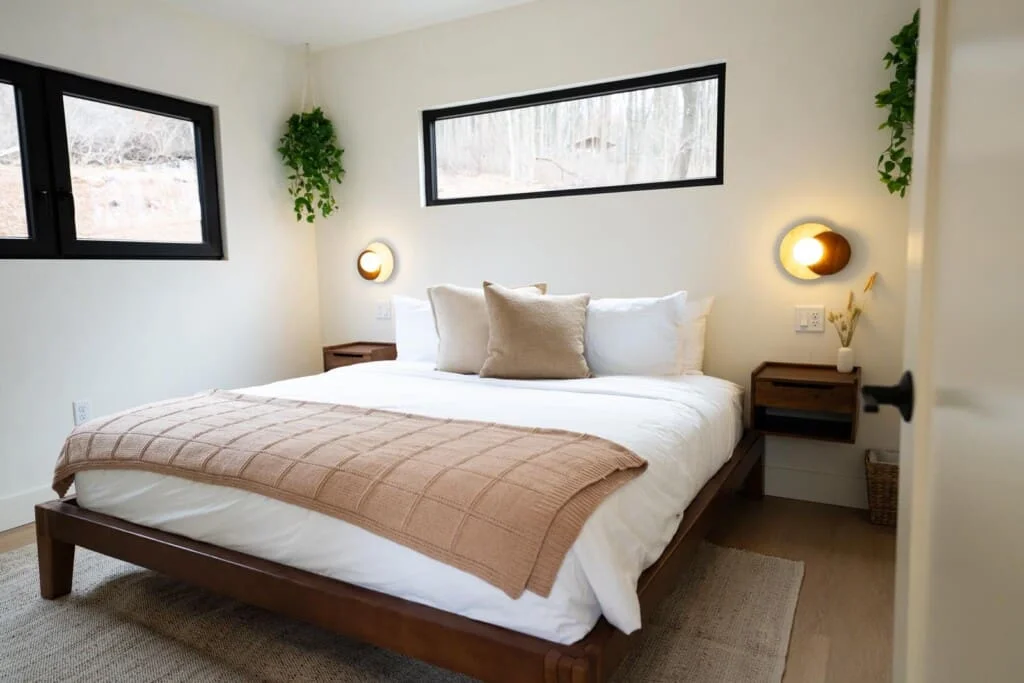
A cabin base near Front Royal or Linden puts you within a short drive of the trail’s northern cluster and Shenandoah National Park’s Skyline Drive entrance alike, which matters more than most guides acknowledge. Royal Oak Retreat, a 1,000-square-foot wellness cabin set in Shenandoah Farms, sits roughly 5 minutes from Fox Meadow Winery and about 8 minutes from Crimson Lane Vineyards, making it a genuinely convenient home base for the northern loop described above.
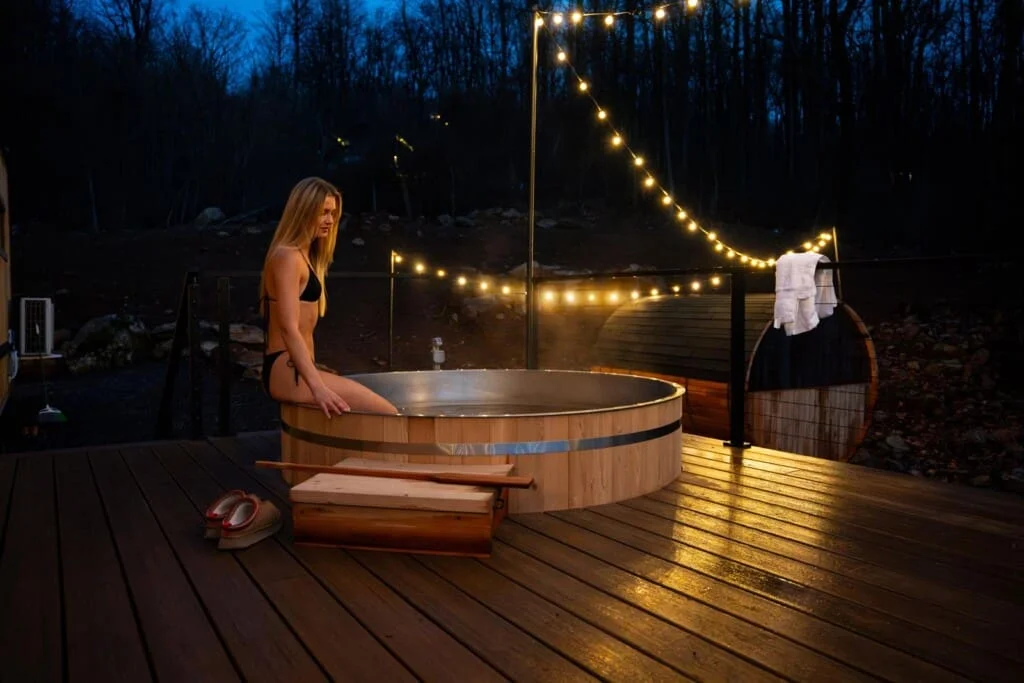
The cabin sleeps up to 4 across a main bedroom with a king bed and a loft with a queen, reached by a spiral staircase, so it’s not the right fit if anyone in your party has mobility concerns with stairs. What sets it apart after a day of tasting is the contrast therapy island: a sunken outdoor hot tub with stargazing views, a Scandinavian sauna, and a cold plunge, all built with no plastics or chemicals in construction. After a day of standing in tasting rooms, alternating a few minutes in the sauna with a short cold plunge is a genuinely different way to close out the evening than another glass of wine on a hotel balcony.
The property also runs on Starlink internet and includes an on-site EV charger, useful if you’re driving up from the DC metro area and want reliable connectivity or a charge before heading home. It’s pet-friendly for one dog under 50 lbs with a pet fee, worth knowing if your wine tasting trip includes a four-legged travel companion. Check the guide to what to know before booking a Shenandoah cabin for practical details on the driveway (a 4×4 is recommended in winter) and check-in logistics before you book.
How Do You Choose Which Wineries to Prioritize on a Short Trip?
Choosing which Shenandoah Valley wineries to prioritize comes down to matching your interests to each winery’s specific strength rather than trying to hit every stop on the trail. If you have one day, pick a geographic cluster and commit to three or four wineries rather than spreading yourself across the entire 22-plus member trail.
First, decide what matters most: view, varietal, or history. If it’s the view, Cave Ridge Vineyards’ hilltop setting is the clear pick. If it’s an unusual varietal, North Mountain Vineyard’s Gruner Veltliner and Zweigelt deliver something genuinely different from standard Virginia pours. If it’s architecture and Bordeaux-style blends, Muse Vineyards wins. Additionally, common mistakes include overscheduling (trying to hit five or six wineries in a day), skipping reservations during peak fall weekends, and forgetting that most tasting rooms don’t serve full meals.
As a result, the smartest approach pairs two “worth the drive” stops with one convenient middle-tier winery near your route, then reserves the evening for rest rather than a fifth tasting room. Trail organizations like the Shenandoah Valley Wine Trail directory also host an annual Shenandoah Cup Celebration event, worth checking for current dates if you want to time your trip around it.
Frequently Asked Questions
What is the Shenandoah Valley AVA?
The Shenandoah Valley AVA is a federally recognized American Viticultural Area covering a stretch of Virginia’s valley floor and surrounding foothills, defined by limestone soil and a cooling elevation effect from the Blue Ridge and Allegheny mountains. It’s distinct from Virginia’s Piedmont wine region, which relies more on clay-based soils.
How many wineries are on the Shenandoah Valley Wine Trail?
The Shenandoah Valley Wine Trail lists more than 22 member wineries as of 2026, spread across several counties from Winchester south toward Harrisonburg. Membership and hours change periodically, so check the trail’s official directory before planning a multi-stop route.
Which Shenandoah Valley winery has won awards?
Cave Ridge Vineyards took a Silver medal at the 2021 Virginia Governor’s Cup competition for its Pet Nat, a naturally sparkling wine. It remains one of the few sparkling options on the trail and pairs with a hilltop tasting room view across the valley.
Do Shenandoah Valley wineries allow dogs?
Policies vary by winery and are frequently limited to outdoor patio areas rather than full tasting room access. Call ahead to confirm current pet policy before building your day around a specific stop with your dog.
Is wine tasting in Shenandoah Valley expensive?
Tasting fees at most valley wineries fall in a moderate range for a standard flight, and many waive the fee with a bottle purchase. Exact pricing varies by winery and season, so check each tasting room’s current rates directly before you go.
What’s the best time of year to visit Shenandoah Valley wineries?
Fall, specifically mid-September through late October, is the strongest window for foliage and harvest-related events, though weekends draw the heaviest crowds. Spring, particularly April and May, offers similar mild weather with noticeably fewer visitors.
Can I combine wine tasting with a Shenandoah National Park visit?
Yes. Skyline Drive’s northern entrance near Front Royal is roughly 40 minutes from Royal Oak Retreat and puts you close to both hiking trails and the northern winery cluster around Linden and Mount Jackson. Many visitors structure a day around a morning hike followed by an afternoon of tasting.
How many wineries can you realistically visit in one day?
Most visitors comfortably manage three to four wineries in a single day before palate and driving fatigue set in. Clustering stops by geographic proximity, rather than spreading across the full trail, makes for a smoother, less rushed day.
The Bottom Line on Wine Tasting Shenandoah Valley
Wine tasting in Shenandoah Valley rewards a targeted approach over an ambitious checklist. Muse Vineyards, Cave Ridge Vineyards, North Mountain Vineyard, and Shenandoah Vineyards represent the trail’s strongest stops as of 2026, each for a distinct reason: architecture, view and award-winning Pet Nat, unusual varietals, and regional history, respectively. Everything else on the 22-plus member trail is worth visiting only if it fits your route.
Plan around three to four stops clustered by geography, confirm tasting fees and reservation policies directly with each winery, and build in a real lunch stop since full meals aren’t the norm at most tasting rooms. Pair the day with a morning on Skyline Drive or an afternoon at Luray Caverns, and you’ve got a genuinely well-rounded Shenandoah Valley weekend for 2026 and beyond.
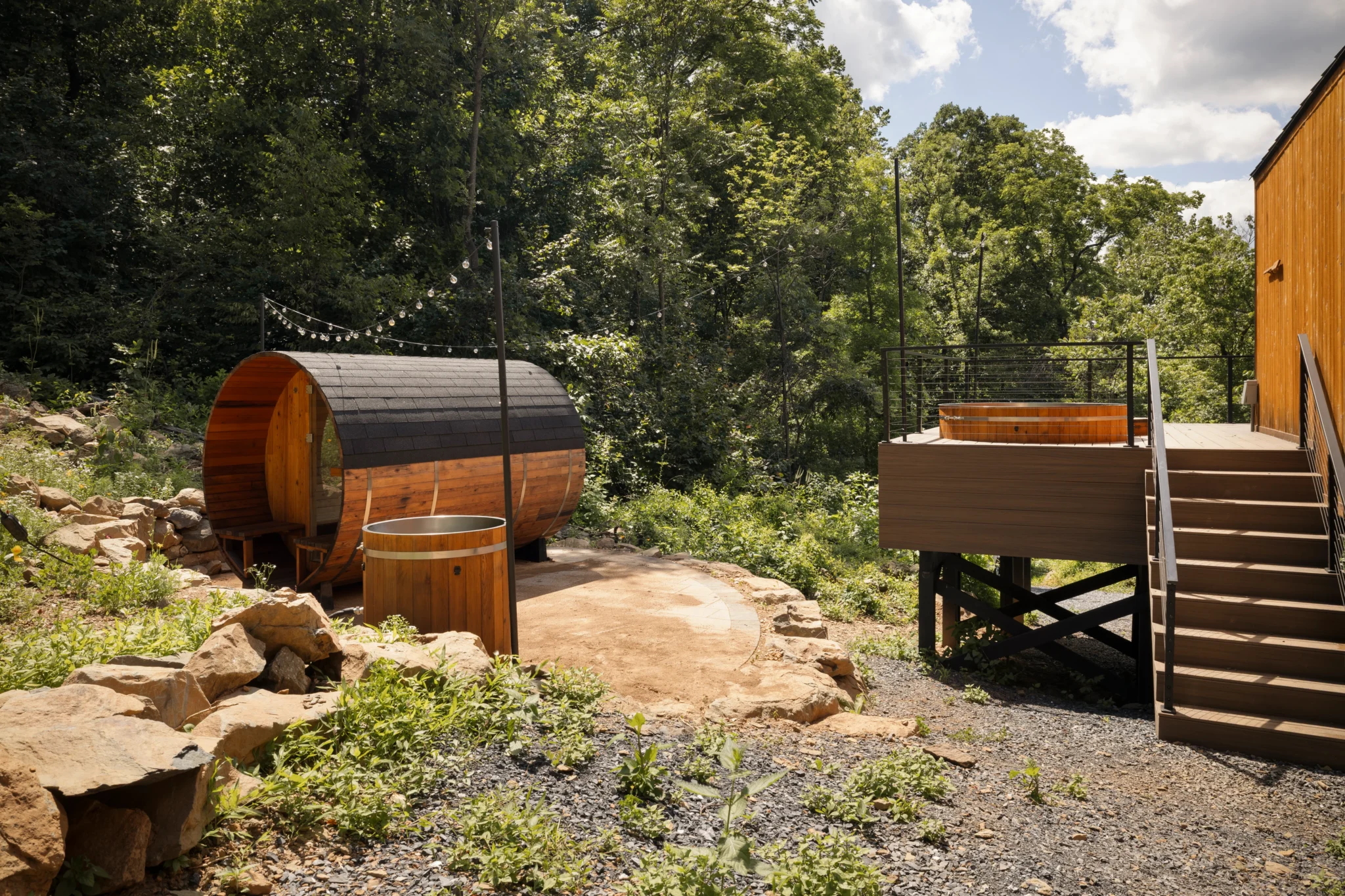
If your wine tasting day ends with tired feet and a full car of bottles, Royal Oak Retreat puts you minutes from Fox Meadow Winery and Crimson Lane Vineyards, with a sauna and cold plunge waiting when you get back. Check availability here.
Content powered by inkSTR.co