
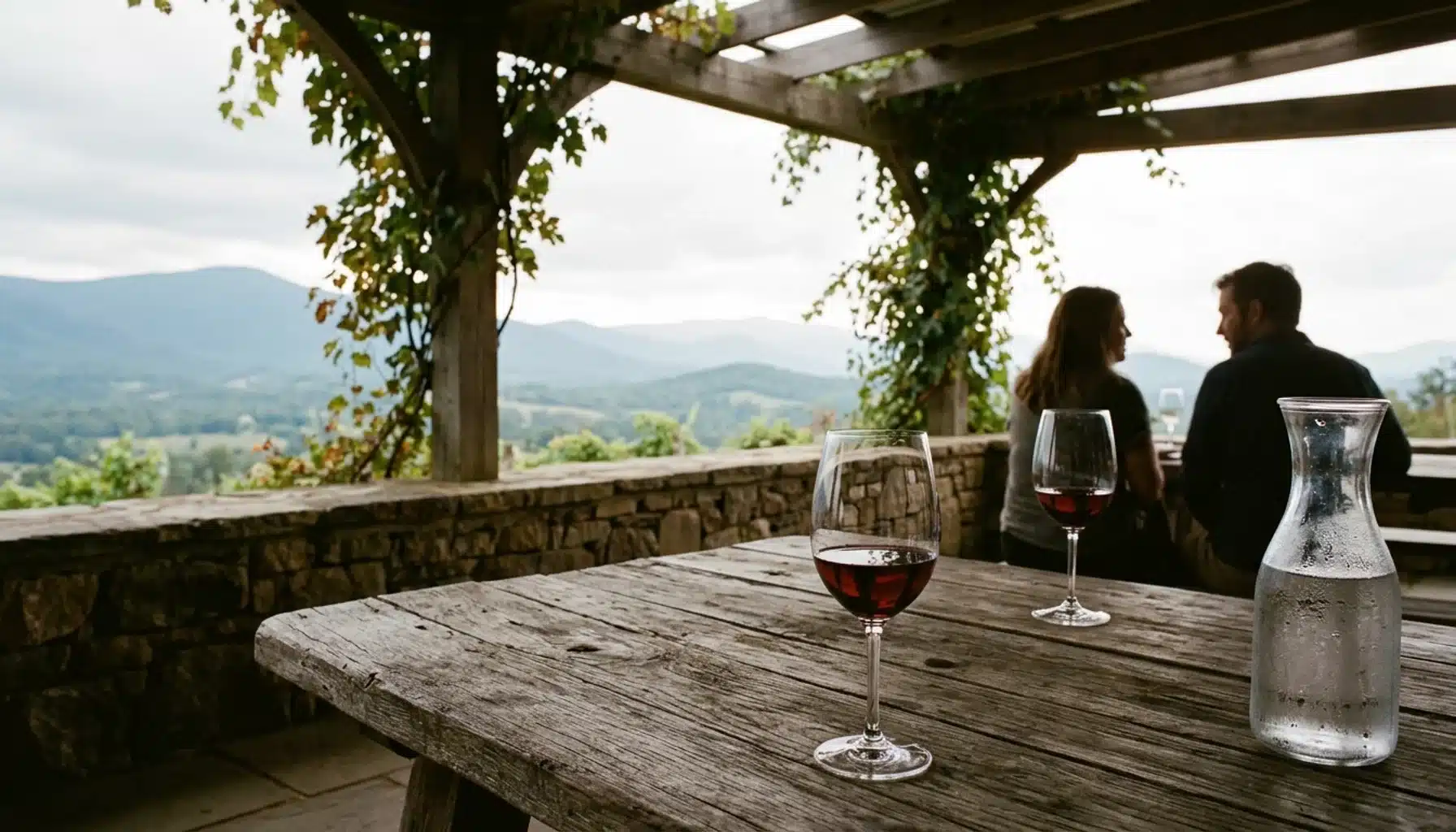
Linden, Virginia is known for four things: its cluster of small mountain wineries, its position at Manassas Gap where the Blue Ridge opens toward the Shenandoah Valley, its Appalachian Trail access points, and its layered history spanning 1669 exploration through Civil War troop movements. It is a rural, unincorporated community in Fauquier County, not a town with a downtown strip.
Key Takeaways
- Linden sits in Fauquier County’s most mountainous region, according to Visit Fauquier County, at the gap where the Blue Ridge Mountains meet the Shenandoah Valley.
- The community hosts several wineries, including Linden Vineyards, which produces around 4,000 cases annually from three vineyard sites.
- Linden’s history includes the 1669 Lederer-Catlett exploration, the mid-1800s Manassas Gap Railroad, a 25-orchard apple industry, and the Civil War-era Battle of Manassas Gap.
- Outdoor access includes Appalachian Trail crossings and the G. Richard Thompson Wildlife Management Area, reached via State Route 55 and Route 638.
- Shenandoah National Park drew 1.7 million visitors in 2026 who spent $132 million in nearby communities, according to the National Park Service, and Linden sits roughly 40 minutes from Skyline Drive.
- Virginia recorded 46.6 million overnight visitors in 2026 generating $36.2 billion in spending, per the Virginia Tourism Corporation, with the Shenandoah Valley region cited as one of the state’s strongest lodging markets through 2026.
If you’re mapping out a Shenandoah Valley trip for 2026 and keep seeing “Linden, Virginia” pop up next to wineries and trailheads, you’re not imagining a pattern. Linden is real, it’s small, and it punches well above its size for a place with no traffic light or main street to speak of.
This guide separates what actually happens inside Linden from what belongs to nearby Front Royal or Shenandoah National Park, something most overview articles blur together. We’ll cover the wine scene, the trail access, the Civil War and railroad history, and how to string it all into a weekend without wasting half your day driving in circles. Along the way, you’ll get real addresses, drive times, and a few honest notes on what to skip.
Where Exactly Is Linden, Virginia?
Linden is an unincorporated community in Fauquier County, Virginia, sitting in a mountain gap that historically connected the state’s Piedmont region to the Shenandoah Valley. Specifically, Linden occupies the pass now traveled by Interstate 66 and the old Manassas Gap rail corridor, about 60 miles west of Washington, D.C.
Fauquier County’s tourism office describes Linden as the county’s most mountainous region, and the terrain backs that up. The Blue Ridge rises sharply on both sides of the gap, which is exactly why this spot mattered for centuries as a crossing point. As a result, Linden functions less like a town and more like a scattered rural community, apple orchards, wineries, and mountain homesteads spread across ridgelines and hollows rather than clustered around a commercial center.
One practical note worth flagging: search results sometimes surface a different Linden in Wise County, Virginia, far to the southwest near the Kentucky border. That is an unrelated community. Every fact in this article refers to the Linden in Fauquier County, the one tied to Manassas Gap, the Appalachian Trail, and Blue Ridge wine country.
What Is Linden, Virginia Known for in Terms of Wine?
Linden is known primarily for a small cluster of independent wineries set into the Blue Ridge foothills, anchored by Linden Vineyards, one of Virginia’s most decorated producers. Unlike Loudoun County’s dense wine trail, Linden’s wineries are spread out and appointment-driven, which changes how you should plan a visit.
Linden Vineyards, located at 3708 Harrels Corner Road, sources all of its roughly 4,000 annual cases from three distinct vineyard sites, according to Virginia Wine. Winemaker Jim Law has run the operation since 1981, and the winery’s single-vineyard Chardonnay and Sauvignon Blanc get regular attention from critics. The standout, though, is Hardscrabble, a Bordeaux-style red blend named for one of the estate’s vineyards. It earned a four-star rating in Hugh Johnson’s 2019 wine guide and has appeared in a Washington Post roundup of Northern Virginia wines. Call ahead at 540-364-1997 before driving out; tasting reservations and hours shift seasonally.
Three other wineries round out the Linden cluster. Fox Meadow Winery (now operating as Accord Vineyards) sits at 3310 Freezeland Road; guests booking a stay at Royal Oak Retreat will find it roughly five minutes away, making it one of the easiest tasting-room stops on a Shenandoah Valley weekend. Crimson Lane Vineyards, at 13334 Crimson Lane, is 21-and-over and about eight minutes from the same cabin. Next door, Capstone Vineyards at 13400 Crimson Lane operates strictly by appointment, so do not show up unannounced expecting an open tasting room.

What Should You Know Before Visiting Linden’s Wineries?
Linden’s wineries are not a walkable trail. Specifically, expect 5 to 15 minute drives between each stop on narrow rural roads, and confirm hours directly with each winery since several, like Capstone, are appointment-only. Bring cash or a card for tastings, and budget an afternoon rather than trying to hit all four in one sitting.
What Is There to Do in Linden, Virginia Beyond Wine?
Linden functions as a quiet gateway to outdoor recreation, offering direct Appalachian Trail access, wildlife management land, and proximity to Shenandoah National Park’s Skyline Drive without the crowds that build up closer to the park’s main entrances. This makes it a practical, low-key base rather than a destination with its own attractions list.
The G. Richard Thompson Wildlife Management Area is one of the region’s better-kept outdoor spots. Its upper section, the Davenport Tract, is reached from State Route 55 at Linden, then north on Route 638 and a fire trail. It’s popular in spring for wildflower displays, particularly trillium, and it draws far fewer people than the national park proper. Notably, this is a genuinely quieter alternative for hikers who want mountain terrain without Skyline Drive traffic.
The Appalachian Trail crosses near Linden as well, with access points that see a fraction of the foot traffic found at more famous trailheads farther south. If you’re staying at a cabin near Fiery Run Road, you’re roughly 3 miles from one such access point, close enough for a morning hike without an early alarm.
For a slower-paced stop, The Marriott Ranch runs a trail-ride barn at 4441 Fiery Run Road in Linden, distinct from its business office and the Inn at Fairfield Farm, both located about 8 miles away in Hume. Confirm which location you’re headed to before booking, since the two addresses are easy to mix up. The Giving Tree Farmer’s Market, at 13485 John Marshall Highway, is a useful stop for local produce if you’re staying self-catered for a weekend.
What Towns Are Near Linden, Virginia?
Linden borders Markham and Front Royal to the west, with the town of Warrenton about 25 miles southeast serving as Fauquier County’s seat. Front Royal, roughly 15 to 20 minutes from Linden, is the closest full-service town with restaurants, groceries, and Shenandoah National Park’s northern entrance.
This matters for trip planning because most articles blend Linden’s own attractions with things that are actually in Front Royal or inside the park, which creates confusion about drive times. In reality, Front Royal is where you’ll find Skyline Caverns, a wider restaurant selection, and the park’s Front Royal entrance station. Linden itself has no downtown commercial strip, so groceries, gas, and sit-down dining mean a short drive into Front Royal or Warrenton.
Markham, immediately adjacent to Linden, shares much of the same rural, mountainous character and was also part of the historic Manassas Gap corridor. The Battle of Manassas Gap in 1863 actually took place across the Linden, Belle Meade, and Markham area, so the two communities share a good chunk of their Civil War history.
What Is the Population of Linden, VA?
Linden is a small, unincorporated community without its own official census designation separate from Fauquier County’s broader population figures, so no standalone population number is officially tracked for Linden specifically. What is clear is that the area remains sparsely settled and rural, with residential clusters concentrated around named areas like Apple Mountain Lake and Blue Mountain.
This lack of a distinct population count is common for unincorporated Virginia communities that never developed a formal town charter. Rather than guessing at a figure, it’s more useful to know that Linden’s character comes from dispersed farms, orchards-turned-vineyards, and mountain homes rather than any dense residential center. If you’re expecting a town with sidewalks and a visible population center, recalibrate: Linden is defined by its geography and history, not its headcount.
Is Linden, VA a Good Place to Visit or Live?
Linden works well as a quiet home base for outdoor recreation and wine touring, and its rural character appeals to residents who want mountain seclusion within a manageable commute distance of Washington, D.C. It is not the right fit if you want walkable amenities, nightlife, or a dense town center; those needs are better served by nearby Front Royal or Warrenton.
For visitors specifically, Linden’s appeal is its position: about an hour from D.C. and roughly 40 minutes from Shenandoah National Park’s Skyline Drive, which has 500-plus miles of connected Blue Ridge trails according to National Park Service data. That combination of proximity to a major metro and genuine mountain immersion is unusual this close to the capital. Through June 2026, Virginia hotel demand rose 3.1% year over year, per the Virginia Tourism Corporation, with the Shenandoah Valley called out as one of the state’s stronger-performing lodging regions, a sign that more travelers are discovering exactly this kind of rural gateway.
What Is Linden’s Civil War and Railroad History?
Linden’s historical significance traces back to 1669, when explorers John Lederer and John Catlett are credited by Wikipedia with the first documented European discovery of the Shenandoah Valley at the present-day site of Linden. The mountain gap they crossed became a strategic corridor for the next two centuries.
By around 1850, the Manassas Gap Railroad had been built through the pass, and it played a specific economic role: moving apples from the area’s orchards to ports for shipment to Europe. At its peak, the Markham and Linden area supported roughly 25 apple orchards, an industry that flourished from the mid-18th century until it declined in the early 1950s. That railroad corridor and its orchard economy are the reason Linden existed as a functioning community at all before wine tourism arrived.
The gap’s strategic value made it a target during the Civil War. The Battle of Manassas Gap unfolded in the vicinity of Linden, Belle Meade, and Markham, and the area’s easy Blue Ridge crossing meant both Union and Confederate armies used it as a transit route. Linden was also part of what’s known as “Mosby’s Confederacy,” territory that provided rallying points and rest stops for Colonel John S. Mosby’s Confederate Rangers throughout the war.
How Does This History Connect to What You Can See Today?
Present-day Linden still carries visible traces of this timeline. Route 55 through the gap roughly follows the same corridor the railroad and armies once used. St. Dominic’s Monastery, a landmark in the area, and the mountain residential clusters at Apple Mountain Lake and Blue Mountain sit on land shaped by that same orchard-and-transit history. If you’re driving Route 55 west from I-66, you’re essentially retracing a route that mattered to apple shippers, railroad crews, and soldiers alike, long before it mattered to wine tourists.

How Do You Plan a Realistic Linden Day Trip or Weekend?
A realistic Linden itinerary treats the community as a wine-and-trail base rather than a self-contained destination, pairing it with Front Royal for meals and supplies and Shenandoah National Park for a bigger day of hiking. Most competing guides list attractions without addressing drive times between them, which leads visitors to underestimate how spread out this area actually is.
Here’s a grounded structure for a two-day trip:
- Friday evening: Arrive and settle in. If you’re staying in the Shenandoah Farms area near Front Royal, budget about an hour from D.C.
- Saturday morning: Head to the G. Richard Thompson Wildlife Management Area via Route 55 and Route 638 for a quiet hike, best done before 10 a.m. to catch cooler temperatures and fewer cars on the fire trail.
- Saturday afternoon: Winery loop. Start at Fox Meadow Winery (Accord Vineyards) on Freezeland Road, then Crimson Lane Vineyards, budgeting 5 to 15 minutes of driving between each stop and calling ahead for Capstone if you want to add it.
- Saturday evening: Drive into Front Royal, about 15 to 20 minutes away, for dinner. Spelunkers at 116 South Street is a solid pre- or post-hike stop for frozen custard, burgers, and chicken sandwiches.
- Sunday: Drive roughly 40 minutes to Skyline Drive for a morning on the trails, or stay local and visit The Giving Tree Farmer’s Market before heading home.
This structure avoids the common mistake of trying to cram Linden, Front Royal, and the full national park into a single rushed day.
Where Should You Stay When Visiting Linden and the Shenandoah Valley?
The Shenandoah Valley rental market has grown fast: active short-term rental listings in Shenandoah, Virginia increased 394.4% year over year from July 2026 to July 2026, according to AirDNA, even as average occupancy settled around 52%. That growth means more choice, but also more variability in quality, so location and amenities matter more than ever when picking a base.
Royal Oak Retreat sits in Shenandoah Farms, about 40 minutes from Shenandoah National Park and within a short drive of the Linden winery cluster, Fox Meadow Winery is roughly five minutes away and Crimson Lane Vineyards about eight. The cabin sleeps up to four across a main bedroom with a king bed and a loft with a queen, reached by a spiral staircase, and is built entirely without plastics or added chemicals in its construction.
What sets it apart for a Linden-area trip is the wellness setup: a sunken outdoor hot tub positioned for stargazing, a Scandinavian-style sauna, and a cold plunge forming a dedicated contrast therapy island on the deck. After a morning at the wildlife management area or a Saturday of winery stops, that combination does real work. The property also has Starlink internet, an on-site EV charger, and welcomes one dog under 50 pounds with a pet fee, useful if you’re road-tripping from D.C. and don’t want to board your dog for the weekend.
For a broader look at options in the region, this guide to cabin rentals in Shenandoah Valley Virginia covers additional properties, and the seasonal guide to things to do in Shenandoah Valley is worth a read before you finalize dates.

What Should You Prioritize When Planning a Trip Around Linden?
Prioritize wineries with confirmed hours first, since several operate by appointment only and won’t accommodate walk-ins. Next, plan your outdoor time around the wildlife management area or Skyline Drive depending on how much driving you want to do; the former is closer, the latter is bigger. Finally, treat Front Royal as your supply run and dinner stop, not a Linden attraction itself.
Common mistakes worth avoiding: assuming Linden has its own restaurant row (it doesn’t), skipping ahead-of-time calls to appointment-only wineries like Capstone, and underestimating drive times between the scattered vineyard sites. Also worth noting, a 4×4 vehicle is genuinely useful in this area during winter months, several access roads and driveways in the Shenandoah Farms area get steep and can hold snow longer than the main highways.
Frequently Asked Questions
What county is Linden, VA in?
Linden is located in Fauquier County, Virginia, specifically in the county’s most mountainous section along the Blue Ridge at Manassas Gap. It sits near the border with Warren County, which is why some travelers confuse it with nearby Front Royal.
Where is Linden, Virginia?
Linden sits about 60 miles west of Washington, D.C., in a mountain gap where Interstate 66 crosses the Blue Ridge into the Shenandoah Valley. It’s roughly 15 to 20 minutes from Front Royal and about 40 minutes from Shenandoah National Park’s Skyline Drive.
What are the best luxury getaways in Virginia for travelers who want a peaceful estate setting?
Travelers looking for a peaceful, secluded setting near Linden should look at wellness-focused cabins in the Shenandoah Farms area, which offer privacy and forest immersion without a long drive from D.C. Royal Oak Retreat is one such option, combining a sunken hot tub, sauna, and cold plunge with a fully non-toxic build on a private wooded lot.
What to do in Shenandoah Valley, Virginia?
The Shenandoah Valley offers hiking on Skyline Drive and in Shenandoah National Park, wine tasting at wineries like Linden Vineyards and Rappahannock Cellars, and quieter outdoor spots like the G. Richard Thompson Wildlife Management Area. Front Royal serves as a good base for dining and supplies, while Skyline Caverns offers an indoor option on rainy days.
Are there any vacation rentals available in Shenandoah National Park, Virginia?
Lodging directly inside Shenandoah National Park is limited to concessionaire-operated options like Skyland and Big Meadows Lodge, both bookable through the park’s official lodging partner. Most travelers instead choose private cabin rentals just outside the park, in areas like Shenandoah Farms or Linden, which offer more amenities and easier access to nearby wineries.
Which Virginia luxury stay is best if I want both privacy and enough activities to justify the nightly rate?
A cabin in the Shenandoah Farms area near Linden works well for this, since it puts you close to both quiet outdoor recreation and a small winery cluster while remaining fully private. Royal Oak Retreat fits this specifically, its contrast therapy setup and forest seclusion justify a longer stay, while wineries and the Appalachian Trail are within a short drive.
What is there to do in Linden, Virginia?
Linden’s main activities are winery visits (Linden Vineyards, Fox Meadow Winery, Crimson Lane Vineyards, and Capstone Vineyards), hiking at the G. Richard Thompson Wildlife Management Area, and Appalachian Trail access points near Fiery Run Road. It’s a low-key area best paired with a day trip into Front Royal or Shenandoah National Park.
What towns are near Linden, Virginia?
Markham sits immediately adjacent to Linden and shares its rural, mountainous character, while Front Royal is roughly 15 to 20 minutes west and offers a fuller range of restaurants and shops. Warrenton, the Fauquier County seat, is about 25 miles southeast.
Final Thoughts on What Linden, Virginia Is Known For
Linden earns its reputation from four overlapping layers: a small, appointment-driven wine scene led by Linden Vineyards, genuine Appalachian Trail and wildlife-area access without national park crowds, and a history stretching from 1669 exploration through the apple-and-railroad era to the Civil War’s Battle of Manassas Gap. None of that requires a downtown or a population count to matter.
As Virginia’s overall tourism numbers keep climbing into 2026, with the Shenandoah Valley region flagged as one of the state’s stronger lodging markets, Linden’s appeal as a quiet, historically rich gateway is only going to draw more attention. Treat it as a base for exploring the wider Blue Ridge and Shenandoah National Park corridor, pair it with Front Royal for practical needs, and give yourself real drive-time buffers between stops.
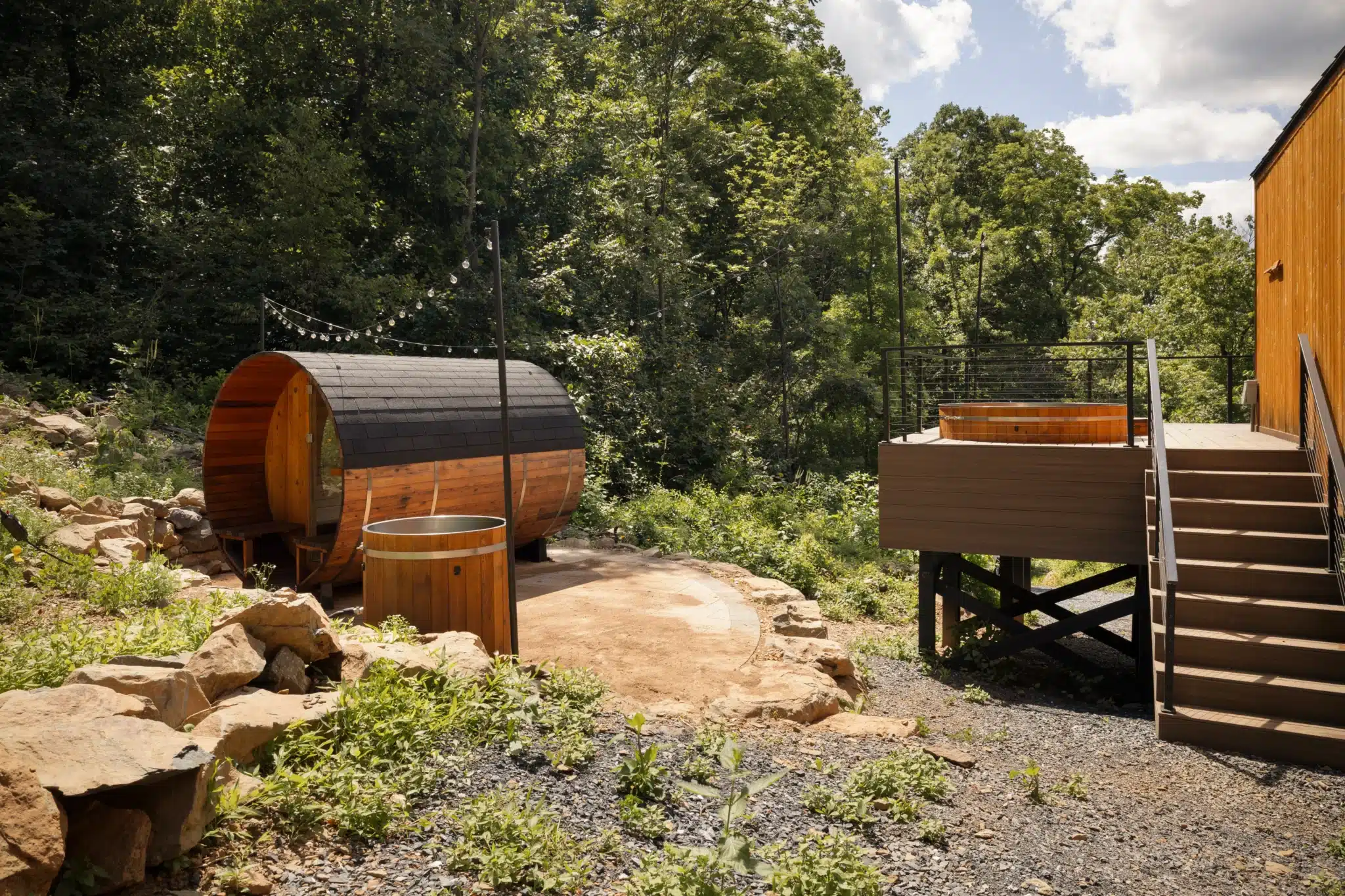
If you’re building a weekend around Linden’s wineries and the wildlife management area, Royal Oak Retreat puts Fox Meadow Winery about five minutes away and Crimson Lane Vineyards about eight, with a sunken hot tub waiting for you after either stop. Check current dates and book direct here.
Content powered by inkSTR.co