
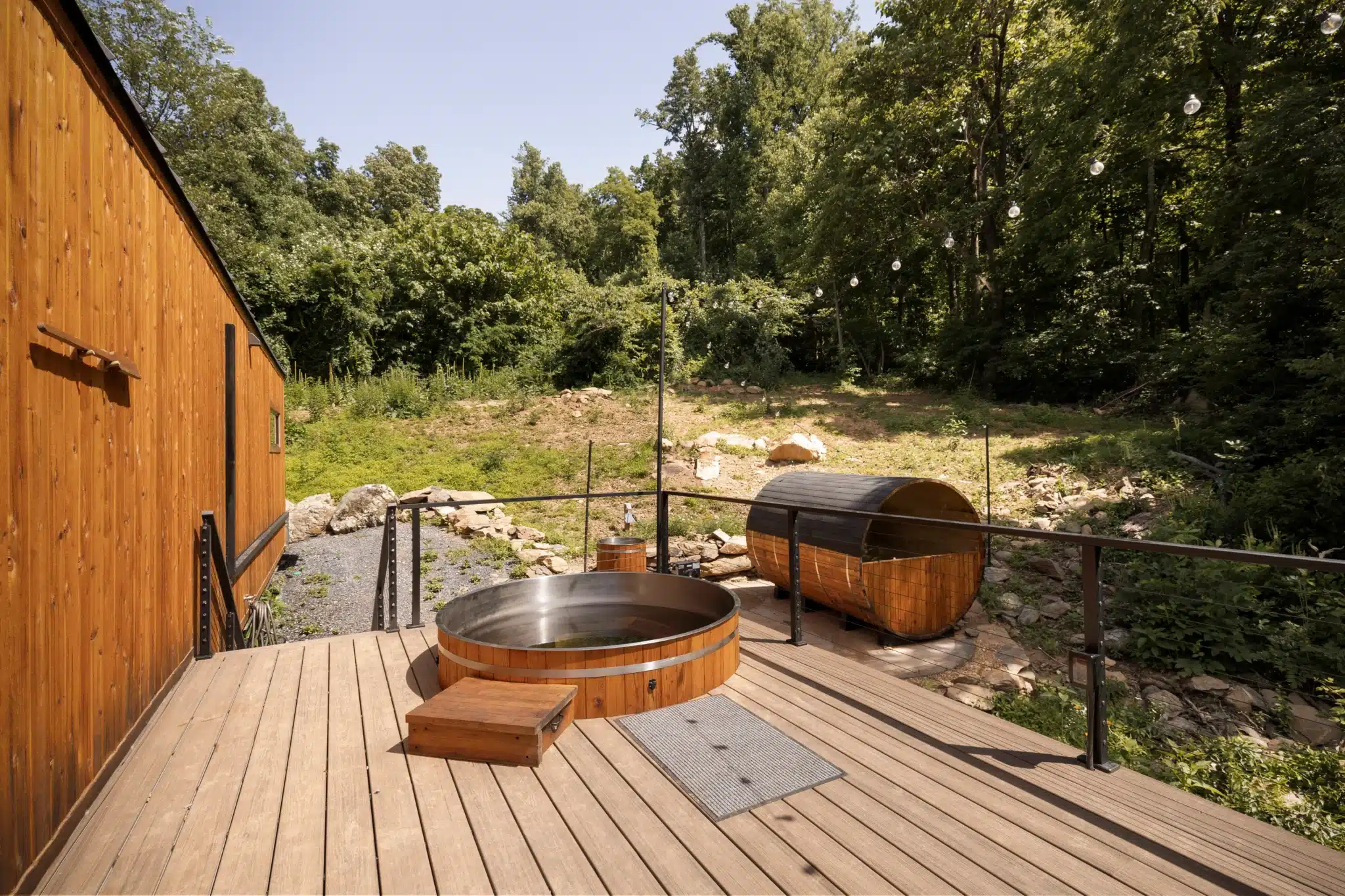
Winter in Virginia is mild on the coast and cold in the mountains. January averages run about 35 to 48 F in Tidewater and 27 to 45 F in the Shenandoah Valley, part of the mountain belt where most snow falls. What is winter like in Virginia? Cool days, freezing nights inland, and a few snow or ice events each season.
Key Takeaways
- Virginia has a humid subtropical climate split into five regions, and Virginia Tourism lists January average ranges from 19 F in Northern Virginia to 48 F in Tidewater.
- Mountain regions average about 16.7 to 23.2 inches of snow a year according to Virginia Tourism, and the southeast sees only a few inches.
- December through February are the coldest months in the Shenandoah Valley, and mountain temperatures can reach 0 F during the harshest outbreaks.
- Winter activities include four ski areas, snow tubing at Wintergreen Resort, evening snowshoe tours at Bryce Resort, and humpback whale watching off Virginia Beach from December through early March.
- Royal Oak Retreat, an adults-first wellness cabin in the Front Royal and Linden area, is about 40 minutes from Skyline Drive and requires a 4×4 vehicle in winter months because of its steep driveway.
- Check Virginia Department of Transportation road conditions and National Park Service alerts before every winter drive, since snow, ice, and closures change by the day.
Most people asking about winter in Virginia are deciding one thing: whether the trip is worth the cold. For the Shenandoah Valley, the answer is usually yes, provided you plan around short daylight hours, icy secondary roads, and seasonal closures.
At Royal Oak Retreat, our guests often arrive from Washington D.C. after a Friday commute and ask the same questions: how cold will it be, will it snow, and can we still get up the driveway? This guide answers each one with climate data from Virginia Tourism, then turns that data into a practical plan for winter 2026.
Here, winter means December through February, with November and March treated as transition months. Climate averages describe long-run patterns, not guarantees, and resort or park schedules change from year to year, so confirm dates with the official source before you drive.
What Is Winter Like in Virginia Across Its Five Climate Regions?
Virginia winter weather is defined by five climate regions: Tidewater, Piedmont, Northern Virginia, Western Mountain, and Southwestern Mountain. According to Virginia Tourism, January averages range from 19 to 48 F depending on the region, and the Shenandoah Valley sits in the Western Mountain band at 27 to 45 F.
| Climate region | Areas covered | January average range |
|---|---|---|
| Tidewater | Hampton Roads, southern Chesapeake Bay, Eastern Shore | 35 to 48 F |
| Piedmont | Central Virginia | 27 to 47 F |
| Northern Virginia | Northern Virginia and northern Chesapeake Bay areas | 19 to 42 F |
| Western Mountain | Shenandoah Valley | 27 to 45 F |
| Southwestern Mountain | Southwest Blue Ridge Highlands, Heart of Appalachia | 24 to 44 F |
Virginia’s climate shifts with elevation and with distance from Chesapeake Bay and the Atlantic Ocean. In southeastern Virginia and on the Eastern Shore, January temperatures average about 40 F, which is why Hampton Roads rarely feels like the mountains.
The Shenandoah Valley range generally spans overnight lows to afternoon highs. Northern Virginia’s January range starts lower, at 19 F, so a Washington D.C. departure and a valley arrival can look similar on the thermometer. The valley adds elevation, ridgelines, and a better chance of snow.
How Cold Does Virginia Get in the Winter?
Virginia winters are cold but seldom extreme: typical winter temperatures across most of the state run roughly 30 to 50 F, with milder coastlines and colder mountains. Mountain temperatures of 0 F can occur, though that level is the exception rather than the norm.
So, does Virginia get cold in the winter? Yes, particularly inland and after dark. Daytime highs in the 40s are common in the valley, but clear nights often fall below freezing and can stay there for stretches.
The coldest and windiest conditions sit on the ridges. Skyline Drive follows the crest of the Blue Ridge, so conditions there typically feel harsher than in the valley below, and ice or fog can close sections of the road. Check the National Park Service page for Shenandoah National Park for current alerts, and skip the drive entirely on a freezing-fog morning.
Why Monthly Averages Can Mislead You
Averages smooth over cold snaps. A single Arctic outbreak can push mountain readings toward 0 F, and a warm spell can bring a thaw within days. Trust the forecast in the five days before departure over any monthly average, including the ones in this article.
Does It Snow in Virginia?
Yes, it snows in Virginia most winters, mainly in the mountains, and amounts vary sharply by region and year. Virginia Tourism says the Western and Southwestern Mountain regions average about 16.7 to 23.2 inches annually, while southeastern Virginia gets only a few inches.
A typical Shenandoah Valley winter brings several snow events, and some winters deliver far less or far more than the average.
Ice deserves more respect than snow. Freezing rain and sleet glaze bridges, shaded curves, and hillside driveways, and road crews generally treat major highways before secondary and private roads. A modest dusting on a steep, untreated driveway can be harder to handle than six inches on a flat parking lot.
If you want snow as part of the plan, January and early February give the best odds. If you want to avoid it, aim for late November or mid-March, and keep a backup activity ready either way.
Which Months Are Coldest in the Shenandoah Valley?
The coldest months in the Shenandoah Valley are typically December through February, with January usually the coldest. Virginia Tourism lists the Western Mountain January average at 27 to 45 F, and March can still deliver snow, so many locals treat it as a swing month.
| Month | Typical conditions | Best for |
|---|---|---|
| December | Cold settling in, early sunsets, first snow possible | Holiday events, fire pit evenings |
| January | Coldest month on average, best odds of snow and ice | Hot tub and sauna weekends, frozen waterfalls elsewhere in the state |
| February | Still cold, snow possible, quieter weekdays | Romantic getaways, ridge views through bare trees |
| March | Freeze and thaw swings, late snow possible, muddy trails | Winery visits, lower lodging demand |
The table is qualitative on purpose. Only the January range comes from a published source, and monthly snowfall in this region varies too much from year to year for a single number to help you.
What Is the Weather Like in Virginia in November?
November in Virginia is the handoff from fall to winter: leaf color fades, nights approach freezing inland, and daylight shrinks once daylight saving time ends. Snow is uncommon across most of the state in November, though higher elevations can see early flurries late in the month.
Late October sits just before that handoff. Mountain foliage typically peaks in October, and that is when Skyline Drive traffic runs heaviest. Shenandoah National Park welcomed 1.7 million visitors in 2026, according to the National Park Service, and a fall Saturday is when most of those crowds concentrate.
If you like the look of bare ridgelines and want fewer cars, choose a weekday in mid-to-late November. Pack for sub-freezing mornings and afternoons that can still feel mild in direct sun.
Is Virginia a Humid State in Winter?
Virginia has a humid subtropical climate, according to Virginia Tourism, which means hot, sticky summers and cool, moist winters. Winter air in Virginia tends to feel damp rather than arid.
That dampness matters more than the thermometer suggests. A 35 F day with moisture in the air and a breeze across a ridge feels colder than the same reading in a dry climate. Waterproof outer layers and dry socks do more for comfort than another sweater.
Winter humidity is also nowhere near summer levels, so the stickiness people associate with Virginia mostly disappears from December through February.
How Should You Pack and Drive for a Virginia Winter Trip?
Winter trip preparation in Virginia means layered clothing, waterproof boots with traction, and a vehicle ready for ice on shaded and hilly roads. As of 2026, check Virginia Department of Transportation road conditions and National Park Service alerts before leaving, since both change hourly during storms.
- Insulated base layer, fleece or wool mid-layer, and a waterproof shell
- Boots with real tread, plus a spare pair of dry socks
- Warm hat, gloves, and a headlamp for early sunsets
- Water, a blanket, and a phone charger kept in the car
Drive in daylight when you can. Fill the tank or charge fully before the final stretch, lower your speed on bridges and curves, and leave extra following distance. Cold air typically reduces electric vehicle range, so plan charging stops conservatively; Royal Oak Retreat has an on-site EV charger, so you can start the drive home full.
Vehicle type matters at the last mile. Royal Oak Retreat requires a 4×4 vehicle in winter months because of its steep driveway and possible snow, so confirm your vehicle before you book and again before you leave.
What Can You Do in Virginia in Winter?
Virginia winter activities range from skiing and snow tubing to whale watching and quiet ridge hikes. Virginia Tourism says the state has four ski areas, including Massanutten, and that Wintergreen Resort’s The Plunge is Virginia’s largest snow tubing park, spanning the length of three football fields.
Guide-led snowshoe tours run on select evenings from December through February at Bryce Resort in Basye; check the resort for current tour dates. Farther east, humpback whales may be seen off Virginia Beach from December through early March. Ski operations, tours, and whale-watching schedules depend on weather and change annually, so verify dates directly.
For quieter days near the valley, hike a frosty section of Shenandoah National Park. Bare trees open up valley views you cannot get in summer, and our guide to Shenandoah National Park hiking trails helps match a trail to your pace. Dress for wind on the ridge and expect ice on north-facing sections.
Winery stops make a good cold-day fallback. Royal Oak Retreat is about 5 minutes from Fox Meadow Winery in Linden and about 8 minutes from Crimson Lane Vineyards in Hume. Visit Fox Meadow Winery or Crimson Lane Vineyards to confirm winter hours. For something underground and weatherproof, Luray Caverns is about 55 minutes from the cabin.
Skip the busiest ski and tubing weekends if you dislike lines; holiday weekends tend to draw the largest crowds. Our seasonal guide to things to do in the Shenandoah Valley and our nearby experiences page list more options.
Where Should You Stay for a Winter Trip to the Shenandoah Valley?
A good winter cabin in the Shenandoah Valley has reliable heat, wellness amenities that make cold weather an asset, and a driveway you can handle in snow. Royal Oak Retreat is an adults-first luxury wellness cabin in the Front Royal and Linden area with a bedroom and loft, one bathroom, and space for up to four guests.
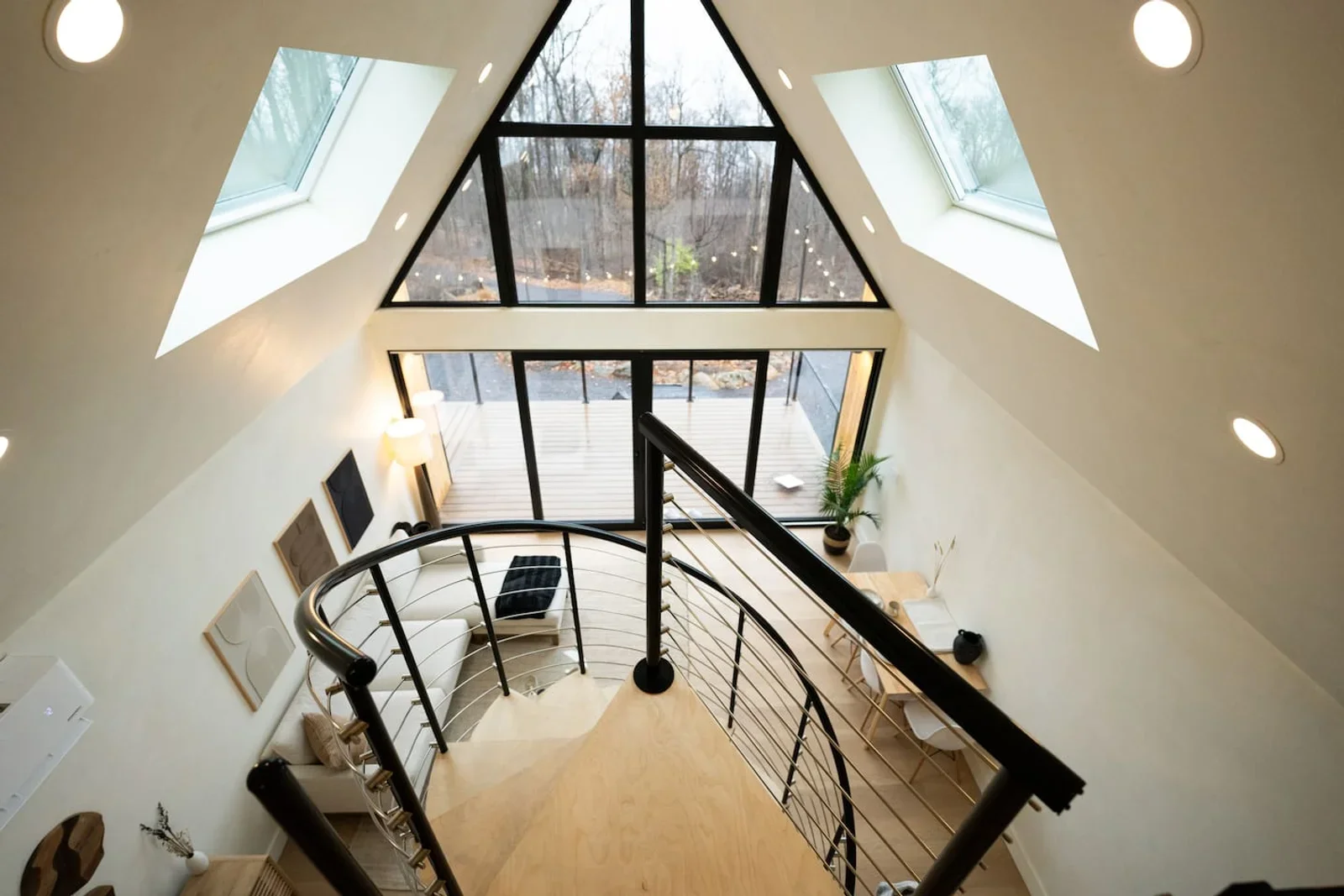
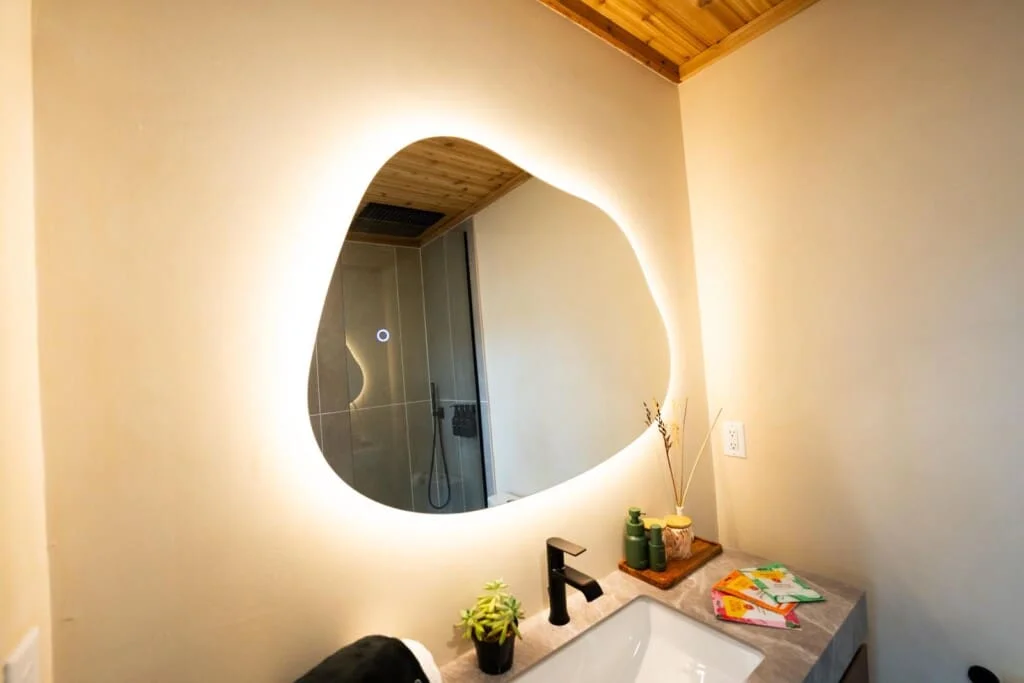
The 1,000 square foot cabin has a cedar-clad exterior and floor-to-ceiling windows that frame the woodland, which matters in winter when bare trees open up the view. Outside, a large sunken hot tub sits on the deck with open sky overhead, and a dedicated contrast therapy island holds a Scandinavian-style sauna and a cold plunge. A fire pit completes the setup. No plastics or chemicals were used in the construction of the space.
Inside, the kitchen is fully equipped with an electric stove-top, a fridge, and an all-in-one microwave, oven, and air fryer. Starlink high-speed internet covers remote work or streaming, and the on-site EV charger helps with cold-weather range worries.
Distances matter for planning. Royal Oak Retreat is about 40 minutes from the main Skyline Drive viewpoints and trailheads, and about 1 hour from Washington D.C. Check-in is at 3 PM and check-out is at 11 AM; early check-in may be available on request.
Winter has real caveats. The 4×4 requirement is firm, and the loft is reached by a spiral staircase, so the cabin is not ideal for guests who have difficulty climbing. One dog under 50 lbs is welcome with a $100 pet fee, and national park trails restrict pets in many places, so check NPS rules before you plan a hike with a dog.
If you are comparing options, our roundup of cabins near Shenandoah National Park and the breakdown of Shenandoah Valley towns and cabins cover the area in more depth, and our overview of cabin rentals in the Shenandoah Valley explains what to ask before you book. In-park lodging operates seasonally, so use the official Shenandoah Valley tourism lodging directory to verify dates.
How Does Contrast Therapy Work on a Cold Winter Weekend?
Contrast therapy is the practice of alternating heat exposure, such as a sauna or hot tub, with cold exposure, such as a cold plunge, and resting between rounds. At Royal Oak Retreat, the sauna and cold plunge sit together on a dedicated contrast therapy island beside the sunken hot tub, so the cycle happens in a few steps outdoors.
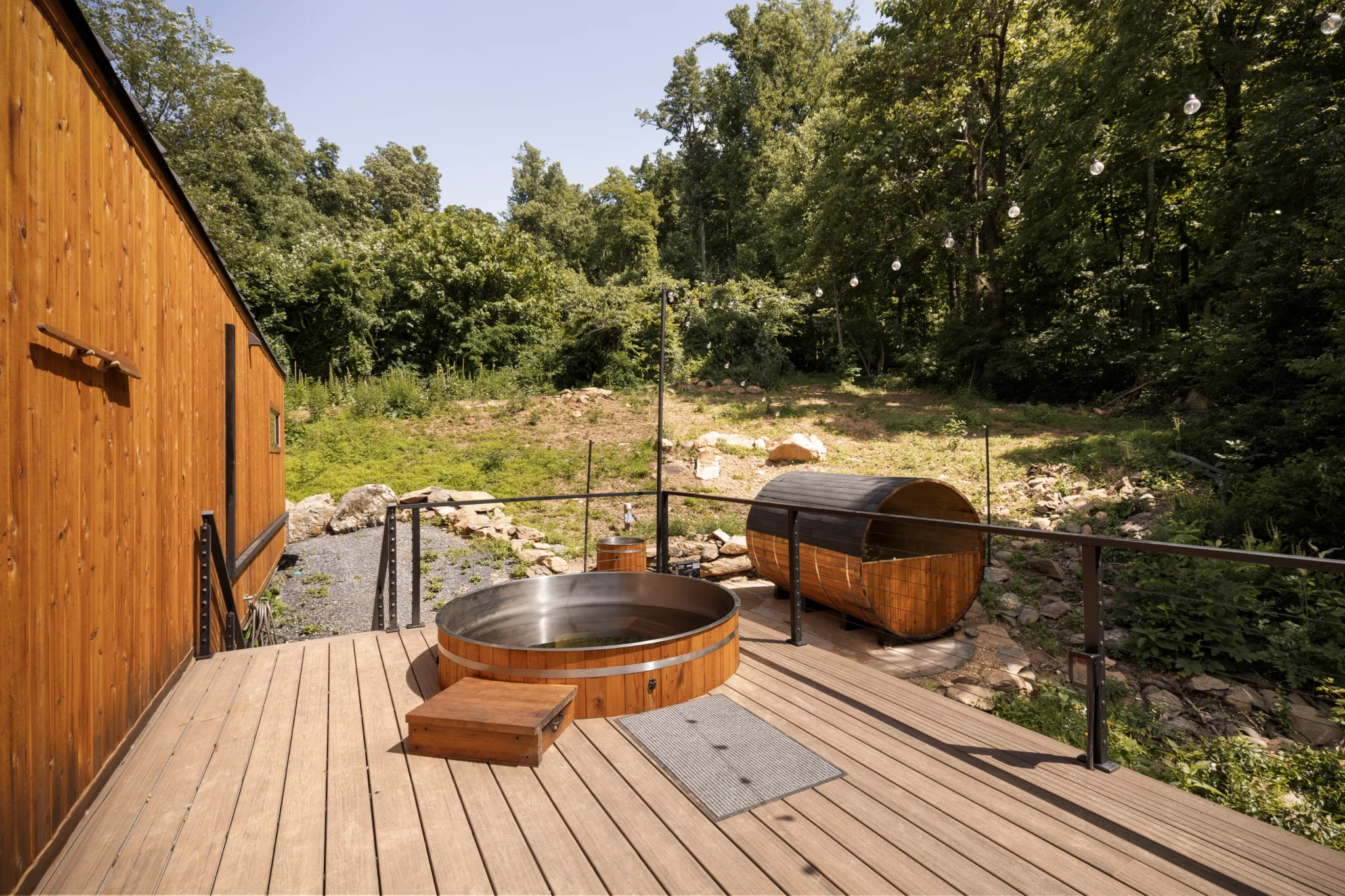
Winter makes the routine easier to enjoy. A cold air temperature outside the sauna door makes the transition feel bigger, and steam rising from the hot tub on a clear night makes the stargazing view a draw. Many guests alternate rounds and rest between each. Start gently and listen to your body.
- Warm up in the sauna with a short first round you can finish comfortably.
- Step out, cool off, and drink water before moving on.
- Try the cold plunge briefly, or skip it if it does not feel right.
- Rest wrapped in a robe, then soak in the sunken hot tub under the sky.
- Repeat only as long as you feel good, and stop if you feel dizzy or unwell.
Heat and cold exposure carry real risks for some people. If you have a heart condition or blood pressure concerns, or are pregnant, talk to a doctor first. This guide makes no medical claims; it describes how guests commonly structure a relaxing evening.
For an occasion, the Romance Package and the Birthday Celebration Package add touches to a winter stay. The Arrival Luxury Touch helps after a long, cold drive, and our services page lists other options. For a broader look at romantic stays, see our guide to Virginia romantic getaways.
What Does a Two-Day Winter Weekend From Washington D.C. Look Like?
A winter weekend in the Shenandoah Valley works best as two daylight-driven days: about 1 hour of driving from Washington D.C., an afternoon check-in at 3 PM, one outing on Saturday, and an evening in the hot tub and sauna. Short winter days, not distance, are the real constraint.
Friday: Arrive Before Dark
Leave D.C. early enough to reach the cabin before sunset, since shaded back roads are hardest to read after dark. Unload, light the fire pit, and keep the evening unscheduled. On a clear night, the sunken hot tub gives you open sky and very little light pollution.
Saturday: One Outing, Then Back to the Heat
Pick a single outing. If Skyline Drive is open, the main viewpoints and trailheads are about 40 minutes away; check NPS alerts that morning and stop at a Shenandoah National Park visitor center if open. If conditions look poor, switch to Fox Meadow Winery or Crimson Lane Vineyards, which are 5 and 8 minutes away. Return by mid-afternoon for a sauna and cold plunge round.
Sunday: Slow Exit
Check-out is at 11 AM. Fill up or charge before the drive, check VDOT conditions, and leave in daylight. Sunday evening return traffic toward D.C. can run heavy, so a late-morning departure with an unhurried lunch stop beats an evening dash.
What Should You Remember About Winter in Virginia?
What is winter like in Virginia? It depends on the region: mild and wet near the coast, cold and snow-prone in the mountains, with January averaging 27 to 45 F in the Shenandoah Valley. Pack layers, check road and park conditions before leaving, and plan around daylight rather than distance.
For winter 2026 and beyond, the best trips pair one outdoor outing with a warm, private evening. Confirm any resort or tour schedules with the operator, and let the forecast make the final call.
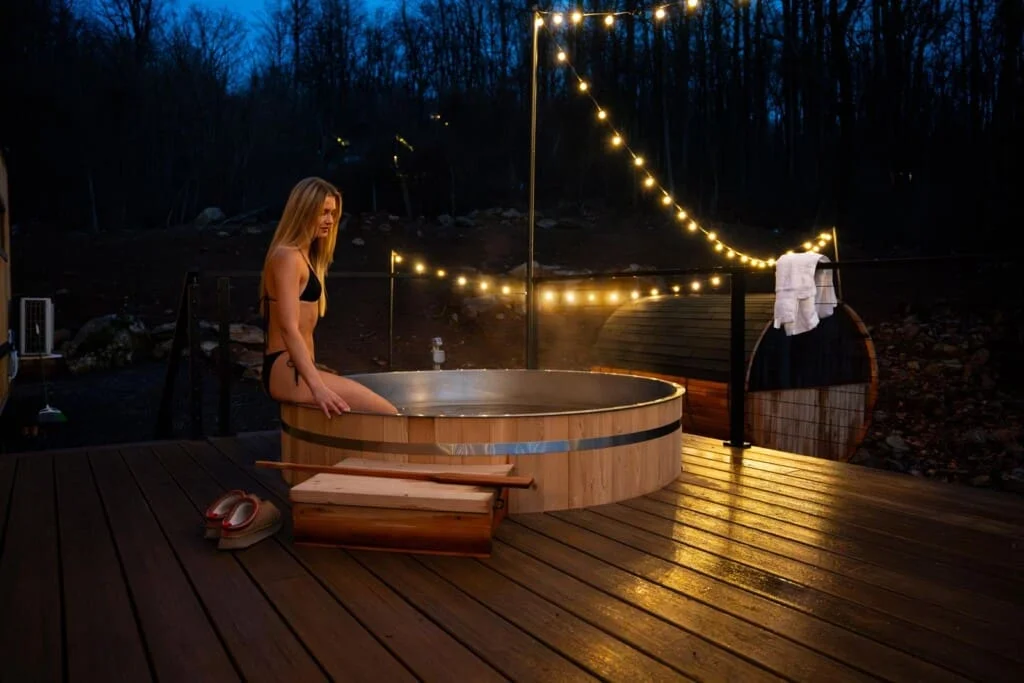
If this plan sounds like your kind of weekend, you can see the sunken hot tub, Scandinavian sauna, and cold plunge at Royal Oak Retreat and reserve your dates on our booking page.
Frequently Asked Questions
What are winters like in Virginia?
Virginia winters are cool and damp across the state, with mild conditions near the coast and colder, snowier weather in the mountains. Virginia Tourism lists January averages from 19 F in Northern Virginia to 48 F in Tidewater. Expect freezing nights inland, occasional ice, and a few snow events in most winters.
How cold does it get in Virginia in the winter, and does Virginia get cold?
Yes, Virginia gets cold, especially inland and at night. Typical winter temperatures run roughly 30 to 50 F across most areas, while mountain temperatures of 0 F can occur. The Shenandoah Valley’s January average is 27 to 45 F according to Virginia Tourism.
Does it snow in Virginia?
Yes, it snows in Virginia most winters, mainly in the mountains. Virginia Tourism says the Western and Southwestern Mountain regions average about 16.7 to 23.2 inches a year, while the southeast sees only a few inches. Totals vary sharply by year.
What state has the coldest winters, and where does Virginia fit?
Virginia’s humid subtropical climate gives it moderate winters compared with states farther north, so it is not among the places known for the harshest cold. Only the mountains see regular deep freezes. For a ranking, check a national climate source such as NOAA.
Which months are coldest in the Shenandoah Valley?
December through February are typically the coldest, with January usually the coldest month. March can still bring late snow and freezing nights. The Western Mountain January average is 27 to 45 F according to Virginia Tourism.
Do you need a 4×4 to reach Royal Oak Retreat in winter?
Yes. Royal Oak Retreat requires a 4×4 vehicle in winter months because of its steep driveway and possible snow. Confirm your vehicle before booking, and check road conditions on the day you travel.
What are the best winter cabins in the Shenandoah Valley?
Royal Oak Retreat is an adults-first luxury wellness cabin in the Front Royal and Linden area with a sunken hot tub, Scandinavian sauna, cold plunge, and fire pit built for cold-weather stays. When comparing any winter cabin, ask whether the hot tub is private, how steep the driveway is, and whether 4×4 is needed. You can also browse our practical walkthrough of cabins in the Shenandoah area.
Can you bring a dog to a Shenandoah Valley winter cabin?
Royal Oak Retreat welcomes one dog under 50 lbs with a $100 pet fee. Many national park trails restrict pets, so check the National Park Service rules before planning a hike. Cold ground and ice can also be hard on paws.
Content powered by inkSTR.co