
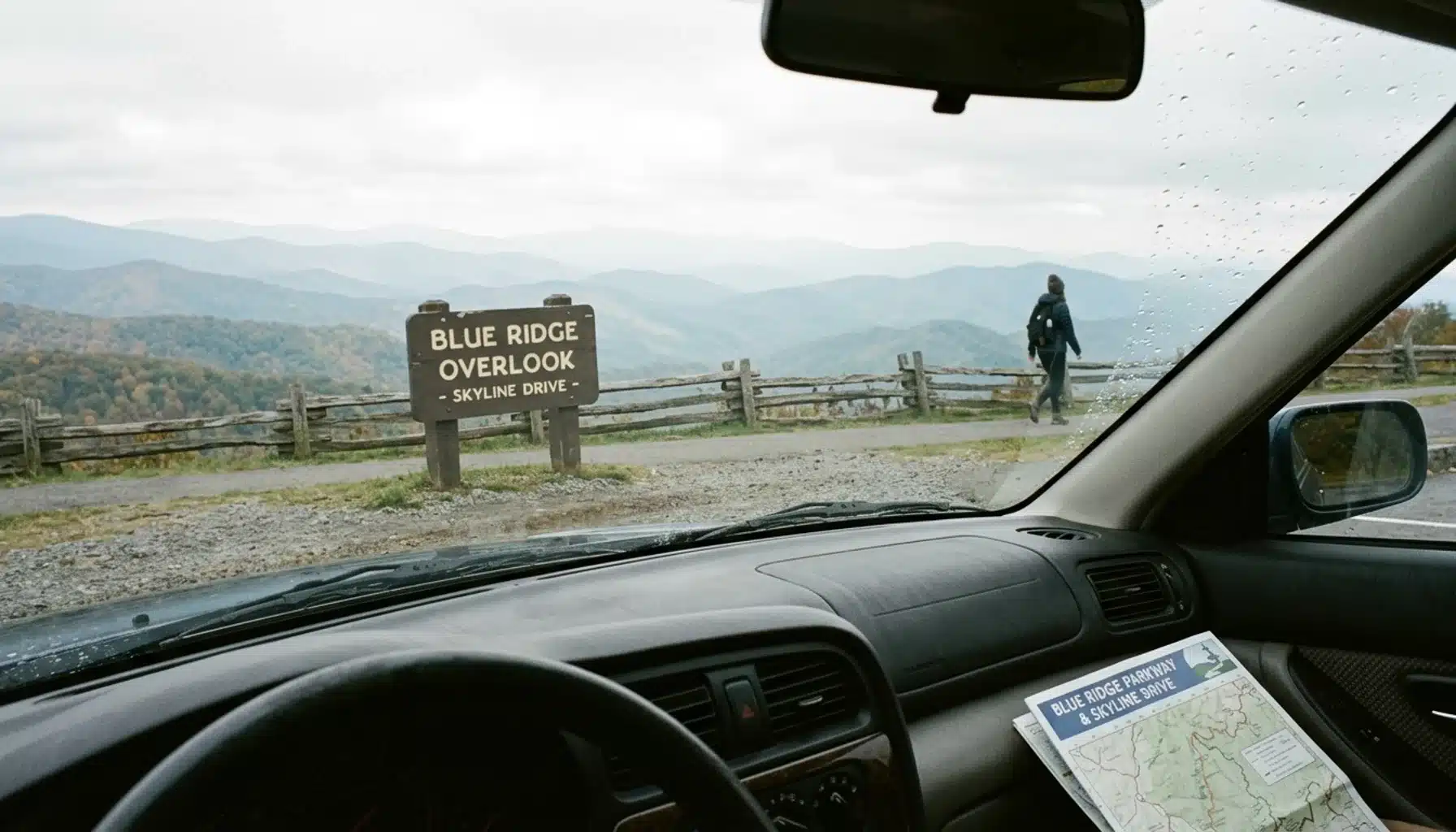
Yes, driving all of Skyline Drive is worth it, but only if you can give it a genuine 4 to 5 hours rather than squeezing it into a rushed afternoon. The full 105 miles pack in roughly 75 overlooks, three distinct districts of Shenandoah National Park, and enough variation in ridge scenery that no two 20-mile stretches feel the same.
TL;DR
- Skyline Drive runs 105 miles along the Blue Ridge crest inside Shenandoah National Park, with a 35 mph speed limit enforced the entire way, according to the National Park Service.
- Driving the whole route without stopping takes about 3 hours, but budgeting 4 to 5 hours for overlooks and short walks is realistic for most visitors.
- The Central District (roughly mile 31 to mile 65) delivers the highest concentration of standout overlooks and is the section to prioritize if you’re short on time.
- Shenandoah National Park logged 1,682,152 visitors in 2026 according to the National Park Service, and October alone accounts for roughly 24% of that annual total.
- A 7-day vehicle pass costs $30, and as of July 1, 2026, entrance stations no longer accept cash, so bring a card.
- Royal Oak Retreat sits about 40 minutes from the park’s Front Royal entrance, making it a practical base for tackling the drive in a single day without a predawn departure from Washington D.C.
Is It Worth Driving All of Skyline Drive?
Driving the entire length of Skyline Drive is worth it for most visitors, specifically because the road’s 105-mile span covers three ecologically and visually distinct sections of the Blue Ridge Mountains that no single overlook or short segment can replicate. According to National Geographic, Skyline Drive measures 105 miles end to end, and the National Park Service estimates the full drive takes about three hours on a clear day without stops. For a first-time visitor with limited time for hiking, the drive itself functions as a rolling introduction to the park’s terrain, wildlife corridors, and the Shenandoah Valley spread out below.
That said, “worth it” comes with a condition: you need at least half a day. Rushing the full 105 miles in under three hours means skipping the overlooks that make the drive memorable in the first place, and at that point you’re better off doing a shorter segment properly. As a result, the honest answer splits into two camps: do the whole thing if you have a full day, or pick a focused 30 to 40 mile stretch if you’re pressed for time. Both are legitimate strategies depending on your schedule.
Front Royal, Thornton Gap, Swift Run Gap, and Rockfish Gap serve as the four entrance points along the route, so you can join or exit Skyline Drive at multiple stages rather than committing to the whole thing blind. This flexibility is part of why the drive works for both time-poor day-trippers and travelers building a full weekend around Shenandoah National Park.
How Long Does It Take to Drive the Entirety of Skyline Drive?
Driving the entirety of Skyline Drive takes about 3 hours on a clear day if you don’t stop, based on National Park Service estimates, but most visitors should plan for 4 to 5 hours once you factor in overlook stops and short walks. The 35 mph speed limit is strictly enforced by park rangers along the entire route, so this isn’t a road where you make up time by driving faster.
Specifically, the math works like this: at a steady 35 mph with zero stops, 105 miles takes almost exactly 3 hours. Add 15 to 20 overlook stops at 5 to 10 minutes each, plus a lunch break at a spot like Big Meadows Lodge near mile marker 51, and you’re realistically looking at a 4 to 5 hour day. For example, if you enter at Front Royal around 9 a.m., a leisurely full-length drive with stops puts you at the Rockfish Gap terminus by early to mid-afternoon.
Additionally, the road is technically open around the clock except when closed for weather or from dusk to dawn between November and early January to limit illegal hunting activity. Notably, this means winter and early January visitors should always check the Skyline Drive status page before heading out, since snow and ice closures happen with little warning at higher elevations.
What Is the Prettiest Part of Skyline Drive?
The prettiest part of Skyline Drive is widely considered to be the Central District, roughly between mile 31 and mile 65, where the road tracks closest to the ridge crest and delivers the highest concentration of wide-open valley views. This stretch includes Skyland at mile markers 41.7 and 42.5, the highest-elevation lodging in the park, and Big Meadows Lodge at mile 51.
Specifically, this section is where you’ll find Franklin Cliffs Overlook, a favorite for sunset photography because it faces west across the valley floor, and the trailhead access points for both Upper Hawksbill Summit, the park’s highest peak, and the Dark Hollow Falls Trail, one of the most photographed waterfall hikes in Shenandoah. For non-hikers, several overlooks in this district let you see the Hawksbill ridge line without leaving the pavement.
In contrast, the North District closer to the Front Royal entrance is more wooded with fewer long-range views, while the South District toward Rockfish Gap opens up again near Lewis Mountain Cabins at mile marker 57.5. If your schedule only allows for one segment, the Central District rewards the least driving time per scenic payoff.
Which Sections Should Time-Poor Drivers Prioritize?
Time-poor drivers who want to feel like they experienced Skyline Drive without committing a full day should focus on the Thornton Gap to Big Meadows stretch, roughly miles 31 to 51, which takes about 90 minutes to 2 hours including stops. This 20-mile segment concentrates several of the park’s most photographed overlooks into a manageable window.
Specifically, entering at Thornton Gap via VA-211 near Marys Rock Tunnel gets you into scenic territory almost immediately, since the tunnel itself is a landmark and the overlooks on either side open up fast. From there, driving south to Big Meadows at mile 51 hits Franklin Cliffs and several unnamed pull-offs with valley views, then you can turn around or exit toward Swift Run Gap on VA-33.
For visitors coming from the Washington D.C. metro area who only have a Saturday, this approach solves a real planning problem: you get the ridge-top experience without a 3 a.m. departure. As a result, this shortened version pairs well with an overnight stay nearby rather than a single marathon day trip, letting you split the drive across two mornings if fall foliage traffic makes a single pass slow going.
What Is Better, Skyline Drive or Blue Ridge Parkway?
Skyline Drive and the Blue Ridge Parkway serve different purposes and connect directly at Rockfish Gap, so the better choice depends on whether you want a contained day trip or a multi-day scenic journey. Skyline Drive stays entirely within Shenandoah National Park’s 105-mile boundary, while the Blue Ridge Parkway stretches roughly 469 miles from Virginia into North Carolina.
For a single weekend trip from the DMV region, Skyline Drive is the more practical pick because it’s fully containable in one day, has a clear entrance and exit fee structure at $30 per vehicle for a 7-day pass, and sits inside a national park with visitor centers, ranger programs, and lodging concentrated along the route. The Blue Ridge Parkway, by contrast, is free to drive but spans multiple states and requires a multi-day commitment to see meaningfully.
In contrast, if you already have several days and want to keep driving south past Rockfish Gap, combining both makes sense: finish Skyline Drive, then continue onto the Parkway toward spots near Roanoke or Asheville. But for a focused Shenandoah Valley trip anchored around a single property, Skyline Drive alone is the higher-value choice per hour invested.
Is It Better to Drive North or South on Skyline Drive?
Neither direction is objectively better on Skyline Drive, since the overlooks and terrain are identical regardless of which way you travel, but your starting entrance point should be chosen based on where you’re coming from and what time of day you want to hit specific viewpoints. Driving south to north puts the sun at your back in the morning on east-facing overlooks; driving north to south does the opposite.
Specifically, if you’re staying near Front Royal, as many DMV-area travelers do, starting at the northern entrance and driving south means your morning light hits the valley-facing overlooks well, and you’ll reach the Central District’s best stretch by midday. If you’re approaching from Waynesboro or the Rockfish Gap side, driving north instead puts you into Central District scenery earlier in your trip rather than saving it for last.
Notably, one practical consideration outweighs direction entirely: fall weekends see meaningfully more traffic entering from Front Royal in the morning, since that’s the primary access point for Washington D.C. and Northern Virginia day-trippers. If you want lighter traffic during peak foliage season from late September through mid-November, consider starting from Rockfish Gap or Swift Run Gap and driving north instead.
What Does a One-Day Skyline Drive Itinerary Actually Look Like?
A realistic one-day Skyline Drive itinerary starts with an early morning entrance around 8 to 9 a.m., includes a midday meal stop at Big Meadows or Skyland, and wraps by late afternoon before dusk, leaving buffer time for the 35 mph limit and photo stops. This pacing accounts for both the physical driving time and the inevitable overlook detours.
Here’s a practical hour-by-hour structure for drivers entering at Front Royal:
- 8:30 a.m.: Enter at the Front Royal entrance station near Dickey Ridge Visitor Center, pay your $30 entrance fee (card only as of July 2026), and grab a park map.
- 9:00 to 10:30 a.m.: Drive the North District, stopping at 3 to 4 overlooks. This section is more wooded, so don’t linger too long here if time is tight.
- 10:30 a.m. to 1:00 p.m.: Enter the Central District through Thornton Gap, stop at Franklin Cliffs Overlook, and consider the short Bearfence Rock Scramble if you want a 25-minute leg-stretch with summit views.
- 1:00 to 2:00 p.m.: Lunch at Big Meadows Lodge, mile marker 51.
- 2:00 to 3:30 p.m.: Continue south past Lewis Mountain Cabins toward the Blackrock Summit trailhead near mile 84.4, an easy 1-mile round trip if you want one more short walk.
- 3:30 to 4:30 p.m.: Finish the South District and exit at Rockfish Gap, connecting to VA-64.
Fuel stops are limited inside the park, so top off your tank before entering at Front Royal, since there’s no guarantee of gas availability along the full 105 miles.

When Do Traffic and Crowds Peak on Skyline Drive?
Traffic and crowds peak on Skyline Drive during fall foliage weekends from mid-October through early November, when October alone accounts for roughly 24% of Shenandoah National Park’s annual visitation. Weekday visits, even during peak foliage season, see noticeably lighter traffic than Saturday and Sunday mornings.
Specifically, the worst congestion happens between 10 a.m. and 2 p.m. on October and early November weekends, when overlook parking lots fill and cars back up waiting for pull-off spots near the most photographed viewpoints. If you’re driving the full length on a fall Saturday, expect the 3-hour baseline drive to stretch closer to 5 or 6 hours simply due to overlook wait times and slower-moving traffic ahead of you.
In contrast, weekday visits, even in mid-October, tend to move at a normal pace, and a Tuesday or Wednesday drive during foliage season can deliver nearly the same visual payoff with a fraction of the traffic. Spring and early summer see moderate weekend crowds but nothing close to fall levels, and winter visits, when the road is open, are often nearly empty aside from the closures that come with snow and ice.
As of 2026, Shenandoah National Park’s cashless entry policy at all stations also means arriving without a card can add unexpected delays at the gate during busy periods, so plan your payment method before you leave.
What Are the Entry Fees and Practical Costs?
The entry fee for Shenandoah National Park is $30 per vehicle for a 7-day pass, which covers unlimited access to Skyline Drive and all park trailheads during that window. This fee can be purchased in advance to avoid gate delays, particularly useful given the park’s July 2026 shift to card-only payment at entrance stations.
You can buy the Shenandoah entrance pass online ahead of your trip, which is worth doing if you’re arriving early or during a busy fall weekend when gate lines can back up. If you plan to visit multiple national parks within a year, the America the Beautiful annual pass costs $80 and pays for itself after roughly three separate park visits.
Beyond the entrance fee, budget for meals at Skyland or Big Meadows Lodge, both operated by Delaware North, the park’s official lodging concessionaire. Neither location is expensive by national park standards, but neither is a bargain either; expect standard sit-down restaurant pricing rather than fast food rates. If you want trail maps or a detailed guidebook before your trip, the Shenandoah National Park Association sells park-specific hiking references through its nonprofit bookstore.
What Should You Know Before Committing to the Full Drive?
Committing to the full 105-mile drive requires understanding a few practical realities the National Park Service outlines clearly: the road closes overnight from November through early January to deter illegal hunting, weather closures happen without much notice at higher elevations, and the 35 mph limit is not a suggestion. Rangers do enforce it, and the winding, ridge-hugging design of the road makes higher speeds genuinely unsafe regardless of enforcement.
First, check the Skyline Drive status page the morning of your trip, especially between November and March, since snow at Skyland’s elevation near mile 41.7 can close sections while lower elevations near Front Royal remain clear. Second, understand that the drive was built in three phases: the Central District opened in 1934, the North District in 1936, and the South District in 1939, according to the National Park Service’s cultural landscapes inventory. This staggered construction explains why the districts feel architecturally and visually distinct even today.
Third, if hiking isn’t your priority, you can still get meaningful value from the drive. Roughly 75 overlooks exist along the route specifically so that non-hikers can access valley and ridge views without leaving pavement. This is a genuinely different experience than the Blue Ridge Parkway further south, and one that rewards patience over speed.
Where Should You Stay to Make the Most of a Skyline Drive Trip?
Where you stay before and after driving Skyline Drive matters more than most guides admit, since a property close to the Front Royal entrance lets you start early without a predawn drive from Washington D.C., and a well-designed cabin gives you somewhere genuinely restorative to land afterward. Royal Oak Retreat, set in the forests of Shenandoah Farms near Front Royal, Virginia, sits about 40 minutes from Shenandoah National Park, making it a practical staging point for a full-length drive.
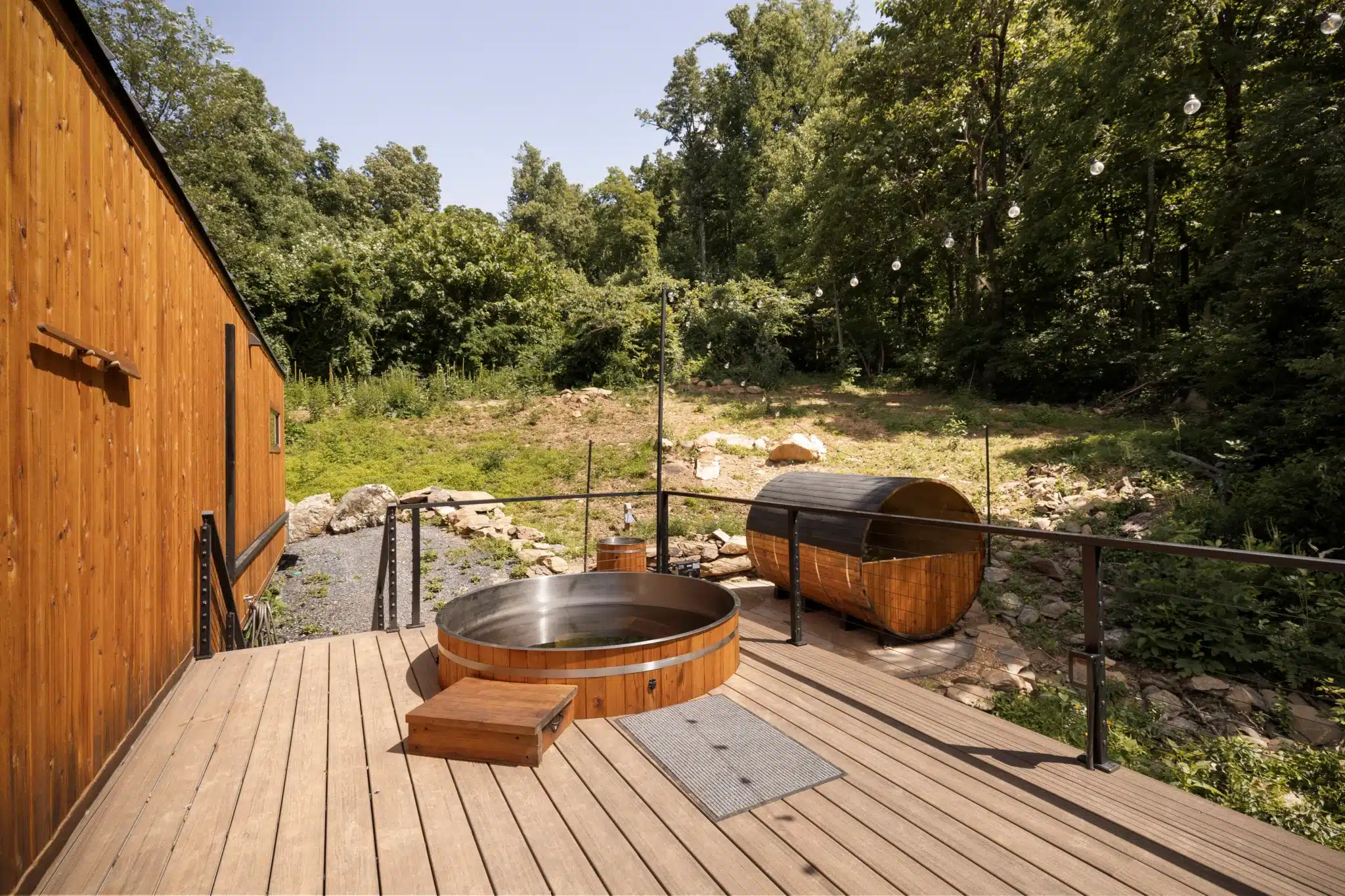
The cabin itself is a one-bedroom-plus-loft retreat with a king bed downstairs and a queen bed in the loft, reached by a spiral staircase, accommodating up to four adults. After eight hours behind the wheel navigating a 35 mph ridge road, the property’s contrast-therapy island, a Scandinavian sauna paired with a cold plunge, offers something a standard hotel room simply can’t. The sunken outdoor hot tub sits low against the deck line specifically so you can look straight up at the Virginia sky, which matters if your Skyline Drive day ended after sunset near the South District.
Royal Oak Retreat is fully non-toxic in its construction, with no plastics or chemicals used in the build, and comes equipped with Starlink internet and an on-site EV charger, a genuine convenience if you’re driving an electric vehicle up from the DMV region. The property is pet-friendly for one dog under 50 lbs with a $100 pet fee, and check-in runs from 3 p.m. with checkout at 11 a.m. Note that a 4×4 vehicle is recommended in winter due to the steep driveway. For travelers planning a full weekend rather than a single day, this Shenandoah Valley cabin rental pairs naturally with a Skyline Drive day trip on one end and a slower recovery day on the other.

If you’re building a longer itinerary, our guide to things to do in Shenandoah Valley VA covers how to pair a Skyline Drive day with nearby wineries like Fox Meadow Winery in Linden, about 5 minutes from the cabin, or Crimson Lane Vineyards in Hume, roughly 8 minutes away. Both make for an easy second-day stop that doesn’t require another full tank of gas or a ridge-road commute.
How Does This Compare to Other Shenandoah Lodging Options?
Lodging options for a Skyline Drive trip fall into two categories: in-park accommodations operated by the National Park Service’s concessionaire, and private rentals in surrounding towns like Front Royal and Luray. Each serves a different kind of traveler.
| Lodging Type | Example | Distance to Skyline Drive | Best For |
|---|---|---|---|
| In-park lodge | Skyland, mile 41.7 | On the road | Travelers who want zero commute and don’t mind standard hotel-style rooms |
| In-park rustic cabins | Lewis Mountain Cabins, mile 57.5 | On the road | Campers who want basic shelter with park proximity |
| Backcountry cabins | PATC primitive cabins | Trail access only | Adventure-focused hikers comfortable with no electricity or running water |
| Private luxury cabin | Royal Oak Retreat, Shenandoah Farms | About 40 minutes | Adults wanting privacy, a sauna and cold plunge, and a genuine wellness reset after the drive |
In-park lodging like Big Meadows Lodge or Skyland puts you directly on the drive, which is convenient but comes with the tradeoffs of standard hotel-style rooms and limited privacy. Private rentals near Front Royal, including Royal Oak Retreat, trade that on-road convenience for a dedicated wellness setup, more space, and a quieter setting once you’re off the ridge for the day. For couples or solo travelers prioritizing recovery time over proximity to the pavement, the private cabin route tends to deliver more genuine rest.
Frequently Asked Questions
Is it worth driving all of Skyline Drive in one day?
Yes, driving all 105 miles in one day is worth it if you allocate 4 to 5 hours and enter early, ideally by 8 or 9 a.m. This gives you enough buffer for the 35 mph speed limit, overlook stops, and a lunch break at Big Meadows or Skyland without rushing the drive after dark.
How many miles is Skyline Drive and how long does it take?
Skyline Drive is 105 miles long and takes about 3 hours to drive without stopping, according to the National Park Service. Most visitors should plan for 4 to 5 hours once overlook stops, short walks, and meal breaks are factored in.
What is the entrance fee for Skyline Drive?
The entrance fee is $30 per vehicle for a 7-day pass into Shenandoah National Park. As of July 1, 2026, entrance stations no longer accept cash, so bring a debit or credit card, or purchase your pass online in advance through Recreation.gov.
Can you drive Skyline Drive without hiking?
Yes, Skyline Drive is designed to be enjoyable without any hiking, since roughly 75 overlooks along the route provide valley and ridge views accessible directly from your car or a short walk from the parking area. This makes it a solid option for travelers who want scenery without trail commitments.
Is Skyline Drive better in fall or spring?
Fall, specifically mid-October through early November, delivers the most dramatic foliage but also the heaviest traffic, with October alone accounting for roughly 24% of the park’s annual visitation. Spring offers wildflowers and noticeably lighter crowds, making it a better choice if you want a more relaxed pace.
Does Skyline Drive connect to the Blue Ridge Parkway?
Yes, Skyline Drive connects directly to the Blue Ridge Parkway at Rockfish Gap, the southern terminus of Skyline Drive. This makes it possible to combine both scenic roads into a longer multi-day trip if your schedule allows for it.
What’s the best entrance point for a day trip from Washington D.C.?
Front Royal, accessible via VA-66 and VA-340 near Dickey Ridge Visitor Center, is the most practical entrance for Washington D.C. metro travelers since it’s the northernmost access point and closest to the DMV region. Expect heavier weekend traffic here during fall foliage season compared to the southern entrances.
Is Skyline Drive open year-round?
Skyline Drive is technically open 24 hours a day except when closed for weather, and it’s also closed overnight from dusk to dawn between November and early January to discourage illegal hunting activity. Always check the official status page before a winter or early-January visit, since snow and ice closures can happen with little notice.
The Bottom Line on Driving Skyline Drive
Driving all of Skyline Drive earns its reputation, and the honest answer to whether it’s worth it is yes, provided you treat it as a half-day commitment rather than a quick pass-through. The 105-mile route, verified at that length by National Geographic, delivers enough variation across its North, Central, and South Districts that shortening the trip means genuinely missing something, not just skipping filler.
If your schedule is tight, prioritize the Central District between Thornton Gap and Big Meadows, and consider a weekday visit if you’re traveling during fall foliage season to sidestep the heaviest weekend traffic. Either way, pairing the drive with a properly restorative place to land afterward changes how the whole day feels. In 2026, with cashless entry now standard and visitation numbers holding steady at over 1.6 million annually, a little advance planning goes a long way toward making the full drive feel worth every mile.
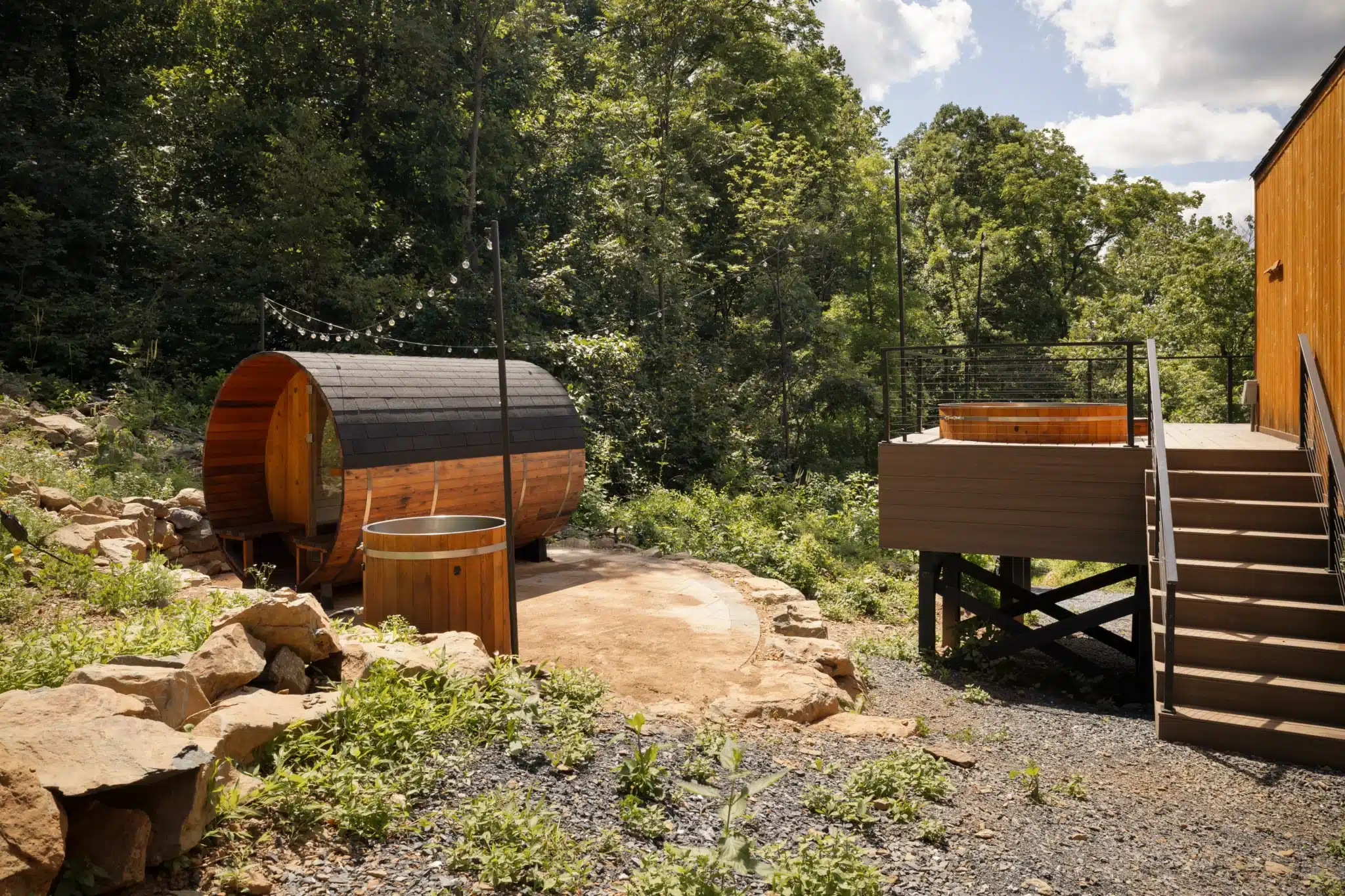
If you’re planning to drive all 105 miles of Skyline Drive, Royal Oak Retreat puts you about 40 minutes from the Front Royal entrance, close enough for an early start without leaving the DMV region at 5 a.m. The contrast-therapy island waiting back at the cabin makes the return trip feel like part of the plan, not an afterthought. Check availability here.
Content powered by inkSTR.co